
Every serious CS:GO player knows the rush of unlocking a rare skin or closing a high-stakes trade, but persistent myths still cloud the true nature of weapon skins. Understanding the role of cosmetic weapon finishes is crucial for anyone invested in trading, collecting, or gambling. Separating fact from fiction not only protects your investments but also helps you develop smarter strategies for navigating the intricate world of CS:GO skin markets and maximizing your digital arsenal.
Table of Contents
- Defining CS:GO Skins and Common Myths
- Types of Skins and Rarity Explained
- How Skin Trading and Gambling Work
- Market Value, Collection, and Upgrades
- Risks, Legal Concerns, and Safe Practices
- Impact on Competitive Gaming and Community
Key Takeaways
| Point | Details |
|---|---|
| Skins are purely cosmetic | CS:GO skins do not affect weapon performance; they are solely visual enhancements. |
| Rarity is key for market value | Skin value is determined by rarity, condition, and features like StatTrak™, impacting collector interest. |
| Market dynamics are complex | Understanding trading mechanisms and market trends is essential for successful skin investments. |
| Be cautious in trading and gambling | Engage responsibly by verifying platform legitimacy and setting spending limits to mitigate risks. |
Defining CS:GO Skins and Common Myths
Counter-Strike: Global Offensive (CS:GO) skins represent unique cosmetic weapon finishes that transform the visual appearance of in-game weapons without altering gameplay mechanics. Cosmetic weapon finishes have become a significant part of the gaming ecosystem, creating an entire economic subculture around digital weapon aesthetics.
Understanding weapon skins requires debunking several persistent myths:
- Skins do NOT impact weapon performance
- Skins are purely visual customizations
- Each skin has a unique rarity and market value
- Skins can be traded, sold, or gambled independently
Contrary to popular misconception, skins function exclusively as visual enhancements. Players cannot gain competitive advantages through skin selection. These digital items derive value from their rarity, design complexity, and community demand rather than any intrinsic gameplay benefit.
Market Dynamics of skins involve complex trading and valuation systems. Monetary value in gaming ecosystems has transformed these digital items into tradable assets with real-world economic significance.
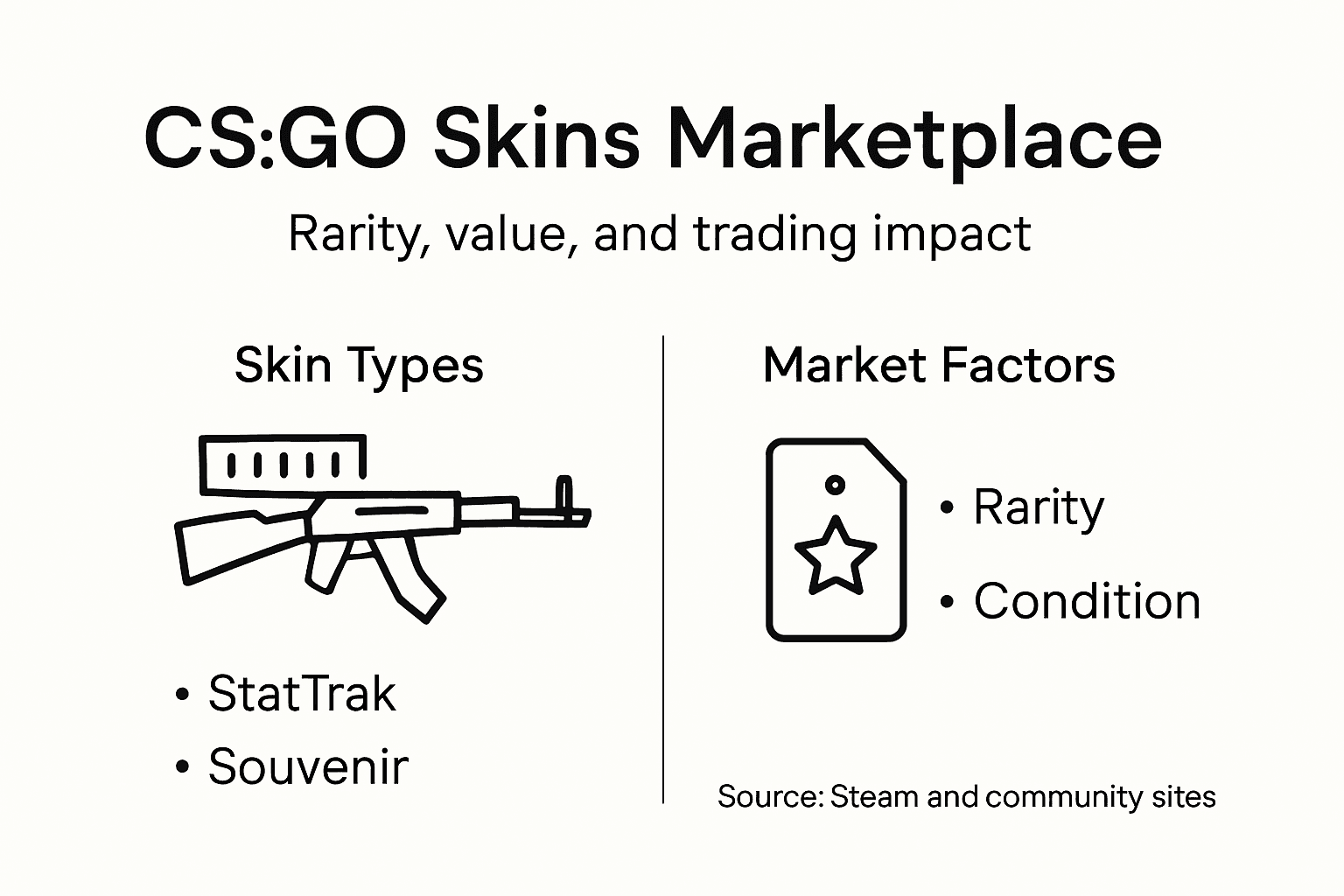
Pro tip: Research skin rarities and market trends before investing significant resources in trading or collecting digital weapon finishes.
Types of Skins and Rarity Explained
CS:GO skins represent a complex ecosystem of visual customizations with intricate rarity classifications that dramatically influence their market value and collector desirability. Skin rarity grades create a hierarchical system that transforms digital weapon appearances into valuable trading assets.
The primary rarity tiers in CS:GO skins include:
- Consumer Grade (White): Most common skins
- Industrial Grade (Light Blue): Slightly more uncommon
- Mil-Spec (Blue): Moderately rare
- Restricted (Purple): High-value category
- Classified (Pink): Extremely rare
- Covert (Red): Ultra-rare skins
- Contraband (Gold/Orange): Exceptionally unique
Beyond standard color classifications, two special skin categories add additional complexity to the marketplace. StatTrak™ skins track total kills made with the weapon, while Souvenir skins originate from specific tournament drops, adding unique provenance and collectible value.
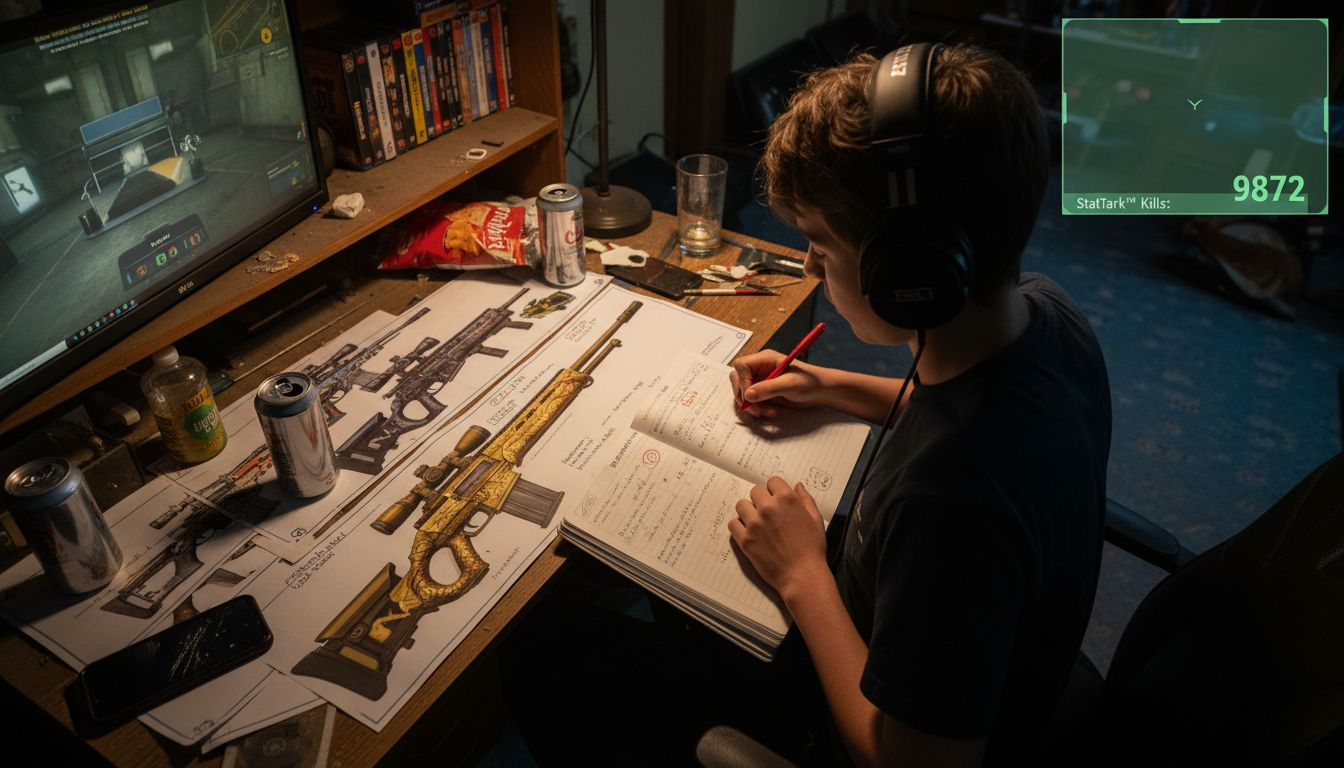
The market dynamics of these skins extend far beyond simple cosmetic appeal. Rarity, condition, and special features like StatTrak™ can exponentially increase a skin's perceived and actual monetary worth, transforming digital items into sought-after collectibles.
Compare the main skin market factors to understand their impact:
| Factor | Effect on Price | Collector Value Impact |
|---|---|---|
| Rarity | Direct, often largest | Drives demand |
| Condition | Major, increases with quality | Affects prestige |
| StatTrak™ | Raises price if working | Popular for tracking |
| Provenance | Unique, only souvenirs | Adds exclusivity |
Here's a quick reference to CS:GO skin rarity grades and their collector appeal:
| Rarity Grade | Color Indicator | Typical Market Value | Collector Interest |
|---|---|---|---|
| Consumer Grade | White | Very low | Entry-level, basic |
| Industrial Grade | Light Blue | Low | Low, mostly traded |
| Mil-Spec | Blue | Moderate | Starter collector item |
| Restricted | Purple | High | Sought after |
| Classified | Pink | Very high | High demand |
| Covert | Red | Extremely high | Top-tier, rare finds |
| Contraband | Gold/Orange | Exceptionally high | Ultra-rare, unique |
Pro tip: Always verify skin condition and authenticity before making significant trading investments, as minor variations can substantially impact market value.
How Skin Trading and Gambling Work
CS:GO skin trading and gambling represent a complex digital ecosystem where virtual weapon appearances become tradable assets with real-world monetary value. Skin gambling mechanics enable players to use digital items as currency across various third-party platforms, transforming simple cosmetic modifications into high-stakes trading opportunities.
The primary mechanisms of skin gambling typically involve:
- Depositing skins with assigned monetary value
- Participating in games like roulette, coin flips, and jackpots
- Betting on esports matches and competitive events
- Attempting to win rarer or more valuable skins
Trading platforms have developed sophisticated systems to manage these exchanges. Steam trade protections now implement specific safeguards to prevent potential exploits, including mandatory trade lock periods that secure transactions and reduce fraudulent activities.
Market Ecosystem fundamentally operates on perceived value, where skin conditions, rarity, and special features like StatTrak™ significantly influence trading potential. Players navigate a complex landscape where digital items can represent substantial financial investments, turning gambling from a casual activity into a strategic economic interaction.
Pro tip: Always document your skin trades, verify platform reputation, and set strict personal spending limits to maintain responsible gambling practices.
Market Value, Collection, and Upgrades
CS:GO skins represent a sophisticated digital economy where collectors and traders strategically manage their virtual inventories. Skin trading dynamics create a complex marketplace driven by rarity, condition, and player demand, transforming digital items into valuable assets.
The primary mechanisms for enhancing skin collection value include:
- Utilizing trade-up contracts to exchange lower-tier skins
- Monitoring market price fluctuations
- Identifying rare and sought-after skin variants
- Maintaining optimal skin condition
- Understanding probabilistic upgrade strategies
Market valuation depends on multiple critical factors. Skin conditions ranging from Factory New to Battle-Scarred dramatically impact pricing, with pristine skins commanding significantly higher values. Collectors meticulously track minute details that distinguish average items from truly exceptional digital assets.
The economic ecosystem surrounding CS:GO skins has evolved into a sophisticated trading environment where strategic collection management can yield substantial financial returns. Players who understand market trends, rarity classifications, and trading mechanics can transform their digital inventories into valuable investment portfolios.
Pro tip: Research current market trends, document skin conditions carefully, and develop a strategic approach to trading that balances collection goals with potential financial opportunities.
Risks, Legal Concerns, and Safe Practices
CS:GO skin gambling exists in a complex legal landscape fraught with potential risks and ethical challenges. Skin gambling risks encompass financial, legal, and personal safety concerns that players must carefully navigate to protect themselves.
Key risks and safety considerations include:
- Potential for significant financial losses
- Risk of developing gambling addiction
- Exposure to fraudulent platforms
- Legal uncertainties in different jurisdictions
- Vulnerability to underage gambling
Regulatory challenges stem from the ambiguous nature of skins as a form of currency. Many gambling platforms operate in legal gray areas, making it difficult to establish clear consumer protections. Players must remain vigilant about the platforms they use, verifying site legitimacy and understanding the potential legal implications of their activities.
The digital marketplace demands sophisticated risk management strategies. Responsible players should implement strict personal guidelines, including setting hard spending limits, using only verified platforms, and maintaining awareness of the evolving legal landscape surrounding digital asset gambling.
Pro tip: Always use two-factor authentication, document all transactions, and never gamble more than you can afford to lose completely.
Impact on Competitive Gaming and Community
CS:GO skins have transformed the competitive gaming landscape, creating a vibrant ecosystem that extends far beyond traditional gameplay mechanics. Esports cultural dynamics reveal how digital cosmetics have become integral to player identity and community engagement.
The skin ecosystem influences competitive gaming through several key dimensions:
- Enabling personal weapon customization
- Creating unique player identities
- Generating alternative revenue streams
- Supporting professional tournament ecosystems
- Fostering global community interactions
Community engagement transcends mere visual aesthetics. Skins have become a form of digital expression, allowing players to showcase individual style and personal achievements without impacting core gameplay mechanics. The trading and collecting culture has developed its own sophisticated subeconomy within the broader esports landscape.
Professional players and streaming personalities have further amplified the cultural significance of skins. By displaying rare or uniquely crafted weapon finishes, they've transformed these digital items into status symbols that extend player recognition beyond traditional competitive performance.
Pro tip: Understand that skins are more than cosmetic items - they represent a complex cultural and economic phenomenon within competitive gaming communities.
Elevate Your CS:GO Skin Experience with Dropskin.com
The complex world of CS:GO skins involves trading, gambling, and upgrading rare digital assets. Many players face challenges navigating skin rarity, market value fluctuations, and safe gambling practices. If you want to turn your gaming passion into rewarding battles while managing risks and maximizing your skin collection’s potential, Dropskin.com offers a unique solution tailored just for you. Our platform combines custom battle matches, case openings, and skin upgrades to empower you with interactive ways to enhance skin value beyond traditional trading.
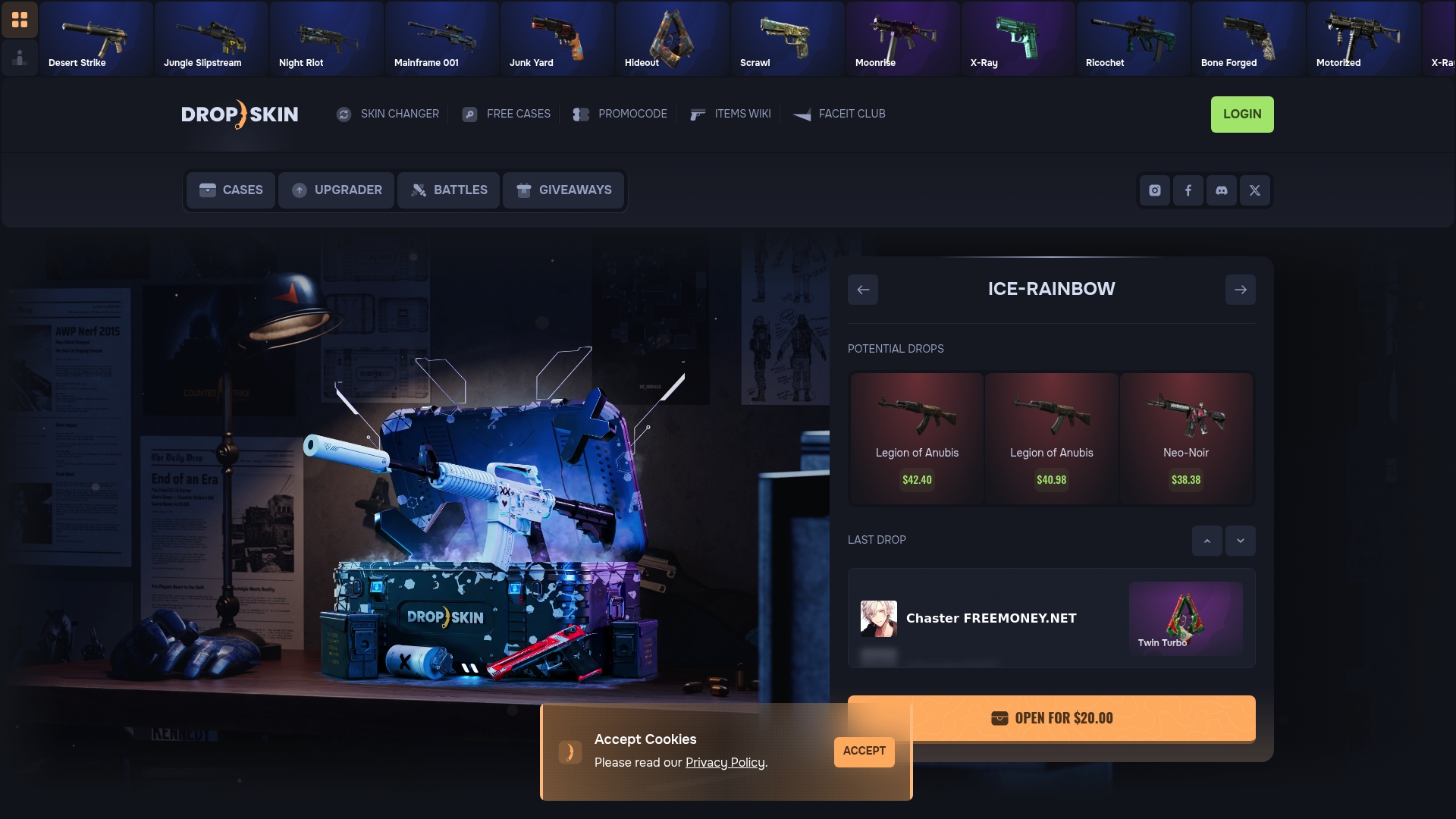
Take control of your skin collection now with Dropskin.com — the hybrid marketplace designed for action-driven skin betting and trading. Join a vibrant community where you can pick your stakes, upgrade your skins, and win premium rewards. Ready to transform cosmetic weapon finishes into valuable assets while enjoying gambling features responsibly? Visit Dropskin.com to get started and discover the exciting future of CS:GO skin trading and gambling today.
Frequently Asked Questions
What are CS:GO skins?
CS:GO skins are unique cosmetic finishes that alter the visual appearance of weapons in the game without affecting performance.
How do skin rarities affect their market value?
The rarity of a skin plays a significant role in its market value, with rarer skins generally commanding higher prices among collectors and traders.
Can I trade or sell my CS:GO skins?
Yes, CS:GO skins can be traded, sold, or even used for gambling on various third-party platforms, adding another layer to their market dynamics.
What are StatTrak™ and Souvenir skins?
StatTrak™ skins track the number of kills achieved with the weapon, while Souvenir skins are linked to specific tournament drops, enhancing their collectible value.
Recommended
- CS2 Skins Wiki - Price Check & Database | DROP.SKIN - Open CS2 Cases and Upgrade your Skins
- CS2 Skin Upgrader - Upgrade Skins Online | DROP.SKIN - Open CS2 Cases and Upgrade your Skins
- AML Policy - DROP.SKIN | DROP.SKIN - Open CS2 Cases and Upgrade your Skins
- DROP.SKIN - Open CS2 Cases and Upgrade your Skins