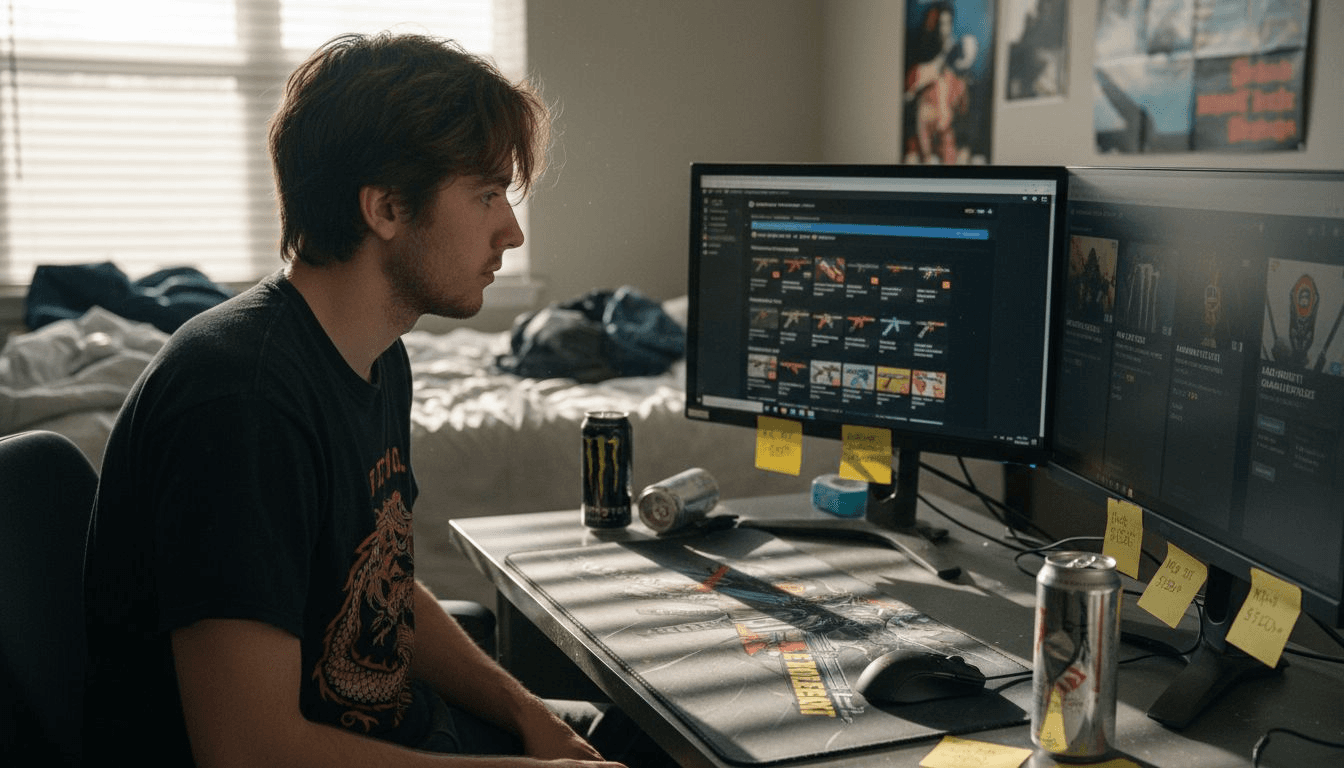
Scrolling through your CS2 inventory, you quickly realize that skin value stretches far beyond simple looks or rarity. Gamers across the globe now treat these digital commodities as true investments, with real-money trades and portfolios rivaling those in traditional markets. Understanding how market dynamics, player demand, and speculative trading shape Counter-Strike skin prices can give you a real advantage. This guide breaks down what actually drives value so you make smarter choices with every trade.
Table of Contents
- Defining Skin Value In Counter-Strike Games
- Key Factors Affecting CS2 Skin Worth
- Types Of Skins And Rarity Levels Explained
- How Market Demand And Trading Influence Prices
- Risks, Legal Concerns, And Avoiding Scams
Key Takeaways
| Point | Details |
|---|---|
| Skin value is speculative | The worth of Counter-Strike skins is driven by market dynamics rather than aesthetics or rarity, making them akin to investments. |
| Market demand drives prices | Factors such as tournament visibility and player endorsements significantly influence skin prices, often in unpredictable ways. |
| Supply constraints matter | Controlled supply by Valve increases skin prices through artificial scarcity, which is crucial for collectors to understand. |
| Be cautious of scams | Engage with trusted marketplace platforms to avoid fraudulent schemes, and practice safe trading to manage financial risks. |
Defining Skin Value in Counter-Strike Games
Skin value in Counter-Strike isn't about what a skin looks like or how rare its design is. Instead, it's driven by something far more complex: market dynamics, player behavior, and supply constraints.
Unlike traditional cosmetics in other games, CS:GO and CS2 skins function as digital commodities. Players don't just view them as cosmetic upgrades—they treat them as assets with real economic value. This shift transforms the entire value proposition of owning a particular skin.
What Actually Determines Price
Research on CS skins reveals something surprising. Observable attributes like rarity or aesthetics have surprisingly limited power in determining prices compared to historical price trends. Instead, skins are valued more like speculative investments than consumer goods.
This means:
- Historical prices matter more than intrinsic beauty or rarity
- Market sentiment drives value shifts week to week
- Supply limitations create artificial scarcity that buyers willingly pay for
- Demand from collectors pushes prices independent of skin aesthetics
You're essentially betting on what the next player will pay, not on the skin's actual quality.
The Economics Behind CS Skins
The Counter-Strike skin market operates on a simple equation: limited supply plus growing player interest equals rising prices. Analysis of over 3000 cosmetic items shows that rapid player growth and restricted item availability have historically generated exceptional returns for early collectors.
When Valve limits the number of skins released or stops dropping certain items, their value typically increases. This isn't because players suddenly love the design more—it's because fewer exist in the marketplace.
Why This Matters to You
Understanding that skin value is speculative rather than inherent changes your strategy. You're not buying a skin because it looks good. You're buying it because you believe demand will increase or supply will decrease, making it worth more later.
This is why trading floors like Dropskin focus on the economic potential of skins. The platform recognizes that skins are assets worth upgrading, trading, and strategically collecting.
Skin value reflects what the next buyer will pay, not the skin's inherent qualities or visual appeal.
Pro tip: Track historical price movements rather than relying on aesthetics alone when evaluating whether a skin is worth acquiring. Skins that have stabilized prices after past volatility often represent better value than newly hyped releases.
Key Factors Affecting CS2 Skin Worth
CS2 skin value isn't controlled by a single factor. Multiple forces push prices up or down simultaneously, and understanding each one gives you an edge in trading and collecting.
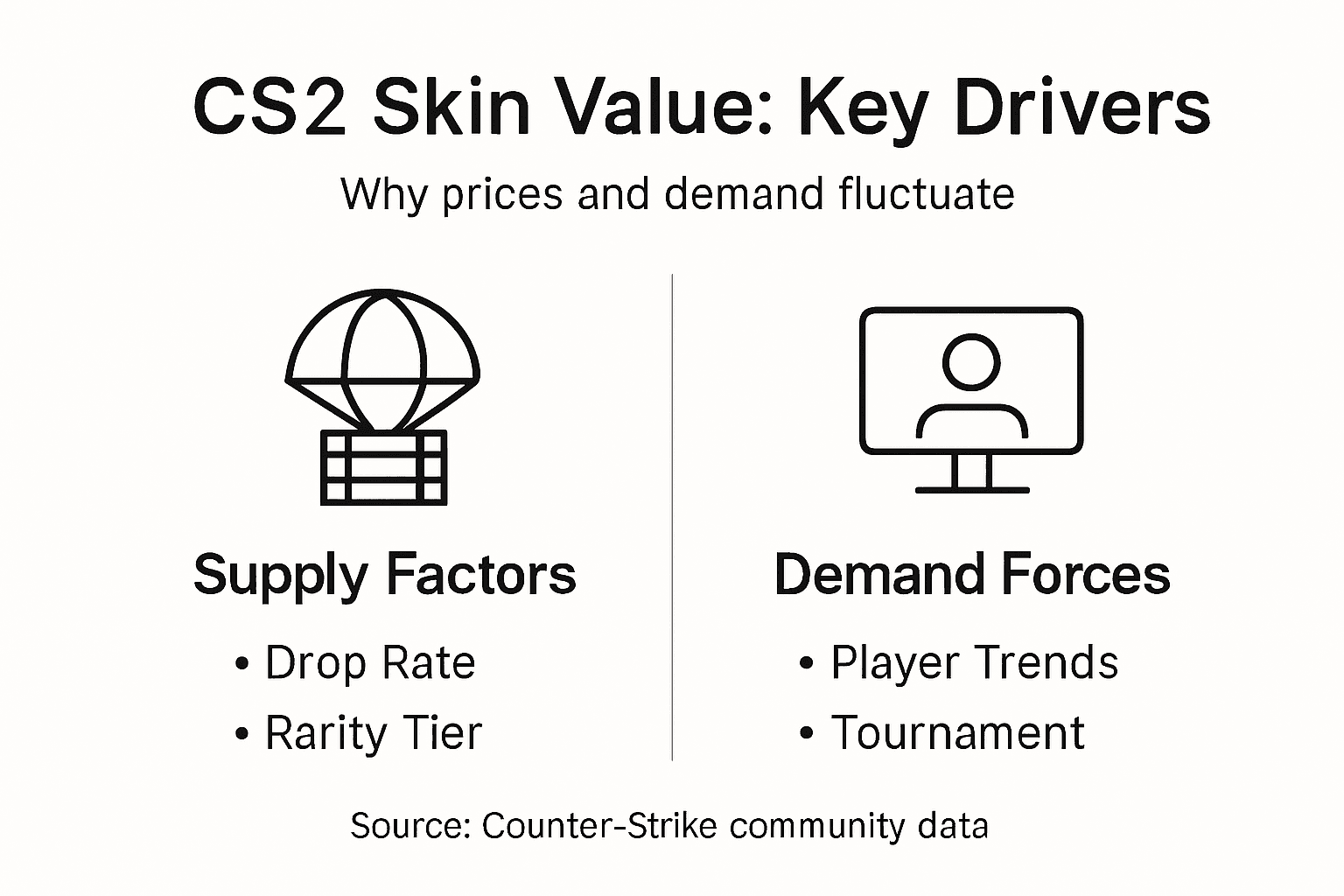
The biggest driver remains supply control. Valve determines how many skins enter the market through case drops and discontinued releases. When a case stops dropping, scarcity increases, and prices typically follow.
Supply and Rarity
Controlled supply by Valve through drop rates and discontinued cases create the foundation of skin worth. Fewer skins in circulation means higher demand from collectors competing for the same inventory.
Rarity levels matter too:
- Classified skins hold value better than Consumer Grade
- Discontinued cases command premiums as new players can't acquire them
- Factory New condition (low float value) costs significantly more than Minimal Wear
- Souvenir variants from esports events trade at exponential premiums
Condition affects price more than most players realize. A Factory New skin might cost triple or quadruple a Field-Tested version of the same item.

Player Experience and Community Demand
Experienced players drive demand differently than casual gamers. Player experience levels correlate with expensive inventories, meaning veteran collectors invest more in premium skins and create consistent buying pressure.
Esports visibility matters enormously. When a professional player uses a specific skin during a major tournament, its demand spikes. Community enthusiasm for the weapon and the visual design amplifies this effect.
Trading Accessibility and Market Liquidity
Skins are only valuable if you can actually trade them. Third-party marketplace activity and trading platforms create liquidity, allowing collectors to convert inventory into real value quickly.
Without accessible trading channels, even rare skins sit stagnant. The easier it is to buy and sell a skin, the higher its practical value becomes.
Skin worth combines scarcity, condition, community interest, and how easily you can trade it away.
Pro tip: Focus on skins with high float variance between conditions—Factory New versions of popular weapon choices typically appreciate faster than rare but unpopular designs, because demand remains consistent across the collector base.
Types of Skins and Rarity Levels Explained
Every CS2 skin falls into one of six rarity categories. Understanding these tiers is essential because rarity directly determines drop rates, availability, and price potential in the market.
Rarity dictates everything. The higher the rarity tier, the fewer skins exist in circulation, the harder they drop from cases, and the more collectors compete for them. This creates a clear hierarchy of value across the entire skin ecosystem.
The Six Rarity Tiers
Rarity tiers ranging from Consumer Grade to Covert form the foundation of skin classification. Each tier corresponds to specific drop rates that Valve controls, creating artificial scarcity at higher levels.
Here's the breakdown:
- Consumer Grade - Most common, lowest prices, easiest to acquire
- Industrial Grade - Still abundant but slightly less common than Consumer Grade
- Mil-Spec - Mid-tier rarity with moderate drop rates and pricing
- Restricted - Noticeably scarcer, prices climb significantly
- Classified - Rare drops create meaningful supply constraints
- Covert - Rarest tier, highest prices, most coveted by collectors
Within each tier, specific weapon skins command different prices based on design popularity and demand.
Here's a comparison of CS2 skin rarity tiers and their market characteristics:
| Rarity Tier | Typical Market Price | Collector Competition | Drop Frequency |
|---|---|---|---|
| Consumer Grade | Lowest | Minimal | Most frequent |
| Industrial Grade | Low | Low | Very frequent |
| Mil-Spec | Moderate | Moderate | Regular |
| Restricted | Higher | Increased | Less frequent |
| Classified | High | Strong | Rare |
| Covert | Highest | Intense | Rarest |
Float Value and Condition
Rarity isn't the only factor determining a skin's quality. Float value measures wear on a skin's surface, ranging from Factory New (almost zero wear) to Battle-Scarred (heavy wear).
Condition impacts price exponentially:
- Factory New costs the most, appearing pristine
- Minimal Wear offers value but shows tiny imperfections
- Field-Tested displays moderate wear and costs noticeably less
- Well-Worn shows significant damage, cheaper still
- Battle-Scarred costs a fraction of Factory New
A Factory New Covert skin might cost five times more than its Battle-Scarred counterpart. This is why float checking matters deeply when trading.
StatTrak and Souvenir Status
Special markings add significant value multipliers. StatTrak versions track your kills with that weapon, and collectors pay premiums for this feature—typically 2x to 5x the standard price depending on rarity.
Souvenir skins from professional tournaments command even higher premiums. A Souvenir Covert Factory New skin can sell for dozens of times the price of a regular version because only tournament matches generate these drops.
Rarity level controls supply, float determines condition value, and special status (StatTrak or Souvenir) multiplies your investment potential.
Pro tip: Target mid-tier Classified skins in Minimal Wear condition with clean float values—they appreciate faster than Covert skins because demand is higher while supply remains limited, creating consistent price momentum.
How Market Demand and Trading Influence Prices
Price is ultimately determined by what someone will pay right now. Supply matters, but demand moves prices every single day in the CS2 skin market.
When a professional player equips a skin during a major tournament, its price jumps within hours. When a streamer showcases a weapon design, collectors rush to acquire it. Demand creates urgency, and urgency drives prices upward regardless of rarity tier.
Tournament Impact and Visibility
Esports events reshape the entire market overnight. A skin that nobody cares about can become highly sought after if a professional uses it during a championship match with millions watching.
This phenomenon works both ways:
- Tournament visibility increases demand exponentially
- Professional endorsement (a pro player choosing your skin) adds prestige
- Streamer usage influences casual collectors and creates trends
- Community hype from social media accelerates price movement
- Event-specific skins (Team Souvenir drops) spike immediately after matches
The timing of tournament seasons directly correlates with skin price volatility. Major events create buying frenzies that reshape market values.
Secondary Markets and Trading Platforms
Demand in secondary markets crucially shapes price dynamics through rapid buying and selling across multiple platforms. Without functional trading marketplaces, even rare skins would stagnate in value.
Third-party sites enable rapid price discovery. When one marketplace lists a skin lower than others, arbitrage traders buy and resell, flattening prices across platforms. This liquidity ensures your inventory remains tradeable at fair market rates.
Places like Dropskin facilitate these transactions, allowing you to convert skins into value quickly. Platform accessibility directly impacts how easily demand translates into actual price increases.
Emotional and Social Value
Collectors buy skins for more than economic reasons. The visual appeal, rarity prestige, and ownership status create emotional attachment that drives purchasing decisions beyond pure speculation.
A skin might be statistically common, but if it looks incredible and famous players use it, demand skyrockets. The psychological desire to own what others want is a powerful price driver.
Demand determines prices far more than supply alone—tournament exposure, marketplace access, and emotional appeal create the buying pressure that moves markets.
Pro tip: Monitor esports schedules and buy skins 2-3 weeks before major tournaments when prices dip; demand spikes during events, allowing you to sell at peak prices when visibility drives urgent buying.
Risks, Legal Concerns, and Avoiding Scams
CS2 skin trading isn't risk-free. Prices crash, scammers operate freely, and the legal status of virtual goods remains murky in most jurisdictions. You need to understand these dangers before investing serious money.
The skin market operates in a gray zone. Unlike traditional stock markets, there's minimal regulatory oversight protecting your investment. This freedom from regulation also means freedom for bad actors to exploit traders.
Market Volatility and Financial Risk
Skin prices swing wildly based on sentiment, tournament outcomes, and Valve decisions. A skin worth $500 last month might drop to $300 this week if professional demand evaporates.
Volatility creates real dangers:
- Price crashes happen without warning when hype dies
- Oversupply events (new case releases) devalue older skins instantly
- Professional meta shifts make previously popular skins worthless
- Market manipulation by wealthy traders artificially inflates then crashes prices
- Liquidity problems leave you unable to sell when prices drop
Treat skin investments like speculative bets, not guaranteed returns. Never invest money you cannot afford to lose.
Below is a summary of risk types for CS2 skin trading and their potential impact:
| Risk Category | Example | Impact on Player | How to Mitigate |
|---|---|---|---|
| Market Volatility | Sudden price drops | Financial loss | Set spending limits |
| Scam/Fraud | Phishing links | Stolen inventory | Use trusted platforms |
| Emotional/Psych | Compulsive buying | Addiction risk | Regular self-assessment |
Scams and Fraudulent Schemes
High volatility and scams plague the unregulated skin market constantly. Phishing links steal your Steam account. Fake marketplace websites steal skins during "trades." Social engineering tricks you into dropping valuable items for worthless ones.
Common scam tactics:
- Phishing emails impersonating Steam or trading sites
- Middleman fraud where the "middleman" disappears with both skins
- Float value deception claiming skins are Factory New when actually Field-Tested
- Fake escrow services that steal items instead of holding them
Always use established platforms like Dropskin with verified security features. Never trade outside official channels with strangers.
Psychological and Addiction Risks
Addictive spending behavior and exploitative practices are well-documented in the skin market. The constant chase for profit creates gambling-like patterns where losses trigger aggressive buying to recover money.
Set spending limits before trading starts. Track your actual returns honestly. If you're chasing losses or trading daily, step back and reassess your approach.
Unregulated markets attract scammers, prices crash without warning, and the psychological hooks of trading can drain your wallet faster than your strategy profits.
Pro tip: Use two-factor authentication on your Steam account, bookmark official Dropskin URLs directly without clicking links, and never trade skins worth more than 10% of your total inventory in a single transaction to limit scam exposure.
Unlock the True Potential of Your CS2 Skins with Dropskin
The article highlights a crucial insight: skin value is driven more by market dynamics and speculative demand than by mere rarity or aesthetics. If you are seeking smarter ways to navigate price volatility while capitalizing on supply control and community demand, you need a platform that understands these complexities. Dropskin offers exactly that by combining skin trading with interactive betting features designed to leverage market trends and boost your potential returns.
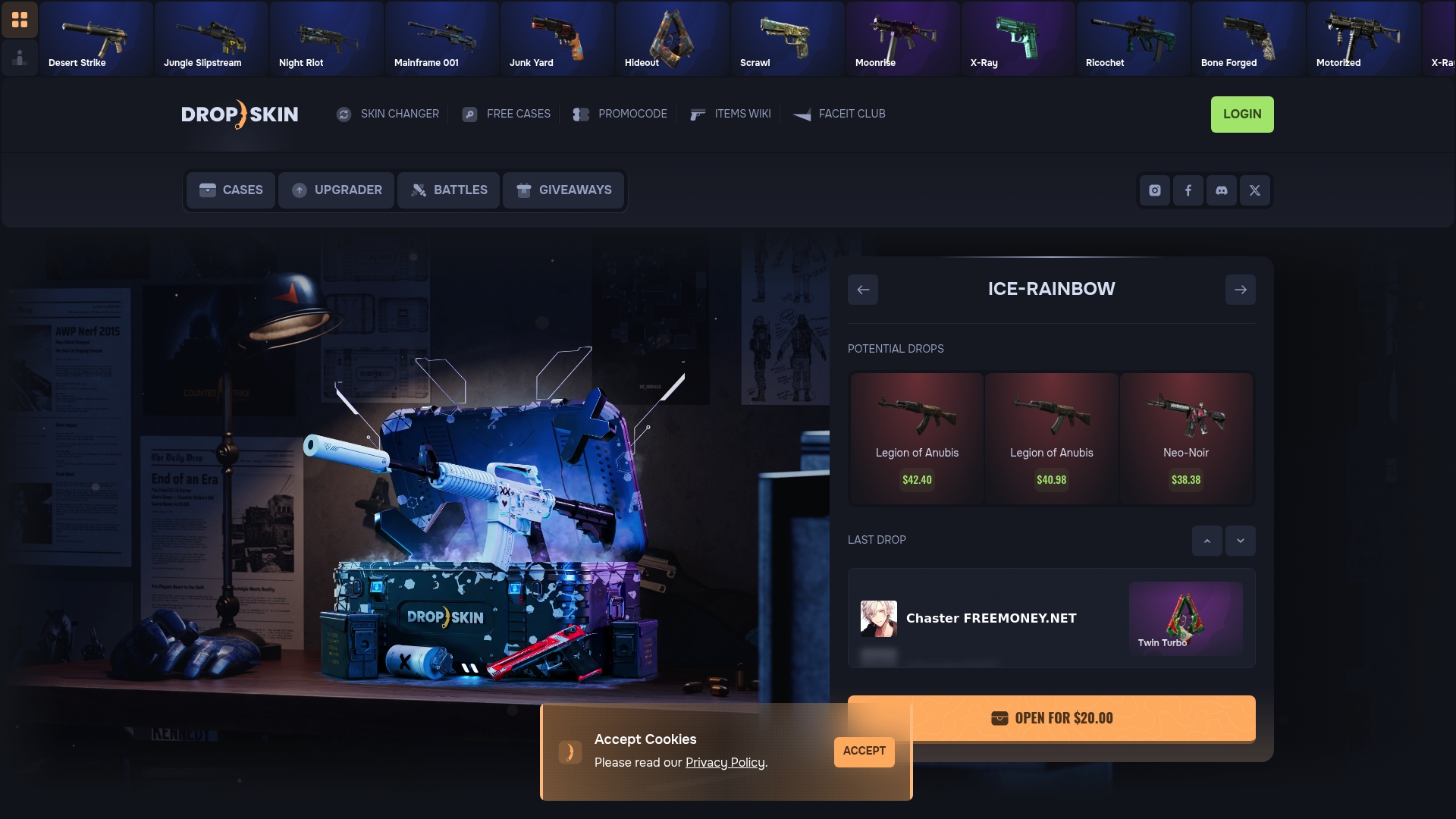
Discover how you can transform your current skins into more valuable assets through custom battle matches, purposeful skin upgrades, and case openings that maximize rarity and condition advantages. Don’t wait as market opportunities ebb and flow with esports events and trader demand. Visit Dropskin now and experience a vibrant marketplace where your skin strategy turns into real value. Explore how skin trading and upgrading can work for you and join the community that stays ahead of market shifts by actively managing their inventories.
Frequently Asked Questions
What factors determine the value of a skin in CS2?
The value of a CS2 skin is determined by supply and demand dynamics, historical price trends, player sentiment, and the skin's condition rather than just its design or rarity.
How does the rarity of a skin affect its market price?
Rarity directly impacts a skin's market price, with higher rarity tiers, such as Covert and Classified, typically resulting in higher values due to limited availability and increased competition among collectors.
What role does player experience play in skin demand?
Experienced players tend to drive demand for more expensive skins, as they are more likely to invest in premium items, creating consistent buying pressure in the market.
How can I evaluate the potential investment value of a CS2 skin?
To evaluate a skin's investment potential, track its historical price movements and consider market demand factors, such as community interest, condition, rarity, and any recent esports visibility that may affect its desirability.
Recommended
- CS2 Skin Changer - Trade & Exchange Skins | DROP.SKIN - Open CS2 Cases and Upgrade your Skins
- DROP.SKIN - Open CS2 Cases and Upgrade your Skins
- CS2 Skin Upgrader - Upgrade Skins Online | DROP.SKIN - Open CS2 Cases and Upgrade your Skins
- CS2 Skins Wiki - Price Check & Database | DROP.SKIN - Open CS2 Cases and Upgrade your Skins