
Staring at a lineup of flashy weapon skins and rare collectibles in your Counter-Strike inventory can spark a mix of excitement and frustration. Managing a skin collection is more than just picking favorites. It is a balancing act of tracking values, market trends, and trading strategies. Learning how to maximize the worth of your digital assets lets you make sharper decisions whether you are betting, selling, or swapping for something bigger. Gain clarity on what makes a skin inventory valuable and use key insights to sharpen your trading game.
Table of Contents
- Defining Skin Inventory In CS:GO And CS2
- Types Of Skins And Inventory Systems Explained
- How Inventory Value Is Determined
- Key Uses And Strategies For Gamers
- Risks, Scams, And Safe Inventory Management
Key Takeaways
| Point | Details |
|---|---|
| Skin Inventory Importance | A player's skin inventory reflects their collection of digital assets, significantly impacting trading and investment strategies. |
| Valuation Factors | The worth of skins fluctuates based on rarity, condition, and market demand, necessitating constant monitoring. |
| Strategic Management | Implementing strategies like market timing and risk diversification can optimize skin inventory value. |
| Security Awareness | Players must adopt robust security measures to guard against risks like phishing and account hijacking. |
Defining Skin Inventory in CS:GO and CS2
In the world of Counter-Strike, a skin inventory represents the total collection of cosmetic items a player owns within the game. These digital assets go far beyond simple decorative elements, serving as a critical component of the trading and economic ecosystem in CS:GO and CS2. Dynamic skin collections showcase player preferences, investment strategies, and market trends.
A typical skin inventory encompasses several key categories of items:
- Weapon skins
- Knives
- Gloves
- Stickers
- Containers
- Agent characters
- Graffiti tags
The value of these items isn't static - it fluctuates based on multiple critical factors. Rarity, condition, and current market demand all play significant roles in determining a skin's worth. Professional players and serious traders meticulously track their inventory values, treating these digital assets like investment portfolios.
Skin inventories function as more than just visual customizations. They represent a complex micro-economy where players buy, sell, trade, and strategically manage their digital collections. Inventory tracking methods help players make informed decisions about potential trades or investments.
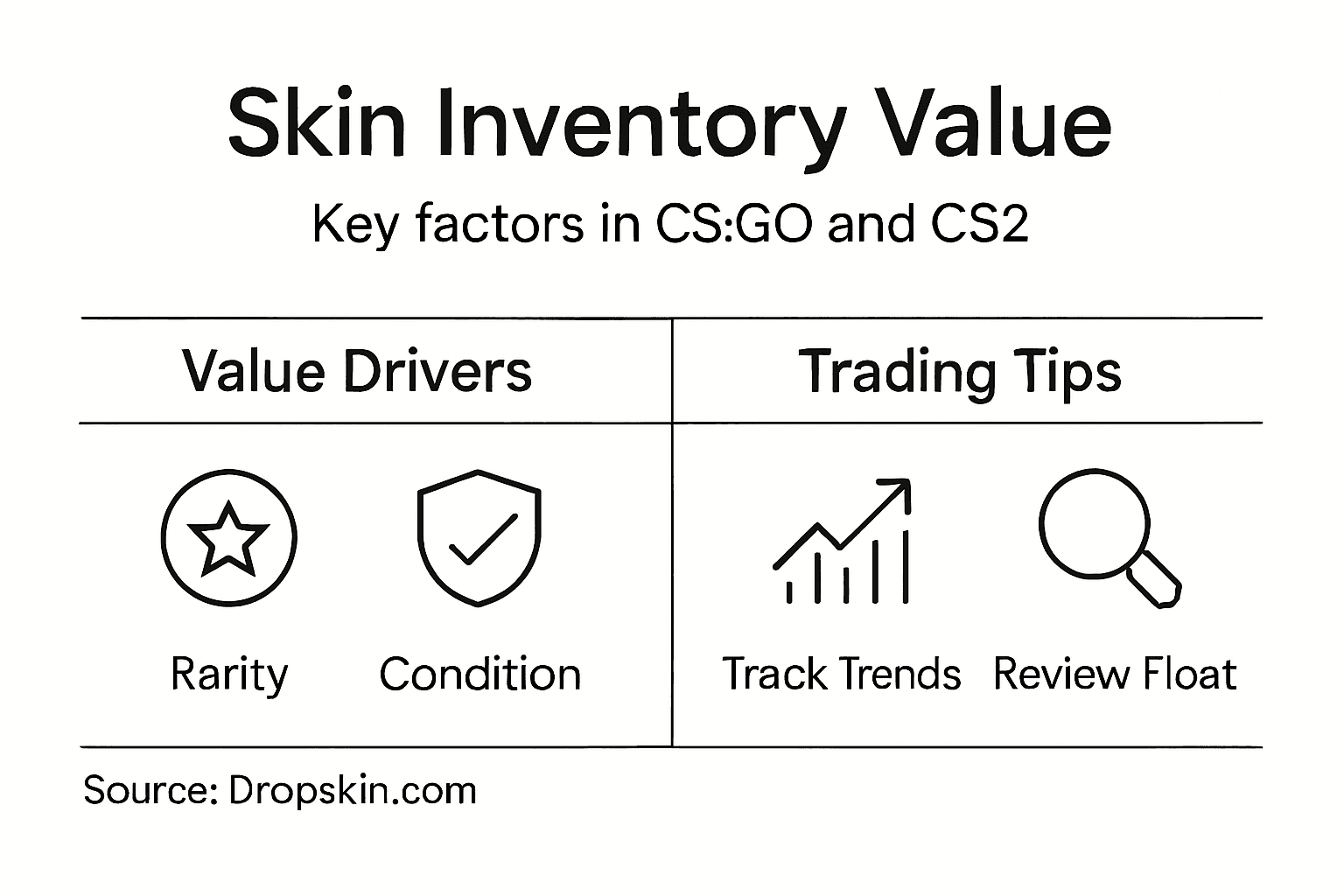
Pro Tip: Regularly monitor skin market trends and condition ratings to maximize your inventory's potential trading value.
Types of Skins and Inventory Systems Explained
CS:GO and CS2 skin inventories feature a diverse range of cosmetic items with complex classification systems. Players can collect multiple skin types that dramatically impact their overall trading and investment potential. Skin upgrader tools help players strategically manage and enhance their digital collections.
The primary categories of skins in Counter-Strike inventories include:
- Weapon Skins: Customized weapon appearances
- Knife Skins: Rare and highly valuable melee weapon designs
- Glove Skins: Unique hand covering aesthetics
- Sticker Capsules: Collectible decorative elements
- Agent Skins: Character model variations
- Case Containers: Potential skin unlocking mechanisms
Each skin category comes with its own unique valuation metrics. Weapon skins typically represent the most common inventory items, ranging from consumer-grade to contraband rarities. The condition of these skins - from Battle-Scarred to Factory New - plays a crucial role in determining their market value and desirability among traders.
Here's a quick comparison of the main skin types in Counter-Strike inventories and what makes each unique:
| Skin Type | Typical Value Range | Notable Feature | Rarity Presence |
|---|---|---|---|
| Weapon Skin | Low to very high | Widest design variety | All rarities |
| Knife Skin | Highest | Exclusive to rare cases | Mostly rare and ultra-rare |
| Glove Skin | Moderate to very high | Unique hand customization | Rare and limited (rare drops) |
| Sticker | Low to high | Applied for custom art | Limited/special editions exist |
| Agent Skin | Low to moderate | Changes character models | Typically event or operation |
| Container | Low to moderate | Unlocks other cosmetics | Priced by contents/potential |
| Graffiti Tag | Low | Temporary sprays | Often promotional or event-only |
Rarity tiers significantly influence skin pricing and collector interest. CS2 skin databases help players track the intricate valuation ecosystem, revealing how factors like float value, pattern quality, and special attributes can transform a basic skin into a high-value digital asset.
Pro Tip: Always examine a skin's wear rating, rarity, and market demand before making trading decisions.
How Inventory Value Is Determined
Skin inventory valuation in CS:GO and CS2 is a complex process involving multiple sophisticated factors. Steam inventory calculators provide players with real-time market insights that help track the constantly changing economic landscape of digital assets.
The primary factors influencing skin inventory value include:
- Rarity Tier: Consumer Grade to Contraband
- Wear Condition: Factory New to Battle-Scarred
- Float Value: Precise numerical wear measurement
- Pattern Quality: Unique visual characteristics
- Sticker Relevance: Special edition or tournament markings
- Historical Significance: Tournament or pro-player associations
Each skin's value is dynamically calculated through intricate market mechanisms. Float values represent microscopic variations in skin appearance, with lower float numbers typically commanding higher prices. Professional traders meticulously analyze these minute details to identify potentially undervalued or premium skins.

Inventory valuation techniques reveal that beyond technical specifications, player demand and cultural significance dramatically impact pricing. Rare skins associated with legendary tournament moments or popular professional players can exponentially increase in value, transforming seemingly ordinary digital assets into highly sought-after collectibles.
Pro Tip: Regularly monitor market trends and track float values to identify potentially undervalued skin investments.
Key Uses and Strategies for Gamers
Skin inventories in CS:GO and CS2 transcend mere cosmetic enhancements, serving as sophisticated investment platforms for strategic gamers. Inventory management techniques enable players to transform digital assets into potentially lucrative opportunities.
Key strategic approaches for managing skin inventories include:
- Hold Strategy: Preserving rare or limited edition skins
- Trading Optimization: Exchanging skins for higher-value items
- Market Timing: Selling at peak market values
- Collector Approach: Accumulating historically significant skins
- Risk Mitigation: Diversifying inventory across different skin types
- Performance Enhancement: Using skins to improve gameplay experience
Successful inventory management requires a nuanced understanding of market dynamics. Emotional detachment becomes crucial when treating skins as potential investments, allowing players to make rational decisions based on market trends rather than personal attachment. Professional traders often develop sophisticated tracking systems to monitor potential value appreciation and identify optimal trading windows.
Beyond financial considerations, skin inventories also offer significant gameplay and aesthetic advantages. Players can express individual style, demonstrate skill achievements, and create unique visual identities within the gaming ecosystem. The psychological satisfaction of owning rare or statistically significant skins adds an additional layer of engagement to the Counter-Strike experience.
Pro Tip: Develop a disciplined approach to skin collection, balancing emotional enjoyment with strategic financial considerations.
Risks, Scams, and Safe Inventory Management
The dynamic world of CS:GO and CS2 skin trading is fraught with potential risks, requiring players to develop robust security strategies. Inventory security practices have become essential in protecting valuable digital assets from sophisticated scamming techniques.
Common risks in skin inventory management include:
- Phishing Attempts: Fraudulent links and fake trading sites
- Account Hijacking: Unauthorized access to Steam accounts
- Trade Manipulation: Deceptive pricing and value misrepresentation
- Fake Middleman Scams: Impersonation of trusted trading intermediaries
- Malware Threats: Malicious software targeting gaming platforms
- Social Engineering: Psychological manipulation tactics
Professional traders emphasize the importance of multi-layered security approaches. This includes using Steam's official authentication methods, enabling two-factor verification, and maintaining strict protocols when engaging in trades. Verifying the reputation of trading platforms and counterparts becomes crucial in minimizing potential financial losses.
Safe trading environments demand constant vigilance and proactive security measures. Players should utilize official Steam APIs, employ verified third-party valuation tools, and maintain a skeptical approach to unsolicited trading offers. Understanding market dynamics and recognizing red flags can significantly reduce the risk of falling victim to sophisticated scamming techniques.
Below is a summary of common risks in CS skin trading and safe management strategies:
| Major Risk | Example Scenario | Effective Prevention Tip |
|---|---|---|
| Phishing Attempt | Fake trade link by scammer | Only access official Steam sites |
| Account Hijacking | Unauthorized login after leak | Enable Steam Guard and 2FA |
| Trade Manipulation | Inflated item value misinformation | Verify prices on trusted platforms |
| Malware Threat | Downloading infected game add-ons | Use reliable antivirus software |
| Fake Middleman | Impersonator in large trades | Double check Steam profile details |
| Social Engineering | Persuasion to reveal credentials | Never share sensitive information |
Pro Tip: Never share personal account information and always verify trading partners through multiple independent sources before completing any transaction.
Unlock the Full Potential of Your Skin Inventory with Dropskin.com
Understanding the complexities of your CS:GO or CS2 skin inventory is just the first step toward maximizing its value. The article highlights key challenges like tracking fluctuating skin conditions, rarity tiers, and market demand which can be overwhelming for many players. Whether you want to upgrade your skins, find better trading opportunities, or simply enjoy interactive battles using your collection, Dropskin.com offers solutions built to address these pain points. Experience how a controlled, entertainment-driven environment can help you transform affordable skins into premium assets while engaging in dynamic gameplay.
Ready to take control of your skin inventory and boost its trading power? Visit Dropskin.com to explore features like skin upgrades, case openings, and custom battle matches that perfectly complement your strategic inventory management. Don't wait to maximize your skins value—join a vibrant community where your collection can truly shine and grow now at Dropskin.com. Enhance your inventory management by learning more about the Skin Upgrader tool and discover the latest insights from the CS2 Skin Database to make smarter trade decisions.
Frequently Asked Questions
What is a skin inventory in CS:GO and CS2?
A skin inventory is the collection of cosmetic items a player owns in CS:GO and CS2, including weapon skins, knives, gloves, and more. These items are integral to the game's trading and economic ecosystem.
How is the value of skins determined in a player's inventory?
The value is influenced by factors such as rarity tier, wear condition, float value, pattern quality, and market demand. Players often use inventory valuation tools to assess their skins' worth in real-time.
What are the different types of skins players can collect?
Players can collect various skin types, including weapon skins, knife skins, glove skins, sticker capsules, agent skins, and containers. Each type has unique features and value ranges that impact trading potential.
What strategies can I use to maximize the trading value of my skin inventory?
Key strategies include holding onto rare skins, optimizing trades for higher-value items, monitoring market trends, and diversifying your collection to minimize risk while enhancing potential returns.
Recommended
- CS2 Skin Upgrader - Upgrade Skins Online | DROP.SKIN - Open CS2 Cases and Upgrade your Skins
- AML Policy - DROP.SKIN | DROP.SKIN - Open CS2 Cases and Upgrade your Skins
- CS2 Skins Wiki - Price Check & Database | DROP.SKIN - Open CS2 Cases and Upgrade your Skins
- DROP.SKIN - Open CS2 Cases and Upgrade your Skins