
Staring at a cluttered inventory packed with duplicates and low-value skins is a familiar headache for any CS:GO or CS2 trader. Finding a smarter way to turn those items into something rare can mean actual advantage in future trades or matches. Skin upgraders let you exchange several common skins for a shot at a higher-tier item, often showing clear probabilities and operating in secure environments. Discover which upgrader types and strategies fit your trading style, making your collection more competitive and easier to manage.
Table of Contents
- Skin Upgrader Explained For CS:GO And CS2
- How Skin Upgrade Systems Work Online
- Types Of Skin Upgraders And Main Features
- Risks, Fairness, And Legal Considerations
Key Takeaways
| Point | Details |
|---|---|
| Skin Upgraders Consolidate Inventory | Skin upgraders allow players to trade multiple low-value skins for a chance to receive a higher-value skin, streamlining inventory management. |
| Fee and Success Rate Awareness | Users should be aware of fees (5-15%) and understand the success rates of different platforms before making trades. |
| Security and Verification Processes | Reliable platforms ensure secure transactions and verify skin authenticity, protecting users from scams and ensuring fair upgrade odds. |
| Legal Considerations | Traders must be mindful of legal implications and account risks associated with third-party skin trading, as regulations vary by jurisdiction. |
Skin upgrader explained for CS:GO and CS2
A skin upgrader is a service that lets you trade multiple lower-value skins for a single higher-value skin, typically through a third-party platform. Think of it like a controlled risk system where you consolidate inventory clutter into something worth more.
Here's how the core mechanic works:
- You select 2-5 lower-tier skins from your inventory
- The platform pools their combined value
- You get a chance to receive a skin worth more than your initial investment
- Success rates depend on the value gap between what you trade in and what you're targeting
The reality is simpler than it sounds. Upgraders exchange multiple lower-tier skins for higher-tier ones, often charging a fee for the service. You're essentially betting that your combined inventory will convert into something rarer. It's not guaranteed—that's where the lottery element comes in.
Why traders use upgraders
You stop wasting inventory slots on duplicates and mid-tier skins that won't sell. Every CS:GO player has those 10-15 skins cluttering their backpack that are too cheap to market. Upgraders solve that problem.
The process happens in a secure environment, meaning the platform holds your items while processing the upgrade. You're not trading with random players—you're using an intermediary system that's documented and traceable.
Key reasons traders favor this:
- Consolidates trash-tier skins into one shot at value
- Faster than listing items individually on the market
- Works for players who want guaranteed outcomes (some upgraders offer fixed-rate conversions)
- Reduces inventory clutter significantly
- Allows strategic portfolio restructuring
The value of skin upgraders lies in converting dead inventory into active trading material—time savings matter when you manage dozens of skins.
The fee structure reality
Nothing's free. Upgraders take a cut, usually 5-15% of the value difference. If you're combining $40 worth of skins to chase a $50 skin, you're paying a fee on top. This affects your actual profit margin.
Some platforms offer tier-based upgrading, where you know exactly what you'll receive. Others use probability systems. Understanding which model you're using prevents surprises.
When comparing platforms, check their success rates and fee transparency. A platform that shows you the odds upfront beats one that keeps the math hidden.
Pro tip: Only upgrade skins you actually want to remove from your inventory—use upgraders for clearing clutter, not as a primary money-making strategy.
How skin upgrade systems work online
Online skin upgrade systems operate through a straightforward backend process that handles item validation, value calculation, and outcome determination. The entire transaction happens on the platform's servers, not peer-to-peer, which is why security and transparency matter.
Here's the basic workflow:
- You deposit your skins into the platform's escrow system
- The platform verifies each item's authenticity and current market value
- Your combined value gets pooled and matched against available upgrade outcomes
- The system determines success or failure based on probability tiers
- You receive your result—either the upgraded skin or a consolation item
The mechanics differ between platforms. Some use algorithmic matching, where your items automatically get compared to upgrade tiers in real time. Others use queue-based systems, where upgrades process in batches at scheduled intervals.
The backend verification process
Every skin uploaded gets scanned for authenticity and condition before entering the upgrade pool. The platform checks Steam market data, float values, and wear ratings to calculate actual worth.
This verification step is critical. Your $2 skin gets valued precisely, not rounded up or manipulated. The system won't let you upgrade with counterfeit or untradable items.
Key verification steps include:
- Float value scanning (determines exact wear level)
- Pattern ID confirmation (checks for rare skins within a tier)
- Market price matching (locks current value at submission time)
- Tradability status verification
- Duplicate detection (flags if you're cycling the same skin repeatedly)
Verification systems protect both you and the platform—they ensure upgrade odds are fair and based on real market data, not fabricated values.
Probability and outcome determination
Once your skins are verified and pooled, the platform calculates upgrade probability. This depends entirely on the value gap between your deposit and your target.
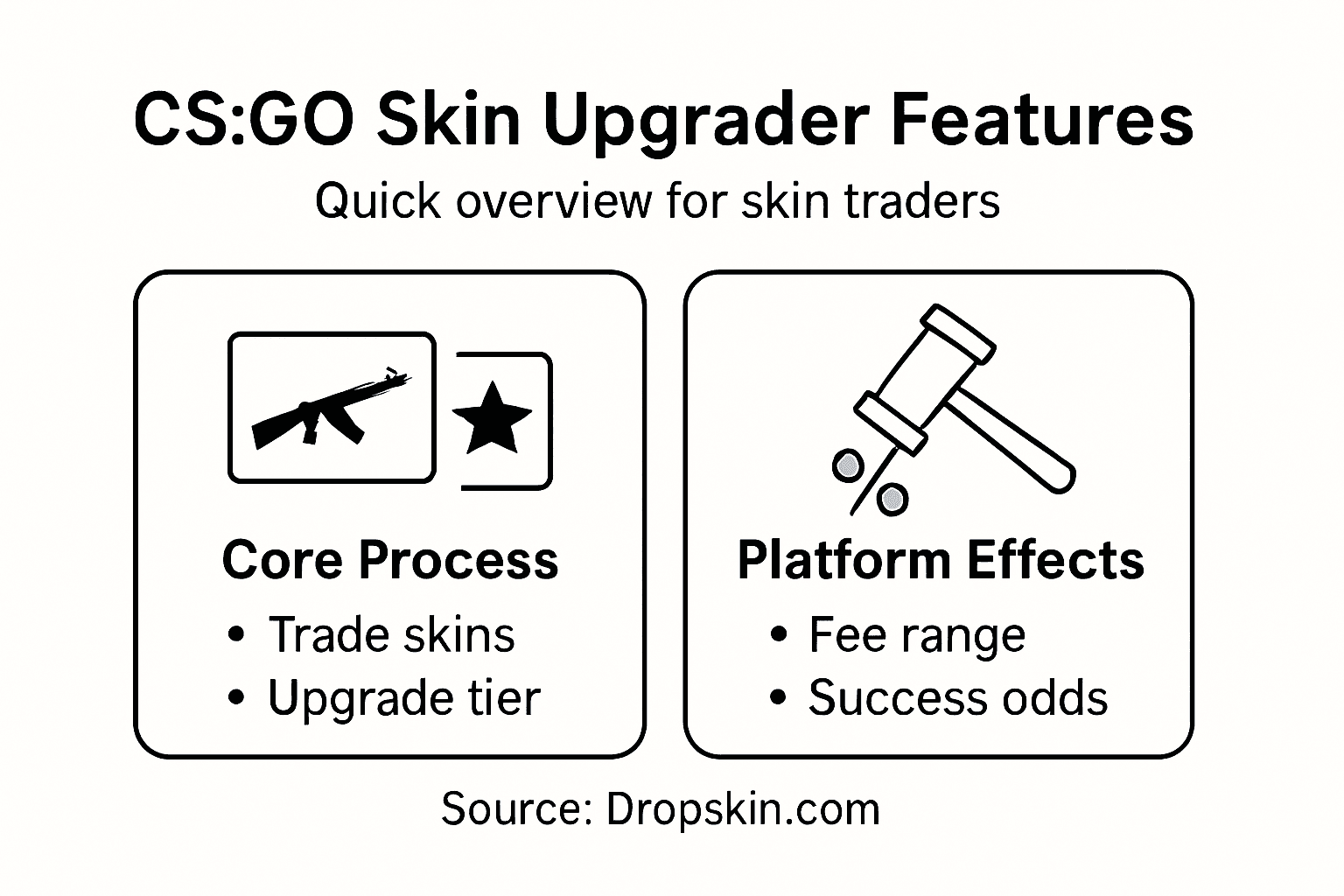
If you deposit $40 in skins targeting a $50 skin, your odds might be 40-60%, not guaranteed. If you target a $100 skin, odds drop significantly because the value jump is massive.
You can access real-time skin pricing data to understand how your current inventory values against upgrade targets. This helps you calculate realistic odds before committing.
The algorithm considers:
- Total deposit value versus target skin value
- Rarity of the target item
- Platform inventory availability
- Your account history (repeat users sometimes get better odds)
Understanding these variables prevents disappointment. You'll know exactly why certain upgrades have low success rates.
Pro tip: Always check upgrade success percentages before submitting—platforms that hide odds upfront are worth avoiding.
Types of skin upgraders and main features
Not all skin upgraders work the same way. Understanding the different types helps you pick the right platform for your trading style and risk tolerance. Each type offers distinct mechanics and payoff structures.
The main upgrader categories break down like this:
Here's a quick comparison of common skin upgrader types and their payout models:
| Upgrader Type | Outcome Model | Potential Benefit | Typical User |
|---|---|---|---|
| Standard | Fixed odds, single skin | Predictable upgrade result | Risk-averse traders |
| Lottery-style | Probability-based win | High-value chance, less predict | Gamblers, risk-takers |
| Cashback | Partial refund on loss | Reduces total loss after failure | Casual users, new traders |
| Consolation Prize | Lower-tier skin given | Minimizes losing everything | All risk levels |
| Multiplier | Bonus/discount rewards | Extra value with activity | Frequent platform users |
- Standard upgraders: Trade multiple low-value skins for one high-value skin with fixed odds
- Lottery-style systems: Use probability-based outcomes with visible win rates displayed upfront
- Cashback upgraders: Return a percentage of your loss if the upgrade fails, softening the blow
- Consolation prize models: Give you a lower-tier skin instead of total loss on failed upgrades
- Multiplier systems: Offer bonus skins or discounts on future upgrades based on account activity
Core features across platforms
Regardless of type, quality upgraders share certain baseline features. Upgrader systems offer secure trading environments where your items stay protected during the entire process.
A user-friendly interface matters more than you'd think. You shouldn't need five minutes to figure out how to submit an upgrade. Good platforms make the process intuitive—select skins, pick your target, confirm odds, done.
Key features to look for:
- Real-time probability displays (no guessing your odds)
- Instant withdrawal to Steam or external wallets
- Transaction history tracking (audit your upgrades over time)
- Skin preview before committing
- Mobile optimization (upgrade on the go)
- Customer support availability (for when things break)
The best upgraders show you everything upfront—odds, fees, withdrawal methods—before you deposit a single skin.
Payment and withdrawal variations
Different platforms offer different ways to fund upgrades and cash out results. Some connect directly to your Steam inventory, while others require cryptocurrency or credit card payments.
Withdrawal speed matters too. Some platforms process instantly; others batch withdrawals every 24 hours. If you need fast access to your upgraded skins for selling, this becomes critical.
Common payment options include:
To help you navigate platform selection, here's a summary of payment and withdrawal options:
| Method | Funding Speed | Withdrawal Speed | Security Level |
|---|---|---|---|
| Steam Inventory Linking | Instant | Instant | Highest |
| Cryptocurrency | Fast | Instant/Batched | High |
| Credit/Debit Card | Instant | Batched | Moderate |
| PayPal | Instant | Batched | Medium (risk of disputes) |
- Direct Steam inventory linking (fastest, most secure)
- Cryptocurrency deposits (Bitcoin, Ethereum)
- Credit and debit card funding
- PayPal integration (less common due to chargebacks)
Always verify withdrawal methods before upgrading. You don't want your upgraded skin stuck in limbo because the platform doesn't support your preferred withdrawal method.
Pro tip: Compare three platforms before committing—check their fee structures, withdrawal speed, and customer reviews to avoid upgrader platforms with hidden costs or slow payouts.
Risks, fairness, and legal considerations
Skin upgraders exist in a gray zone legally. They're not traditional gambling in most jurisdictions, but they're not entirely unregulated either. Understanding the risks protects you from surprises down the line.
The primary risk categories include:
- Account suspension: Steam can ban accounts involved in third-party skin trading if terms are violated
- Platform exit scams: Upgrader sites can disappear with user funds; escrow systems aren't always secure
- Probability manipulation: Some platforms claim fair odds but secretly rig upgrade chances
- Tax implications: Upgrading skins for profit may trigger tax obligations in your jurisdiction
- Payment fraud: Chargebacks on credit cards can result in account bans or legal liability
Fairness and transparency gaps
Most legitimate upgrader platforms publish their odds, but verification remains difficult. You can't independently confirm whether stated probabilities match actual results without statistical analysis over hundreds of upgrades.
Platforms operating outside regulated jurisdictions face zero oversight. This means unfair odds, hidden fees, and lack of customer recourse if something goes wrong.
Red flags to watch for:
- No published success rates or hidden probability information
- Fees that change without notice
- Slow or missing customer support responses
- Recent platform launch with heavy promotional pressure
- No clear terms of service or privacy policy
- Withdrawal requests that mysteriously fail
Transparency isn't optional—platforms that hide their mechanics or odds deserve your skepticism, not your money.
Legal gray areas and jurisdiction concerns
Skin upgraders occupy unclear legal territory across most countries. Some governments classify them as gambling; others treat them as legitimate trading services. Your location determines your actual legal exposure.
In jurisdictions treating upgraders as gambling, you might violate age restrictions or unlicensed gambling laws by participating. Some banks and payment processors flag these transactions as high-risk, potentially freezing accounts.
Key legal considerations:
- Age restrictions (usually 18+, sometimes 21+ depending on location)
- Gambling classification status in your country
- Know Your Customer (KYC) requirements for deposits over certain amounts
- Tax reporting obligations on profits
- Terms of Service violations with Steam or game publishers
Before using any upgrader platform, research your local regulations. What's legal in Canada might be illegal in your state or country.
Pro tip: Start with small upgrades on established platforms with clear terms of service and transparent odds—this minimizes financial risk while you evaluate whether upgraders fit your trading strategy.
Transform Your CS:GO Skins with Ease Using Dropskin.com
If you find yourself overwhelmed by inventory clutter or hesitant to risk your valuable skins in uncertain upgrade systems, Dropskin.com offers a perfect solution tailored to your needs. The article highlights how skin upgraders help consolidate low-tier skins into higher-value ones through controlled risk and probability. Dropskin.com takes this experience further by combining skin upgrades with interactive battles and custom matches that make trading exciting and rewarding. Benefit from transparent upgrade odds, a secure trading environment, and a dynamic platform built specifically for CS:GO and CS2 traders like you.
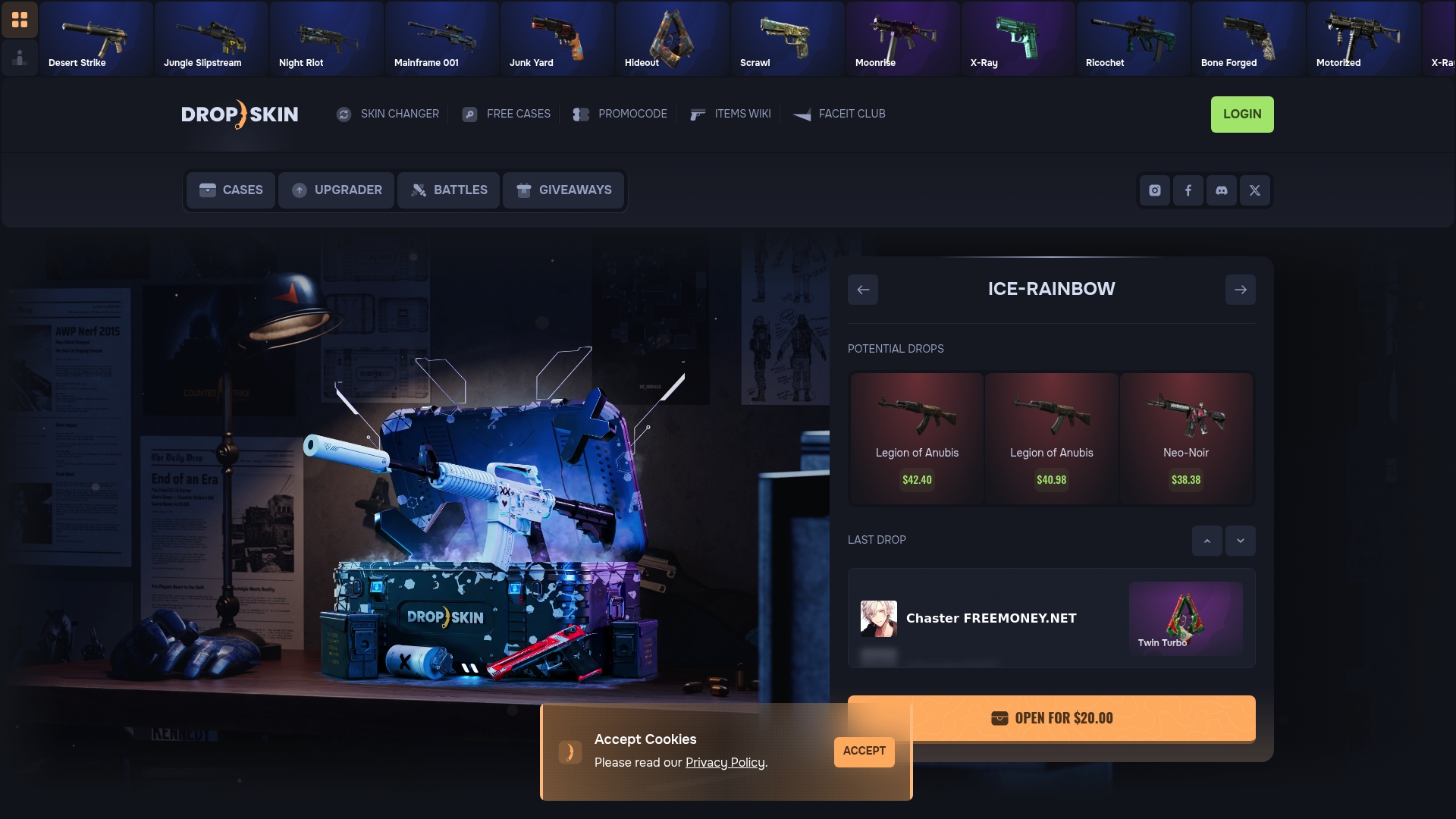
Start converting your unwanted skins into valuable rewards today while enjoying case openings, giveaways, and unique skin changers. Don’t let your inventory sit idle or lose value in obscure upgrade sites. Visit Dropskin.com, explore the skin upgrade feature, and engage with a vibrant community that shares your passion for CS skin trading and gaming excitement. Take control of your inventory and experience skin upgrading with confidence now!
Frequently Asked Questions
What is a skin upgrader in CS:GO?
A skin upgrader is a service that allows players to trade multiple lower-value skins for a single higher-value skin, typically using a third-party platform. It operates as a risk-controlled system where combined inventory can convert into something more valuable.
How do skin upgraders determine success rates?
Success rates are determined by the value gap between the skins you trade in and the skin you're targeting. The larger the difference in value, the lower the odds of success, as the overall probability is impacted by the rarity and availability of the target item.
Are there fees associated with using skin upgraders?
Yes, skin upgraders usually charge a fee that typically ranges from 5% to 15% of the value difference between your traded skins and the target upgrade skin. This fee can affect your overall profit margin, so it's important to factor it in.
What types of skin upgraders are available?
There are various types of skin upgraders, including standard, lottery-style, cashback, consolation prize, and multiplier systems. Each type offers different mechanisms for outcomes and risk levels, catering to different trader preferences.