
Opening your inventory after an intense Counter-Strike match, it's clear that skins are more than just flashy weapon upgrades—they're the backbone of a thriving market where style meets real value. With thousands of traders and gamblers shaping prices every day, understanding these digital assets can mean the difference between quick profits and costly mistakes. Get ready to see why digital skins have become an emerging asset class, connecting personal identity with strategic investments for players worldwide.
Table of Contents
- What Are Digital Skins in Gaming
- Why Skins Matter Beyond Looks
- The Economic Reality of Skins
- How Skins Connect to Player Identity
- Skins as Tradeable Assets
- Types of Skins and How They Differ
- The Rarity Classification System
- Condition Ratings and Float Values
- Design and Visual Rarity
- Market Demand and Regional Preference
- How to Identify Valuable Skins
- How Skin Trading and Gambling Work
- Understanding Skin Trading
- How Skin Gambling Functions
- The Economics of Skin Markets
- Risk Management in Trading and Gambling
- Choosing Your Approach
- Value, Rarity, and Market Dynamics
- The Core Value Drivers
- How Supply and Demand Shape Prices
- Condition Grades and Float Economics
- Tournament Impact and Seasonal Trends
- Building Value Through Strategic Collecting
- Risks, Pitfalls, and Safe Practices
- Gambling Addiction and Financial Harm
- Security Threats and Account Protection
- Market Volatility and Investment Risk
- Fraud and Scam Prevention
- Building a Sustainable Strategy
Key Takeaways
| Point | Details |
|---|---|
| Digital Skins Are Aesthetic Customizations | Skins provide visual enhancements for characters and weapons in games, allowing players to express their personal style without impacting gameplay. |
| Economic Asset Class | Skins have evolved into tradable assets with real economic value, often treated as investments in virtual economies. |
| Player Identity and Engagement | Customized skins enhance player identity, increasing engagement and emotional connection to games through self-expression. |
| Market Dynamics and Value Fluctuation | The skin market is influenced by rarity, condition, and professional player usage, making it essential for traders to stay informed on trends and shifts. |
What Are Digital Skins in Gaming
Digital skins are cosmetic items you can equip in video games that change how your character or weapon looks without affecting gameplay mechanics. Think of them like clothing customization—they're purely visual upgrades. In Counter-Strike, skins transform the appearance of your weapons, letting you express personal style through your arsenal.
Unlike gameplay-changing equipment, skins exist purely for aesthetics. Your M4A4 with a Dragon King skin performs identically to a factory-standard version. The difference is purely visual presentation.
Why Skins Matter Beyond Looks
Skins have evolved far beyond simple cosmetics. Research shows that cosmetic digital items function as an emerging asset class with measurable economic and social value within gaming communities. They're not just decoration—they're a form of personal identity expression.
They serve several key purposes for players:
- Visual identity: Express your gaming personality and style preferences
- Status symbol: Rare or expensive skins signal investment and dedication
- Community belonging: Specific skins connect you to gaming subcultures
- Economic value: Skins can be traded, sold, or held as investments
- Collectibility: Building themed collections provides long-term engagement
Skins have transformed from cosmetic items into a recognized economic asset class with portfolio and investment characteristics comparable to traditional collectibles.
The Economic Reality of Skins
Skins aren't just virtual decorations anymore. Thousands of traders and investors actively buy, sell, and hold skins as part of their gaming strategy. The market encompasses over 3,000 distinct cosmetic items across Counter-Strike, each with fluctuating values based on rarity, demand, and condition.
Condition ratings significantly impact skin value. Factory New versions command premium prices compared to Field-Tested or Minimal Wear variants of the same design. Float values (wear ratings) create micro-markets within the skin ecosystem.
How Skins Connect to Player Identity
Skins enable players to purchase in-game representation that reflects their personal brand within competitive environments. Your weapon choices tell a story about who you are as a player. Matching skin themes across your weapon loadout creates cohesive presentation.

This goes beyond vanity. Psychological research confirms that owning customized items increases player engagement and emotional connection to games.
Skins as Tradeable Assets
The skin market operates like a miniature financial system. Prices fluctuate based on supply, demand, game updates, and professional esports exposure. Some skins appreciate significantly over time, while others depreciate as the meta shifts.
Key trading concepts to understand:
- Float values: Numerical wear ratings that differentiate identical skins
- Rarity tiers: Covert, Classified, Restricted, Mil-Spec, Industrial Grade, Consumer Grade
- Market demand: Professional player usage directly impacts skin desirability
- Seasonal trends: Major tournaments and updates create buying surges
Pro tip: Track professional esports matches and tournament results to anticipate which weapon skins will spike in demand, giving you advance knowledge of profitable trading opportunities.
Types of Skins and How They Differ
Not all skins are created equal. Counter-Strike skins vary dramatically in appearance, rarity, and market value. Understanding these differences helps you make smarter trading and collection decisions.
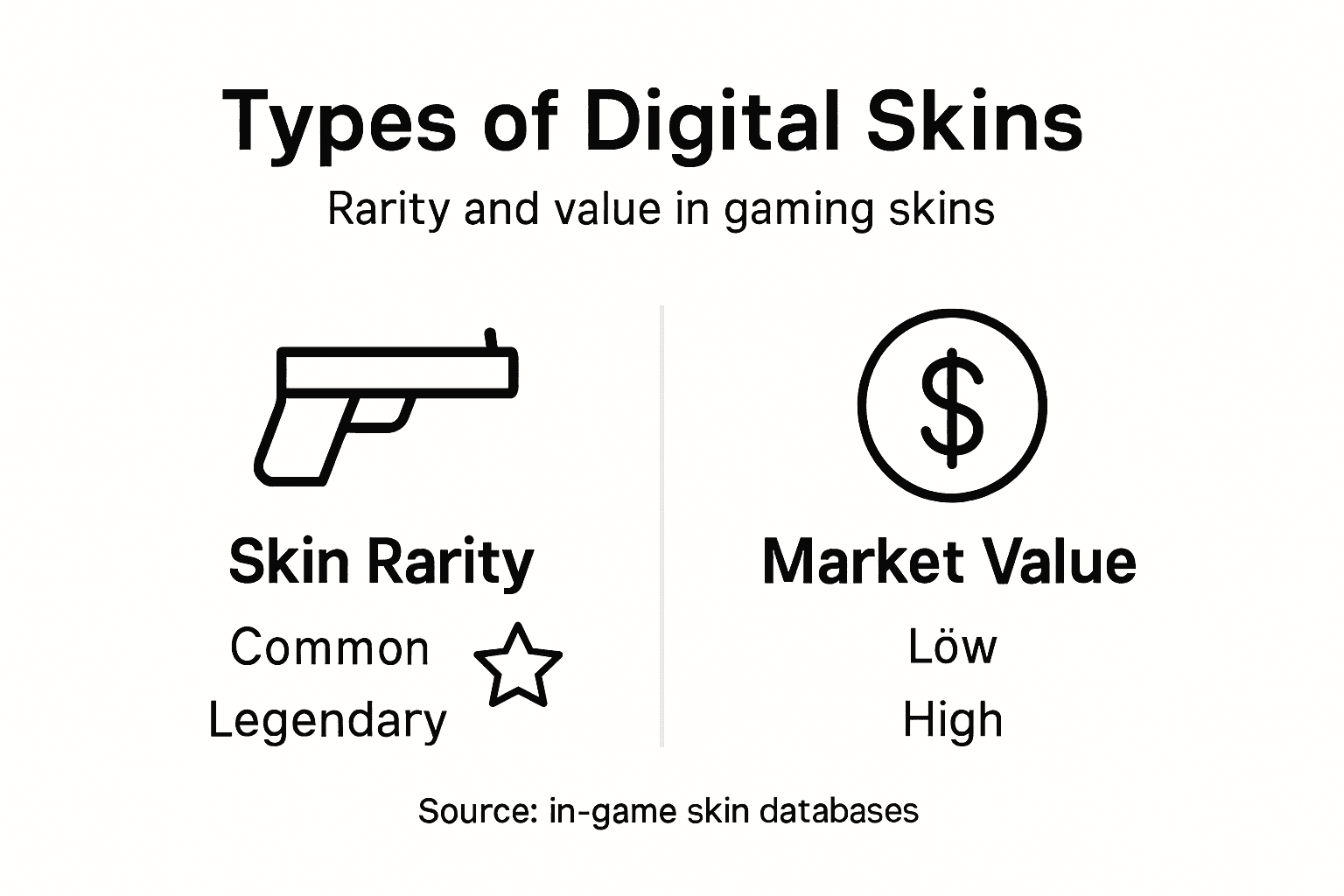
Skins differ based on several core factors that determine their appeal and investment potential. Rarity classifications range from common to legendary, with each tier commanding vastly different price points. Design complexity, color schemes, and visual intricacy also influence how much players value specific skins.
The Rarity Classification System
Rarity tiers form the backbone of skin categorization in Counter-Strike. Each tier represents availability and exclusivity within the game's economy.
The standard rarity breakdown includes:
- Consumer Grade: Most common, lowest cost, easiest to obtain
- Industrial Grade: Common skins with decent aesthetics
- Mil-Spec: Military-Spec tier, starting to increase in visual appeal
- Restricted: Rarer than Mil-Spec, noticeably more detailed designs
- Classified: Significantly scarcer, premium visual quality
- Covert: Extremely rare, highest-tier designs with exceptional detail
- Exceedingly Rare: Souvenir and special editions from tournaments
Rarity directly correlates with both market price and collector demand. Covert skins can cost 100 times more than Consumer Grade versions of similar designs.
Condition Ratings and Float Values
Condition dramatically impacts skin value even within the same rarity tier. Two identical skins with different wear ratings trade at vastly different prices.
The five condition tiers are:
- Factory New: Freshly unboxed, minimal visible wear
- Minimal Wear: Barely used, near-perfect appearance
- Field-Tested: Moderate wear, visible but not severe damage
- Well-Worn: Heavy visible wear, scratches and scuffs apparent
- Battle-Scarred: Maximum wear, heavily damaged appearance
Float values provide precise wear measurements. A Factory New M4A4 with a float of 0.01 costs significantly more than the same skin at 0.07 float value, even though both are technically Factory New.
Use this table to see how skin condition impacts market value and collector interest:
| Condition Tier | Visual Appearance | Market Price Impact | Collector Appeal |
|---|---|---|---|
| Factory New | Pristine, no visible wear | Highest premium | Extremely high |
| Minimal Wear | Near-perfect | Slightly lower premium | Strong |
| Field-Tested | Moderate visible wear | Average market value | Moderate |
| Well-Worn | Heavily worn, scratched | Discounted pricing | Low |
| Battle-Scarred | Major damage and marks | Deeply discounted | Very low |
Design and Visual Rarity
Some skins cost more because of their visual appeal, not just rarity tier. A Classified skin with an intricate, detailed design outperforms a Covert skin with boring aesthetics in market demand.
Design categories that drive value include:
- Pattern variability: Skins with random paint patterns have valued stencils
- Color contrast: Vibrant, eye-catching color schemes attract premium prices
- Professional association: Skins used by pro players in tournaments spike in demand
- Limited editions: Tournament Souvenir versions command astronomical premiums
Market Demand and Regional Preference
Global player preferences influence which skins command the highest prices. Asian markets value certain aesthetic themes differently than Western players. Pro player endorsements create sudden demand surges for specific skins.
Seasonal factors matter too. After major esports tournaments, weapon skins used by winning teams experience price increases from collector interest.
How to Identify Valuable Skins
Use the CS2 skins price database to compare market values across condition ratings and rarity tiers. Market data reveals which skins appreciate versus depreciate over time. Trading volume indicates which skins have active buyer interest.
Pro tip: Focus on low-float Factory New versions of Restricted and Classified skins with vibrant designs—these hold value better than high-float Covert skins because they balance investment cost with scarcity appeal.
How Skin Trading and Gambling Work
Skin trading and gambling represent two distinct but interconnected activities within the Counter-Strike economy. Understanding how both work helps you navigate opportunities and avoid pitfalls in this complex market.
Trading involves buying and selling skins between players through authorized platforms or peer-to-peer exchanges. Gambling involves staking skins on chance-based games where outcomes determine whether you gain or lose your wagers. Both activities create liquidity and price fluctuations that shape the overall skin economy.
Understanding Skin Trading
Trading is the primary method players use to acquire specific skins without spending additional money. You find a skin you want, negotiate a price, and exchange it with another player or platform.
Common trading methods include:
- Platform exchanges: Official Steam Community Market and third-party authorized marketplaces
- Peer-to-peer trading: Direct negotiations between players using escrow services
- Batch trading: Exchanging multiple low-value skins for one higher-value skin
- Pattern trading: Targeting specific float values or paint patterns within the same skin type
Skin values fluctuate based on supply, demand, and market conditions. A skin worth $15 today might be $12 next month if the meta shifts or tournament hype fades. Successful traders track these fluctuations and profit from price discrepancies across platforms.
How Skin Gambling Functions
Skins gambling involves betting virtual items on chance-based games where outcomes are determined by random number generators or game mechanics. Players stake skins and either win additional skins or lose their wagers based on the game outcome.
Common gambling formats include:
- Case openings: Spending skins to open virtual cases containing random rewards
- Crash games: Predicting when a multiplier will crash before it does
- Roulette: Wagering skins on color or number outcomes
- Battle matches: Two players stake skins and fight for combined rewards
- Coin flips: 50/50 chance games with instant results
Gambling and trading both move money between players, but gambling's random outcomes create winners and losers, while trading success depends on market knowledge and timing.
The Economics of Skin Markets
Skins function as virtual currency with values determined by rarity and desirability. This creates a parallel economy where skins maintain purchasing power across multiple platforms and marketplaces globally.
Price discovery happens through:
- Active buyer and seller competition establishing equilibrium prices
- Professional player usage influencing demand for specific weapon skins
- Tournament exposure creating temporary price spikes
- Seasonal trends from new case releases and map rotations
Risk Management in Trading and Gambling
Trading carries lower risk than gambling because you control the terms. You research prices, negotiate carefully, and decide whether deals represent value.
Gambling introduces random outcomes beyond your control. House advantages ensure long-term losses for most players. Even professional gamblers experience significant variance and occasional bankruptcy.
Choosing Your Approach
Traders focus on price research and market timing. Using tools like the skin upgrader helps you identify undervalued skins and upgrade opportunities strategically. Gambling focuses on entertainment value and accepting that you might lose your stake.
Most successful players combine both approaches strategically. They trade to build bankrolls, gamble occasionally with profits, and reinvest winnings into higher-tier skins.
Pro tip: Track price trends over 2-4 weeks before committing significant capital to trades, and never gamble with skins you cannot afford to lose permanently.
Here's a quick comparison of skin trading and gambling outcomes:
| Aspect | Skin Trading | Skin Gambling |
|---|---|---|
| Risk Level | Controlled and research-based | High, outcome based on chance |
| Main Purpose | Profit, collecting, upgrading | Entertainment, risk-taking |
| Typical Result | Gradual profit or loss | Win big or lose everything |
| Success Factors | Market knowledge, timing, negotiation | Luck, random number generators |
Value, Rarity, and Market Dynamics
Skin values aren't arbitrary. They're determined by measurable factors that create a predictable market where informed decisions lead to profits. Understanding what drives value helps you recognize opportunities others miss.
Digital skins function as valuable assets traded on secondary markets with prices reflecting supply, demand, and player sentiment. The same skin can trade at wildly different prices depending on condition, float value, and current market trends. This volatility creates both risk and opportunity.
The Core Value Drivers
Multiple factors combine to determine what players pay for specific skins. Rarity alone doesn't guarantee value—a rare skin nobody wants trades for less than a common skin every pro player uses.
Primary value drivers include:
- Rarity tier: Covert skins cost exponentially more than Mil-Spec variants
- Condition rating: Factory New commands 200-300% premiums over Battle-Scarred versions
- Float precision: 0.001 floats sell for significantly more than 0.070 floats
- Professional usage: Skins used by championship-winning teams spike in demand
- Aesthetic appeal: Vibrant designs outperform bland color schemes consistently
- Scarcity: Limited souvenir editions from major tournaments achieve premium valuations
How Supply and Demand Shape Prices
Supply stays relatively fixed—Valve doesn't create new skins from old cases. But demand fluctuates dramatically based on game updates, tournament schedules, and player sentiment.
When a weapon receives a balance buff, skins for that weapon suddenly become more desirable. Professional players adopting new strategies shifts demand toward previously unpopular skins. Major esports tournaments create temporary spikes in weapon-specific demand.
Market dynamics mirror traditional asset markets where scarcity meets desire equals value. Limited supply combined with high demand creates exponential price increases.
Condition Grades and Float Economics
Rarity tiers and condition grades fundamentally affect valuation throughout the skin market. A Factory New Dragon King M4A4 with 0.01 float trades at 3-5 times the price of the same skin at 0.06 float, even though both are technically Factory New.
Minimal Wear skins with low floats often provide better value than Factory New skins with high floats. Smart collectors hunt these discrepancies where condition precision creates arbitrage opportunities.
Tournament Impact and Seasonal Trends
Major esports events create predictable trading patterns. Teams announce their weapon lineups, professional players showcase specific skins during tournaments, and collectors rush to acquire matching gear.
Prices typically:
- Rise during tournament announcements and group stages
- Peak during playoff matches with maximum viewership
- Decline 2-4 weeks post-tournament as hype fades
- Stabilize at new equilibrium if the meta permanently shifts
Seasonal map rotations and weapon balance changes create secondary waves of demand that astute traders anticipate months in advance.
Building Value Through Strategic Collecting
Collecting specific themes creates portfolio effects where related skins appreciate together. Weapon lineups match pro team aesthetics, creating cohesive collections that outperform random acquisitions.
Strategic collection focus includes:
- Weapon classes: Collecting all AK-47 Dragon King variants across conditions
- Themes: Asian-inspired designs, animal patterns, or specific color palettes
- Professional ties: Skins associated with championship-winning teams
- Low-float hunting: Building collections of Factory New skins under 0.02 float
Pro tip: Monitor professional player streams and esports tournament schedules to anticipate weapon preference shifts, then acquire undervalued skins for those weapons 2-3 weeks before major tournaments when demand spikes.
Risks, Pitfalls, and Safe Practices
Skin trading and gambling carry real risks that can drain your bankroll or compromise your account security. Understanding these dangers upfront helps you avoid costly mistakes that devastate unprepared players.
The skin market isn't regulated like traditional financial markets. No consumer protections guarantee your funds, no insurance covers losses, and scammers operate with relative impunity. This means you're entirely responsible for protecting yourself through smart practices.
Gambling Addiction and Financial Harm
Skins gambling presents significant addiction and financial harm risks due to unregulated platforms and minimal age verification safeguards. The random rewards structure mirrors slot machines, creating psychological hooks that exploit susceptible players, particularly younger gamers without developed impulse control.
Dangerous patterns include:
- Chasing losses: Gambling more to recover previous losses
- Variable rewards: Occasional big wins creating addiction cycles
- Sunk cost fallacy: Continuing to gamble because you've already invested heavily
- Underage exposure: Minors accessing gambling platforms without ID verification
- Account compromise: Hacked accounts emptied by thieves gambling your skins away
Gambling sites profit when players lose. House advantages ensure mathematical certainty that casual gamblers lose money long-term, regardless of skill level or luck streaks.
Security Threats and Account Protection
Secure trading demands awareness of fraud risks and account security challenges that expose careless traders to permanent losses. Phishing emails, malware, and social engineering cost traders thousands of dollars annually through stolen skins and account takeovers.
Critical security measures include:
- Two-factor authentication: Enable on Steam and email accounts immediately
- Unique passwords: Never reuse passwords across multiple sites
- Email verification: Confirm trading partner identity before transferring skins
- Trusted platforms: Trade only through official marketplaces or escrow services
- Link verification: Hover over links before clicking to confirm legitimate URLs
Market Volatility and Investment Risk
Skin values fluctuate unpredictably. A $200 skin can drop 40-50% in value overnight if the meta shifts, tournament interest fades, or Valve releases competing alternatives. You might buy at the peak only to watch your investment depreciate while holding.
Volatility sources include:
- Balance patch announcements changing weapon popularity
- Professional player preference shifts creating demand cascades
- New case releases flooding the market with superior alternatives
- Tournament schedule changes affecting seasonal demand patterns
- Game updates introducing competing cosmetics
Fraud and Scam Prevention
Scammers exploit FOMO (fear of missing out) by offering deals too good to be true. Counterfeit skins, fake marketplace listings, and bait-and-switch tactics separate careless traders from their bankrolls.
Common scams to avoid:
- Middleman impersonation claiming to facilitate trades
- Fake marketplace listings appearing legitimate but redirecting to phishing pages
- Price manipulation schemes coordinating artificial demand
- Account hijacking through credential compromise
- Souvenir skin counterfeits mimicking authentic tournament drops
Building a Sustainable Strategy
Successful long-term skin collectors treat this like investing, not gambling. They research before buying, diversify across multiple skins, and accept that some purchases lose value. Emotional decisions—buying on FOMO or gambling during frustration—consistently destroy accounts.
Healthy practices include:
- Only trading with capital you can afford to lose completely
- Setting strict budgets and never exceeding them
- Avoiding gambling platforms entirely
- Tracking all transactions for personal accountability
- Taking breaks when frustrated or experiencing consecutive losses
Pro tip: Set a monthly spending limit in dollars before trading season starts, then stick rigidly to it regardless of market opportunities or pressure from other players.
Unlock the Full Potential of Your Digital Skins with Dropskin.com
The article reveals how digital skins are more than just cosmetic items They hold real economic value create personal identity and fuel a vibrant trading ecosystem Yet navigating the complexities of rarity tiers condition grades and market dynamics can be overwhelming. Many players struggle to turn their skins into meaningful assets or find affordable ways to collect premium designs while avoiding risks like market volatility or gambling pitfalls. This is where Dropskin.com comes in offering a dynamic platform designed to help you upgrade skins, participate in custom battle matches, and engage with a supportive community focused on smart trading and entertainment.
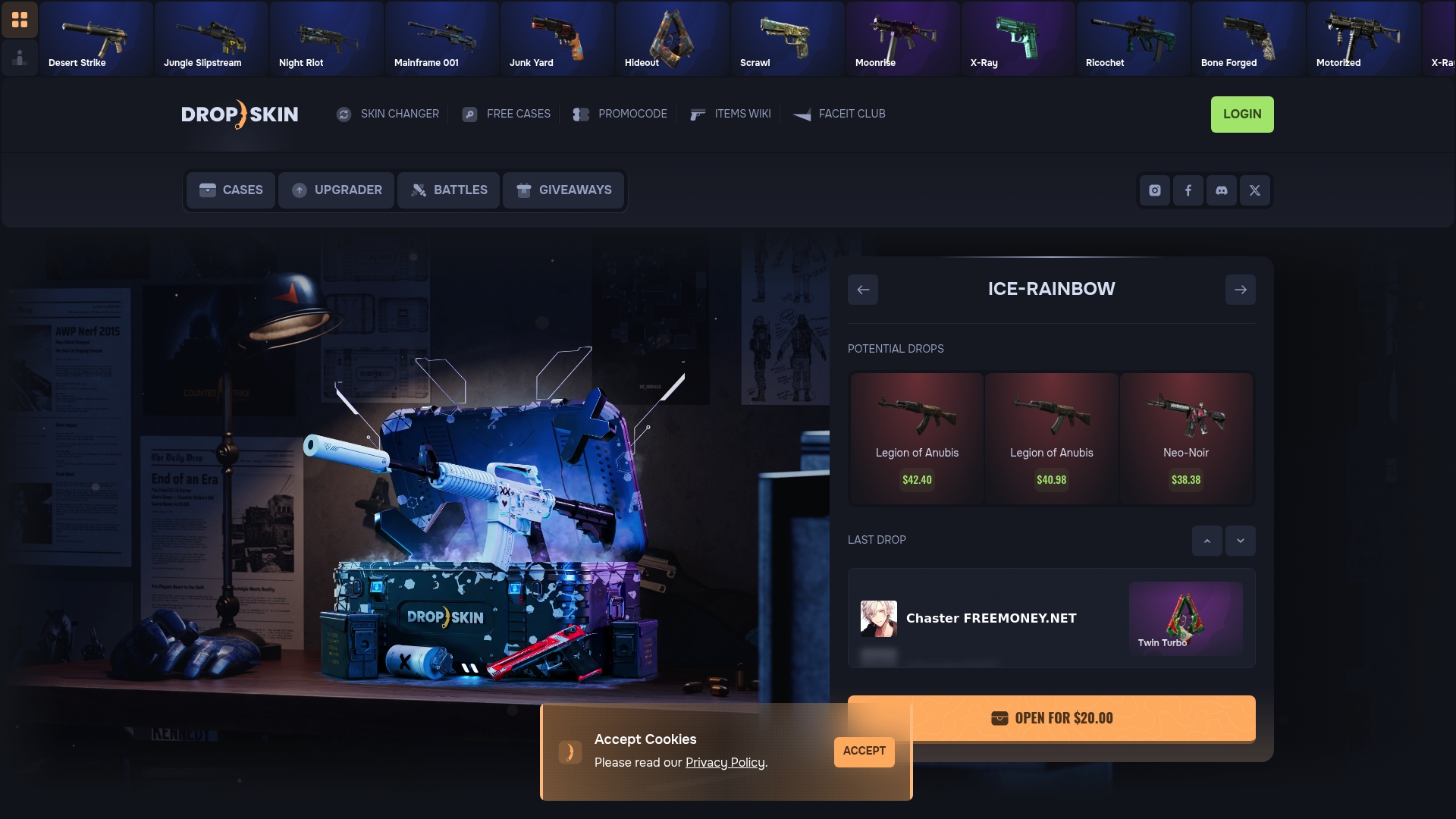
Experience the thrill of turning cheap skins into valuable rewards through features like skin upgrades and case openings. Join a thriving community where you can pick stakes, fight for rewards, and explore interactive skin gambling balanced with trading opportunities. Start building your collection with strategic tools that align perfectly with the article's insights about rarity, condition, and market demand. Don't miss your chance to elevate your gaming identity and investment potential today Visit Dropskin.com and discover how to transform your skins into powerful assets and competitive advantages.
Frequently Asked Questions
What are digital skins in gaming?
Digital skins are cosmetic items used in video games to change the appearance of characters or weapons without affecting gameplay mechanics. They allow players to personalize their gaming experience.
Why do digital skins have economic value?
Digital skins have evolved into an emerging asset class with measurable economic and social value. They can be traded and sold, serve as status symbols within gaming communities, and are sometimes viewed as investments.
How do condition ratings impact the value of digital skins?
Condition ratings significantly influence the market value of digital skins. For instance, Factory New skins are valued much higher than Well-Worn skins, even if they are the same design, due to their perceived quality and desirability.
How can players strategically collect digital skins?
Players can build value through strategic collecting by focusing on themes, weapon classes, and professional associations. Collecting low-float Factory New skins and monitoring professional player preferences can also enhance the value of their collections.