
Every serious Counter-Strike player knows the thrill of seeing a rare skin drop, but turning that digital prize into real value takes more than luck. Skins have built a thriving marketplace where rarity, wear level, and unique attributes shape every deal and trade. If you want to master this ecosystem, understanding the rules and mechanics behind tradable digital assets will give you the edge you need to profit and protect your inventory.
Table of Contents
- What Makes Counter-Strike Skins Tradable
- Types of Tradable Skins and Their Value
- How the Skin Trading Marketplace Operates
- Key Rules and Restrictions for Skin Trading
- Risks and Security in Skin Transactions
- Impact on Gaming Economy and Player Behavior
Key Takeaways
| Point | Details |
|---|---|
| Tradable Characteristics | Counter-Strike skins gain value through unique designs, rarity levels, condition variations, and statistical attributes that drive player interest. |
| Market Ecosystem | The skin trading market involves both Valve's official platform and third-party sites, each with its own security protocols and transaction dynamics. |
| Investment Potential | Players increasingly view skins as speculative assets, prompting changes in behavior regarding acquisition, trading, and in-game reputation. |
| Security Awareness | Users must implement robust security measures to protect against phishing and fraud, particularly in unregulated trading environments. |
What Makes Counter-Strike Skins Tradable
Counter-Strike skins represent a fascinating digital economy where cosmetic items transcend mere visual customization. These unique in-game assets have developed a robust trading ecosystem driven by rarity, design, and collector interest. Digital cosmetic items with real-world value create an intricate marketplace that extends far beyond traditional gaming transactions.
The tradability of Counter-Strike skins emerges from several key characteristics that transform them from simple visual upgrades into valuable digital commodities:
- Unique Design: Each skin features distinctive artwork and visual modifications
- Rarity Levels: Skins are classified into different scarcity tiers
- Condition Variations: Wear levels impact skin value significantly
- Statistical Tracking: Special attributes can increase a skin's desirability
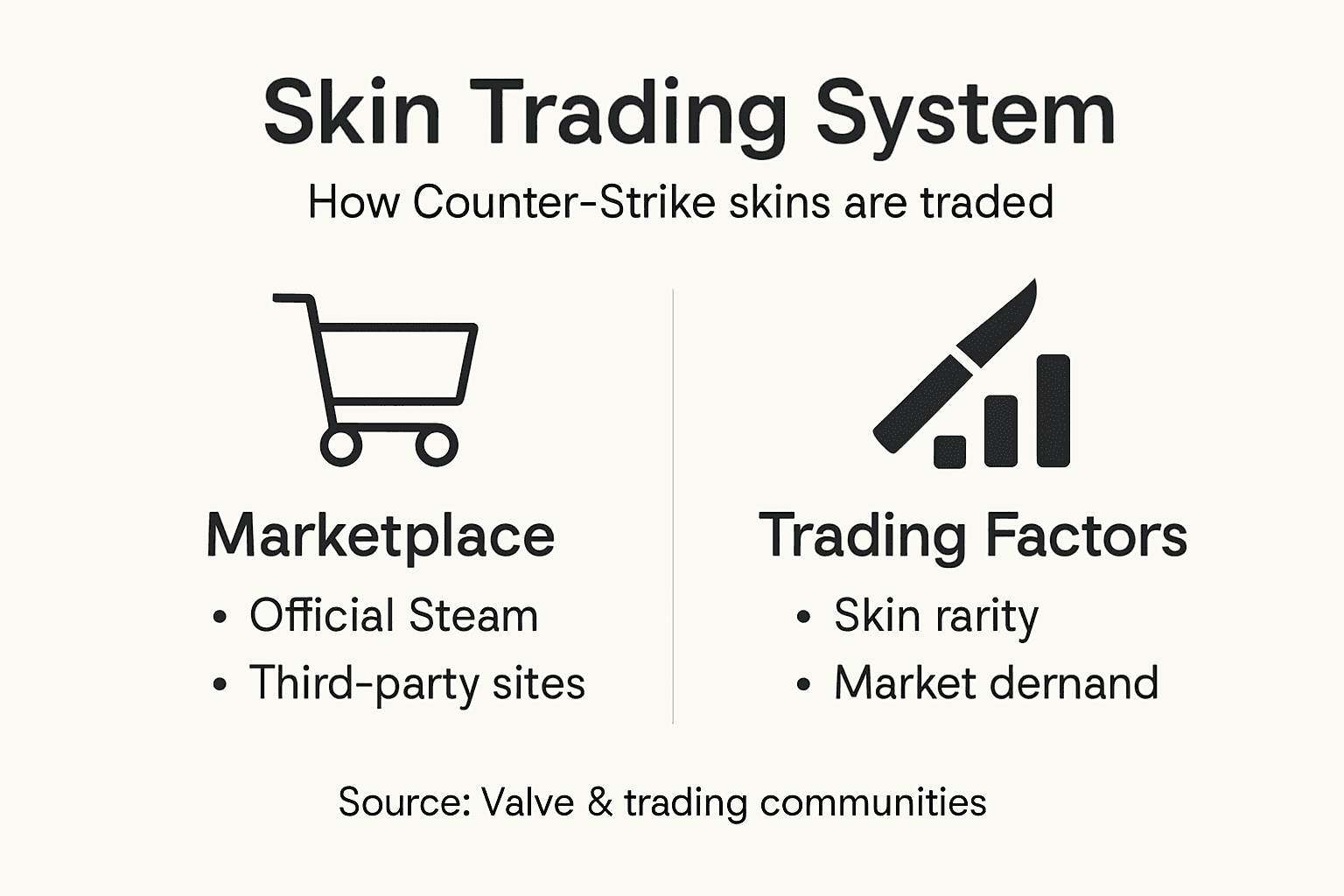
Valve's official marketplace serves as the primary infrastructure supporting skin trading. Third-party marketplaces have expanded trading opportunities beyond Steam's original ecosystem, allowing players to exchange, sell, and collect these digital assets with increasing complexity.
The skin trading mechanism operates through a complex system where randomized case drops, key purchases, and community-driven valuation determine market dynamics. Players can acquire skins through multiple channels: in-game drops, case openings, marketplace purchases, and direct trades with other community members.
Pro tip: Research skin wear levels and market trends before making significant trading decisions to maximize potential value.
Types of Tradable Skins and Their Value
Counter-Strike skin trading involves a sophisticated ecosystem of digital items classified by intricate rarity and design characteristics. Skin types range from common consumer grades to ultra-rare collectibles, creating a complex marketplace where visual aesthetics meet economic speculation.
The primary categories of tradable skins include:
- Consumer Grade: Most common and lowest value skins
- Industrial Grade: Slightly more rare and distinctive designs
- Mil-Spec: More uncommon skins with unique visual characteristics
- Restricted: Higher-tier skins with limited availability
- Classified: Rare skins that command significant market prices
- Covert: Extremely rare skins with exceptional design
- Contraband: Extremely limited edition skins with maximum value
Wear Levels play a critical role in determining skin value, ranging from:
- Factory New: Pristine condition, highest value
- Minimal Wear: Slight signs of usage
- Field-Tested: Moderate wear and scratches
- Well-Worn: Significant visible damage
- Battle-Scarred: Maximum wear, lowest potential value
Unique patterns and limited edition releases can dramatically increase a skin's market value. Some extraordinary skins, like special knife or glove variants, can fetch thousands of dollars, transforming digital items into genuine collectors' investments.

Here's a reference table summarizing the main types of Counter-Strike tradable skins and their typical market roles:
| Skin Category | Example Appearance | Usual Market Value | Typical Buyer Motivation |
|---|---|---|---|
| Consumer Grade | Basic colors, simple | Very low | Casual play, beginner collectors |
| Mil-Spec | Enhanced patterns | Moderate | Players seeking minor upgrades |
| Classified | Distinct visuals | High | Collectors, investors |
| Covert | Unique, standout style | Very high | Serious traders, prestige seekers |
| Contraband | No longer available | Extremely high | High-end investors, rare collectors |
Pro tip: Always verify skin authenticity and current market trends before making significant trading or purchasing decisions.
How the Skin Trading Marketplace Operates
Skin trading platforms operate through complex digital ecosystems that connect players, collectors, and investors across multiple marketplaces. The primary trading infrastructure involves two fundamental channels: Valve's official Steam Community Market and numerous third-party trading platforms that offer alternative transaction methods.
The key components of the skin trading marketplace include:
- Steam Community Market: Official platform with strict transaction rules
- Third-Party Websites: Provide alternative trading and cash-out options
- Escrow Services: Facilitate secure skin exchanges
- Cryptocurrency Platforms: Enable alternative payment methods
- Gambling Sites: Offer skin wagering and exchange opportunities
Trading mechanisms typically involve several critical steps:
- List skin for sale or trade
- Negotiate price or exchange terms
- Confirm trade through secure platform interface
- Complete transaction using platform-specific protocols
- Verify skin transfer and ownership
Trading platforms require strict security protocols to protect users from potential fraud. Most platforms mandate two-factor authentication, trade hold periods, and verified account requirements to minimize risks associated with digital asset exchanges.
Marketplace dynamics are continuously influenced by factors like skin rarity, game updates, and community demand, creating a volatile yet fascinating economic environment where digital items can represent significant monetary value.
Pro tip: Always use verified trading platforms and enable all available security features to protect your digital assets.
Key Rules and Restrictions for Skin Trading
Trading skin rules in Counter-Strike require strict adherence to prevent fraud and maintain marketplace integrity. Valve has implemented comprehensive guidelines that govern how players can exchange digital assets, creating a structured environment designed to protect users and maintain fair trading practices.
Key trading restrictions include:
- Steam Guard Authentication: Mandatory two-factor security
- Account Purchase Requirement: At least one prior transaction
- Trade Cooldown Periods: Restrictions on immediate item transfers
- Mobile Authenticator Confirmation: Additional transaction verification
- Limited Trading Frequency: Controls to prevent potential abuse
The primary regulatory mechanisms for skin trading involve several critical steps:
- Enable Steam Guard protection
- Verify account identity
- Complete minimum purchase requirements
- Understand and respect trade hold periods
- Use official Steam trading interfaces
Third-party trading platforms often introduce significant risks by potentially violating Valve's terms of service. These unauthorized platforms can lead to account restrictions, inventory loss, or permanent bans if users do not carefully navigate the trading ecosystem.
Marketplace regulations are continuously evolving, with Valve implementing sophisticated monitoring systems to detect and prevent fraudulent activities, scams, and unauthorized trading practices.
Pro tip: Always prioritize using official Steam trading channels and maintain comprehensive documentation of all skin transactions.
Risks and Security in Skin Transactions
Skin trading exposes players to complex security vulnerabilities that require comprehensive understanding and proactive protection strategies. The digital nature of Counter-Strike skin transactions creates multiple potential attack vectors for malicious actors seeking to compromise player accounts and steal valuable digital assets.
Primary security risks in skin transactions include:
- Phishing Attacks: Deceptive links and fake websites
- Account Hijacking: Unauthorized access to Steam accounts
- Scam Transactions: Fraudulent trade offers
- Third-Party Platform Risks: Unregulated trading environments
- Social Engineering: Manipulative techniques targeting players
Critical security measures players must implement:
- Enable two-factor authentication
- Use Steam Guard protection
- Verify trade partner authenticity
- Avoid suspicious links and offers
- Monitor account activity regularly
Trading platforms introduce significant security challenges that require constant vigilance. Unauthorized third-party sites often operate in legal gray areas, creating additional risks for unsuspecting players who might unknowingly expose their digital assets to potential theft or manipulation.
The complexity of skin transaction security demands continuous education, with players needing to stay updated on the latest scamming techniques and protective strategies to safeguard their valuable digital inventories.
Pro tip: Implement multiple layers of account security and treat every trade with professional skepticism.
Impact on Gaming Economy and Player Behavior
Counter-Strike skins have transformed digital gaming economies by introducing complex financial dynamics that extend far beyond traditional gameplay. These digital assets have fundamentally reshaped player interactions, turning cosmetic items into valuable economic instruments with real-world monetary implications.
Key economic and behavioral shifts include:
- Status Signaling: Skins as digital prestige markers
- Investment Behavior: Treating skins as speculative assets
- Collector Mentality: Driving acquisition beyond gameplay
- Social Capital: Using skins to establish in-game reputation
- Financial Motivation: Creating alternative income streams
The most significant player behavior transformations involve:
- Viewing games as potential economic platforms
- Developing trading and investment skills
- Prioritizing asset value over pure entertainment
- Engaging in complex market strategies
- Treating digital items as legitimate financial resources
Skin economies have created intricate micro-communities that blur traditional boundaries between gaming, collecting, and financial speculation. Players now approach Counter-Strike not just as a game, but as a potential marketplace where strategic decisions can yield tangible economic returns.
These evolving dynamics demonstrate how digital ecosystems can generate complex economic behaviors, transforming player engagement from simple entertainment to sophisticated economic participation.
This table outlines the real-world impacts skins trading has on the gaming economy and user behavior:
| Impact Area | Description | Main Outcome |
|---|---|---|
| Economic Activity | Skins act as digital assets for trade | New market opportunities |
| Social Dynamics | Players flaunt rare skins for status | Drives prestige competition |
| Investment Patterns | Users treat skins as speculative investments | Volatility and speculation |
| Community Growth | Niche trading groups and forums emerge | Expands and diversifies user base |
Pro tip: Understand market trends and treat skin trading as a serious economic activity requiring research and strategic thinking.
Explore the Exciting World of Tradable Counter-Strike Skins at Dropskin
Understanding the value and tradability of Counter-Strike skins can transform how you engage with the game. Whether it's identifying rare Covert or Classified skins, tracking wear levels, or navigating secure trade marketplaces, the challenge lies in turning your knowledge into meaningful gameplay and rewards. Many players face the frustration of complex trading rules and security concerns while striving to maximize the worth of their digital assets.
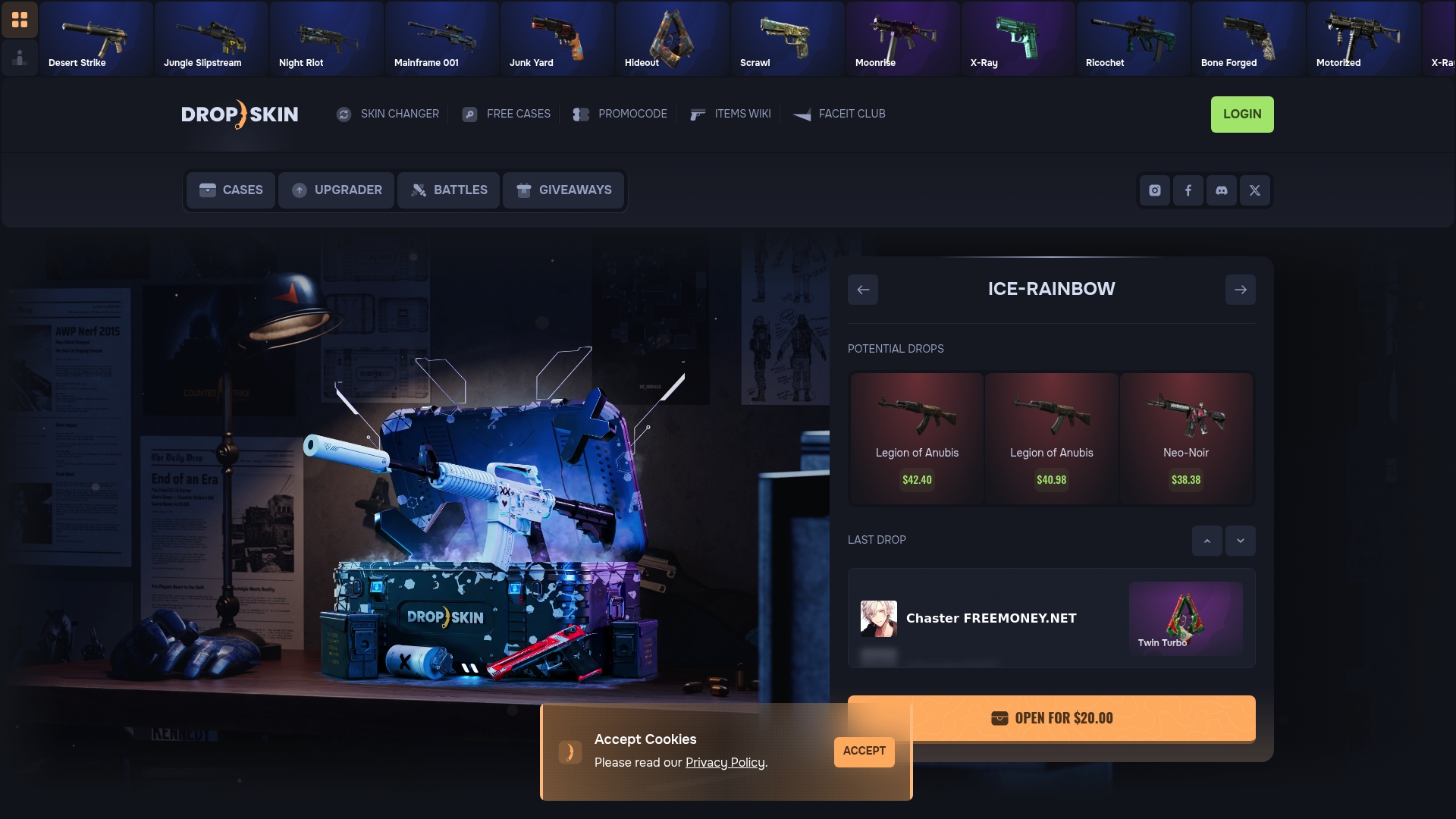
Dropskin.com offers a unique solution that goes beyond traditional skin trading. With options for custom battle matches where you can stake your skins and compete for greater rewards, case openings, and skin upgrades, you gain entertainment and potential value in one place. Take advantage of giveaways, promo codes, and a vibrant community focused on affordable ways to level up your skin collection. Ready to experience skin trading with fun and security? Visit Dropskin today and start turning your knowledge of skin economics into exciting wins and upgrades.
Frequently Asked Questions
What factors determine the tradability of Counter-Strike skins?
The tradability of Counter-Strike skins is determined by their unique design, rarity levels, condition variations, and special attributes that can enhance desirability in the trading market.
How is the value of Counter-Strike skins assessed?
The value of Counter-Strike skins is assessed based on their rarity tier, wear levels (such as Factory New to Battle-Scarred), and unique visual designs, which can greatly influence market demand and pricing.
What role do third-party platforms play in skin trading?
Third-party platforms expand trading opportunities beyond Valve's official market, providing alternative methods for players to exchange, sell, and collect skins, although they may also introduce additional security risks.
What security measures should players implement when trading skins?
Players should enable two-factor authentication, verify trade partner authenticity, avoid suspicious links, and regularly monitor their account activity to protect against potential scams and unauthorized access.