
Many gamers confuse case farming with casual case opening, but they're fundamentally different activities with distinct goals and outcomes. Case farming is a strategic approach to repeatedly opening cases with specific objectives like building a tradeable inventory or enhancing gambling strategies. This guide clarifies what case farming really means, how it impacts your skin trading and gambling efforts, the methods that work best, and the risks you need to manage. Whether you're looking to grow your collection or maximize trading profits, understanding case farming is essential for success in CS:GO and CS2.
Table of Contents
- What Is Case Farming In CS:GO And CS2?
- How Case Farming Impacts Skin Trading And Gambling Strategies
- Common Case Farming Methods And Tips For Success
- Managing Risks And Pitfalls In Case Farming
- Discover Safer Case Opening And Skin Upgrading On DROP.SKIN
Key takeaways
| Point | Details |
|---|---|
| Strategic repetition | Case farming involves repeatedly opening cases with clear goals for trading or profit, not just casual fun |
| Market awareness matters | Success depends on understanding skin rarity, market demand, and timing your openings strategically |
| Risk management essential | Financial and psychological risks require strict budgets and self-awareness to avoid losses |
| Multiple methods available | Bulk opening, selective upgrading, and timed strategies each offer different benefits and trade-offs |
What is case farming in CS:GO and CS2?
Case farming means repeatedly opening in-game cases with the goal of accumulation for trade or profit, beyond casual enjoyment. Unlike casual players who open a case occasionally for excitement, case farmers approach openings systematically with clear objectives. They track market trends, calculate potential returns, and treat their activity as an investment rather than pure entertainment.
The distinction matters because casual case opening focuses on the thrill of unboxing without strategic planning. You might open a case when you have extra funds or feel lucky, but you're not tracking outcomes or building toward specific goals. Case farming, however, requires discipline, research, and a methodical approach to maximize value from your openings.
Gamers pursue case farming for several compelling reasons. Some want to build diverse skin inventories that offer flexibility in trades and gambling matches. Others aim to accumulate enough skins to profit from market fluctuations, buying low during openings and selling high when demand spikes. Many use case farming to stock up on skins for gambling events, where having multiple options improves your chances of finding favorable matchups.
The economic role of skins in CS:GO and CS2 makes case farming viable. Skins function as virtual currency with real-world value, creating opportunities for profit when you understand market dynamics. Rare skins from popular cases can appreciate significantly, especially after cases retire from active drops. Case farmers capitalize on these patterns by targeting specific cases at optimal times.
Common motivations for case farming include:
- Building a tradeable inventory with diverse skins across multiple rarity tiers
- Generating profit through strategic buying and selling based on market trends
- Stocking gambling inventories with skins that offer competitive advantages
- Collecting specific skins or completing themed sets for personal satisfaction
- Experimenting with different cases to understand odds and payout patterns
Understanding these motivations helps you define your own case farming goals. Without clear objectives, you risk falling into casual opening patterns that drain funds without building value. Successful case farmers know exactly why they're opening each case and how it fits their broader strategy.
How case farming impacts skin trading and gambling strategies
Case farming helps gamers accumulate a diverse skin portfolio that can be traded or used in gambling, optimizing chances for profit. When you consistently open cases, you build an inventory with various rarities and styles that appeal to different buyers and gambling scenarios. This diversity gives you flexibility to adapt to market changes and capitalize on emerging opportunities.
Market demand and rarity directly influence your trading profits from case farming. Popular skins from sought-after collections command premium prices, especially when they feature desirable wear levels or rare patterns. By farming cases known for valuable drops, you increase your odds of obtaining tradeable assets. However, the market fluctuates based on game updates, professional player preferences, and seasonal trends that affect which skins buyers want.
For CS2 skin gambling strategies, case farming provides the raw materials you need to compete effectively. Having multiple skins at different price points lets you enter various gambling matches without depleting your entire inventory on a single bet. You can spread risk across multiple events, experiment with different gambling formats, and maintain a reserve for future opportunities.
Consistent farming differs fundamentally from single openings in both approach and results. Single openings are high-variance events where you might hit a jackpot or lose everything on one case. Case farming smooths out variance through volume, giving you more predictable outcomes over time. You'll still experience lucky and unlucky streaks, but the overall pattern becomes clearer with more data points.
Key strategies for effective case farming:
- Research case contents and drop rates before committing significant funds to any single case type
- Track your openings meticulously to identify which cases provide the best return on investment for your goals
- Time your farming sessions around market events like major tournaments or game updates that affect skin values
- Diversify across multiple case types to avoid overexposure to any single collection's market performance
- Set clear profit targets and exit strategies before starting each farming session to maintain discipline
Pro Tip: Focus on cases that recently entered the rare drop pool, as their contents often appreciate when supply decreases and nostalgia increases demand among collectors.
Risk mitigation requires understanding both financial and strategic dimensions. Financially, never farm with money you can't afford to lose, as case odds favor the house over individual players. Strategically, avoid skin trading mistakes like panic selling during market dips or holding onto depreciating skins hoping for recovery. Smart farmers accept small losses quickly and reinvest in better opportunities.
Common case farming methods and tips for success
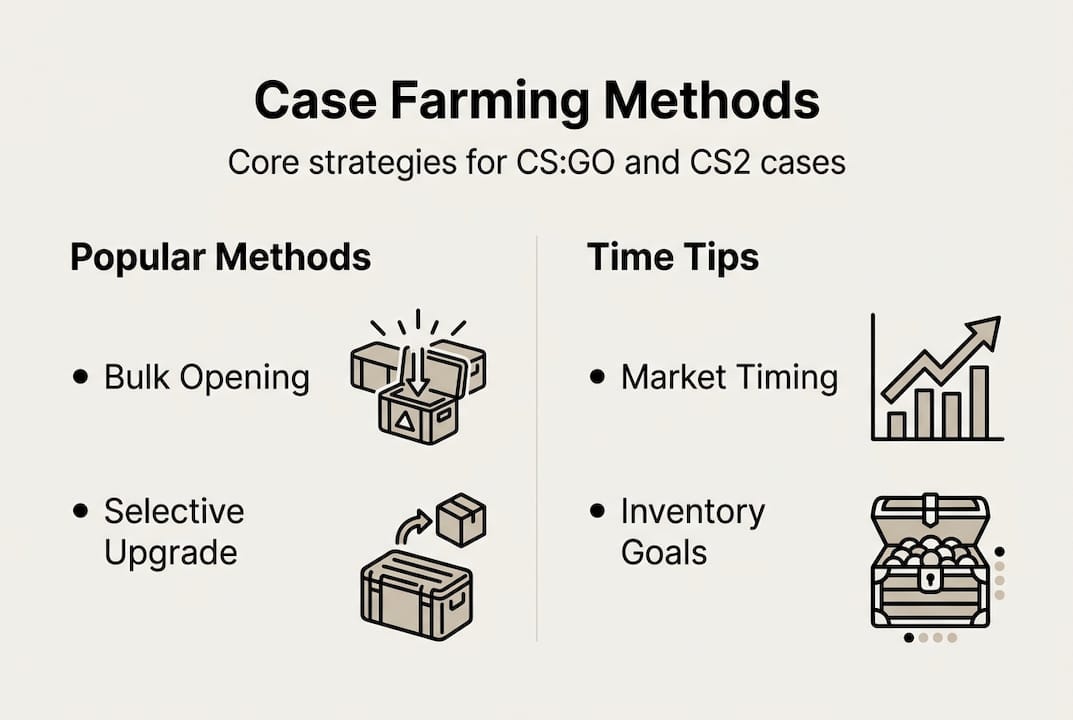
Different methods of case farming include bulk opening, selective upgrading, and timed openings based on market trends. Each approach offers distinct advantages depending on your budget, risk tolerance, and time commitment. Choosing the right method aligns your farming activity with your personal goals and maximizes your chances of success.
Bulk opening involves purchasing and opening large quantities of the same case type in a single session. This method provides maximum data about drop rates and helps you accumulate diverse skins quickly. The downside is high upfront cost and exposure to variance, as you might experience extended unlucky streaks before hitting valuable drops.

Selective upgrading focuses on opening cases strategically, then using upgrade features to transform lower-value skins into higher-tier items. This method reduces the sting of common drops by giving them second chances at value. However, upgrade systems have their own odds and costs that can eat into profits if you're not careful about which skins you attempt to upgrade.
Timed openings capitalize on market fluctuations by farming cases when their contents are undervalued and likely to appreciate. This requires market research and patience, as you might wait weeks or months for optimal timing. The payoff comes when you've accumulated skins before a price surge that other farmers missed.
| Method | Pros | Cons | | --- | --- | | Bulk opening | Fast inventory building, clear drop rate data, volume discounts | High upfront cost, variance risk, potential for significant losses | | Selective upgrading | Second chances on common drops, controlled risk per attempt | Additional fees, upgrade odds favor house, time intensive | | Timed openings | Capitalize on market inefficiencies, lower competition | Requires research, delayed gratification, market unpredictability |
Pro Tip: Combine methods by bulk opening during market lows, then selectively upgrading your best prospects when prices rise, maximizing value at each stage.
Successful case farmers share several common practices that separate them from casual players. They maintain detailed spreadsheets tracking every opening, including case type, cost, drops received, and current market value. This data reveals which cases offer the best returns and when to shift focus to different collections.
Focus on case opening methods for CS:GO gamers that match your available capital and time. If you have limited funds, start with cheaper cases that still offer occasional valuable drops. As your inventory grows, reinvest profits into higher-tier cases with better average returns. This scaling approach builds momentum without requiring massive initial investment.
Common pitfalls to avoid:
- Over-investing in a single case type without diversifying across multiple collections
- Chasing losses by opening more cases immediately after unlucky streaks
- Ignoring market trends and farming cases whose contents are depreciating
- Failing to set stop-loss limits that protect your bankroll from catastrophic depletion
- Comparing your results to cherry-picked success stories instead of realistic averages
Align your farming method to your personal goals and risk tolerance by honestly assessing what you want from the activity. If you're farming for fun with modest profit hopes, bulk opening provides excitement and quick results. If you're treating it as serious investment, timed openings with careful market analysis offer better risk-adjusted returns. Understanding the advantages of case opening helps you set realistic expectations and choose methods that deliver the outcomes you value most.
Managing risks and pitfalls in case farming
Case farming carries inherent financial risks and potential for addictive behaviors that gamers must manage carefully. The excitement of opening cases triggers dopamine responses similar to traditional gambling, making it easy to lose track of spending and time invested. Understanding these risks helps you establish protective measures before problems develop.
Financial risks stem from the fundamental mathematics of case openings. The expected value of most cases is negative, meaning the average outcome loses money over time. While individual openings might yield valuable skins, the odds ensure that most players lose more than they gain. Case farmers who ignore this reality often deplete their funds chasing the occasional big win.
Psychological risks include developing gambling addiction tendencies that extend beyond case farming into other areas of life. The variable reward schedule of case openings is particularly addictive because you never know when the next valuable drop will occur. This uncertainty keeps you opening cases even during losing streaks, hoping the next one will turn things around.
Budgeting and setting limits are essential protective measures. Decide before each session exactly how much you're willing to spend, then stop when you reach that limit regardless of results. Never use money intended for bills, savings, or other obligations for case farming. Treat your case farming budget as entertainment expense, not investment capital you expect to recover.
Establish clear rules for your case farming activity:
- Set daily, weekly, and monthly spending caps that fit comfortably within your discretionary income
- Track every dollar spent and received to maintain awareness of your true profit or loss
- Take mandatory breaks after reaching spending limits, even if you're on a winning streak
- Avoid borrowing money or using credit to fund case farming under any circumstances
- Share your activity with a trusted friend who can provide objective feedback on your behavior
Identify signs of unhealthy engagement early before they escalate into serious problems. Warning signs include spending more than planned, hiding your case farming from others, neglecting responsibilities to open cases, or feeling anxious when you can't access cases. If you notice these patterns, pause your activity and seek support from friends, family, or professional resources.
Responsible case farming requires the same discipline as any form of gambling. Set strict limits, track your spending honestly, and recognize when the activity stops being fun and starts causing stress or financial strain.
Avoid common skin trading mistakes by maintaining emotional distance from your results. Treat each opening as an independent event with known odds rather than a personal test of luck or skill. When you detach your self-worth from outcomes, you make better decisions about when to continue farming and when to walk away.
Healthy case farming balances entertainment value with realistic financial expectations. If you're having fun, staying within budget, and not experiencing negative life consequences, your activity is probably sustainable. The moment case farming causes stress, relationship problems, or financial hardship, it's time to reassess your approach or stop entirely.
Discover safer case opening and skin upgrading on DROP.SKIN
Now that you understand case farming strategies and risks, you need a reliable platform to put your knowledge into practice. DROP.SKIN offers transparent case opening and secure skin upgrading services designed for serious CS2 gamers and collectors. The platform provides clear odds for every case, eliminating the guesswork that plagues other sites and letting you make informed decisions about your farming strategy.
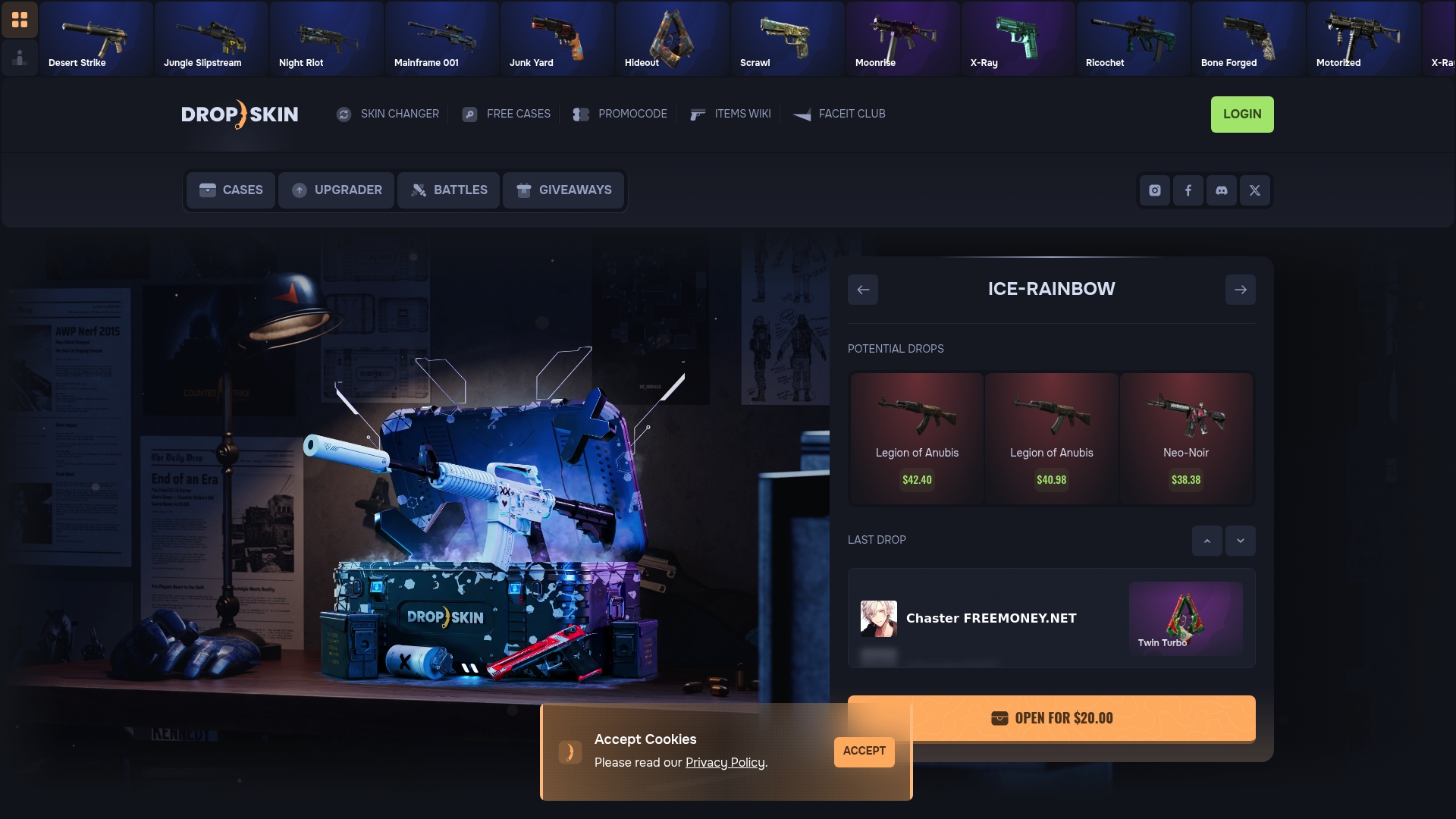
DROP.SKIN's case opening platform features extensive case collections with fair, verifiable odds that help you calculate expected returns before investing. The site's secure transaction system protects your skins and funds throughout the opening process, while the CS2 skin upgrader gives your common drops a second chance at premium value. Whether you're farming cases in bulk or selectively upgrading your best prospects, DROP.SKIN provides the tools and transparency you need to farm smarter and safer in 2026.
FAQ
What is the difference between case farming and simple case opening?
Case farming is a strategic, repeated activity with specific goals like building tradeable inventory or generating profit through market knowledge. Simple case opening is casual entertainment where you open cases occasionally for excitement without tracking outcomes or planning future trades. The key distinction lies in intent and methodology, not just frequency.
Can case farming guarantee profit in CS:GO and CS2?
No, case farming cannot guarantee profit because case odds and market fluctuations create inherent uncertainty in every opening. Most cases have negative expected value, meaning average outcomes lose money over time. Profits depend on strategic timing, volume, market research, and luck, with no method eliminating the fundamental risk of loss.
What are the best methods to start case farming safely?
Start with small-scale bulk opening or timed methods that match your available budget and risk tolerance. Set strict spending limits before your first session and track every opening to build data about which cases offer the best returns. Research market trends thoroughly before making large investments, and never chase losses by exceeding your predetermined budget. Understanding the advantages of case opening helps you set realistic goals and choose sustainable farming practices.
How does case farming affect skin trading mistakes?
Case farming amplifies common skin trading mistakes like over-investing in depreciating assets or panic selling during market dips. The volume of skins you accumulate through farming creates more opportunities to make poor trading decisions if you lack market awareness. However, strategic case farming combined with disciplined trading practices helps you avoid these errors by building diverse inventory that provides flexibility during market fluctuations.