TL;DR:
- Effective CS2 skin trading requires starting with $50 to $100 to cover fees and learn market dynamics, while avoiding overexposure in single trades.
- Using low-fee platforms, maintaining cash reserves, and tracking all trades systematically helps control costs and prevent impulsive losses for sustained profitability.
Budgeting for CS2 skin trades is the practice of allocating your capital strategically across purchases, fees, and trade-up contracts to grow your inventory without bleeding money to avoidable costs. Most beginners lose ground not because they pick the wrong skins, but because they ignore fee structures, skip liquidity checks, and put too much capital into a single trade. This guide covers how to budget for skin trading from your first $50 to your first $500, with fee-aware strategies and risk allocation frameworks drawn from 2026 market data.
How to budget for CS2 skin trades: starting capital explained
The recommended starting budget for CS2 skin traders is $50 to $100. That range gives you enough capital to absorb fees, make a few mistakes, and still have money left to learn from. Starting below $20 to $30 is counterproductive because platform fees eat such a large percentage of each transaction that you cannot build any meaningful position. Think of this early capital as learning money, not profit money. Your first goal is to understand how the market moves, not to flip your way to a knife.
Budget tiers break down roughly like this:
- $50 to $100: Ideal for beginners. Enough to experiment with cases, sticker capsules, and low-tier skins without catastrophic downside.
- $200 to $500: Opens up mid-tier skins and Industrial to Mil-Spec trade-up contracts with real upside potential.
- $1,000 and above: Suitable for traders who already understand float values, pattern premiums, and platform fee differences.
Cases and sticker capsules are the best low-risk entry points for beginners. Their supply is fixed once discontinued, which means they historically appreciate over time. More importantly, they teach you market timing and volume dynamics without putting serious capital at risk.
Pro Tip: Treat your first $100 as tuition, not investment. The goal is to complete 10 to 15 trades, track every fee, and understand what liquidity actually looks like before you scale up.

How do marketplace fees affect your trading budget?
Steam Community Market charges 15% on every sale, which is one of the highest fee structures in any trading environment. Third-party platforms charge between 2% and 12% depending on the site. That difference compounds fast when you are flipping skins regularly.
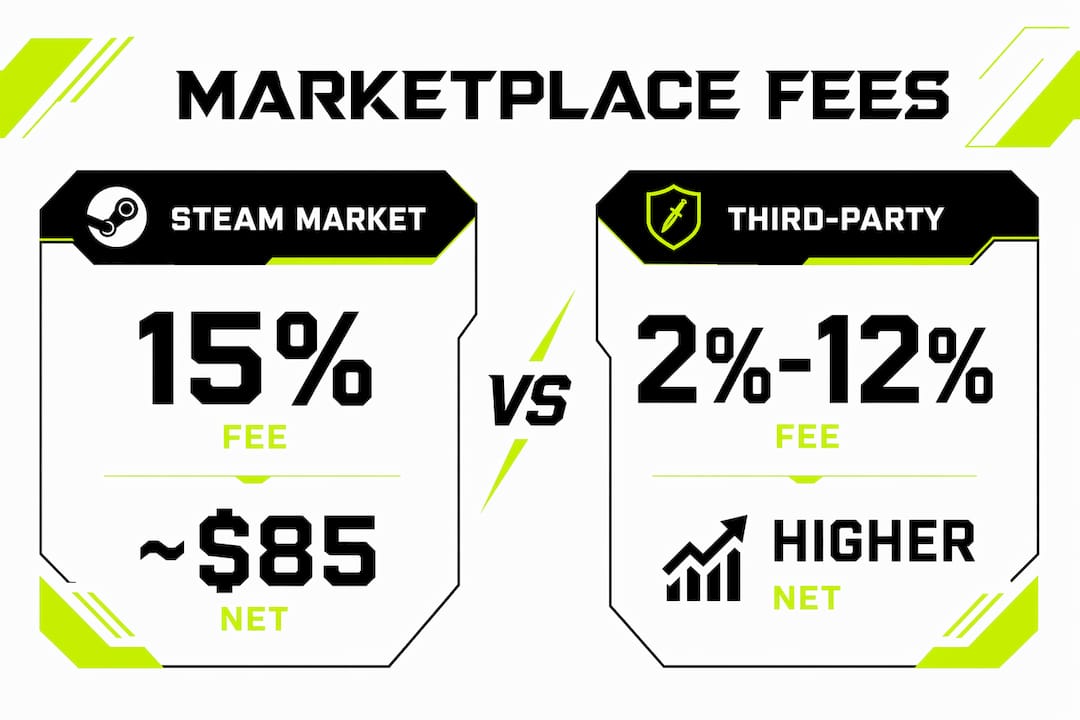
Here is a practical comparison of how fees affect a $100 trade:
| Platform type | Fee range | Net return on $100 sale |
|---|---|---|
| Steam Community Market | ~15% | ~$85 |
| Mid-tier third-party platform | ~8-12% | ~$88 to $92 |
| Low-fee third-party platform | ~2-5% | ~$95 to $98 |
The table above assumes a single sale. Round-trip fees and spreads can consume 15% to 30% of transaction value across a buy-and-sell cycle, which means a visible 10% gain on a skin often becomes a net loss once you account for both sides of the trade. Fee management is the most overlooked budgeting factor among beginners, and it is the one that kills otherwise solid trade ideas.
When you are building your CS2 skin trading guide, platform choice belongs in your budget plan from day one. Choosing a lower-fee platform for your regular flips and reserving Steam for items that only sell there is a concrete way to protect margin.
Pro Tip: Before executing any trade, calculate the full round-trip cost. If buying at $10 and selling at $11 on Steam, you net roughly $9.35 after fees. That is a loss, not a gain.
How to allocate your budget across trade types
Budget allocation is where most intermediate traders separate themselves from beginners. The principle is simple: no single trade-up contract should receive more than 20% of your total budget. Experienced traders limit exposure to 20% per trade-up run specifically to control variance. A single bad outcome on a 50% budget allocation can set you back weeks.
Here is a practical allocation framework for a $200 budget:
- 40% to stable mid-tier skins ($80). These are liquid items with active buyer pools. They protect your base capital and can be sold quickly if you need to rebalance.
- 30% to trade-up contracts ($60). Focus on Industrial to Mil-Spec tier contracts with input costs under $5 per item. These offer real upside without requiring large single bets.
- 20% to cases and sticker capsules ($40). Low-cost, fixed-supply items that appreciate passively. They require no active management and serve as a buffer.
- 10% held as cash reserve ($20). Cash reserves prevent forced selling and let you act on unexpected opportunities when a high-value item drops below market price.
The cash reserve point deserves emphasis. Experienced traders keep a portion of their portfolio liquid at all times. When a market fluctuation drops a desirable skin 20% below its normal price, the trader with reserves buys it. The trader who is fully allocated watches the opportunity pass.
Balancing speculative holdings against stable ones is the core discipline of budgeting for CS2 skins. Speculative items, like trade-up outputs or hype-driven skins, can deliver strong returns but carry real downside. Stable items, like popular mid-tier skins with consistent demand, protect your floor. A 60/40 split between stable and speculative is a reasonable starting ratio for anyone under $500 in total capital.
What tools and steps should you use to track your trades?
Discipline without tracking is just intention. Spreadsheet tracking of purchases, fees, floats, and results is the standard practice among traders who consistently improve their returns. A basic spreadsheet with columns for item name, buy price, platform fee paid, sell price, net profit, and float value will show you within a month which trade types are working and which are draining capital.
Practical steps to set up your tracking system:
- Log every trade immediately. Memory is unreliable. Record the buy price, platform, fee, and date at the moment of purchase.
- Track float values and pattern premiums. A Factory New AK-47 with a 0.01 float trades at a premium over a 0.06 float. Knowing this prevents you from overpaying and helps you price your sales correctly.
- Set an exit price before you buy. Decide your target sell price and your stop-loss price before the purchase. This removes emotion from the decision when the market moves against you.
- Review your fee totals weekly. Add up every fee paid across all platforms. This single habit forces you to confront the real cost of your trading activity.
- Use cases and sticker capsules as market timing practice. These low-cost entries let you observe price cycles and demand patterns without risking meaningful capital.
Trade-up contracts should be modeled statistically, not treated as a gamble. Before running a contract, calculate the expected value by listing all possible outputs, their probabilities, and their post-fee sale prices. If the weighted average output is below your total input cost including fees, the contract is a losing proposition regardless of how good the best-case outcome looks.
Pro Tip: Add a "regret column" to your spreadsheet. After each trade closes, note whether you followed your exit plan. Traders who deviate from their exit plans lose more money than traders who pick slightly worse skins.
What budgeting mistakes drain CS2 traders the most?
Knowing what to avoid is as useful as knowing what to do. The most common beginner mistake is confusing rarity with liquidity. A rare skin with no active buyer pool traps your capital. You cannot pay platform fees or fund new trades with an item that nobody is buying this week.
The most damaging patterns to watch for:
- Ignoring cumulative fees. A trader who completes 20 trades per month on Steam at 15% per sale is paying $3 in fees for every $20 trade. That adds up to $60 per month in pure fee cost on a $200 portfolio, which is 30% of total capital.
- Over-allocating to a single trade-up. Putting 50% or more of your budget into one contract outcome is not trading. It is gambling with extra steps.
- Holding illiquid rare skins. Liquidity matters more than rarity. A skin that sells in 10 minutes at a fair price is worth more to your budget than a skin that might sell in 10 days at a premium.
- Chasing hype trades without an exit plan. Hype-driven price spikes are real, but they reverse fast. Buying into a spike without a defined sell target leaves you holding a depreciated item when the hype fades.
- Depleting cash reserves. Traders who go fully allocated lose the ability to act on good opportunities and sometimes face forced selling at a loss when they need funds quickly.
For a deeper look at the specific traps that catch new traders, the common skin trading mistakes guide from Dropskin covers the full list with practical fixes.
Key takeaways
Effective CS2 skin trade budgeting requires starting with $50 to $100, capping single trade-up exposure at 20%, choosing low-fee platforms, and maintaining cash reserves at all times.
| Point | Details |
|---|---|
| Start with $50 to $100 | This range covers fees and learning costs without risking serious capital loss. |
| Cap trade-up exposure at 20% | Never commit more than 20% of total budget to a single contract to control variance. |
| Choose platforms by fee rate | Steam charges ~15%; third-party platforms charge 2% to 12%, directly improving net returns. |
| Track every trade in a spreadsheet | Logging fees, floats, and exit prices reveals which trade types actually generate profit. |
| Keep a cash reserve | Liquid capital prevents forced selling and lets you act on sudden market opportunities. |
Dropskin's take on trading discipline
The traders I see lose money consistently share one trait: they treat skin trading like a slot machine and budgeting like an afterthought. The ones who build real inventory value over time treat it more like a small portfolio. They know their fee costs, they know their liquidity, and they never go fully allocated.
Starting small is not a limitation. It is the only way to build the pattern recognition that makes larger trades profitable. A trader who runs 50 trades at $5 each learns more about market timing, float premiums, and fee impact than someone who drops $500 on one knife and waits. The knife trader might win once. The disciplined trader wins consistently.
Fee awareness is the single habit that separates profitable traders from break-even traders. Most people focus on picking the right skin. The better focus is on the full round-trip cost of every transaction. A 10% gain that costs 15% in fees is not a strategy. It is a slow drain.
Think of your CS2 skin budget the way a careful investor thinks about a portfolio. Diversify across risk levels, keep reserves, track performance, and cut positions that are not working. The market rewards patience and punishes impulsive allocation every time.
— Dropskin
Start trading smarter with Dropskin
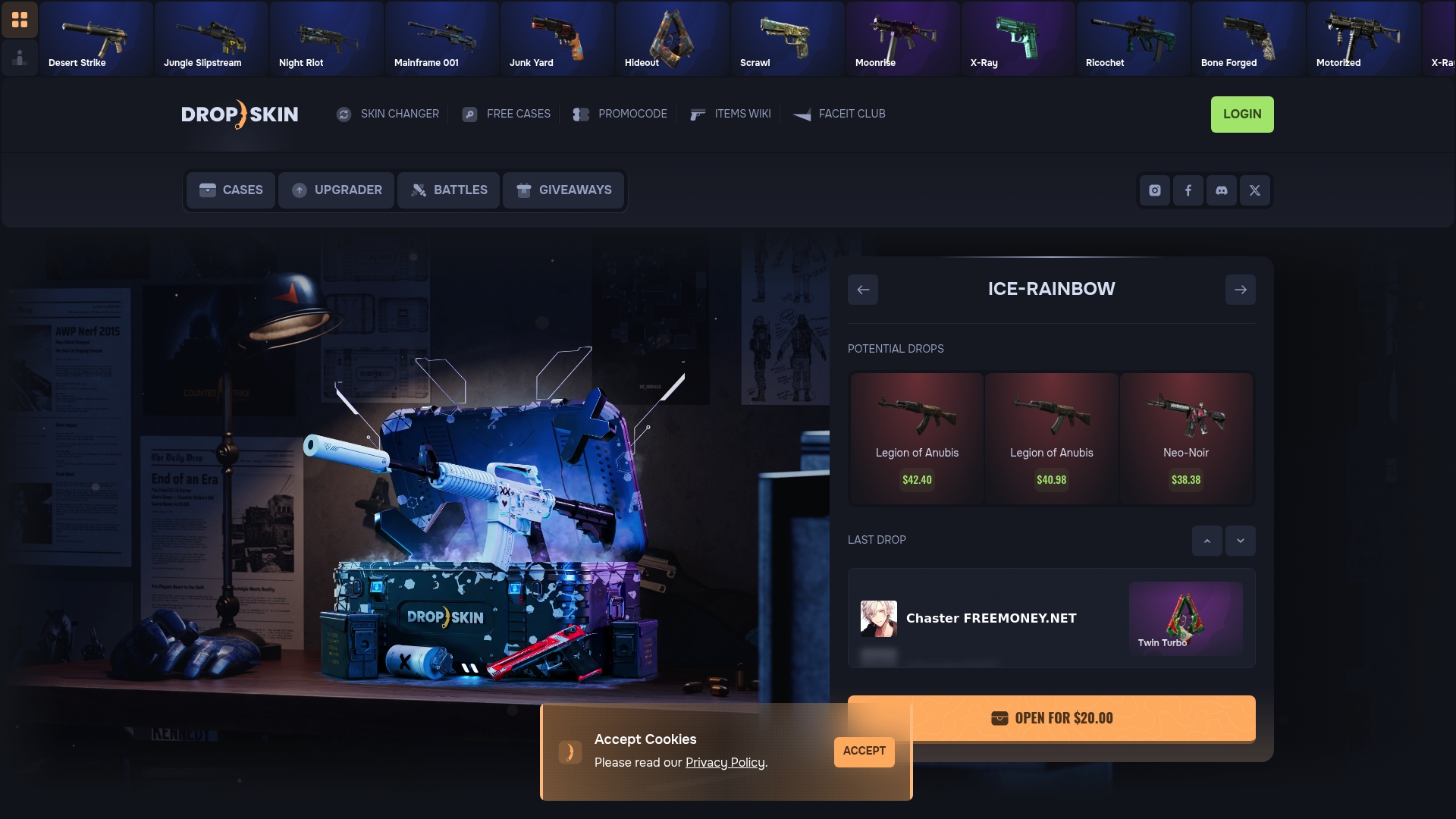
Dropskin gives you a practical environment to put these budgeting strategies to work. The platform's skin upgrader tool lets you run trade-up style upgrades with clear cost visibility, so you can model your expected value before committing capital. Case openings on Dropskin offer low-entry-cost ways to practice market timing and build inventory without overextending your budget. Whether you are working with $50 or $500, Dropskin's features support the kind of disciplined, fee-aware trading this guide recommends. Explore the platform and see how affordable skin upgrading fits into your trading plan.
FAQ
What is a good starting budget for CS2 skin trading?
The recommended starting budget is $50 to $100 for beginners. Starting below $20 to $30 is counterproductive because fees consume too large a percentage of each transaction to allow meaningful progress.
How much do fees actually cost in CS2 skin trades?
Steam Community Market charges approximately 15% per sale, while third-party platforms charge between 2% and 12%. Round-trip fees across a full buy-and-sell cycle can consume 15% to 30% of total transaction value.
How should I split my CS2 skin trading budget?
A practical split for a $200 budget is 40% to liquid mid-tier skins, 30% to trade-up contracts, 20% to cases and sticker capsules, and 10% held as a cash reserve for opportunities.
Why does liquidity matter more than rarity in CS2 trading?
A rare skin with no active buyers traps your capital and prevents you from funding new trades. Liquid skins with consistent demand let you move in and out of positions quickly, which is what keeps your budget working.
What is the best tool for tracking CS2 skin trades?
A spreadsheet tracking item name, buy price, platform fee, sell price, float value, and net profit is the standard approach. Reviewing fee totals weekly forces you to see the real cost of your trading activity and adjust platform choices accordingly.