
The CS2 skin economy surpassed $4 billion in annual trading volume in 2025, yet many gamers remain confused about what actually makes a skin premium. Most players assume rarity alone drives value, but that's only part of the story. This guide explains premium skins, their value factors, and practical investing tips to help you enhance your CS2 gameplay and collection.
Table of Contents
- What Makes A Premium Skin In CS2?
- How Float Value And Wear Impact Skin Pricing
- Premium Skin Market Dynamics And Investment Strategies
- Advanced Factors Affecting Premium Skin Value
- Explore Premium Skin Upgrades And Trades On DROP.SKIN
Key takeaways
| Point | Details |
|---|---|
| Rarity and condition define premium status | Premium skins combine scarcity, excellent float value, and high demand among players. |
| Float value drives significant price differences | Even within the same wear category, lower float numbers command substantially higher prices. |
| Long-term investing outperforms quick flips | Blue-chip discontinued skins appreciate 50 to 100 times over years, while rapid trading yields minimal gains. |
| Pattern and stickers add hidden premiums | Specific pattern indexes and rare sticker placements create value multipliers beyond base skin prices. |
| Liquidity and verification prevent costly mistakes | Monitor market depth and always verify exact float and skin photos before purchasing premium items. |
What makes a premium skin in CS2?
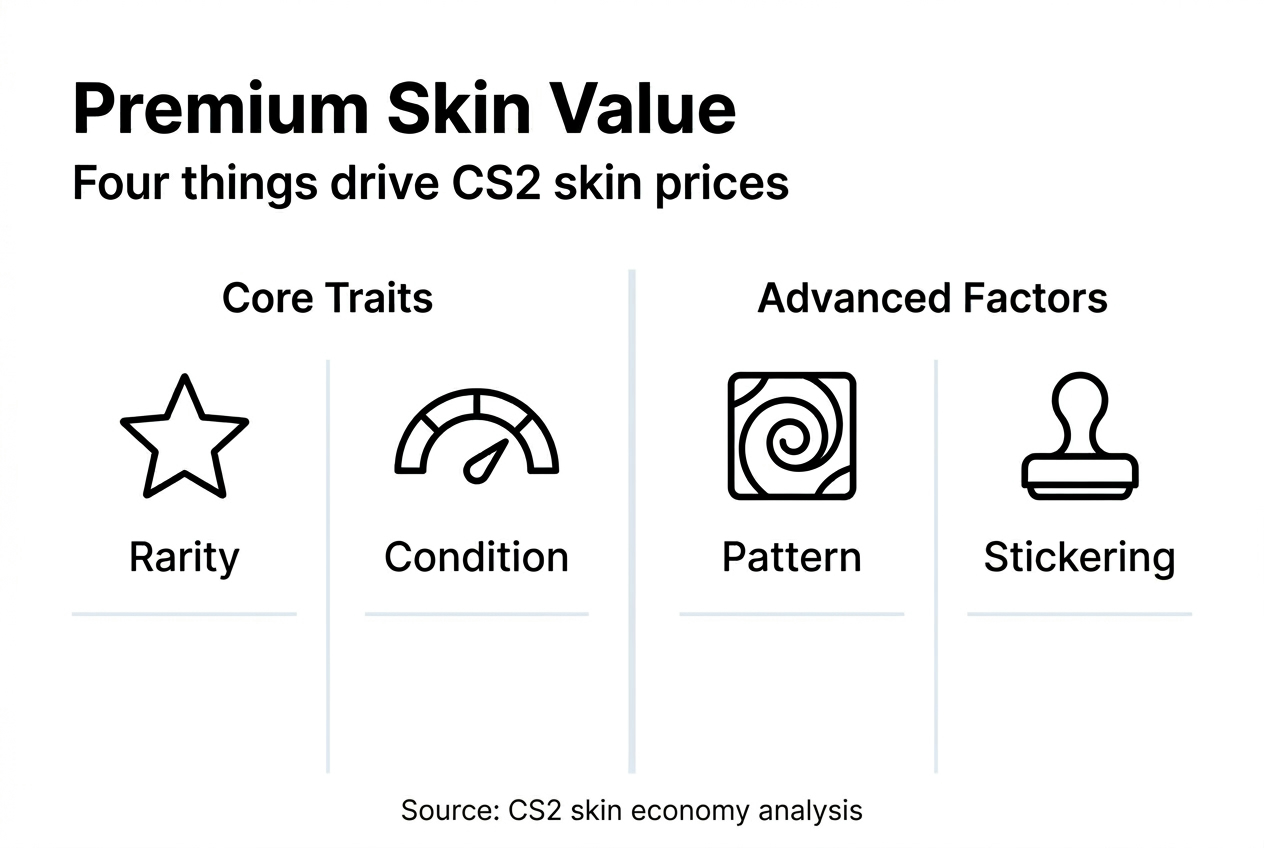
Premium skins aren't just expensive items. They represent a convergence of technical attributes and social desirability that creates lasting value. Several technical factors dictate value, including rarity grade, wear (float value), pattern templates, and sticker combinations.
The classification system matters enormously. Skins fall into color-coded rarity tiers ranging from Consumer Grade (white) through Covert (red) and Extraordinary (gold for knives and gloves). Higher rarity means fewer items drop, creating natural scarcity. But rarity alone doesn't guarantee premium status.
CS2 skins derive value from social status, liquidity, utility, demand, and scarcity working together. A rare skin nobody wants remains worthless. Conversely, popular skins with moderate rarity can command premium prices if demand stays strong.
Condition plays a massive role. A Factory New AK-47 with flawless appearance holds far more value than a Battle-Scarred version of the same skin. Float value quantifies this wear numerically, and we'll explore that in depth next.
Social perception drives the market as much as objective scarcity. Pro players and streamers influence which skins become desirable. When a famous player equips a specific skin during a major tournament, demand spikes immediately. This creates investment opportunities for savvy collectors who anticipate trends.
Understanding defining premium skins requires looking beyond surface aesthetics. You need to evaluate the complete package: rarity tier, condition grade, pattern uniqueness, applied stickers, and current market sentiment. Only then can you identify truly premium items worth your investment.
How float value and wear impact skin pricing
Float value is a decimal between 0.00 and 1.00 that determines how worn a skin looks in CS2. This single number dramatically affects pricing, especially for high-value skins where collectors demand pristine conditions.
The game assigns five wear categories based on float ranges. Factory New spans 0.00 to 0.07, Minimal Wear covers 0.07 to 0.15, Field-Tested runs 0.15 to 0.38, Well-Worn extends 0.38 to 0.45, and Battle-Scarred includes 0.45 to 1.00. Each category looks progressively more worn, with scratches, fading, and visual degradation increasing.
Here's where it gets interesting. A 0.01 float FN skin looks significantly better than a 0.069 float FN skin, even though both are Factory New. Collectors pay substantial premiums for the lowest possible floats within each category. For a $1,000 skin, the difference between 0.01 and 0.06 float can mean $200 or more in value.
| Wear Category | Float Range | Visual Quality | Price Impact |
|---|---|---|---|
| Factory New | 0.00 - 0.07 | Pristine, minimal wear | Highest premium for low floats |
| Minimal Wear | 0.07 - 0.15 | Slight wear visible | Moderate premium variation |
| Field-Tested | 0.15 - 0.38 | Noticeable wear | Lower price sensitivity |
| Well-Worn | 0.38 - 0.45 | Heavy visible wear | Minimal float impact |
| Battle-Scarred | 0.45 - 1.00 | Extreme degradation | Lowest prices, little variation |
Not all skins can exist in all wear categories. Some skins have restricted float ranges, making certain conditions impossible. This artificial scarcity drives prices even higher when a skin only drops in Factory New or Minimal Wear.
Float sensitivity varies by skin design. Skins with bold patterns show wear less obviously than those with intricate details or metallic finishes. An AWP Asiimov in Field-Tested looks remarkably clean despite a 0.25 float, while an AK-47 Case Hardened shows every scratch.
Pro Tip: Always inspect a skin in-game before purchasing premium items. Use float checking websites to verify the exact decimal value and examine high-resolution screenshots from multiple angles. Sellers sometimes misrepresent condition or hide unfavorable wear patterns in listing photos.
Understanding premium skin wear definitions helps you spot value opportunities. A 0.15 Minimal Wear skin priced like Field-Tested represents an excellent buy, while a 0.069 Factory New at full premium price may disappoint.
Premium skin market dynamics and investment strategies
The CS2 skin economy operates on supply and demand with a maturing market and less volatile price spikes in 2026. Understanding these mechanics separates successful investors from those who lose money chasing trends.
Supply scarcity drives long-term appreciation. Discontinued skins that no longer drop from cases become increasingly rare as players consume items through trade-ups or lose account access. Rare blue-chip skins have appreciated 50 to 100 times over a decade, with some legendary items showing even higher returns.
Let's examine concrete examples. The AK-47 Fire Serpent went from approximately $50 in 2013 to $4,800 or more in 2025. The Glock-18 Fade climbed from around $11 to $1,800 or higher. These weren't lucky breaks but predictable outcomes of supply restriction meeting sustained demand.
| Skin | 2013 Price | 2025 Price | Appreciation |
|---|---|---|---|
| AK-47 Fire Serpent FN | $50 | $4,800+ | 96x |
| Glock-18 Fade FN | $11 | $1,800+ | 163x |
| M4A4 Howl FN | $80 | $6,500+ | 81x |
| AWP Dragon Lore FN | $400 | $15,000+ | 37x |
Liquidity matters enormously for practical investing. Popular case skins from active cases sell within hours at fair prices. Rare collector items may take weeks or months to find the right buyer. Balance your portfolio between liquid holdings for flexibility and illiquid blue-chips for maximum appreciation.
Long-term holding consistently outperforms rapid flipping. Transaction fees, trade holds, and market volatility erode profits from short-term trading. Buying quality discontinued skins and holding for years minimizes costs while capturing the full appreciation curve.
Diversification reduces risk. Don't put your entire budget into one skin, no matter how promising. Spread investments across multiple weapons, rarity tiers, and release periods. This protects you if one skin underperforms or if specific weapons fall out of meta favor.
Pro Tip: Track market trends using price history tools and community sentiment indicators. Watch professional tournament viewership, game updates, and Steam Market volume. Major updates or competitive scene changes often trigger predictable price movements you can capitalize on by positioning early.
Study CS2 skin collecting tips to refine your strategy. Follow 2026 skin trading trends to stay ahead of market shifts. Learn from common trading mistakes to avoid costly errors that drain your investment capital.
Advanced factors affecting premium skin value
Beyond basic rarity and condition, sophisticated collectors evaluate nuanced factors that separate good investments from exceptional ones. These advanced considerations often determine whether a skin appreciates modestly or explosively.
Pattern index affects skin appearance and value in significant ways depending on skin type. Case Hardened skins display vastly different blue percentages based on pattern seed. A blue gem AK-47 Case Hardened with 90% blue top can sell for 10 to 20 times the price of an average pattern.
Sticker placement and rarity create substantial value multipliers. Katowice 2014 tournament stickers, especially Holo versions, add thousands of dollars to weapon value. A single iBUYPOWER Holo sticker can increase a gun's worth by $10,000 or more. Position matters too: stickers on the best visible spots command higher premiums.
Provenance and ownership history attract collector interest. Skins previously owned by famous players or those with documented tournament use carry mystique that drives prices higher. While harder to verify, provenance adds a narrative element that passionate collectors value.
Liquidity is the time between listing and sale, and monitoring spreads and sales timestamps reveals demand strength. High-liquidity skins sell at consistent prices with narrow bid-ask spreads. Low-liquidity items show wide price variations and infrequent transactions, increasing investment risk.
Case skins versus collection skins differ fundamentally in supply predictability. Active case skins continue dropping, creating ongoing supply pressure that caps appreciation. Collection skins from discontinued operations or finite events have fixed maximum supply, setting up stronger long-term scarcity.
Key advanced factors to monitor:
- Pattern seed numbers and visual appearance variations
- Applied sticker types, conditions, and placement positions
- Ownership history and provenance documentation
- Market depth, bid-ask spreads, and transaction frequency
- Supply mechanics: active cases versus discontinued collections
- Meta shifts affecting weapon popularity in competitive play
- Regional price differences creating arbitrage opportunities
Understanding CS2 skin market drivers helps you evaluate these complex factors systematically. Study building a skin collection guide for frameworks to assess nuanced value elements and construct a sophisticated portfolio.
Explore premium skin upgrades and trades on DROP.SKIN
Now that you understand what makes skins valuable and how to invest strategically, put that knowledge into action. DROP.SKIN offers practical tools to acquire premium skins, upgrade your collection, and trade safely within a trusted marketplace.
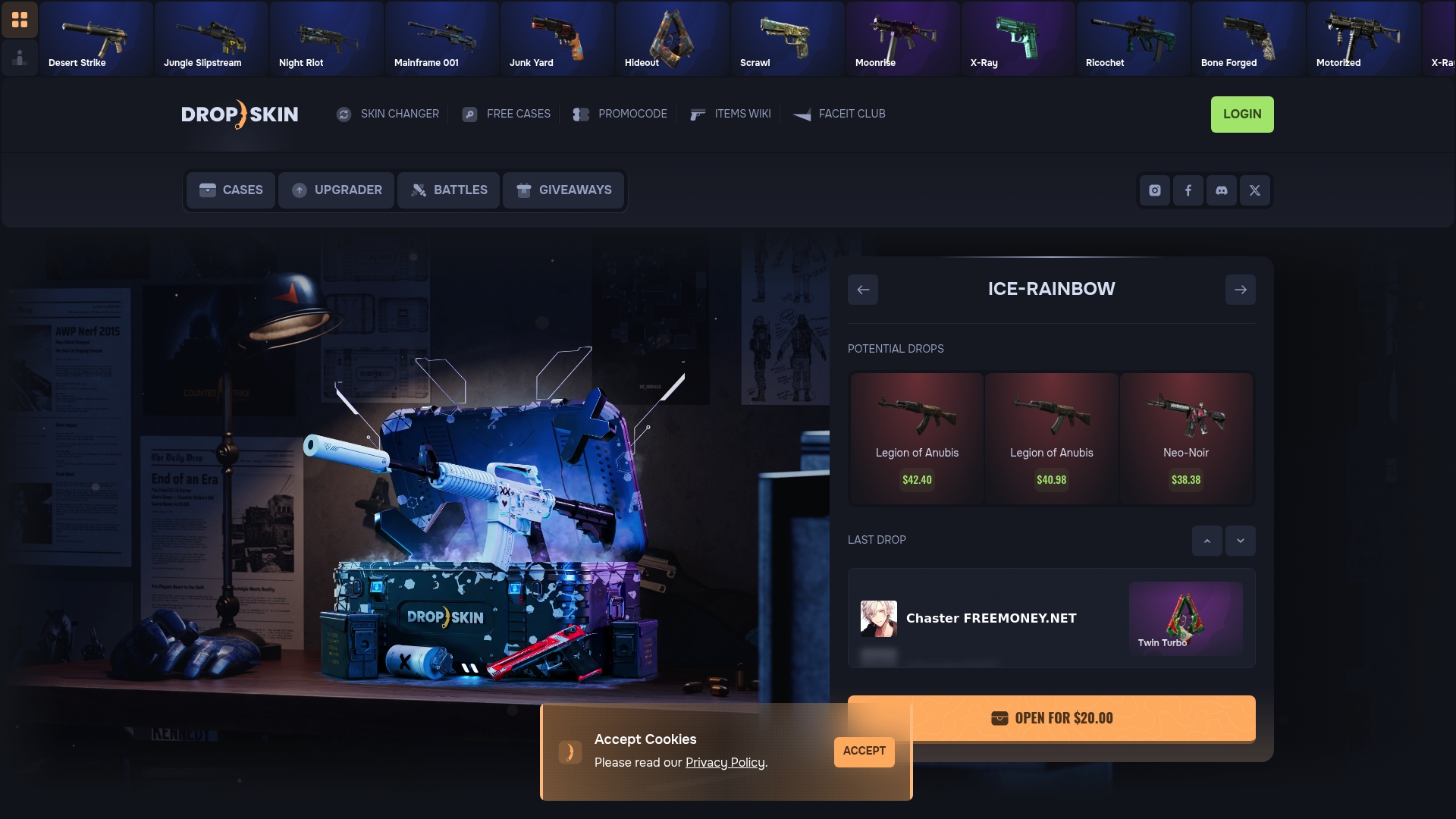
Open cases on DROP.SKIN to discover premium skins at accessible price points. Our extensive case collection gives you shots at rare items while maintaining transparent odds. Whether you're hunting specific skins or building a diverse inventory, case openings provide exciting opportunities.
Use our CS2 skin upgrader to transform lower-value items into premium skins. The upgrader tool lets you leverage your existing inventory toward higher-tier acquisitions, implementing the value-building strategies discussed throughout this guide. Upgrade smartly by applying float value knowledge and rarity principles you've learned.
Trade and build your collection within DROP.SKIN's secure marketplace environment. Verify trades carefully using our built-in tools, apply your understanding of premium skin factors, and execute transactions with confidence. Experience the practical benefits of understanding what truly makes skins valuable.
FAQ
What defines a premium skin in CS2?
Premium skins combine exceptional rarity, pristine condition (low float), and strong sustained demand among players. They often feature discontinued status, unique patterns, or rare stickers that multiply base value. Social prestige and proven appreciation history further distinguish premium items from ordinary skins.
How does float value affect skin resale price?
Lower float numbers indicate less wear and typically command higher prices, especially within Factory New and Minimal Wear categories. Small float differences of 0.01 to 0.02 can create price gaps of hundreds or thousands of dollars on premium skins. Always verify exact float and inspect condition photos before purchasing to ensure you're paying appropriate premiums.
What are the best strategies to invest in premium skins?
Focus on rare discontinued skins with proven appreciation histories for long-term growth potential. Avoid rapid flipping due to transaction costs and hold quality items for years to capture full value curves. Monitor market liquidity, diversify across weapons and rarity tiers, and verify all trades carefully using float checkers and inspection tools. Learn from expert skin collecting tips to refine your approach.
Do pattern variations significantly impact skin value?
Yes, especially for Case Hardened, Fade, and Marble Fade skins where pattern seed determines appearance. Highly desirable patterns like blue gems can multiply value by 10 to 20 times compared to average seeds. Research pattern databases and community preferences before investing in pattern-sensitive skins to identify premium variations.
How important is liquidity when choosing investment skins?
Liquidity determines how quickly you can sell at fair market prices without significant discounts. High-liquidity skins from popular cases offer flexibility and consistent pricing, while rare collector items may require weeks or months to find buyers. Balance your portfolio between liquid holdings for agility and illiquid blue-chips for maximum appreciation to manage risk effectively.