Upgrading a cheap CS:GO or CS2 skin can increase its market value by up to 200%, turning budget items into desirable assets. Beyond economics, upgraded skins deliver psychological benefits that sharpen your competitive edge. This guide reveals how smart upgrades enhance aesthetics, boost confidence, and improve gameplay focus while maximizing your investment. You'll learn practical strategies, avoid common myths, and discover why upgrading beats buying premium skins outright.
Table of Contents
- Introduction To Skin Upgrading In CS:GO And CS2
- Why Upgrade Skins For Competitive Edge
- Economic Benefits Of Upgrading Cheap Skins
- Understanding Skin Quality And Wear In Upgrades
- Common Misconceptions About Skin Upgrading
- How Dropskin.com Facilitates Skin Upgrades
- Practical Guide To Upgrading Cheap Skins
- Conclusion: Making The Most Of Skin Upgrades For Gamers
- Explore Dropskin.com For Your Skin Upgrade Journey
- Frequently Asked Questions
Key takeaways
| Point | Details |
|---|---|
| Aesthetic and confidence boost | Upgraded skins enhance visual appeal and can increase player confidence by up to 20% during matches. |
| Market value potential | Skin upgrades can raise market value 1.5x to 3x original cost, though success involves risk and randomness. |
| Wear ratings matter | Better exterior conditions like Factory New improve upgrade outcomes and final skin desirability significantly. |
| Myth-busting required | Upgrades don't guarantee rare skins; only ~15% yield over double the original value. |
| Platform advantage | Dropskin.com offers transparent upgrade mechanics, community contests, and strategic tools for budget-conscious gamers. |
Introduction to skin upgrading in CS:GO and CS2
Skin upgrading transforms budget items into more visually striking assets within Counter-Strike's economy. Understanding skin tiers and rarity classifications helps you identify upgrade candidates worth your investment.
CS:GO and CS2 organize skins into tiers: Consumer Grade (white), Industrial Grade (light blue), Mil-Spec (blue), Restricted (purple), Classified (pink), Covert (red), and Contraband (gold). Cheap skins typically fall into Consumer through Mil-Spec categories, costing under $5. Premium skins occupy Restricted and above, featuring intricate designs and commanding higher prices.
Upgrading converts lower-tier skins into potentially higher-tier versions through platform mechanics. You deposit a cheap skin and roll for a chance at receiving something more valuable. This process differs from trading because outcomes depend on probability rather than direct negotiation.
Before upgrading, familiarize yourself with these fundamentals:
- Skin rarity hierarchy and typical price ranges per tier
- Exterior wear categories from Factory New to Battle-Scarred
- Platform-specific upgrade odds and mechanics
- Your budget limits and risk tolerance for gambling elements
This foundation ensures you make informed decisions rather than impulsive gambles. Knowing which cheap skins offer the best upgrade potential separates strategic players from those who burn through inventory carelessly.
Why upgrade skins for competitive edge
Upgraded skins deliver measurable psychological advantages that translate into better performance. Players report up to a 20% increase in confidence when using visually appealing weapons during matches. This confidence boost isn't superficial; it affects decision-making speed and aggression levels in clutch situations.
Research shows upgraded skins reduce stress by 15% and increase focus by 10% compared to default weapons. When you're proud of your loadout, you experience less performance anxiety and maintain concentration longer during intense rounds. These improvements matter in competitive environments where split-second reactions determine outcomes.
The psychological edge manifests in several ways:
- Enhanced self-perception leading to bolder plays and calculated risks
- Reduced mental fatigue from visual monotony during extended sessions
- Increased motivation to practice and improve with aesthetically pleasing gear
- Stronger emotional connection to your inventory, boosting overall engagement
"The visual appeal of my upgraded AK-47 genuinely makes me play more confidently. I take fights I'd normally avoid because I feel like I deserve to win with this skin." — Competitive CS2 player
Pro Tip: Choose skins with color schemes and patterns you genuinely enjoy, not just expensive items. Personal preference drives the psychological benefits more than raw market value.
This competitive advantage extends beyond individual performance. Teammates notice upgraded inventories, which can improve team morale and perceived credibility. While CS2 skins don't affect hitboxes or damage, they absolutely influence the mental game that separates good players from great ones.
Economic benefits of upgrading cheap skins
Upgrading cheap skins offers compelling financial advantages over purchasing premium items directly. Market analysis reveals upgraded skins can increase in value from 1.5x to 3x their original cost when successful. This return on investment beats buying mid-tier skins outright, especially when you factor in the entertainment value of the upgrade process itself.

Consider the cost comparison: a $2 skin successfully upgraded might yield a $6 item, netting you $4 in value. Buying that $6 skin directly provides no potential upside. Upgrading creates opportunities for profit that straight purchases eliminate. The gambling element introduces risk, but strategic upgrading with proper bankroll management minimizes losses.
| Method | Initial Cost | Potential Value | Risk Level | ROI Potential |
|---|---|---|---|---|
| Upgrade cheap skin | $2-5 | $6-15 | Medium-High | 200-400% |
| Buy premium direct | $10-20 | $10-20 | None | 0% |
| Trade up contract | $5-10 | $8-25 | Medium | 60-150% |
Market demand dynamics favor visually enhanced skins. When you successfully upgrade to Restricted or Classified tiers, trading liquidity increases dramatically. More buyers compete for attractive skins, driving prices higher and enabling faster sales. Budget skins often sit unsold for weeks; upgraded versions move within days.
Upgrading also positions you strategically within the broader skin economy:
- Lower entry barriers let you accumulate multiple upgrade attempts versus one premium purchase
- Successful upgrades can fund additional attempts, creating a self-sustaining cycle
- Understanding CSGO vs CS2 skin differences helps you target undervalued items with high upgrade potential
- Platforms like Dropskin's skin upgrader offer transparent odds that enable calculated risk-taking
The economic case strengthens when you view upgrading as both investment and entertainment. Even failed attempts provide gameplay excitement that purchasing premium skins doesn't deliver. You're paying for the thrill alongside the potential profit, making the overall value proposition more attractive than it initially appears.
Understanding skin quality and wear in upgrades
Wear ratings critically influence upgrade outcomes and final market value. CS:GO and CS2 categorize skin exteriors into five conditions: Factory New (0.00-0.07 float), Minimal Wear (0.07-0.15), Field-Tested (0.15-0.38), Well-Worn (0.38-0.45), and Battle-Scarred (0.45-1.00). Lower float values indicate better condition and command premium prices.
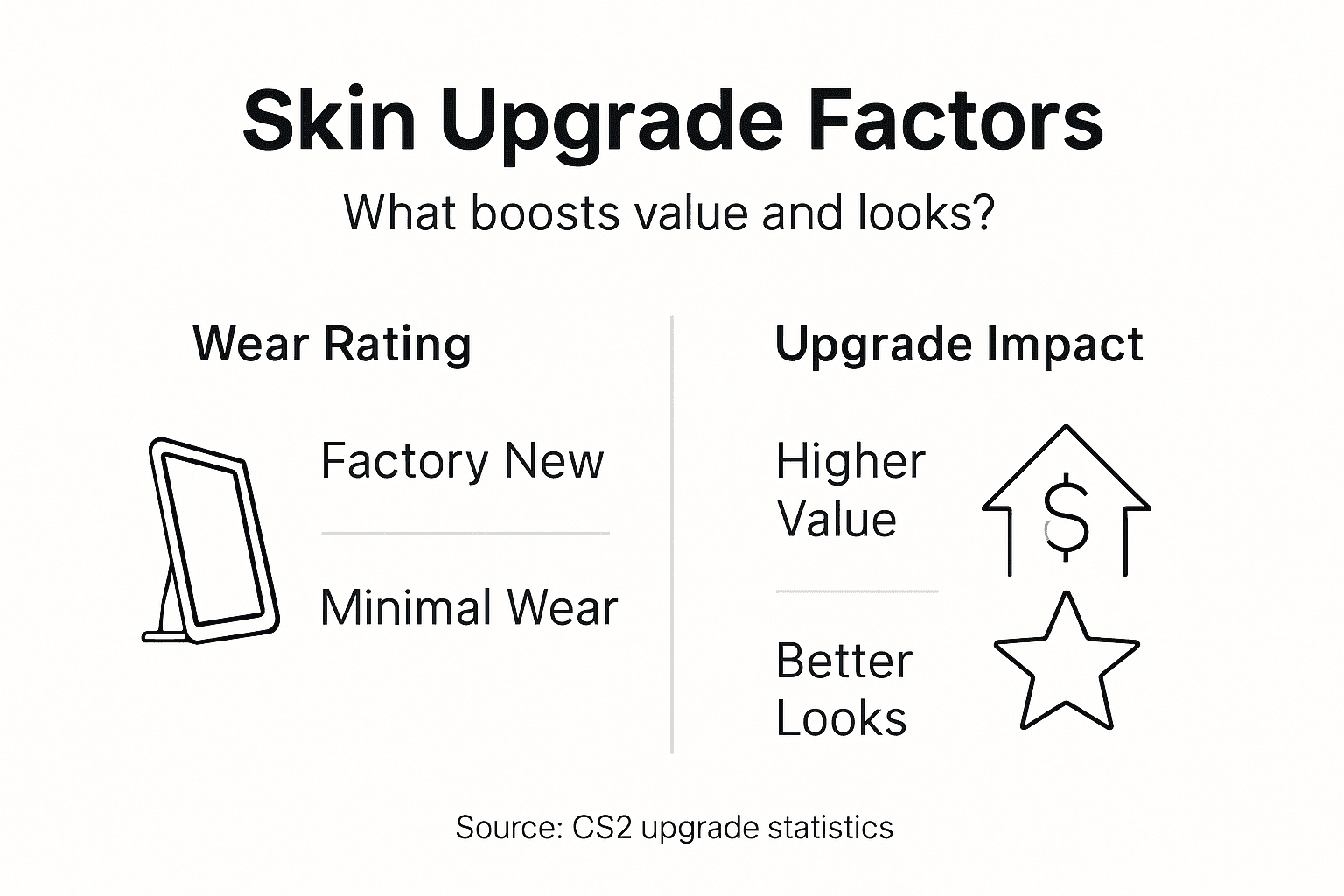
When you upgrade a skin, the resulting item's wear often reflects or improves upon the original. Starting with Factory New or Minimal Wear items increases your chances of receiving desirable outcomes. Battle-Scarred skins rarely upgrade to pristine conditions, limiting their potential value gains even when rarity increases.
Exterior quality significantly impacts how buyers perceive and price skins. A Classified skin in Battle-Scarred condition might sell for less than a Restricted skin in Factory New. Pattern visibility suffers in worn conditions; intricate designs that make premium skins attractive become obscured by scratches and fading.
Strategic upgraders prioritize wear optimization:
- Target Factory New and Minimal Wear cheap skins for upgrade attempts
- Avoid Well-Worn and Battle-Scarred items unless testing mechanics with minimal investment
- Research which skin families maintain visual appeal across wear ranges
- Calculate whether better condition cheap skins justify their higher initial cost
Pro Tip: Factory New skins under $3 represent ideal upgrade candidates. You maximize potential value while maintaining affordable risk exposure per attempt.
Float value transparency varies by platform. Reputable sites display exact float numbers, enabling precise decision-making. Always verify wear before committing to upgrades, as condition differences of 0.01 can mean $5-10 price gaps at higher tiers. Understanding these technical factors separates informed upgraders from those gambling blindly on rarity alone.
Common misconceptions about skin upgrading
Skin upgrading attracts myths that mislead new players into unrealistic expectations. Clearing these misconceptions helps you approach upgrades strategically rather than emotionally.
-
Upgrades guarantee rare or highly valuable skins. Reality: Upgrade outcomes follow probability distributions weighted toward lower tiers. Statistical analysis shows only 15% of upgrades yield skins worth more than double the input value. Most attempts result in modest gains or losses. Platforms display odds transparently, but excitement clouds judgment. Treat upgrading as entertainment with occasional wins, not a reliable profit system.
-
Market value always increases after upgrading. Reality: Successful rarity upgrades don't guarantee price increases. A poorly conditioned Classified skin might sell for less than a pristine Mil-Spec. Market oversaturation of certain upgraded skins depresses prices. Timing matters; upgraded skins need buyers willing to pay your asking price. Some upgraded items lose value if demand shifts or new cases release similar designs at lower natural drop rates.
-
Upgrading doesn't affect gameplay perception. Reality: This contradicts psychological research showing aesthetic improvements boost confidence and focus measurably. Players consistently report enhanced enjoyment and performance with upgraded inventories. While skins don't change mechanics, they absolutely influence the mental aspects of competitive play. Dismissing this psychological dimension ignores a major upgrade benefit beyond pure economics.
-
All platforms offer equivalent upgrade mechanics. Reality: Different sites implement varying probability systems, fee structures, and transparency levels. Some platforms favor the house heavily; others provide fairer odds. Research platform reputations and published success rates before committing funds. Not all upgrade systems treat players equally.
-
You can predict upgrade outcomes through patterns or timing. Reality: Legitimate platforms use provably fair random number generation. No timing strategy, ritual, or pattern analysis improves your odds. Each upgrade represents an independent probability event. Players who claim otherwise exhibit gambler's fallacy thinking.
Understanding these realities prevents disappointment and promotes responsible upgrade habits. Set clear budgets, accept losses as part of the process, and celebrate wins without expecting them consistently.
How Dropskin.com facilitates skin upgrades
Dropskin.com provides a specialized platform for executing skin upgrades with transparent mechanics and community-driven features. The site's upgrade system lets you deposit cheap skins and roll for higher-tier outcomes based on published probability tables.
The platform implements several user-friendly features:
- Clear odds display showing exact percentages for each potential outcome tier
- Provably fair system enabling verification of random number generation integrity
- Instant skin deposits and withdrawals through Steam integration
- Real-time upgrade history showing recent community wins and losses
Dropskin's upgrade mechanics operate on a tiered probability model. When you submit a $2 Mil-Spec skin, the system calculates potential outcomes ranging from Consumer Grade losses to rare Covert wins. Higher-tier results carry lower probabilities, with exact percentages visible before you commit. This transparency lets you calculate expected value and make informed decisions.
The platform distinguishes itself through community engagement features. Regular upgrade contests reward users who achieve rare outcomes or upgrade streaks. Leaderboards track top performers, fostering competitive atmosphere among upgraders. These social elements add entertainment value beyond the upgrade mechanics themselves.
Safety measures include account verification requirements, withdrawal limits for new users, and transaction histories for tracking spending. Dropskin maintains Steam API compliance and doesn't require sharing login credentials. The site's reputation within the CS:GO and CS2 communities reflects years of consistent operation and fair practices.
For players new to upgrading, Dropskin offers low-stakes entry points. You can experiment with $1-2 skins before committing to higher-value attempts. This accessibility lets you learn upgrade dynamics without risking significant inventory value. The platform's educational resources explain probability concepts and risk management strategies for responsible participation.
Practical guide to upgrading cheap skins
Successful skin upgrading requires methodical planning rather than impulsive gambling. Follow this framework to maximize your chances of profitable outcomes.
-
Assess cheap skins for upgrade potential. Examine your inventory for Mil-Spec and lower items in Factory New or Minimal Wear condition. Check current market prices on Steam Community Market or third-party sites. Target skins valued between $2-5 that maintain visual appeal across their design. Avoid Battle-Scarred items unless testing mechanics with money you're comfortable losing.
-
Research upgrade odds and platform mechanics. Study Dropskin's upgrade system to understand probability distributions for your chosen input skins. Calculate expected value by multiplying each outcome's probability by its market price. Compare platforms if you're considering alternatives; odds and fee structures vary significantly. Comprehensive tutorials walk you through technical details before you risk real inventory.
-
Budget upgrade attempts strictly. Allocate a fixed amount you can afford to lose entirely, typically 10-20% of your total skin inventory value. Divide this budget across multiple attempts rather than one high-stakes roll. Set win and loss limits; stop after reaching either threshold regardless of emotions. Budget-friendly strategies from financial planning apply equally to skin upgrading.
-
Execute upgrades focusing on value increase projections. Start with your lowest-value skins to learn mechanics with minimal risk. Track results in a spreadsheet noting input value, output value, and net gain or loss. Adjust strategy based on outcomes; if you're consistently losing on certain skin types, eliminate them from future attempts. Successful streaks don't predict future results; maintain disciplined bankroll management throughout.
| Approach | Initial Investment | Risk Level | Average Outcome | Best For |
|---|---|---|---|---|
| Upgrade cheap skins | $10-20 (multiple attempts) | Medium-High | 1-3 modest wins, several losses | Learning mechanics, entertainment |
| Buy mid-tier direct | $10-20 (single purchase) | None | Guaranteed specific skin | Collectors wanting particular items |
Pro Tip: Never chase losses by exceeding your predetermined budget. The house edge ensures long-term losses for most players. Treat upgrading as paid entertainment, not income generation.
This systematic approach balances excitement with financial responsibility. You'll experience the thrill of potential upgrades while protecting your broader inventory from catastrophic losses. Successful upgraders treat the process as a calculated hobby rather than a get-rich-quick scheme.
Conclusion: making the most of skin upgrades for gamers
Upgrading cheap skins delivers triple benefits: enhanced aesthetics that boost confidence, psychological advantages improving focus and gameplay, and economic opportunities for savvy value increases. You've learned how wear ratings influence outcomes, which myths to discard, and how platforms like Dropskin.com facilitate strategic upgrading.
The randomness inherent in upgrades demands respect. Only 15% of attempts yield significant value gains; most result in modest outcomes or losses. Success requires viewing upgrades as entertainment with occasional profit potential, not guaranteed income. Set strict budgets, track results objectively, and adjust strategies based on actual performance rather than emotional reactions.
Apply this framework to transform your budget inventory into more desirable assets. Start with low-stakes experiments, prioritize Factory New condition skins, and leverage transparent platforms offering fair odds. Whether you're chasing market value, gameplay confidence, or simple excitement, informed upgrading beats impulsive gambling every time. Your next cheap skin might become your favorite weapon; approach upgrades strategically to maximize that potential.
Explore Dropskin.com for your skin upgrade journey
Ready to transform your budget skins into premium assets? Dropskin's upgrader platform offers transparent mechanics, competitive odds, and community features that make upgrading strategic rather than random. You'll find detailed probability displays, provably fair systems, and regular contests rewarding successful upgraders.
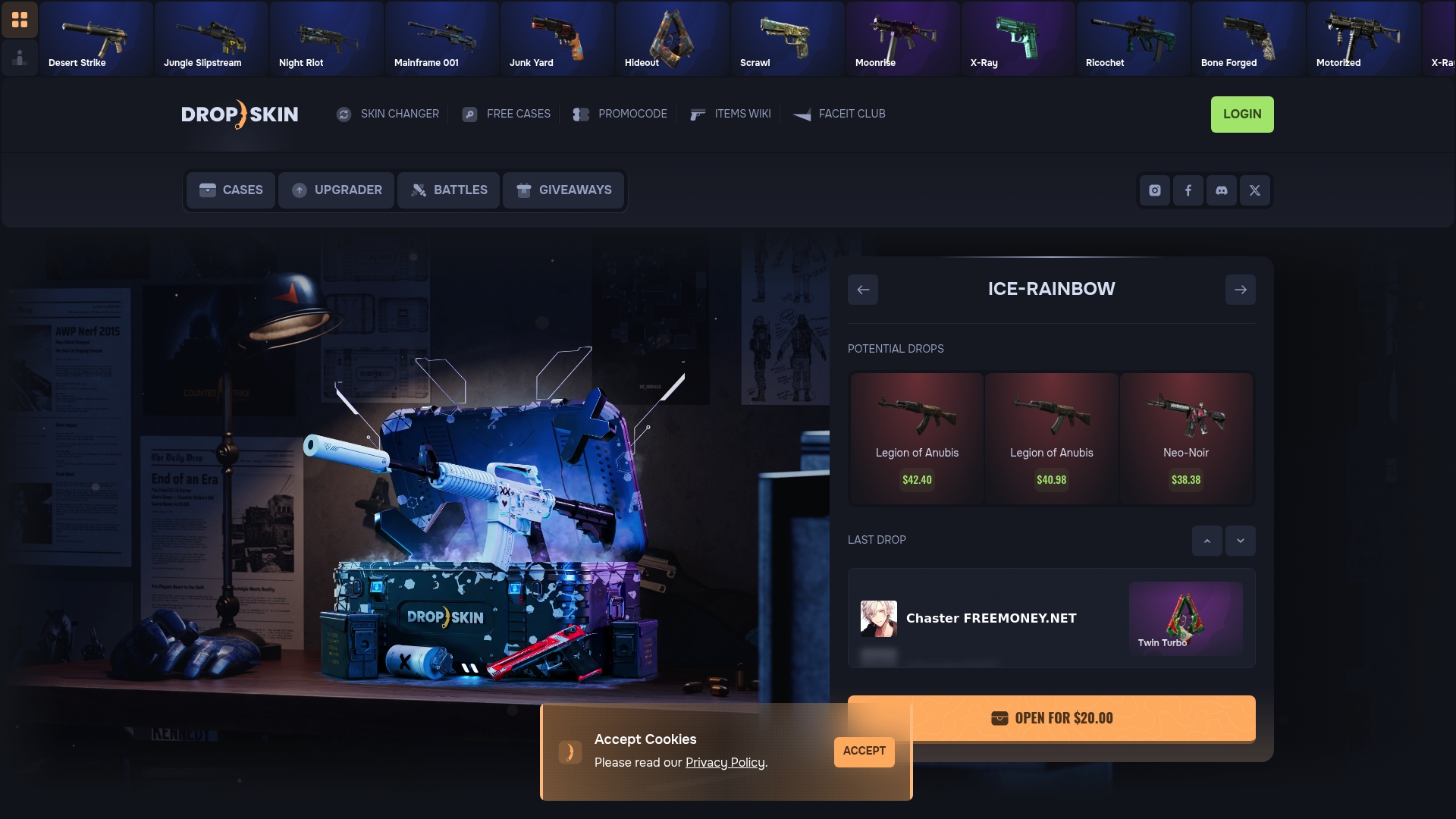
The platform's extensive case collections and skin changer tools complement upgrading features, creating a comprehensive ecosystem for skin enthusiasts. Whether you're curious about why skins hold value or want to understand CSGO versus CS2 skin differences, Dropskin provides resources alongside upgrade opportunities. Start with small investments to learn mechanics, then scale up as you develop strategies that match your budget and risk tolerance. Join thousands of gamers already enhancing their inventories through smart, informed upgrading.
Frequently asked questions
What is the difference between cheap and premium skins?
Cheap skins occupy Consumer Grade through Mil-Spec rarity tiers, typically costing under $5 with simpler designs and fewer visual details. Premium skins belong to Restricted, Classified, and Covert categories, featuring intricate patterns, animated elements, and significantly higher market prices ranging from $20 to thousands of dollars.
Does upgrading guarantee a rare or valuable skin?
No, upgrading involves randomness governed by probability distributions. Only approximately 15% of upgrade attempts yield skins worth more than double the input value. Most outcomes result in similar-tier items or modest value changes, with rare high-tier results occurring infrequently based on published odds.
How do wear ratings affect skin upgrades?
Better wear ratings like Factory New and Minimal Wear increase the likelihood of receiving visually appealing upgraded skins that command higher market prices. Starting with well-conditioned skins maximizes potential value because buyers strongly prefer lower float values. Battle-Scarred inputs rarely produce desirable outcomes even when rarity increases.
Can upgraded skins improve my in-game performance?
Yes, upgraded skins increase confidence by up to 20% and reduce stress while improving focus during competitive matches. This psychological edge translates to bolder decision-making, sustained concentration, and enhanced enjoyment. While skins don't change weapon mechanics, they absolutely influence the mental aspects of gameplay that separate good players from great ones.
Recommended
- CS2 Skin Upgrader - Upgrade Skins Online | DROP.SKIN - Open CS2 Cases and Upgrade your Skins
- Step by Step Skin Upgrade: Boost CS Skins Value Easily
- DROP.SKIN - Open CS2 Cases and Upgrade your Skins
- Value Skin Promos Boost CS:GO & CS2 Profits 30%
- 7 Ways Games Super Elevates Art Collecting Experience – The Mansion Press