
TL;DR:
- The best CS:GO battle modes are Wingman for fast 2v2 tactical play and third-party case battles for skin wagering excitement. Players should rotate between modes like Deathmatch, HS Deathmatch, Arena, and Duels to target specific skills and avoid plateauing. Choosing the right mode depends on your goals, available time, and whether you seek competitive growth or entertainment.
The best CS:GO battle modes are defined by three factors: competitive intensity, skill development potential, and entertainment value. Wingman stands out as the top official mode for fast 2v2 tactical play, while third-party case battle platforms like CSGORoll, DatDrop, and Clash.gg have created an entirely separate category of popular CS:GO battles that blend skin wagering with competitive excitement. Whether you want to sharpen your clutch instincts or chase rare skins through case battles, the right mode depends on what you want to get out of each session. This guide breaks down every major option so you can make that call with confidence.
1. What are the best CS:GO battle modes?
The best CS:GO battle modes split into two categories: official Valve modes built into CS2, and third-party case battle formats hosted on external platforms. Wingman leads the official side. Case battles on platforms like CSGORoll and DatDrop lead the third-party side. Both categories reward different skills and deliver different kinds of excitement, which is exactly why serious players use both.
Wingman is a 2v2 competitive format built around single-bombsite maps. It strips away the noise of 5v5 and forces every player to make faster, sharper decisions. Case battles, by contrast, are event-style competitions where players open cases simultaneously and the highest total skin value wins. Platforms like Clash.gg add formats like Crazy Mode, where the lowest total value wins instead, flipping the usual strategy entirely.
Understanding both categories gives you a complete picture of what CS:GO and CS2 offer in 2026.
2. Why Wingman is the top choice for competitive 2v2 play
Wingman is the best official CS:GO battle mode for players who want competitive depth without the time commitment of a full 5v5 match. Wingman matches last 15–20 minutes, making them ideal for a focused practice session before ranked play or a quick competitive fix between longer commitments.
The format uses small maps built around a single bombsite. Maps like Agency, Studio, and Austria force both players on each team to communicate constantly and execute without room for error. There is no hiding behind four teammates. Every round exposes your positioning, your utility usage, and your decision-making under pressure.
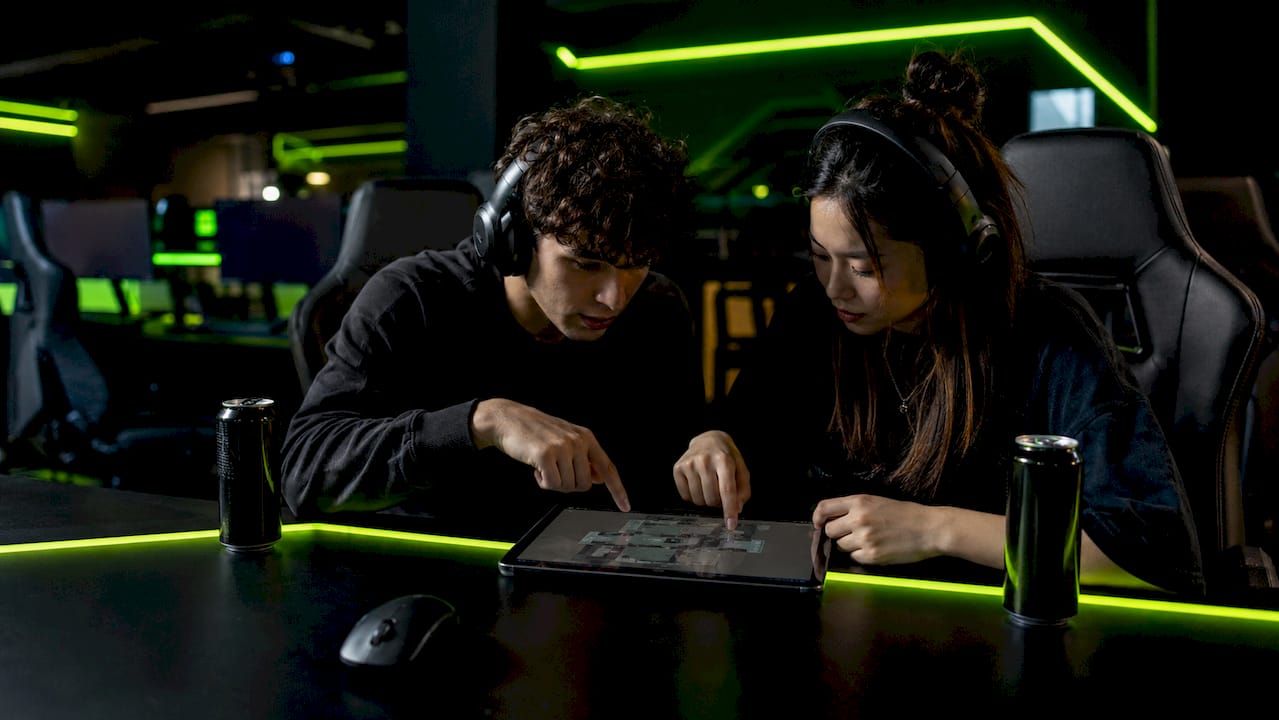
Wingman's single-bombsite design creates a coordination-heavy environment where clutch performance is the norm, not the exception. Players who grind Wingman consistently report faster improvement in 1v2 situations and post-plant scenarios than those who only play standard competitive.
Pro Tip: Pick Studio or Agency for Wingman practice. Both maps have tight angles that punish passive play and force you to develop aggressive, read-based movement.
Wingman's growing popularity reflects a broader shift in how competitive CS2 players think about skill development. Short, intense rounds build clutch instincts faster than long matches where individual impact gets diluted across ten players.
3. The rise of CS:GO case battle modes
Case battle modes are the most popular CS:GO battle types outside of Valve's official client. They work like this: two or more players each open the same set of cases simultaneously, and the player whose skins total the highest value wins the entire pool. The format is fast, transparent, and genuinely exciting because every case opening is a live event.
The top platforms for case battles in 2026 are CSGORoll, DatDrop, and Clash.gg. All three use provably fair systems, meaning the outcome of each case opening is verifiable by the player. That transparency is what separates legitimate case battle platforms from low-quality alternatives.
Case battle formats have expanded well beyond the basic 1v1 structure. Here are the main variants you will encounter:
- 1v1 battles are the standard format. Two players open identical case sets and the higher total wins.
- Crazy Mode reverses the winning condition so the player with the lowest total value wins. This changes strategy completely since high-value cases become a liability.
- Jackpot formats pool multiple players' case results into a single prize, with the winner taking everything.
- Team battles let groups of players combine their case totals against another group, adding a social layer to the competition.
"The best case battle players don't just open cases. They track their win/loss ratios, stick to high-traffic rooms, and treat each battle as a calculated decision rather than a pure gamble." — Dropskin
Successful case battle players avoid low-traffic rooms because slow matchmaking disrupts round flow and reduces the quality of competition. Active rooms on CSGORoll and DatDrop fill quickly, keep the energy high, and give you more data to work with across sessions. You can explore the most popular skin battle types to understand which formats suit your style before committing real skins.
4. CS:GO mode comparison: Deathmatch, Arena, Duels, and HS Deathmatch
No single mode trains every skill. The four core training modes in CS2 each target a specific gap, and rotating between them is what separates players who plateau from players who keep improving.
| Mode | Primary skill trained | Best used for |
|---|---|---|
| Deathmatch | Raw aim volume and tracking | General warmup and movement activation |
| HS Deathmatch | Headshot discipline and crosshair placement | Precision training and head-level habits |
| Arena | Reaction speed and fight pressure | Fast engagement reads and aggression |
| Duels | Isolated 1v1 positioning and mechanics | Identifying specific mechanical weaknesses |
Deathmatch is the highest-volume option. You get constant engagements, varied opponents, and no round structure to slow you down. It is the right choice when you need to activate your aim before a ranked session. HS Deathmatch removes body-shot comfort entirely, forcing pure headshot discipline and building the crosshair placement habits that matter most in competitive play.
Arena compresses the fight timeline. You face opponents in rapid succession with minimal downtime, which trains your ability to reset mentally and engage under pressure. Duels strip everything else away and put your 1v1 mechanics on full display. If you lose a Duels session consistently, you know exactly which mechanical area needs work.
Pro Tip: Use Deathmatch for the first 10 minutes of warmup to activate tracking and movement. Then switch to HS Deathmatch for 10 minutes to lock in head-level crosshair placement before your ranked matches.
Experts recommend rotating through multiple CS2 modes rather than grinding one format indefinitely. Each mode addresses a different skill gap, and over-relying on any single format creates blind spots that opponents will exploit in competitive matches.
5. How to pick the best CS:GO battle mode for your playstyle
Choosing the right mode starts with one honest question: what do you actually need right now? The answer changes depending on your time, your current skill gaps, and whether you want to compete or just have fun.
Here is a practical framework for matching modes to goals:
- You have 20 minutes and want competition. Play Wingman. The fast 2v2 format delivers real competitive pressure without the 45-minute commitment of a standard match.
- You want to fix your aim before ranked play. Run Deathmatch for warmup, then HS Deathmatch to sharpen crosshair placement. Fifteen minutes total is enough.
- You want to test your 1v1 mechanics. Duels mode isolates your individual performance and removes team variables. It is the most honest feedback loop in CS2.
- You want skin rewards alongside competition. Case battles on CSGORoll or DatDrop combine the excitement of opening cases with a competitive format. You can check fairness in skin gambling to understand how provably fair systems protect your interests on these platforms.
- You want to improve under pressure without ranked stakes. Arena mode puts you in constant fight scenarios with no rank on the line. It is the best low-risk environment for developing aggression.
The biggest mistake players make is defaulting to one mode out of habit. Wingman players who never touch Deathmatch develop weak aim volume. Deathmatch grinders who skip Wingman lack clutch experience. The players who improve fastest treat their mode selection as a training plan, not a preference.
Budget also matters for case battle formats. Start with lower-value case sets on DatDrop or Clash.gg to understand the format before scaling up. The advantages of skin gambling go beyond just winning skins. The community engagement and competitive structure make it a genuinely different kind of CS2 experience.
Key takeaways
The best CS:GO battle modes combine Wingman for fast competitive depth, case battles for skin-based excitement, and training modes like HS Deathmatch and Duels for targeted skill development.
| Point | Details |
|---|---|
| Wingman leads official modes | Its 15–20 minute 2v2 format builds clutch skills faster than standard 5v5 matches. |
| Case battles add a new dimension | Platforms like CSGORoll, DatDrop, and Clash.gg offer provably fair, skin-based competition. |
| Rotate training modes | Deathmatch, HS Deathmatch, Arena, and Duels each fix a different skill gap. |
| Match mode to your goal | Choose based on time available, skill focus, and whether you want competition or entertainment. |
| Track your case battle data | Monitoring win/loss ratios and sticking to high-traffic rooms improves long-term results. |
Dropskin's take on mixing modes for real improvement
I have spent enough time in CS2 to know that players who obsess over one mode hit a wall fast. Wingman is my personal go-to for quick tactical sessions. There is something about the 2v2 pressure that no other official mode replicates. You cannot hide, you cannot blame teammates, and every round teaches you something specific about your decision-making.
Case battles are a different kind of engagement entirely. The excitement of opening cases against a live opponent on platforms like DatDrop or Clash.gg is real, and the skin rewards make it feel like the stakes actually matter. What I find most interesting is how case battle players who track their data start to develop a strategic mindset that carries over into competitive play. Pattern recognition, risk assessment, and staying calm under pressure are skills that transfer.
The uncomfortable truth about CS:GO and CS2 mode selection is that most players pick what feels comfortable rather than what they need. If you always play Wingman because you are good at it, you are not improving. If you only grind Deathmatch because it feels productive, you are missing the clutch training that Wingman provides. The players who grow fastest are the ones who rotate deliberately and treat each mode as a tool with a specific purpose. Use Wingman to build pressure tolerance. Use HS Deathmatch to fix crosshair placement. Use case battles to stay engaged with the game when you want entertainment without ranked stress.
— Dropskin
Upgrade your CS2 experience with Dropskin
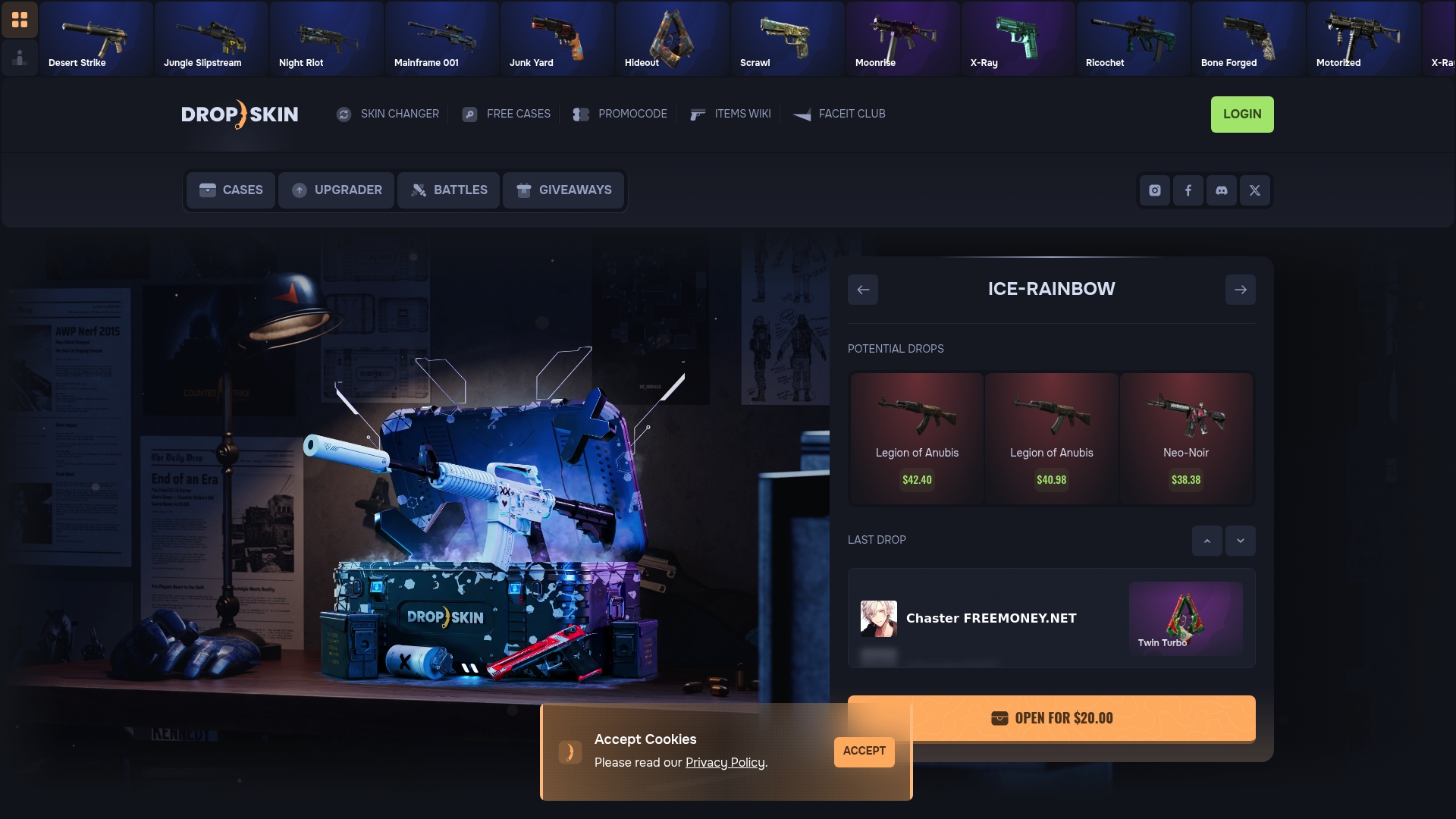
Dropskin gives CS2 players a direct way to turn their skin collection into something worth competing for. The platform's skin upgrader lets you trade up lower-value skins for higher-tier items, so every battle mode session can feed into a growing inventory. Case openings on Dropskin cover an extensive range of collections, from budget-friendly options to premium cases with rare drops. If you are already playing Wingman and case battles to sharpen your game, open CS2 cases on Dropskin to add real skin rewards to your routine. The platform also runs regular giveaways and promo codes, giving you more ways to build your inventory without always spending full price.
FAQ
What is the best CS:GO mode for fast competitive play?
Wingman is the best option for fast competitive play. Matches last 15–20 minutes and the 2v2 format delivers intense tactical pressure on small, single-bombsite maps.
Which CS:GO mode is best for improving aim?
Deathmatch trains raw aim volume and tracking, while HS Deathmatch is better for building headshot discipline and correct crosshair placement habits.
What are case battle modes in CS:GO?
Case battle modes are third-party competitive formats where players open identical case sets simultaneously and the highest total skin value wins. Platforms like CSGORoll, DatDrop, and Clash.gg host these battles with provably fair systems.
How do I win more case battles?
Track your win/loss ratios across sessions and stick to high-traffic rooms on established platforms. Active rooms provide better competition flow and more consistent results than low-traffic alternatives.
Is Wingman or standard competitive better for skill development?
Wingman develops clutch performance and 1v1 decision-making faster because every round isolates your individual impact. Standard competitive is better for team strategy and communication across larger maps.