
TL;DR:
- Choosing the right skin battle format depends on risk tolerance and gameplay preferences.
- Reputable platforms use provably fair mechanics to ensure transparent and fair outcomes.
- Responsible bankroll management and understanding each format's mechanics help sustain long-term enjoyment.
Picking the wrong skin battle type is one of the fastest ways to drain your bankroll and kill your enthusiasm. Whether you're new to the scene or a seasoned trader looking to maximize every match, the battle format you choose shapes your entire experience, from how much fun you have to how much value you walk away with. CS:GO and CS2 skin battles come in several distinct formats, each with its own mechanics, risk profile, and ideal player type. This article breaks down every major type, gives you a clear framework for comparing them, and helps you figure out which format fits your style and goals.
Table of Contents
- How to evaluate CS:GO skin battle types
- Case battles: The foundation of skin competition
- Crash: High-risk, high-reward multiplier battles
- Roulette, jackpots, and upgraders: Alternative battle options
- Which type of skin battle is right for you?
- Our take: Balancing fun, skill, and sustainability in CS:GO skin battles
- Give skin battles a try on DROP.SKIN
- Frequently asked questions
Key Takeaways
| Point | Details |
|---|---|
| Case battles dominate | They are most popular and offer many rule variants for all play styles. |
| Crash is volatile | Crash games offer high reward but rapid loss, so set limits when playing. |
| Alternative modes add variety | Roulette, jackpots, and upgraders suit different risk levels and preferences. |
| Evaluate and manage risk | Use bankroll strategies and pick the mode that fits your entertainment style. |
How to evaluate CS:GO skin battle types
Before you drop skins into any battle, you need a way to compare your options objectively. Not all battle types are created equal, and what works for a high-risk player might be a disaster for someone playing casually on a tight budget.
Here are the core criteria you should use when sizing up any skin battle format:
- Fairness: Does the site use provably fair mechanics? This means the outcome is cryptographically verifiable, so neither the platform nor another player can manipulate results.
- House edge: Every format has a built-in advantage for the platform. Lower house edge means better long-term value for you.
- Entertainment value: Some formats are slow and strategic; others are fast and chaotic. Match the format to your mood and session length.
- Reward potential: What's the realistic upside? Some modes offer massive wins; others offer steady, smaller gains.
- Risk level: How quickly can you lose your entire stake? High volatility formats demand tighter bankroll discipline.
According to case selection mechanics, smart play favors tight case value spreads, opponent stats, and disciplined bankroll management over pure luck. That means research before the battle matters as much as luck during it.
Pro Tip: Before joining any battle, check the platform's provably fair documentation. If it's not publicly available, that's a red flag.
Understanding case opening advantages can also help you recognize which formats give you the most control over your outcomes versus which are purely chance-driven.
Case battles: The foundation of skin competition
Case battles are the most widely played skin battle format, and for good reason. The concept is straightforward: two to four players each open identical cases over multiple rounds, and whoever accumulates the highest total skin value by the end wins all the skins.
Case Battles attract millions of players every month, making them the dominant format across CS:GO and CS2 skin gambling platforms. The format's popularity comes from its simplicity and the satisfying tension of watching each case reveal stack up against your opponent's.
The four main variants are:
- Original: Standard winner-takes-all format. Highest total value wins everything.
- Crazy: The player with the lowest total value wins. It flips the usual logic and creates wild, unexpected moments.
- Shared: All opened skins are distributed among participants, reducing the all-or-nothing pressure.
- Team: Players compete in groups, combining their totals, which encourages cooperative strategy.
| Battle variant | Win condition | Risk level | Best for |
|---|---|---|---|
| Original | Highest value wins | High | Competitive players |
| Crazy | Lowest value wins | Medium | Chaos lovers |
| Shared | Skins split evenly | Low | Casual players |
| Team | Combined team value | Medium | Group sessions |
One important trust factor: provably fair systems verify that every case opening result is random and tamper-proof, giving players confidence the outcomes are genuine.
Understanding skin gambling advantages alongside case opening methods helps you enter battles with realistic expectations. Always combine that knowledge with safe gambling tips to protect your inventory.
Crash: High-risk, high-reward multiplier battles
Crash is a completely different animal compared to case battles. It's fast, intense, and demands real-time decision-making under pressure.
Here's how it works step by step:
- You place your bet using skins or credits before the round starts.
- A multiplier begins rising from 1.00x upward.
- You can cash out at any point to lock in your winnings at the current multiplier.
- If you wait too long and the multiplier crashes before you cash out, you lose your entire bet.
- The crash point is randomly determined each round using a provably fair algorithm.
Players bet on a rising multiplier and must exit before it crashes to collect their winnings. The tension between greed and caution is what makes Crash so compelling and so dangerous.
"The biggest mistake in Crash isn't bad luck. It's not having a plan before the round starts."
Most platforms offer an auto-cashout feature, which lets you set a target multiplier in advance. This removes the emotional impulse to "hold just a little longer" and is one of the most effective tools for managing Crash volatility.
Pro Tip: Decide your cashout target before the round begins, not during it. Emotional decisions mid-round are where most players lose money.
If you want a deeper breakdown of how betting with skins works across formats, the CS2 skin betting guide covers the mechanics thoroughly. You should also review skin betting risks before committing real inventory to Crash sessions.
Roulette, jackpots, and upgraders: Alternative battle options
Beyond case battles and Crash, several other formats attract players looking for variety. Each has its own appeal and risk structure.
Roulette is one of the oldest formats in skin gambling. You bet skins on a color or number, and the wheel determines the outcome. It's simple, fast, and social. The downside is that the house edge is baked into the probability, so the odds are always slightly against you.
Jackpots work differently. All participating players deposit skins into a shared pot. A random draw determines the winner, but your odds of winning scale with the value of what you contributed. Deposit more, and your slice of the probability pie grows. This format can produce massive single-session wins, but it also means competing against players with much deeper pockets.

Upgraders are arguably the most strategic format for skin collectors. You risk a skin you own for a chance to receive one of higher value or rarity. The probability of success decreases as the value gap widens.
Roulette, jackpots, and upgraders are all common on reputable gambling platforms that use provably fair systems to validate outcomes.
| Format | Entry type | Skill factor | Volatility |
|---|---|---|---|
| Roulette | Skins or credits | Low | Medium |
| Jackpot | Skin deposit | Low | Very high |
| Upgrader | Single skin | Medium | High |
| Case battles | Cases | Medium | Medium |
The CS2 skin upgrader is a great entry point if you want to experiment with upgrading without committing to full jackpot-style risk. Understanding what the skin upgrader does before you use it helps you set realistic expectations for each attempt.
Which type of skin battle is right for you?
Now that you know how each format works, the real question is which one fits you. Your answer depends on three things: your risk tolerance, how much time you want to spend per session, and whether you're playing for fun or chasing specific skins.
| Battle type | Skill influence | Risk | Reward potential | Best player type |
|---|---|---|---|---|
| Case battles | Medium | Medium | Medium to high | Strategy-focused players |
| Crash | Low | Very high | Very high | Risk-tolerant players |
| Roulette | Low | Medium | Medium | Casual players |
| Jackpot | Low | Very high | Massive | High-rollers |
| Upgrader | Medium | High | High | Skin collectors |
Here's how to match your profile to the right format:
- Casual players should start with Shared case battles or Roulette. Lower stakes, lower pressure.
- Strategy-focused players will enjoy Original case battles and Upgraders, where case selection and value analysis actually matter.
- Risk-takers looking for big swings should explore Crash or Jackpots, but only with money they're fully prepared to lose.
- Team players benefit most from Team case battles, which add a social layer to the competition.
Bankroll discipline is the single most important habit across all formats. A widely respected rule: never put more than 5% of your total skin bankroll into any single battle. It keeps losing streaks survivable and winning streaks sustainable.
For deeper strategy, the smart skin battle strategies guide covers advanced tactics, and case opening risks and rewards gives you a grounded view of what to realistically expect.
Our take: Balancing fun, skill, and sustainability in CS:GO skin battles
Here's the honest truth most skin battle content won't tell you: skill plays a much smaller role than most players want to believe. Yes, you can optimize case selection, choose better opponents, and manage your bankroll intelligently. But every format covered here has a negative expected value (EV), meaning the math favors the house over time. That's not a reason to avoid skin battles. It's a reason to approach them correctly.
The players who stay in this hobby longest are the ones who treat it as entertainment, not income. They set session limits, celebrate wins without chasing them, and walk away from losses without tilting into bigger bets. That mindset shift changes everything.
We've seen players burn through entire inventories chasing "one big win" in Crash or Jackpot. We've also seen players enjoy years of case battles by staying disciplined and picking formats that match their personality. The difference isn't luck. It's self-awareness.
Practicing safe gambling habits isn't just about protecting your skins. It's about making sure skin battles stay fun long-term.
Give skin battles a try on DROP.SKIN
If you're ready to put this knowledge into practice, DROP.SKIN is built for exactly this kind of informed, engaged player. Every major battle type covered in this article is available on the platform, from classic case battles and Crash to the skin upgrader.
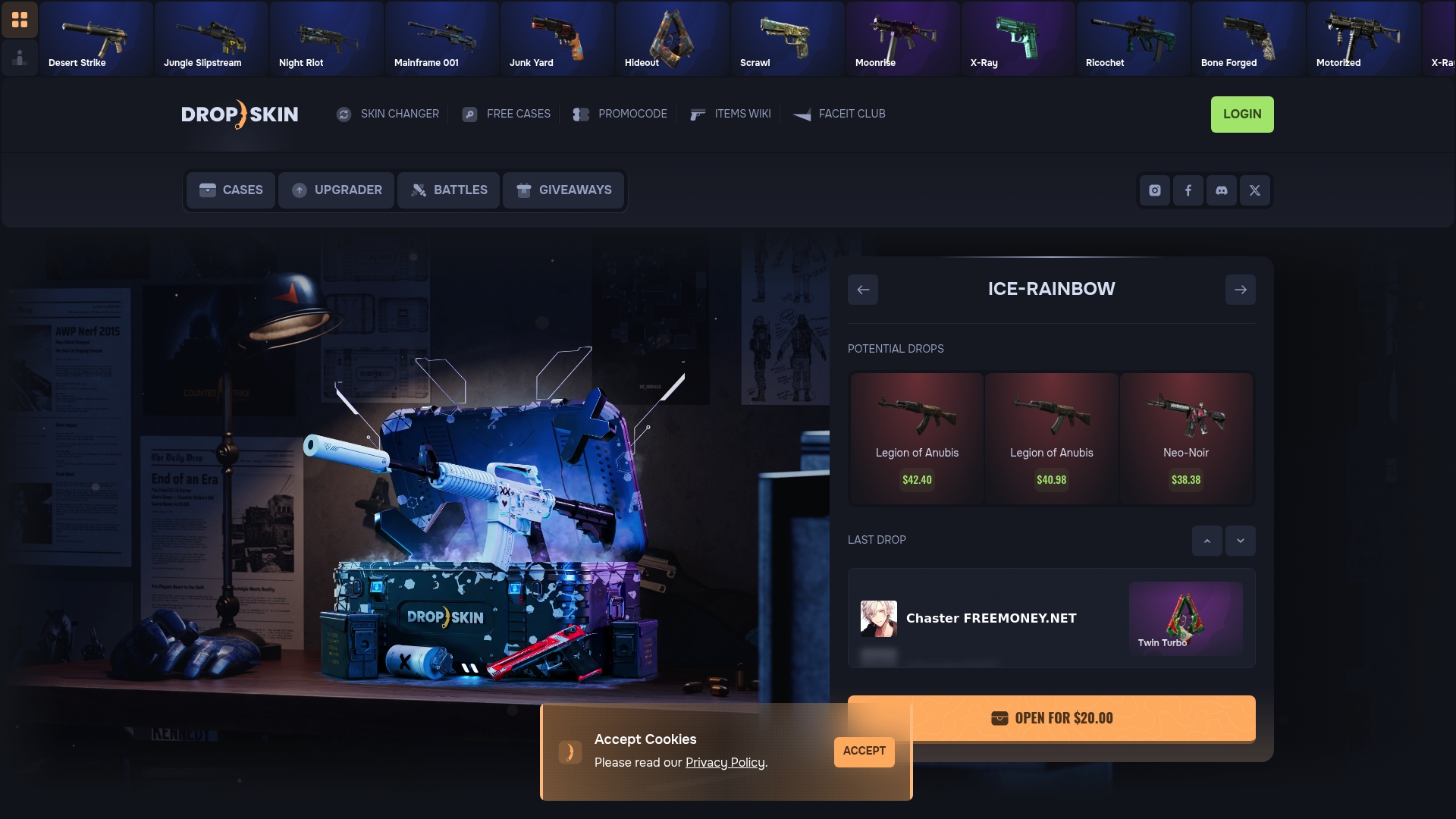
DROP.SKIN uses provably fair mechanics across all its game modes, so you can verify every outcome yourself. The platform also runs regular giveaways and promo codes that let you explore new formats without risking your own inventory. Whether you want to explore DROP.SKIN case battles or go straight to try the skin upgrader, the experience is designed to be transparent, fair, and genuinely entertaining.
Frequently asked questions
What is the difference between case battles and crash games?
Case battles involve opening cases to compete on total skin value against other players, while Crash is a multiplier betting game where you must cash out before a random crash point ends the round.
Are CS:GO skin battles fair?
Reputable platforms use provably fair mechanics that cryptographically verify each result is random and unmanipulated, giving players a transparent way to confirm outcomes.
What is the safest way to participate in skin battles?
Stick to verified platforms, apply the 5% bankroll rule per battle, and never bet more than you're comfortable losing in a single session.
Do team and shared case battles have lower risk?
Team and Shared modes distribute risk and winnings across multiple players, making them significantly less all-or-nothing than standard solo battles.