
You've set up what looks like a perfect battle lineup, picked your cases carefully, and still walked away with nothing. Sound familiar? The frustrating truth is that randomness plays a real role in CS2 skin battles, but it's not the only factor. Evidence-backed strategies can meaningfully shift your win rate, and the difference between players who consistently profit and those who don't often comes down to preparation, structure, and smart opponent selection. This guide breaks down everything you need to know, from understanding battle formats to managing your rewards and avoiding the mistakes that quietly drain your bankroll.
Table of Contents
- Understanding CS2 skin battles: Basics and formats
- Setting yourself up to win: Preparation and essentials
- How to structure your battles for better odds
- Opponent selection: Picking the right battles
- Maximizing and managing your rewards
- Common mistakes and how to avoid them
- Level up your strategy with DROP.SKIN
- Frequently asked questions
Key Takeaways
| Point | Details |
|---|---|
| Pick stable cases | Select mid-tier, consistent cases rather than high-variance or unsellable ones. |
| Structure battles smartly | Set up smaller battles with filler and comeback rounds for better odds control. |
| Target weaker opponents | Check win rates and choose battles with lower-performing competitors for higher chances of winning. |
| Cash out immediately | Sell or trade unwanted skins quickly to lock in profits and avoid value drops. |
| Don’t chase losses | Stick to limits and see skin battles as entertainment, not a guaranteed profit path. |
Understanding CS2 skin battles: Basics and formats
Before you can win more, you need to understand exactly what you're playing. CS2 skin battles, also called Case Battles, are multiplayer competitions where 2 to 4 players open identical CS2 cases at the same time, and the player with the highest total skin value wins all items from the battle. It's a format that blends the thrill of case openings with head-to-head competition.
A few key terms worth knowing: RNG (random number generator) controls which skins drop, the house edge is the platform's built-in percentage advantage, and the rake is the fee the site takes from each battle. Understanding these terms helps you make smarter decisions about where and how you play.
Here's a quick look at the most common battle formats:
| Format | Players | How it works |
|---|---|---|
| 1v1 | 2 | Head-to-head, highest value wins |
| 2v2 | 4 | Team totals compared, highest wins |
| Free-for-all | 2-4 | Every player for themselves |
| Crazy Mode | 2-4 | Lowest total skin value wins |
Battles support modes like 1v1, 2v2, free-for-all, and Crazy Mode, giving players flexibility in how they compete. Crazy Mode in particular flips the usual logic and rewards players who open lower-value skins, which can actually be a smart play with the right case selection.
Why do players join skin battles in the first place? A few solid reasons:
- Higher potential rewards compared to solo case openings
- The competitive element adds excitement beyond standard gambling
- Opportunity to win premium skins at a fraction of their market price
- Social and community engagement with other CS2 players
Safety note: Always stick to reputable, provably fair platforms that let you verify battle outcomes. Platforms take a site fee or rake, and the house edge means long-term losses are expected without smart play. Knowing this upfront protects your bankroll.
If you want a deeper look at maximizing skin battle value or want to understand what is a CS2 case collection, both are worth reading before you dive in.
Setting yourself up to win: Preparation and essentials
With the basics covered, let's detail the preparation steps that can tip the odds before you ever open a case. Most players skip this part entirely, and it costs them.
Not all cases are created equal for battles. Here's how popular case types compare:
| Case type | Value spread | Battle suitability | Example |
|---|---|---|---|
| Mid-tier cases | Tight, consistent | High | Kilowatt Case |
| Knife-heavy cases | Wide, unpredictable | Low | Chroma Case |
| Dead cases | Low, unsellable skins | Very low | Older discontinued cases |
| Weapon-focused cases | Moderate | Medium | Fracture Case |
Selecting cases with tight value spreads and consistent mid-tier drops, like the Kilowatt Case, reduces blowout losses compared to high-variance knife-heavy cases. This single decision can dramatically change your battle outcomes.
Here's your pre-battle checklist:
- Check current case values and recent skin drop rates
- Scout the lobby and review opponent stats before joining
- Confirm the platform's house edge and rake percentage
- Verify the site is provably fair
- Set a clear budget limit before you start
Pro Tip: When you win skins you don't want, trade or sell them immediately to lock in profits. Skin markets move fast, and holding onto unwanted items often means watching their value drop while you wait.
For more on building a CS2 skin collection strategically, or to run a quick CS2 skins price check before your next battle, both resources will sharpen your prep game.
How to structure your battles for better odds
Now, with your essentials ready, it's time to get tactical. The way you set up each battle can seriously influence outcomes, and most players leave this entirely to chance.
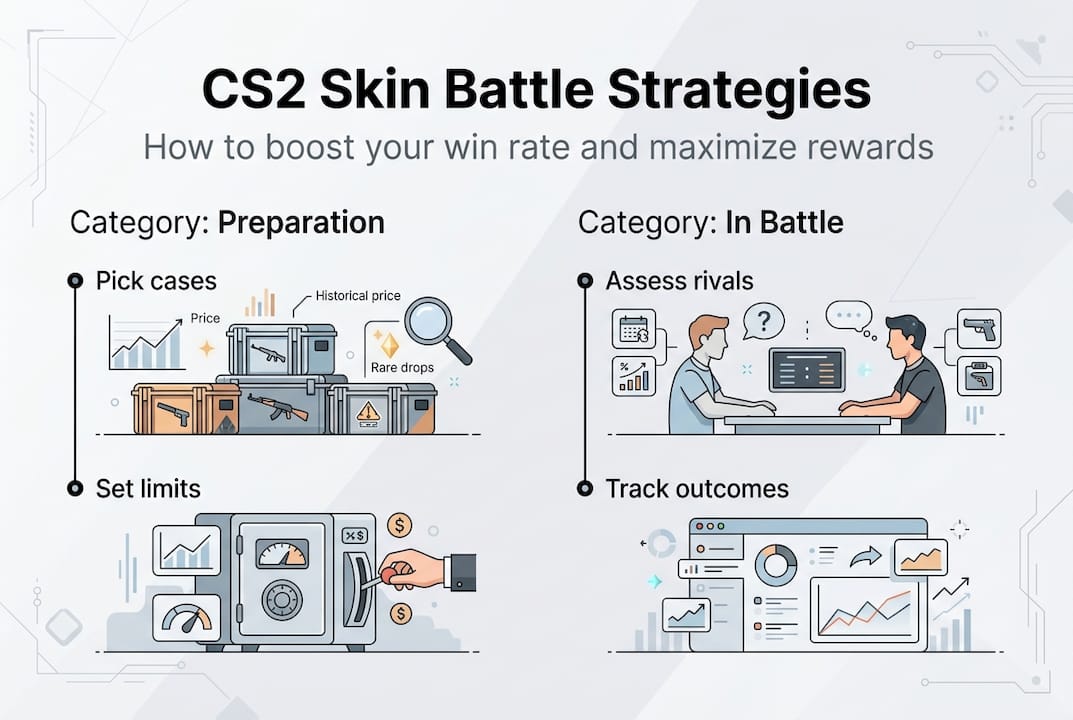
Here's a step-by-step approach to structuring battles that control variance and maximize comeback potential:
- Start with low-cost filler cases to build early momentum without risking your full stake upfront.
- Place your highest-value case last so you have a comeback opportunity if you're trailing.
- Keep battle size small, ideally 3 to 5 rounds, for better RNG control and tighter variance.
- Mix case types to avoid single-drop dependency, where one bad pull wipes your entire lead.
- Review your lineup before confirming to make sure no single case dominates your total value.
Smaller battles with 3 to 5 rounds give you better RNG control, and structuring with low-cost fillers plus one higher-value case creates real comeback potential. This isn't just theory. It's a format used by experienced players who understand variance.
Stat callout: The house edge typically sits at 5 to 15%, making battles negative expected value long-term. However, a win rate above 50%, pushed to 55 to 60% through smart strategy, can make battles neutral or even positive compared to solo case openings.
Pro Tip: Smaller, focused battles cut down randomness and let you adjust your strategy round by round. Avoid massive 10-round battles unless you're comfortable with high variance and have the bankroll to absorb swings.
Check out skin collecting tips for more on managing value across your inventory, or browse best CS2 cases to open to find the right cases for your next structured battle.
Opponent selection: Picking the right battles
Having set your battle structure, choosing whom you face is the final step before the match begins. This is one of the most overlooked advantages in skin battles.

Most platforms show lobby stats before you join. Use them. Target opponents with win rates under 35 to 40% across many battles, and avoid anyone sitting above 60%. These numbers reflect real patterns, not just luck.
What to look for when scouting a lobby:
- Win/loss ratio over a significant number of battles (50 or more)
- Recent win streaks that suggest hot variance, not skill
- Battle formats they prefer and whether those match your strengths
- Total battles played, since newer players have less reliable stats
Avoid players who are clearly on a hot streak. Variance can cluster, and joining a lobby with someone riding a 10-battle win streak is a risk you don't need to take. Target players with lower past performance and inconsistent results.
Pro Tip: Keep a personal log of recurring players you encounter. Note their outcomes over time. Patterns emerge faster than you'd expect, and this habit gives you a real edge when the same names show up in lobbies.
For more context on how skins influence gameplay and player psychology, it's a useful read before your next session.
Maximizing and managing your rewards
Once you've won skins in battle, the way you manage your rewards is just as critical as how you earned them. Winning is only half the equation.
Here's a simple process to follow after every battle:
- Claim your rewards immediately and review what you've won against current market prices.
- Sell or trade unwanted skins right away to lock in value before market prices shift.
- Reinvest selectively, putting a portion of profits back into battles only if your bankroll supports it.
- Cash out regularly rather than letting winnings sit idle on the platform.
- Track your net results over time to understand your actual win rate and adjust strategy.
Trading or selling unwanted skins immediately locks in profits and lets you target the items you actually want. Holding onto skins hoping for a price spike is a gamble on top of a gamble.
Remember: Skin battles are primarily entertainment. Strategies boost win rates but cannot overcome the house edge long-term. Never battle with money or skins you can't afford to lose, and treat any profit as a bonus, not a guarantee.
For a broader look at the landscape, the CS2 skin betting guide covers expected value trade-offs in detail.
Common mistakes and how to avoid them
Even with good strategies, some frequent mistakes can seriously damage your chances or returns. Here's what to watch out for:
- Ignoring lobby stats: Jumping into any open battle without checking opponent win rates is leaving money on the table. Always scout first.
- Overextending your bankroll: Setting no budget limit is the fastest way to wipe out your inventory. Decide your limit before you start, not after a loss.
- Chasing losses: Doubling down after a bad battle to recover losses is a classic trap. Each battle is independent. Walk away and reset.
- Relying on knife-heavy cases: High-variance cases feel exciting but create massive swings. Mid-tier cases like Kilowatt provide steadier, more predictable results.
- Holding dead skins too long: Skins from discontinued or low-demand cases lose value fast. Sell them quickly and reinvest in cases with active markets.
- Playing too many rounds per battle: Longer battles amplify variance. Stick to shorter formats where your strategy has more impact.
Diversify your case lineup, set hard battle limits per session, and sell dead skins the moment you win them. These three habits alone will protect more value than any single strategy tip. For a full breakdown of the risks involved, the skin gambling risks guide is essential reading.
Level up your strategy with DROP.SKIN
Ready to put these strategies into practice? DROP.SKIN is built for exactly this kind of play. The platform gives you access to a wide range of CS2 case battles, a full skin upgrader, and an extensive case collection, all in one place.
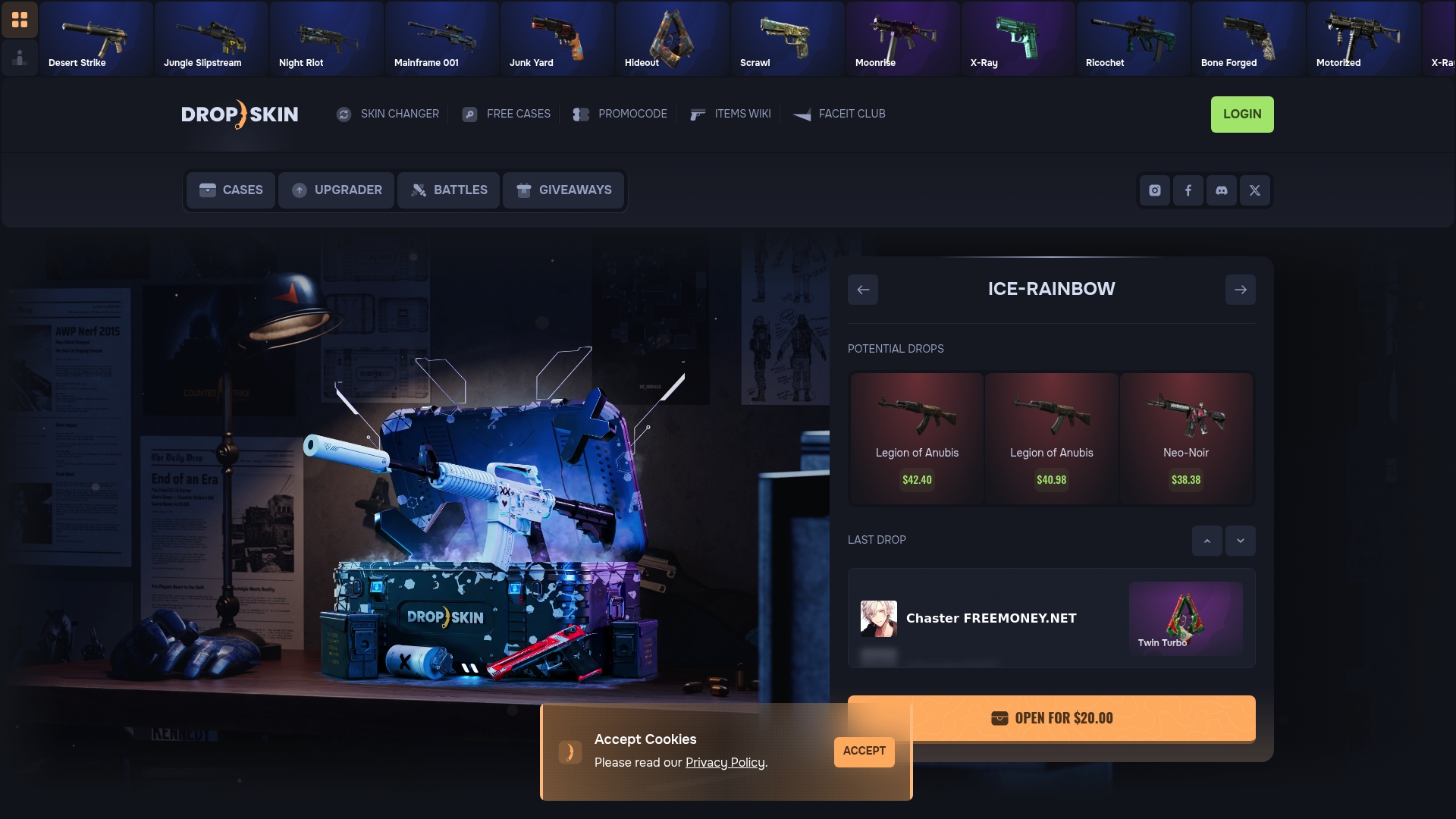
Whether you're structuring your first 3-round battle or looking to upgrade skins you've already won, DROP.SKIN CS2 case battles gives you the tools to apply everything covered in this guide. Use the CS2 skin upgrader to turn mid-tier wins into premium skins without waiting for the perfect battle outcome. The platform is designed for players who want more than luck on their side.
Frequently asked questions
What is the house edge in CS2 case battles?
The house edge typically sits at 5 to 15%, meaning the platform keeps a small percentage of the total case value from every battle. This is built into the format and applies regardless of your skill level.
Is it possible to turn a profit playing skin battles long-term?
Skin battles can be profitable short-term with smart strategies, but strategies can't overcome the house edge over a long enough timeline. Treat battles as entertainment with profit potential, not a reliable income source.
Which case types are best for winning more battles?
Mid-tier cases like Kilowatt offer tighter value spreads and more consistent drops, making them far better for battles than knife-heavy or discontinued dead cases.
How can I check if a platform is provably fair?
Look for platforms that offer transparency tools letting you independently verify the randomness of each battle outcome. Provably fair sites publish verifiable data so you can confirm results weren't manipulated.