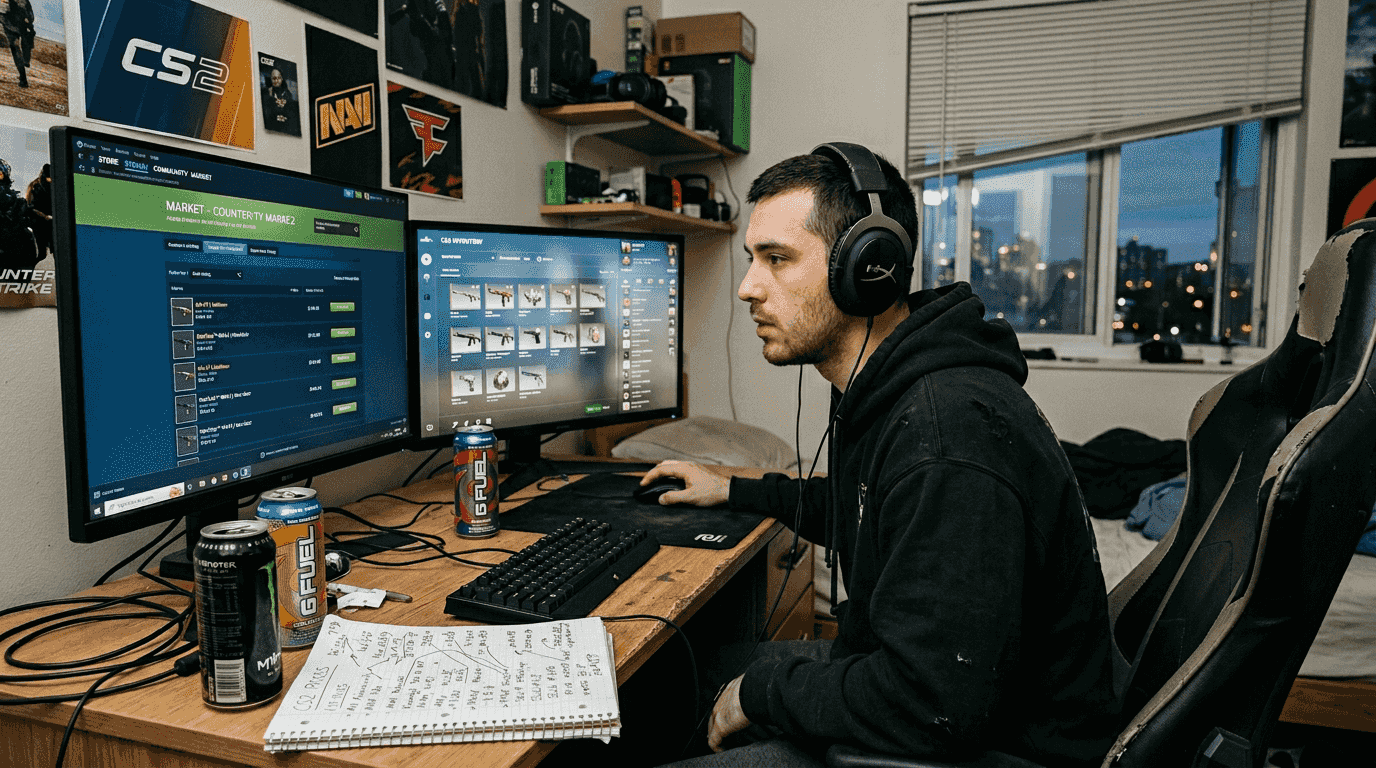
CS2 skin collecting and trading has evolved into a sophisticated market where strategic decisions separate profitable collectors from casual players. The competitive landscape of 2026 demands understanding market dynamics, leveraging gamified features, and choosing secure platforms to maximize returns. Whether you're building a premium collection or actively trading for profit, mastering evaluation criteria, trade-up mechanics, and marketplace selection will transform your approach to skin value optimization.
Table of Contents
- 1. Criteria For Evaluating Esports Skins In CS2
- 2. Profitable Options: Skin Gambling And Trade-Up Contracts
- 3. Comparing Marketplaces And Selling Strategies In 2026
- 4. Making The Right Decisions: Long-Term Investment Vs Active Trading
Key takeaways
| Point | Details |
|---|---|
| Market awareness drives value | CS2 skin prices fluctuate based on tournament usage, player trends, and game updates in 2026. |
| Trade-up contracts yield high ROI | Successful contracts deliver 65-145% profit margins with 70-85% success rates when executed properly. |
| Platform security is critical | Choosing verified marketplaces with 2FA and counterfeit detection prevents losses and protects investments. |
| Long-term investing outperforms flipping | Discontinued skins and operation items generate higher sustained returns than quick trading cycles. |
| Float values impact pricing | Wear ratings and StatTrak™ features significantly affect skin desirability and market value. |
1. Criteria for evaluating esports skins in CS2
Understanding what makes a CS2 skin valuable requires analyzing multiple factors that influence market demand and pricing. The CS2 skin economy operates on supply and demand, with item values fluctuating based on player interest, tournament usage, and update news. Smart collectors monitor these trends to identify profitable acquisition opportunities before prices surge.
Rarity forms the foundation of skin value assessment. Factory New skins with minimal wear attract premium prices, while Battle Scarred versions of the same design sell for fractions of the cost. Float values determine exact wear levels, ranging from 0.00 (pristine) to 1.00 (heavily worn). StatTrak™ technology adds another value layer by tracking kill counts, making these variants more desirable to competitive players.
Discontinued cases and operation exclusive skins create scarcity that drives long term appreciation. When Valve removes cases from active drop pools, existing skins from those collections become finite resources. This supply constraint pushes prices upward as demand remains constant or increases. The CS2 skin market economy rewards collectors who recognize these patterns early.
Timing purchases around game updates maximizes value potential. Major patches often introduce weapon balance changes that shift player preferences toward specific guns. Skins for newly buffed weapons experience immediate demand spikes. Similarly, tournament announcements featuring particular teams or players can elevate associated skin collections.
Key evaluation factors include:
- Market demand signals from trading volume and price velocity
- Float value precision affecting visual appearance quality
- StatTrak™ availability and functionality for competitive appeal
- Cosmetic uniqueness including pattern variations and color schemes
- Historical price trends indicating stability or volatility
- Community perception and professional player endorsements
Pro Tip: Calculate exact float values using inspection tools before purchasing Factory New or Minimal Wear skins, as small differences within these categories create significant price gaps that casual buyers overlook.
2. Profitable options: skin gambling and trade-up contracts
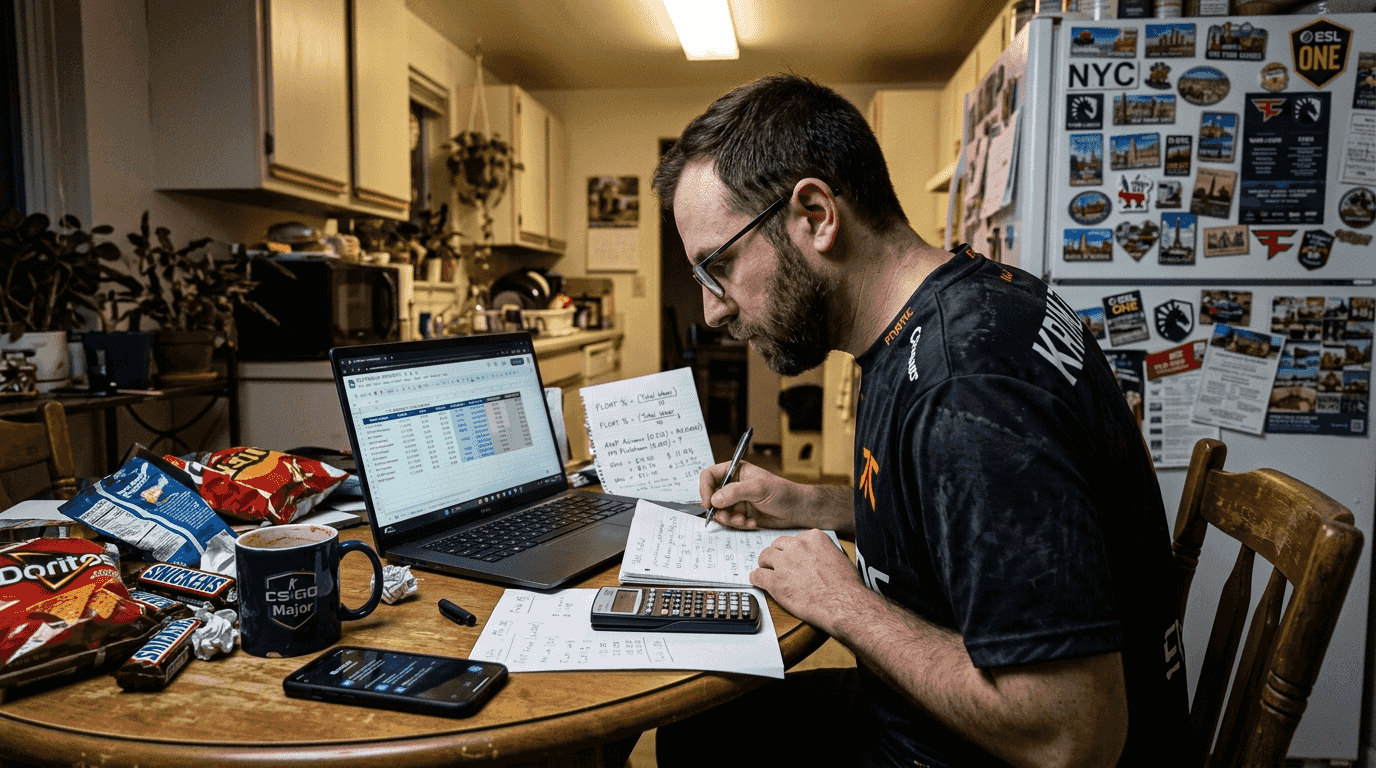
Trade-up contracts represent one of the most mathematically favorable methods to generate profit in CS2. These contracts yield profit margins between 65% and 145%, with average returns around 89% when executed with proper research and calculation. The mechanic allows players to exchange ten skins from one quality tier for a single skin from the next tier up, creating arbitrage opportunities.
Successful trade-ups require understanding probability distributions and outcome ranges. Each contract has a defined collection of possible results, with rarity determining individual item chances. Consumer to Industrial contracts typically offer the most consistent returns because lower tier skins cost less while output values remain attractive. Calculating expected value before committing resources separates profitable trades from gambling.
The Armory Pass system introduced in 2026 provides additional value extraction through reward tracks and exclusive drops. Players who complete weekly missions accumulate stars that unlock premium skins and cases. Strategic pass owners focus on high value reward tiers, ignoring cosmetic items with minimal resale potential. This approach transforms the pass from an expense into an investment vehicle.
Executing profitable trade-ups follows a systematic process:
- Research target skin collections and identify high value outputs with favorable probabilities
- Calculate expected value by multiplying each possible outcome price by its occurrence chance
- Source input skins at below market prices using patient buy orders on trading platforms
- Verify float value ranges to ensure outputs will achieve desired wear ratings
- Execute contracts during low volume periods to minimize competition for input materials
- List successful outputs immediately if prices show downward momentum or hold for appreciation
Skin upgrade tools on platforms like DROP.SKIN offer alternative profit paths through progressive enhancement mechanics. These systems let players stake lower value skins for chances at premium upgrades, creating entertainment value alongside potential returns. Understanding upgrade probability curves helps optimize stake sizes and timing.
| Trade-Up Tier | Average Profit Margin | Success Rate | Input Cost Range | Typical Output Value |
|---|---|---|---|---|
| Consumer to Industrial | 89% | 75-82% | $2-8 | $15-45 |
| Industrial to Mil-Spec | 67% | 70-78% | $8-25 | $35-95 |
| Mil-Spec to Restricted | 112% | 68-75% | $20-80 | $120-380 |
| Restricted to Classified | 145% | 65-72% | $75-300 | $450-1200 |
Pro Tip: Invest in discontinued operation cases and their associated skins rather than current drop pool items, as these appreciate steadily while active cases flood the market with supply that depresses values.
3. Comparing marketplaces and selling strategies in 2026
Platform selection directly impacts profitability and security when converting skins to cash. Choosing the right platform to sell skins is crucial for preserving value, avoiding fraud, and navigating regulatory shifts that reshaped the landscape in 2026. Third party marketplaces vary dramatically in fee structures, security measures, and user protection systems.
Valve's updated API terms eliminated 19% of low security instant trade sites, forcing sellers toward platforms with robust verification systems. This regulatory shift improved overall market safety but reduced liquidity options for traders seeking quick transactions. The surviving platforms invested heavily in counterfeit detection, two factor authentication requirements, and dispute resolution processes.
Skinport maintains a reputation for stringent security protocols and competitive fee structures around 12% for sellers. The platform's automated pricing suggestions help users list items at market competitive rates. DMarket offers lower fees near 7% but requires more active price management from sellers. Both platforms implement mandatory 2FA and hold periods for new accounts to prevent compromised account exploitation.
Red flags indicating problematic platforms include:
- Instant trade promises without identity verification or account age requirements
- API access requests that exceed necessary permissions for basic transactions
- Missing or optional two factor authentication during high value transfers
- User reviews concentrated in short time periods suggesting manipulation
- Unclear fee structures that hide charges until transaction completion
- No counterfeit detection systems or buyer protection guarantees
The consequences of poor platform choices remain severe. Data shows 63% of active sellers lost valuable skins due to platform related mistakes, including phishing attacks, API scams, and counterfeit acceptance. Avoiding common skin trading mistakes requires diligence in platform vetting and transaction verification.
| Platform | Security Measures | Seller Fees | Counterfeit Protection | User Base Size | Payment Speed |
|---|---|---|---|---|---|
| Skinport | Mandatory 2FA, ID verification | 12% | Automated scanning | 850K active | 1-3 days |
| DMarket | 2FA, trade lock periods | 7% | Manual review option | 620K active | 2-5 days |
| CS.MONEY | 2FA, reputation system | 10% | Community reporting | 1.2M active | 1-2 days |
| Tradeit.gg | Optional 2FA, email confirm | 15% | Limited automation | 340K active | 3-7 days |
Successful sellers diversify across multiple platforms to maximize exposure while maintaining security standards. Listing high value items on premium platforms with better buyer pools justifies higher fees through faster sales and better prices. Lower value skins move efficiently through high volume marketplaces where fee percentages matter less than transaction speed.
4. Making the right decisions: long-term investment vs active trading
Choosing between active trading and long term holding shapes your entire approach to CS2 skin profitability. Successful CS2 trading involves understanding the distinction between active income through frequent flips and passive income from strategic holding. Each strategy demands different resources, skills, and time commitments that align with specific collector profiles.
Active traders capitalize on short term price fluctuations, market inefficiencies, and arbitrage opportunities between platforms. This approach generates consistent cash flow but requires constant market monitoring, quick decision making, and substantial transaction volume to overcome fee erosion. Successful active traders develop expertise in specific skin categories, enabling rapid value assessment and confident purchasing.
Long term investors focus on discontinued items, operation exclusives, and skins with historical appreciation patterns. Patience characterizes this strategy as positions may take months or years to reach target valuations. The reduced transaction frequency minimizes fee impact while allowing investors to ride major market trends rather than daily volatility. Building a CS2 skin collection for investment requires different criteria than assembling trading inventory.
Factors determining your optimal strategy include:
- Available time for market research, price monitoring, and transaction execution
- Risk tolerance for holding positions through temporary price declines
- Starting capital size affecting ability to diversify across multiple positions
- Market knowledge depth in specific skin categories or collections
- Transaction fee sensitivity based on trading volume and frequency
- Liquidity needs for converting skins to cash on short notice
Trade-up contracts serve active traders well by creating immediate value through skill based execution. The quick turnaround from input purchase to output sale generates frequent profits that compound rapidly. Skin changer tools offer similar benefits for traders who understand upgrade probability mechanics and optimal stake sizing.
Investors benefit more from identifying undervalued discontinued cases before scarcity drives appreciation. Operation Hydra cases purchased at $2 in early 2025 now trade above $8, rewarding patient holders who recognized the supply constraint. These returns exceed what most active traders achieve after accounting for time investment and fee costs.
Pro Tip: Patience with discontinued skin investments consistently yields higher risk adjusted returns than active flipping, as holding eliminates repeated transaction fees while capturing long term appreciation from supply constraints.
Balanced portfolios combine both approaches by allocating capital across active trading inventory and long term hold positions. This structure provides steady cash flow from trading activities while building wealth through appreciation of investment grade skins. Successful collectors adjust their allocation ratios based on market conditions, increasing trading activity during volatile periods and shifting toward holding during stable appreciation trends.
Explore exclusive CS2 skin features with DROP.SKIN
Putting these strategies into practice requires a platform that combines security, functionality, and diverse skin interaction options. DROP.SKIN delivers a comprehensive ecosystem for collectors and traders seeking to maximize skin value through proven mechanics. The platform's verified trade systems and transparent probability disclosures create a trustworthy environment for both new and experienced users.
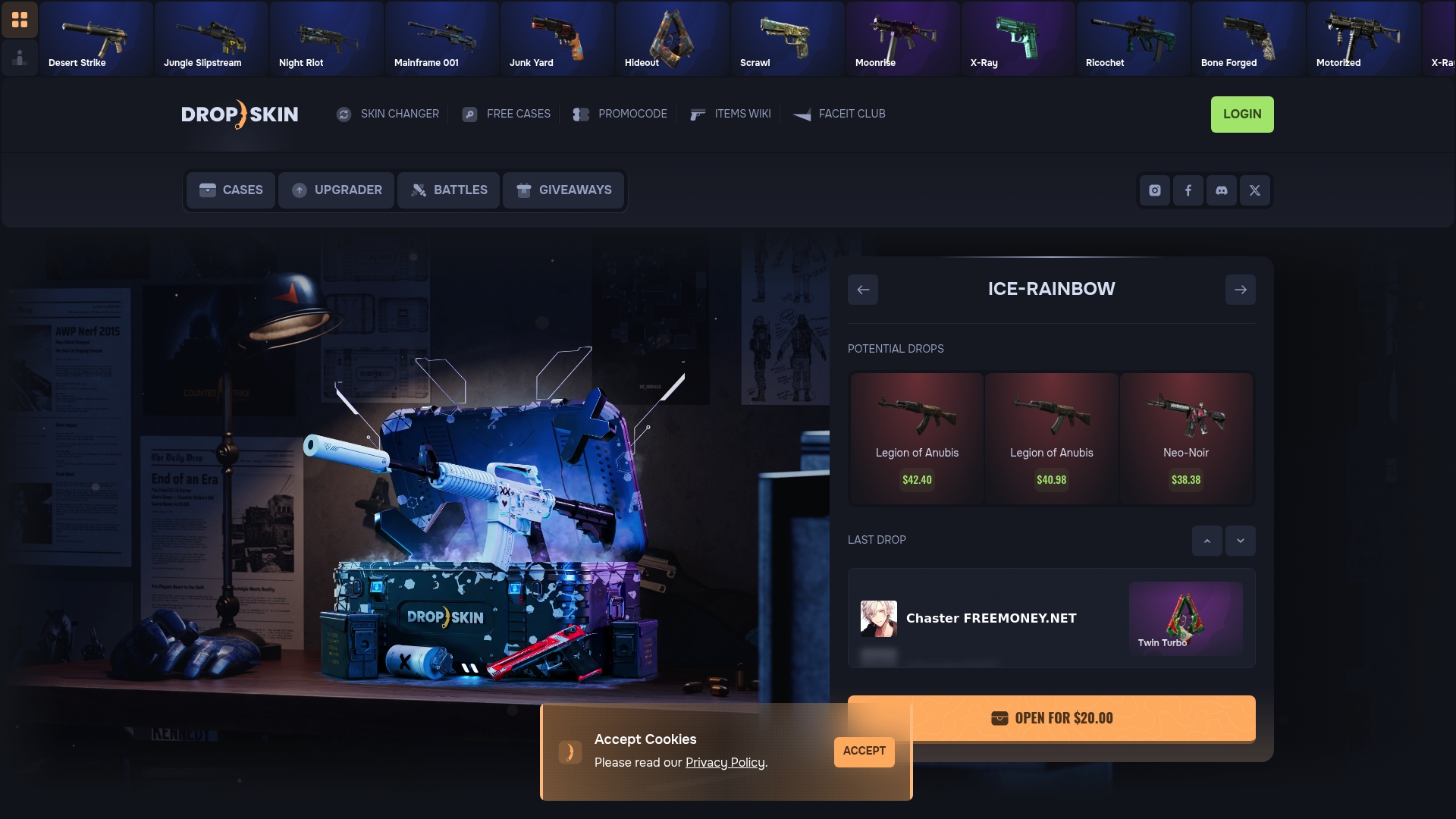
The DROP.SKIN CS2 cases and upgrades interface streamlines case opening with detailed odds breakdowns and historical outcome data. This transparency helps users make informed decisions about case selection and investment timing. The extensive collection spans current and discontinued cases, providing access to diverse skin categories and rarity tiers.
Interactive tools transform theoretical knowledge into practical results. The CS2 skin changer feature lets users experiment with different skin combinations before committing resources, while the CS2 skin upgrader implements the progressive enhancement mechanics discussed earlier. These tools turn skin value optimization from abstract strategy into tangible outcomes, helping you apply trade-up calculations and upgrade probability assessments in real scenarios.
Frequently asked questions about CS2 skin value strategies
What factors most influence CS2 skin values in 2026?
Market demand driven by tournament usage and professional player preferences creates the strongest price movements. Float values, StatTrak™ features, and discontinued status also significantly impact pricing. Game updates that change weapon balance shift demand toward affected gun skins.
How do trade-up contracts generate consistent profits?
Trade-ups exploit price inefficiencies between input costs and output values by converting ten lower tier skins into one higher tier item. Calculating expected value before execution and sourcing inputs below market rates creates positive return opportunities. Consumer to Industrial contracts offer the most reliable margins.
Which marketplace features matter most for safe skin trading?
Mandatory two factor authentication, identity verification requirements, and automated counterfeit detection protect against the most common loss vectors. Transparent fee structures and established dispute resolution processes indicate platform reliability. Avoid sites offering instant trades without security checks.
Should I focus on active trading or long-term skin investing?
Your available time, starting capital, and risk tolerance determine the optimal approach. Active trading generates steady cash flow but demands constant market monitoring and quick decisions. Long term investing in discontinued items requires patience but delivers higher risk adjusted returns by avoiding repeated transaction fees. Many successful collectors balance both strategies.
How can I identify undervalued skins before prices increase?
Monitor upcoming tournament schedules for team and player specific skin demand signals. Track game update announcements for weapon balance changes that shift meta preferences. Research historical appreciation patterns of discontinued operation cases and exclusive collections. The CS2 skin trading guide 2026 provides frameworks for systematic value assessment.