If you've ever felt lost reading skin marketplace listings or hesitated before placing a skin bet because the terminology seemed like a foreign language, you're not alone. The CS:GO and CS2 skin trading world has evolved into a complex ecosystem with specialized jargon covering everything from float values and pattern indexes to trade-up contracts and fade percentages. Understanding these industry terms isn't just about sounding knowledgeable, it's the difference between making profitable trades and losing value on every transaction. This guide breaks down the essential terminology that powers the skin economy, helping you navigate marketplaces, evaluate skins accurately, and make informed decisions whether you're trading, betting, or collecting.
Table of Contents
- Key takeaways
- Understanding key skin trading terms and market basics
- Pattern-dependent skins and their effect on skin value
- Skin trading mechanics, strategies, and market risks
- Applying industry terms to improve your skin trading and betting
- Explore expert skin trading tools and case openings at DROP.SKIN
- FAQ
Key Takeaways
| Point | Details |
|---|---|
| Pattern dependent value | Some skins vary greatly in price based on their pattern, so understanding pattern details can dramatically affect valuation. |
| Case Hardened blue gems | Blue gem variants with 90 percent or more blue can be vastly more valuable than standard patterns, making pattern knowledge crucial. |
| Pattern indexes matter | Pattern indexes identify which visual arrangements appear on skins and help traders spot favorable trade offers. |
| Wear and rarity influence price | Wear ratings from Factory New to Battle Scarred plus rarity classes drive base value and market demand. |
Understanding key skin trading terms and market basics
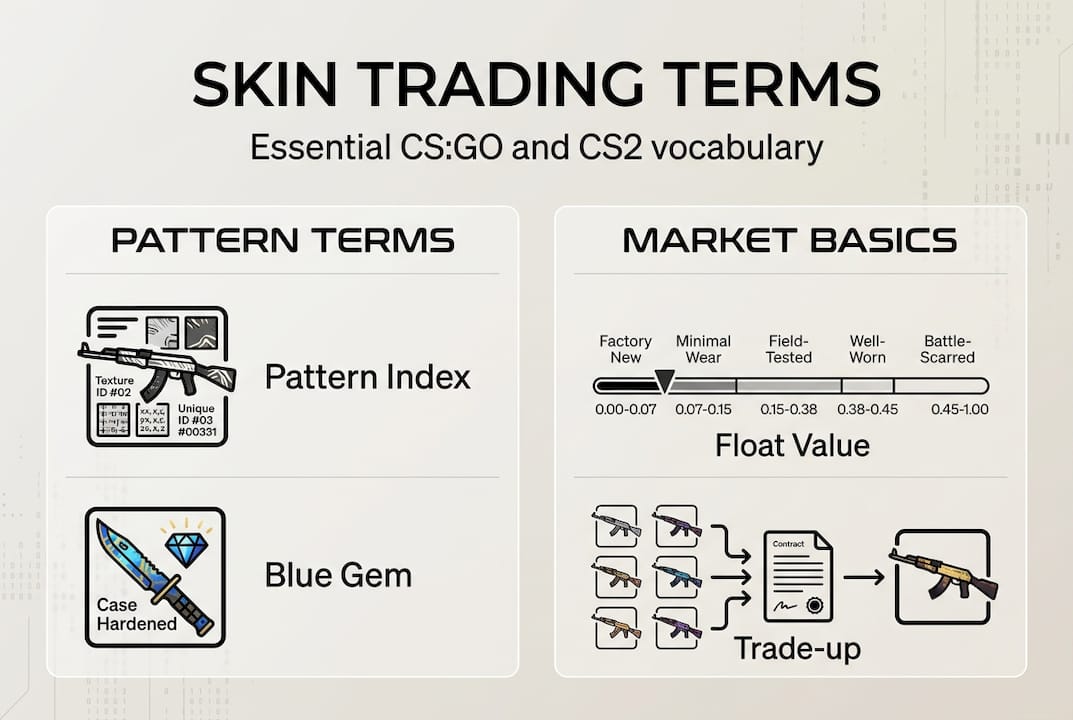
Before diving into advanced concepts, you need to grasp the foundational vocabulary that defines skin trading. A skin is a cosmetic item that changes your weapon's appearance without affecting gameplay. Float value represents the numeric condition rating from 0.00 (Factory New) to 1.00 (Battle-Scarred), determining visible wear on the weapon surface. Pattern refers to the unique visual arrangement on certain skins, while rarity classifies items from Consumer Grade to Covert and higher special categories.
Skin betting involves wagering skins on competitive matches, jackpot games, and casino-style activities where your items represent convertible currency. These digital assets hold real-world value because players actively buy, sell, and trade them on marketplaces. Understanding how skins function as both collectibles and currency is crucial for anyone entering this space.
Case openings let you unlock random skins by purchasing keys, while jackpots pool multiple players' skins with winners determined by probability. The role of skins in CSGO extends beyond aesthetics into a thriving economy where knowledge of these basic terms separates successful traders from those who overpay or undervalue their inventory. Key concepts include:
- Wear ratings that determine condition categories from Factory New to Battle-Scarred
- Rarity tiers affecting base value and market demand for specific items
- Pattern seeds generating unique visual variations on select skin collections
- Market liquidity indicating how quickly you can convert skins to cash
Pattern-dependent skins and their effect on skin value
Some skins possess pattern-dependent characteristics where visual variations create massive price differences between identical weapon types. Case Hardened skins exemplify this perfectly, with blue coverage percentages determining whether you own a $50 skin or a $5,000 Blue Gem. Case Hardened Blue Gems with 90%+ blue on the playside command 50-100x more than standard patterns, making pattern knowledge essential for accurate valuation.
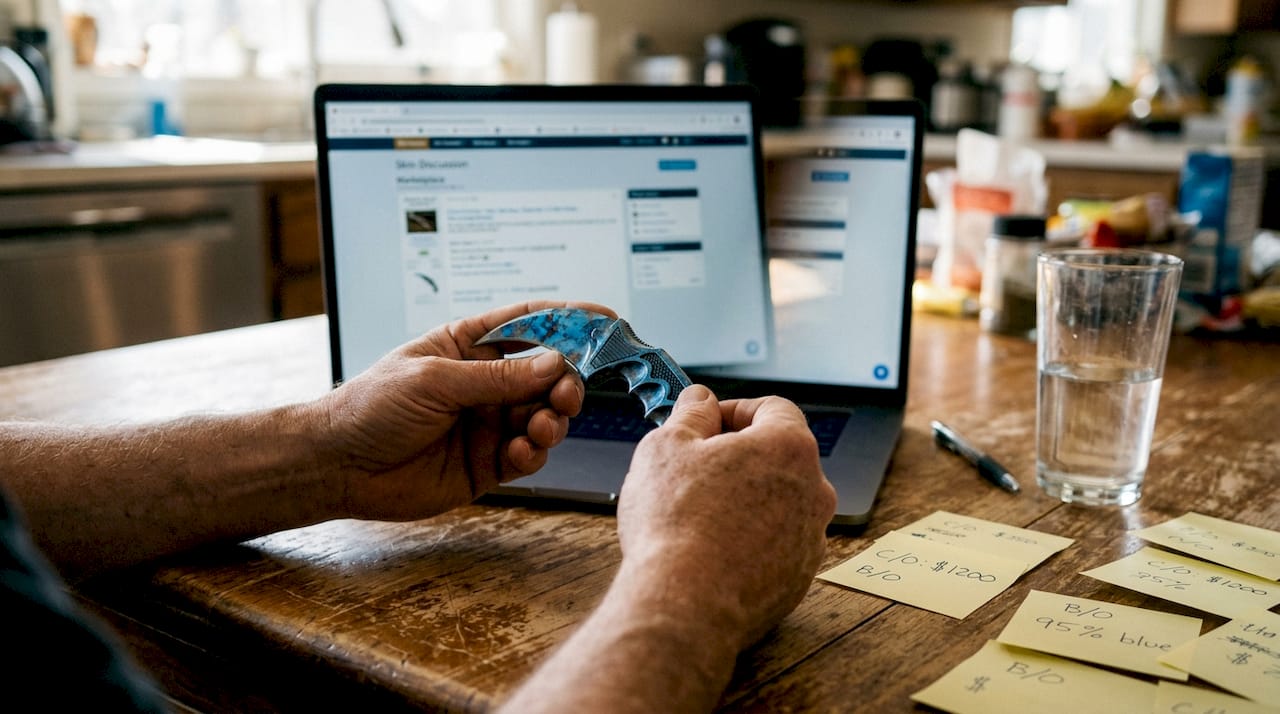
Fade percentage works similarly on Fade skins, where color distribution creates tiers like 80/20, 90/10, and the highly coveted max fade variants. Marble Fade patterns include special Fire & Ice combinations featuring only red and blue without yellow, pushing prices significantly above standard Marble Fades. Recognizing these variations requires studying pattern databases and understanding which characteristics collectors value most.
| Skin Type | Pattern Rarity | Approximate Market Multiplier |
|---|---|---|
| Case Hardened Blue Gem (90%+ blue) | Extremely Rare | 50-100x base value |
| Fade Max Pattern (90/10) | Very Rare | 3-5x base value |
| Marble Fade Fire & Ice | Rare | 2-3x base value |
| Crimson Web Big Web | Rare | 2-4x base value |
| Standard Patterns | Common | 1x base value |
Pro Tip: Experienced traders scan case opening results and marketplace listings for pattern mispricing, buying undervalued Blue Gems before sellers realize their true worth.
Pattern indexes are numeric identifiers (0-999) that generate specific visual arrangements. Learning which indexes produce desirable patterns on your favorite skins gives you an edge when evaluating trade offers or marketplace purchases. Some traders specialize exclusively in pattern-dependent skins, building expertise that lets them profit from information asymmetry in the market.
Skin trading mechanics, strategies, and market risks
Three primary methods exist for acquiring skins: trade-up contracts, case openings, and direct marketplace purchases. Trade-up contracts let you exchange ten lower-tier skins for one higher-tier item with calculable probabilities, offering better expected value than random cases. Case openings provide the thrill of chance but typically result in losses over time. Direct purchases eliminate randomness but require market knowledge to avoid overpaying.
| Method | Expected Value | Risk Level | Skill Required |
|---|---|---|---|
| Trade-Up Contracts | -65% EV (better with expertise) | Medium | High |
| Case Openings | -75% to -85% EV | High | Low |
| Direct Marketplace Purchase | Variable | Low | Medium |
| Skin Betting Sites | -70% to -90% EV | Very High | Medium |
Trade-ups offer better expected value than case openings, and experts who understand pattern mispricing can achieve near break-even or profitable results by targeting specific outcomes. Meanwhile, Steam market prices include a 15% fee increase compared to third-party cashout values, meaning your inventory is worth less when cashing out than Steam listings suggest.
"Skin market prices on Steam are inflated by approximately 15% fees compared to third-party cashout platforms, creating a hidden cost many traders overlook when calculating inventory value."
Pro Tip: Math-based trade-ups targeting pattern-dependent outcomes provide the best expected value for skilled traders willing to research float ranges and pattern probabilities.
To trade safely and maximize value:
- Verify trade partner reputation through multiple sources before accepting offers
- Use Steam's official trade window exclusively, never third-party sites requiring login credentials
- Double-check item float values and pattern indexes before finalizing high-value trades
- Research recent sales data to confirm fair market pricing on both sides
- Avoid trades requiring you to send items first or use middlemen you don't personally trust
- Compare Steam Community Market prices against third-party marketplaces for better deals
Skin betting sites carry higher risks than peer-to-peer trading because of limited regulation and potential for manipulation. Understanding the common mistakes traders make helps you avoid losing value through uninformed decisions. Market dynamics shift based on game updates, professional tournament results, and broader economic factors affecting digital collectibles.
Applying industry terms to improve your skin trading and betting
Knowing terminology transforms how you evaluate opportunities and make decisions. When you understand that float values below 0.07 qualify as Minimal Wear but prices jump significantly at 0.06 and below for Factory New designation, you can identify mispriced items where sellers don't recognize the category boundary. Pattern awareness lets you spot undervalued Blue Gems listed by owners who haven't checked pattern databases.
Following key trends in skin trading helps you anticipate price movements before they occur. Major game updates often shift demand toward newly released collections while depressing prices on older cases. Professional tournament schedules create temporary spikes in viewership and trading activity, presenting short-term opportunities for informed traders.
Pro Tip: AI and deep learning tools improve trading returns in volatile skin markets, with 35% market growth in 2025 driven by game updates and sustained demand.
Best practices for leveraging terminology knowledge:
- Cross-reference multiple marketplaces to identify price discrepancies on identical items
- Use float and pattern databases to verify accurate valuations before trading
- Monitor esports skin collecting trends to anticipate demand shifts
- Set price alerts on skin marketplace platforms for target items below market value
- Join trading communities where experienced collectors share pattern insights and market analysis
- Document your trades to identify which strategies produce consistent profits versus losses
Understanding betting terminology helps you evaluate wagering opportunities more critically. Terms like rollover requirements, house edge, and provably fair systems determine whether a betting platform offers legitimate value or exploits uninformed users. Knowing how skin valuations work on betting sites versus trading marketplaces prevents you from accepting unfavorable conversion rates that diminish your inventory's worth.
Explore expert skin trading tools and case openings at DROP.SKIN
Now that you understand the terminology powering the skin economy, you can apply this knowledge on platforms designed for hands-on trading and upgrading. DROP.SKIN offers an intuitive interface for opening CS2 cases, participating in custom battles, and accessing skin upgrade features that let you transform lower-value items into premium skins.
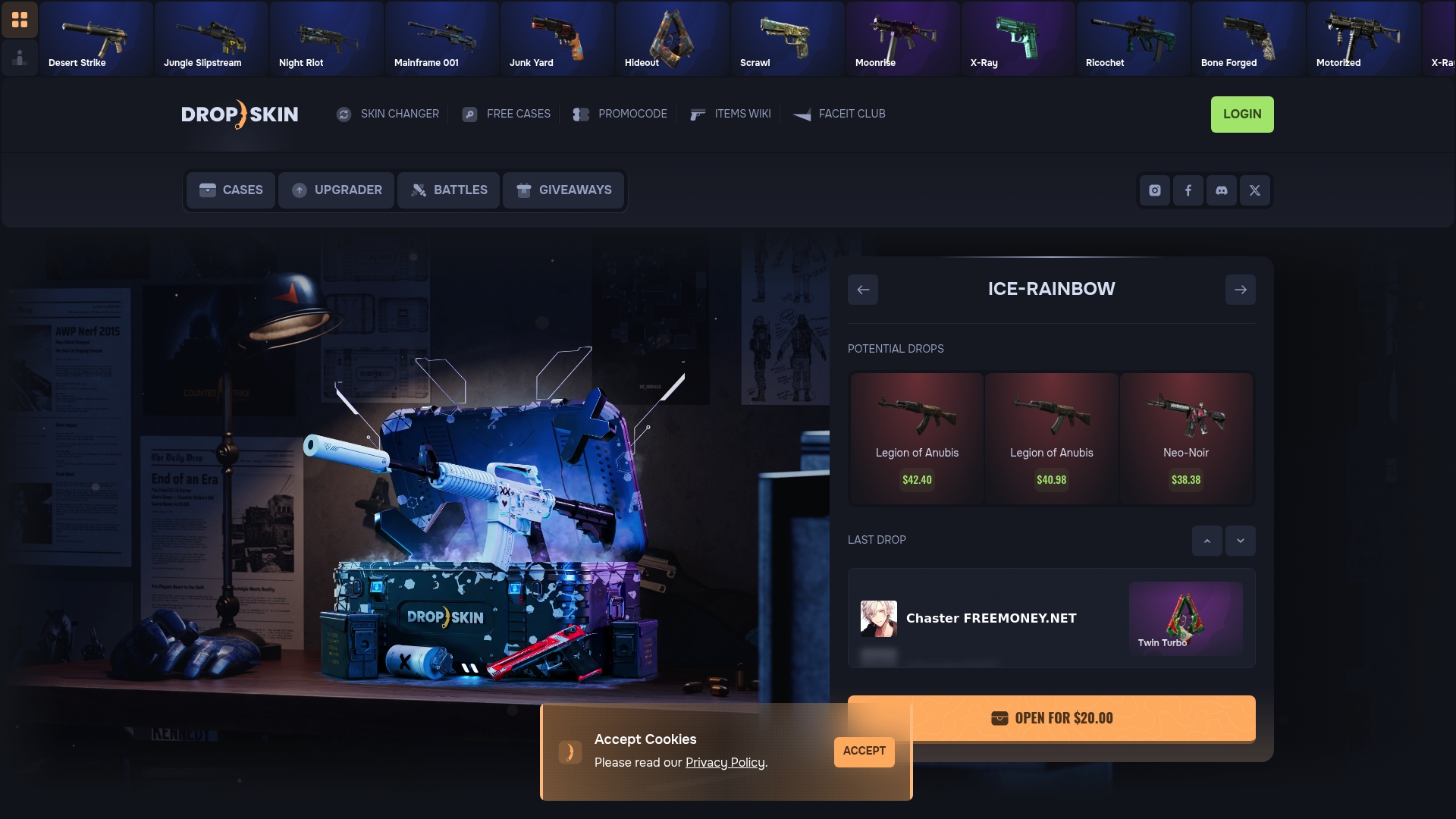
The platform's skin upgrader tool applies the mathematical principles discussed earlier, giving you transparent odds and expected outcomes before committing items. Whether you're testing trade-up strategies, exploring case opening mechanics, or looking to upgrade your inventory, DROP.SKIN provides the practical environment where terminology knowledge translates into real results. The site's giveaways and promotional codes offer additional value for active community members, while the extensive case collection lets you target specific items you've researched using the concepts covered in this guide.
FAQ
What are float values and how do they affect skin worth?
Float value is a numeric indicator from 0.00 to 1.00 that determines a skin's wear condition, with lower numbers representing better condition. Factory New skins (0.00-0.07 float) command significantly higher prices than Battle-Scarred versions (0.45-1.00) of the same pattern because visible wear affects aesthetic appeal and collector desirability.
How do pattern-dependent skins influence trading prices?
Pattern-dependent skins like Case Hardened can command 50-100x price premiums when rare patterns appear, such as Blue Gems with 90%+ blue coverage. Collectors pay substantial premiums for visually distinctive patterns because scarcity and aesthetic appeal create demand far exceeding standard pattern variants of identical weapons.
Is skin betting safe compared to peer-to-peer trading?
Skin betting carries higher risks due to limited regulation, potential platform insolvency, and house edge mechanics that favor operators over players. Peer-to-peer trading on established marketplaces with escrow systems and reputation tracking offers significantly safer transactions with more transparent pricing and fraud protection.
What strategies improve success in skin trading and upgrading?
Math-based trade-up contracts targeting specific float ranges and pattern outcomes provide better expected returns than random case openings, especially when you identify mispriced input skins. Following market trends through AI-powered analytics tools and timing trades around game updates or tournament schedules helps you buy low during supply increases and sell high when demand spikes.
Why do Steam prices differ from third-party marketplace values?
Steam Community Market includes a 15% combined fee (5% to Steam, 10% to game publisher) on every transaction, inflating listed prices compared to third-party platforms that charge lower fees or enable direct peer-to-peer transfers. This fee structure means your inventory's cashout value is consistently lower than Steam market listings suggest, making third-party sales more profitable for sellers.