A single Valve update in 2025 wiped nearly $2 billion from the CS skin market overnight, exposing the fragile nature of this digital economy. The skin economy transforms virtual cosmetics into tradable assets worth real money, creating opportunities for gamers to build valuable inventories through strategic trading, case openings, and battle matches. Understanding market forces and smart strategies separates profitable collectors from those who lose value with every update.
Table of Contents
- Understanding The Skin Economy: Definition And Scale
- Key Elements Defining Skin Value
- Supply, Demand, And Price Dynamics In The Skin Economy
- Impact Of Game Updates On The Skin Market
- Innovative Skin Economy Mechanisms: Battle Matches And Upgrades
- Common Misconceptions And Risks In The Skin Economy
- Skin Investment Strategies And Market Volatility
- Practical Guide To Enhancing Your Skin Inventory
- Enhance Your CS Skin Experience With Dropskin
Key takeaways
| Point | Details |
|---|---|
| Multi-billion dollar market | The CS skin economy represents billions in digital asset value driven by rarity, supply, and demand dynamics. |
| Update volatility risk | Valve's game updates can instantly shift supply and crash prices, requiring strategic awareness. |
| Strategic engagement opportunities | Battle matches and skin upgrades blend gambling with trading for portfolio growth. |
| Risk management essential | Diversification and research protect against market shocks and value erosion. |
| Value creation through knowledge | Understanding float values, rarity tiers, and market psychology enables profitable trading. |
Understanding the skin economy: definition and scale
The skin economy functions as a virtual marketplace where players buy, sell, and trade weapon and character cosmetics for CS:GO and CS2. What began as simple visual enhancements evolved into a sophisticated financial ecosystem where rare skins command prices rivaling real-world luxury goods. The market cap reached billions, transforming cosmetics into investment-worthy digital assets.
Skin types include weapons, knives, gloves, and character agents, each offering different rarity levels and aesthetic appeal. Knives and gloves represent the pinnacle of rarity, with drop rates below 0.26% creating intense scarcity. Understanding why skins are valuable requires recognizing both their visual appeal and their role as status symbols within the gaming community.
The transition from CS:GO to CS2 fundamentally altered skin dynamics, introducing new visual fidelity while maintaining backward compatibility. Players who grasp what is skin upgrader mechanics gain advantages in converting lower-tier items into premium inventory. This digital economy mirrors traditional markets with price discovery, liquidity flows, and speculative investment opportunities that attract collectors worldwide.
Key elements defining skin value
Rarity tiers form the foundation of skin valuation, creating clear hierarchies that determine baseline prices. The system progresses through Consumer Grade, Mil-Spec, Restricted, Classified, and Covert categories, with Contraband items representing the absolute rarest tier. Rarity tiers range from Common to Contraband, with knives and gloves commanding premium prices due to their ultra-low drop rates.
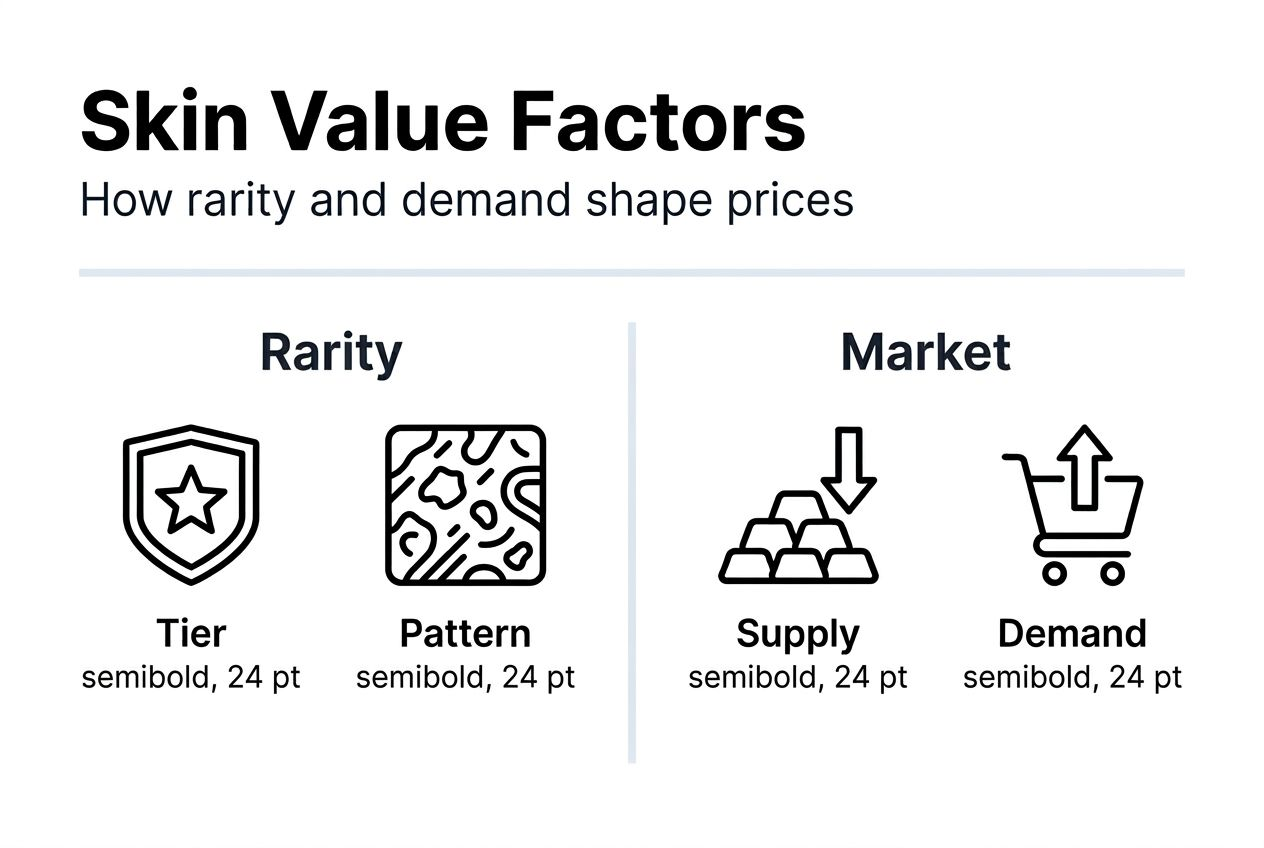
Wear conditions introduce multipliers that dramatically affect pricing within the same skin type. Wear condition and unique patterns create price variations that can reach 10x differences between Factory New and Battle-Scarred versions. Float values between 0 and 1 determine precise wear levels, with collectors seeking specific ranges for optimal appearance.
Several additional factors combine to create unique value propositions:
- Pattern variations generate collector premiums for specific seed numbers with desirable visual characteristics
- Sticker combinations add personality and scarcity when rare tournament or autograph stickers appear
- StatTrak technology tracks kills, adding measurable engagement value to weapons
- Limited-edition items from discontinued cases become increasingly valuable over time
- Cultural trends and pro player endorsements temporarily boost demand for specific skins
These elements interact to create complex pricing structures where seemingly identical skins trade at vastly different values. Savvy collectors who understand these nuances identify undervalued items before market recognition drives prices upward.
Supply, demand, and price dynamics in the skin economy
Supply generation mechanisms directly control skin availability and market saturation. Cases, trade-ups, and drops create new skins entering circulation, with each method producing different rarity distributions. Case openings require key purchases, creating a monetization loop that funds ongoing game development while introducing controlled randomness into supply creation.

Trade-up contracts allow players to exchange ten lower-tier skins for one higher-tier item, providing a deterministic path to rarity upgrades. This mechanism creates strategic opportunities for patient traders who calculate probabilities and target specific outcomes. Weekly drops offer free skins to active players, maintaining baseline engagement while preventing total supply stagnation.
Demand fluctuations drive rapid price movements based on cultural and competitive factors:
- Professional tournament exposure increases interest in skins used by winning teams
- Content creator showcases generate viral demand spikes for featured items
- Seasonal trends around major updates create predictable buying patterns
- Community perception shifts elevate certain aesthetics while depreciating others
The Steam Market provides centralized liquidity where closed wallet system enables liquidity and price discovery occurs in real time. This platform controls transaction flows while taking a percentage fee, creating a self-sustaining ecosystem. Understanding skin value cs2 market drivers helps traders anticipate movements before they occur.
| Supply Factor | Impact on Prices | Timing |
|---|---|---|
| Case releases | Initial spike, then gradual decline | First 3 months |
| Trade-up updates | Immediate supply increase | Within 24 hours |
| Drop rotations | Slow appreciation for discontinued items | 6-12 months |
| Market restrictions | Reduced liquidity, price compression | Immediate |
Impact of game updates on the skin market
Valve's October 2025 Trade-Up Contract modification demonstrated how developer decisions reshape entire market segments overnight. The update allowed trade-ups from five Covert skins, fundamentally altering knife and glove scarcity. Valve's October 2025 Trade-Up update doubled knife and glove supply, triggering an 80% price collapse that erased nearly $2 billion in collective value.
This supply shock revealed the fragility of digital asset valuations tied to arbitrary game mechanics. Items previously considered stable stores of value became overnight casualties of a simple rule change. The psychological impact extended beyond pure economics, shaking trader confidence and prompting widespread portfolio reassessments.
"The Trade-Up update proved that no CS skin investment is truly safe from developer intervention. Players who diversified across multiple asset classes weathered the storm better than those concentrated in knives and gloves alone."
Market recovery patterns following major updates typically span months as new equilibriums establish. Early adapters who recognized the permanent supply increase repositioned portfolios toward unaffected skin categories, preserving value while others panic-sold. Understanding these dynamics helps traders avoid skin trading mistakes during future update cycles.
Valve's update history shows a pattern of occasional market interventions balanced against long stability periods. Traders monitoring developer communications and community feedback gain early warning signals for potential changes. This vigilance separates prepared investors from those caught off guard by sudden rule modifications.
Innovative skin economy mechanisms: battle matches and upgrades
Battle matches introduce competitive gambling elements where players stake skins against opponents for reward pools. Platforms like Dropskin enable custom battle matches allowing skin staking and rewards, combining gambling excitement with strategic matchmaking. Players select skins, set stakes, and compete for winner-take-all or proportional prize distributions based on match outcomes.
Skin upgrade systems transform lower-value items into premium tier skins through progressive enhancement mechanics. These systems calculate success probabilities based on input skin values, creating risk-reward scenarios that appeal to both conservative and aggressive traders. Successful upgrades multiply inventory value while failures consume input skins, requiring careful calculation and bankroll management.
Strategic approaches to these mechanisms include:
- Analyzing opponent skin selection patterns to identify favorable matchup opportunities
- Calculating expected value across multiple upgrade attempts rather than single high-risk plays
- Timing battles during high-liquidity periods when winning skins can be quickly monetized
- Diversifying across multiple small-stake matches instead of concentrating on single large bets
Pro Tip: Start with minimal-stake battle matches to understand platform mechanics and opponent behaviors before committing valuable skins. Many platforms offer practice modes or low-entry contests that build experience without significant risk exposure.
These interactive features create engagement beyond passive trading, appealing to gamers who enjoy advantages of skin gambling combined with skill expression. The social competition aspects foster community building while providing entertainment value independent of pure profit motives.
Common misconceptions and risks in the skin economy
The myth that rare skins inevitably appreciate overlooks market volatility and developer intervention risks. Many collectors assume scarcity alone guarantees value growth, ignoring how supply changes or demand shifts erase gains overnight. The 2025 Trade-Up update demolished this assumption, proving that market shocks can wipe billions in value regardless of previous rarity status.
Another dangerous misconception treats skin gambling as pure chance requiring no strategic thinking. While randomness plays a role, strategic betting can improve odds through careful case selection, upgrade probability calculations, and timing decisions. Understanding drop rates, market trends, and platform mechanics separates informed participants from those relying solely on luck.
Key risks requiring awareness and mitigation strategies:
- Concentration risk from holding too many similar skins vulnerable to single update impacts
- Liquidity risk when popular items become difficult to sell during market downturns
- Platform risk from trading on unverified sites that may restrict withdrawals or manipulate odds
- Emotional trading driven by fear or greed rather than calculated analysis
- Regulatory uncertainty as governments worldwide examine virtual item gambling legality
Understanding role of skins in csgo helps contextualize their entertainment value versus investment potential. Viewing skins primarily as enjoyment vehicles with secondary financial upside creates healthier engagement than treating them as guaranteed profit centers. Avoiding common skin trading mistakes requires discipline and continuous market education.
Successful traders recognize that skin economy participation involves real financial risk requiring the same diligence as traditional investing. Setting loss limits, maintaining diversified portfolios, and staying informed about platform changes protects against catastrophic losses. Learning winning cs skins 2026 strategies provides frameworks for consistent value generation.
Skin investment strategies and market volatility
Long-term trading strategies focus on acquiring undervalued skins with strong fundamentals and holding through market cycles. This approach targets discontinued case items, limited-edition releases, and skins with proven appreciation patterns. Patience allows positions to mature as supply naturally decreases while demand from new players creates upward pressure. Historical data shows some skins appreciate significantly but volatility requires strong conviction to hold through temporary downturns.
Short-term gambling and upgrade strategies prioritize frequent small wins through battle matches, case openings, and trade-up contracts. This active approach generates regular engagement and entertainment value while accepting higher variance in outcomes. Quick portfolio turnover limits exposure to single-position risks but demands constant market monitoring and rapid decision making.
| Strategy Type | Time Horizon | Risk Level | Potential Return | Best For |
|---|---|---|---|---|
| Buy and hold rare skins | 6-24 months | Medium | 50-200% | Patient collectors |
| Active trading | Days to weeks | Medium-High | 10-30% per trade | Market-savvy traders |
| Battle matches | Hours | High | 2-10x stake | Risk-tolerant gamers |
| Case opening | Immediate | Very High | 0-1000x cost | Entertainment seekers |
Volatility management requires diversification across skin types, rarity tiers, and acquisition methods. Spreading risk prevents single update changes or demand shifts from decimating entire portfolios. Traders who balanced knife holdings with weapon skins, stickers, and agents survived the 2025 update with minimal damage compared to knife-focused portfolios.
Pro Tip: Allocate no more than 20% of your skin portfolio to any single item or category. This simple rule protects against catastrophic losses while maintaining upside exposure to breakout performers across different market segments.
Timing trades around major tournament events, seasonal sales, and update announcements creates strategic entry and exit opportunities. Picking winning cs skins requires analyzing multiple data sources including Steam Market trends, third-party price trackers, and community sentiment indicators. Combining fundamental analysis with technical price patterns generates superior returns versus random buying.
Practical guide to enhancing your skin inventory
Building a valuable CS skin collection starts with clear goals and risk tolerance assessment. Define whether your primary objective involves maximizing financial returns, acquiring personally meaningful skins, or balancing both considerations. This clarity guides every subsequent acquisition and trading decision.
- Research current market conditions using Steam Market data and community price tracking tools before making any purchases
- Start with affordable skins in the $5-$20 range to gain trading experience without significant capital risk
- Use battle matches strategically by selecting favorable odds matchups and limiting individual stake sizes to 5% of total inventory value
- Open cases only during promotional periods or when targeting specific high-demand items with strong resale potential
- Diversify across weapon types, rarity tiers, and wear conditions to create portfolio resilience against market shifts
- Monitor Valve developer updates and community forums for early signals of potential game changes affecting supply or demand
- Set profit targets and loss limits for each position, executing trades when thresholds are reached rather than emotional impulses
- Build relationships with trusted traders and platforms offering transparent odds and secure transaction processes
Strategic case opening requires calculating expected value based on current market prices for all potential drops. Target cases where even mid-tier results provide reasonable value relative to key costs. Avoid cases where only the rarest drops justify the opening expense, as statistical probability makes consistent losses inevitable.
Pro Tip: Track every trade, case opening, and battle match result in a simple spreadsheet to identify which strategies actually generate positive returns for your personal approach. Most traders dramatically overestimate their profitability without rigorous record keeping.
Leveraging advantages of skin gambling requires understanding platform mechanics and house edges. Platforms offering skill-based elements or transparent probability disclosures provide better long-term value than opaque systems. Avoiding common trading mistakes accelerates learning curves and preserves capital during the inevitable early missteps.
Consistent small improvements compound over time into substantial portfolio growth. Focus on incremental gains rather than home-run trades that rarely materialize. Patient accumulation of undervalued items during market downturns positions you for outsized returns when sentiment inevitably shifts positive.
Enhance your CS skin experience with Dropskin
Dropskin offers comprehensive tools for gamers seeking strategic skin portfolio growth through innovative battle mechanics and upgrade systems. The platform combines transparent case opening with CS2 skin upgrader functionality that transforms lower-tier items into premium inventory through calculated risk-reward scenarios.
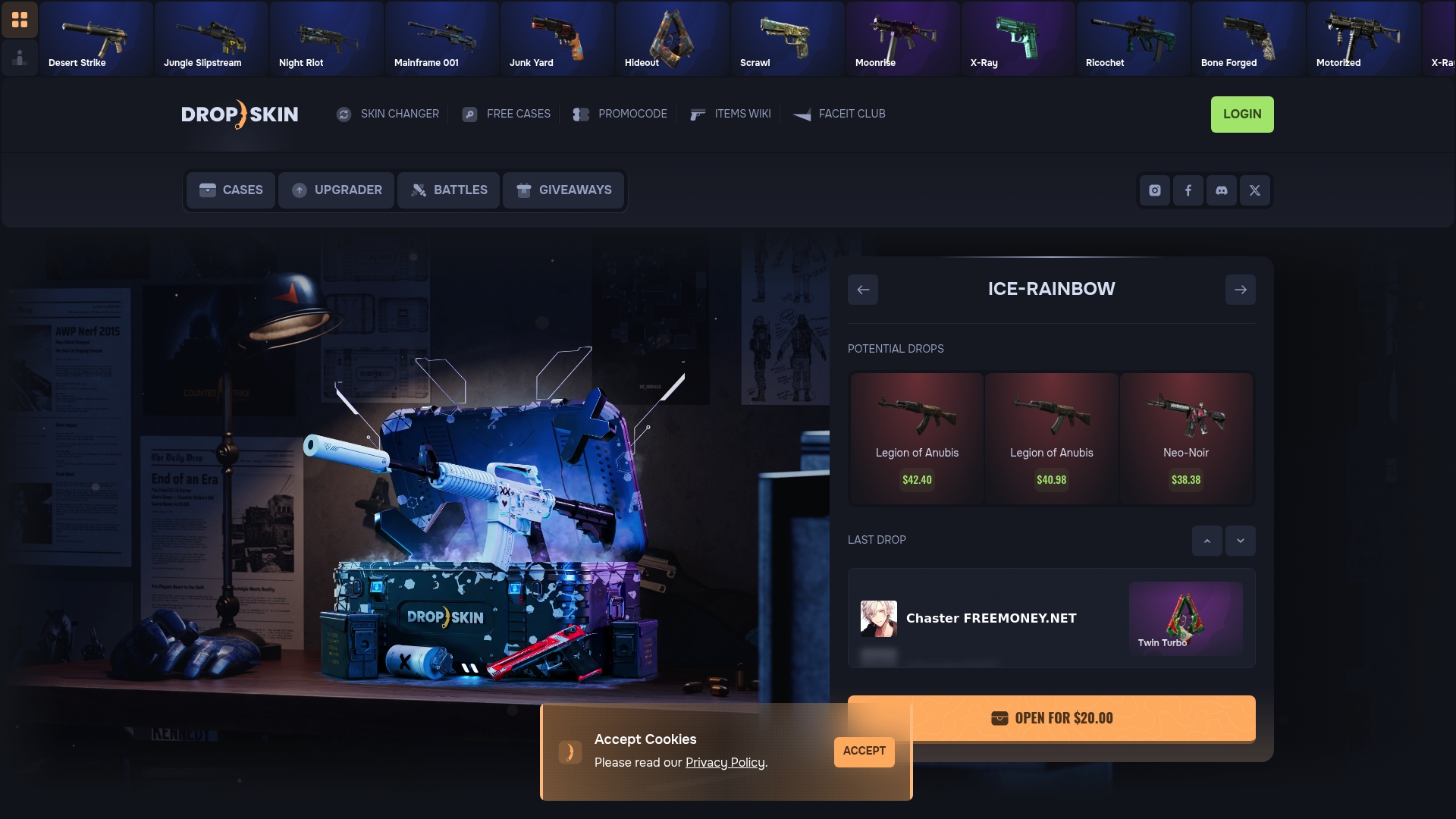
Custom battle matches enable competitive skin staking with clear odds and instant reward distribution. Players control every aspect of their engagements, selecting opponents, setting stakes, and choosing match formats that align with personal risk tolerance. Dropskin case openings feature verified drop rates and extensive case collections spanning classic CS:GO containers through the latest CS2 releases.
The CS2 skins price database provides real-time market valuations essential for informed trading decisions. Research skin values before upgrading, compare battle match stakes against current market rates, and identify undervalued opportunities across thousands of tracked items. This transparency eliminates guesswork and supports data-driven portfolio management.
Frequently asked questions
What is skin economy in CS:GO and CS2?
The skin economy represents a virtual marketplace where players trade weapon and character cosmetics as digital assets with real monetary value. This ecosystem includes case openings, battle matches, direct trading, and upgrade mechanics that enable portfolio growth. Understanding cs2 skin rarity explained provides the foundation for participating effectively in this multi-billion dollar market.
What factors affect the value of a CS skin?
Rarity tiers, wear conditions, pattern variations, and market supply determine baseline skin values. Popular items influenced by professional players, content creators, or cultural trends command premium prices beyond pure scarcity metrics. Float values between 0 and 1 create price multipliers where Factory New versions trade at significantly higher rates than Battle-Scarred counterparts of identical skins.
How do game updates like Valve's trade-up changes affect the skin market?
Developer updates can instantly alter supply mechanics, drop rates, or trading restrictions, causing dramatic price movements. The 2025 Trade-Up update doubled knife and glove supply by enabling five-Covert-skin trade-ups, crashing values by 80% overnight. These interventions demonstrate how no skin investment is completely safe from arbitrary rule changes, requiring diversification and vigilance.
Can I win skins through gambling or battle matches strategically?
Skin gambling combines chance with strategic decision making through careful case selection, upgrade probability calculations, and opponent matchup analysis. Platforms like Dropskin offer battle systems where understanding odds, managing bankroll, and timing engagements improve expected outcomes. While randomness remains a factor, informed participants consistently outperform those relying purely on luck through disciplined approaches.
What are the biggest risks in skin trading?
Market volatility from Valve updates represents the primary systemic risk, capable of erasing billions in value overnight. Concentration in single skin categories, trading on unverified platforms, and emotional decision making amplify individual portfolio risks. Regulatory uncertainty as governments examine virtual item gambling adds legal complexity. Mitigation requires diversification, research, and treating skin investments with the same diligence as traditional financial assets.
How can I safely build and enhance my CS skin inventory?
Start with affordable items to gain experience, diversify across categories and rarity tiers, and research market conditions before every trade. Use battle matches and upgrades with strict stake limits, typically 5% of total inventory per engagement. Monitor developer communications for update signals and maintain detailed records of all transactions. Avoiding skin trading mistakes through continuous education and disciplined execution protects capital while enabling steady portfolio growth.