
TL;DR:
- Social features in trading sites create engaging communities with live feeds, leaderboards, and verified performance data. These tools improve user retention by fostering real-time interaction, competition, and trust through accountability. Platforms like Dropskin integrate community tools with game-specific trading to enhance loyalty and trading experiences.
Social features in trading sites are defined as interactive community tools embedded directly within a trading platform, giving users live feeds, leaderboards, verified performance data, and group discussions without leaving the app. For gamers and e-sports enthusiasts, these tools are not a bonus. They are the difference between a dead marketplace and a living community. Platforms like Robinhood and OKX proved this in 2026 by building native social networks into their trading dashboards. Dropskin applies the same logic to CS2 skin trading, where community engagement is as important as the trade itself.
What are the key social features on modern trading sites?
Modern trading platforms now ship with a toolkit that looks more like a social media app than a brokerage dashboard. The core features fall into five categories, each serving a distinct purpose for the community.

Live social feeds work like a Twitter or Threads timeline, but every post is tied to a real trade or market event. Users share commentary, reactions, and analysis in real time. Robinhood's 2026 beta expanded to over 10,000 users, offering verified trader profiles and live trade streams. That scale confirmed that gamers and traders want social context alongside price data.
Leaderboards display top traders ranked by verified stats, including win rates, profit-and-loss records, and portfolio returns. These rankings create healthy competition and give newer traders a clear target to study. Live leaderboards embedded in dashboards promote real-time performance rankings that incentivize learning, not just winning.
Copy trading engines let you mirror another trader's moves with configurable risk limits. Followers can allocate a set amount of capital and automatically replicate trades. This is especially useful in CS2 skin trading, where reading market timing is a skill that takes time to develop.
Cashtag systems group discussions by specific assets. OKX launched its in-app social network Orbit in february 2026, using tags like $BTC and $ETH to link commentary to verified portfolio returns. In gaming, the same logic applies. Tags like $CS2Skin group discussions around specific skins, keeping conversations relevant and focused.
Gated group chats add another layer by creating invite-only or tier-based communities. These spaces filter out noise and let serious traders share strategies without distraction.
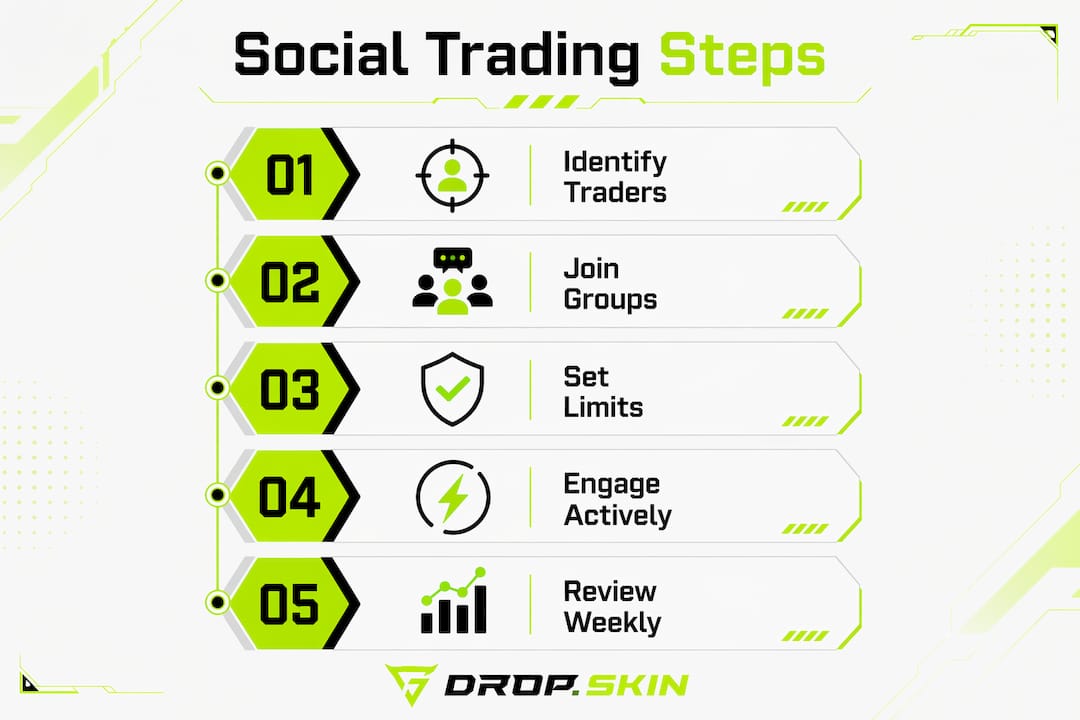
Pro Tip: Before joining any group chat or following a leaderboard trader, check their verified stats inside the app. Public win rates and P&L records tell you far more than any post they write.
How do social features impact engagement on gaming trading platforms?
Social tools do not just make platforms more fun. They measurably change how long users stay and how often they return. Interactive community models outperform siloed interfaces on every retention metric. That finding holds across financial trading apps and gaming marketplaces alike.
The reason is simple. When you can see what other traders are doing in real time, you have a reason to stay logged in. A leaderboard creates a daily check-in habit. A live feed gives you market signals you would otherwise miss. These micro-interactions stack up into significantly longer session lengths over time.
For CS2 skin trading communities specifically, the social layer adds an entertainment dimension that pure trading apps lack. Watching a top-ranked trader flip a rare knife skin in real time is genuinely exciting. It combines the competitive energy of e-sports with the financial stakes of a marketplace. Dropskin builds on this dynamic by connecting skin battles and upgrades with community visibility.
Cashtag groupings play a specific role here. When discussions are organized around a specific skin or asset, the signal-to-noise ratio improves dramatically. Users stay in conversations longer because every message is relevant to what they are already watching. That focus reduces the frustration that drives players away from generic chat rooms.
The emotional attachment that forms in these communities also drives loyalty. Players who feel part of a group are far less likely to switch to a different platform. Community-driven skin trading creates identity and belonging, two forces that no price discount can easily replace.
What challenges do trading platforms face when adding social features?
Adding a chat room to a trading app sounds simple. Getting it right is not. The most common failure is launching an unmoderated chat that quickly fills with spam, hype, and toxic behavior. That experience drives users away faster than having no social features at all.
The solution is contextual linking. Linking conversations to specific trading activity reduces noise and improves user retention. When a message can only be posted in the context of a specific asset or trade event, off-topic content has nowhere to go. The conversation stays useful.
Misinformation is the second major problem. External social networks like Reddit or Discord have no accountability mechanism. Anyone can claim a skin is about to spike in value. Inside a trading platform, verified performance metrics change that dynamic entirely. Verified stats shown inside the app combat hype and manipulation by showing whether a trader's record actually supports their advice.
Here is how the best platforms address these challenges in practice:
- Require verified profiles. Every social participant must link their trading account. Anonymous posting is disabled.
- Use contextual threads. Discussions are attached to specific assets or events, not open forums.
- Display P&L records publicly. Traders who give advice must show their actual results.
- Moderate with automated filters. Spam and abusive language are flagged before they reach the feed.
- Separate social feeds from trade execution. The trading interface stays clean. Social content appears in a dedicated panel.
Pro Tip: If a platform does not show verified performance data next to a trader's social posts, treat their advice the same way you would treat an anonymous tip on Reddit. Skepticism is the right default.
How can gamers maximize the benefits of social trading features?
Knowing the features exist is not enough. Getting real value from trader social networks requires a deliberate approach. The players who benefit most treat the social layer as a research tool, not just entertainment.
Start by identifying the top three traders on the leaderboard in your asset category. Study their verified stats before you follow or copy anyone. Win rate matters, but so does consistency over time. A trader with a steady record across 200 trades is more reliable than one with a single spectacular week.
Use cashtag groups to stay ahead of market shifts. When a specific skin or asset starts generating high discussion volume, that activity often precedes a price move. Aggregated social sentiment adds timing advantages that isolated analysis cannot provide. You are essentially reading the crowd before the crowd acts.
Engage actively in community discussions, not just passively. Asking questions in asset-specific groups surfaces knowledge from experienced traders who have already made the mistakes you are about to make. The gaming community best practices that work in e-sports clans apply directly here: contribute, ask, and share.
When using copy trading, always set a configurable risk limit before you activate it. Copy trading infrastructure with risk limits keeps novice traders within the platform ecosystem by reducing research friction and risk exposure. Decide in advance how much capital you are willing to allocate to any single copied trader, and never exceed that amount regardless of their recent performance.
Pro Tip: Set a weekly review habit. Every week, check whether the traders you follow are still performing at the level that made you follow them. Leaderboard positions change, and your strategy should change with them.
Key Takeaways
Social features in trading sites work best when they combine verified performance data, contextual discussions, and native integration to create accountable, engaging communities for traders.
| Point | Details |
|---|---|
| Verified metrics build trust | Displaying P&L and win rates inside the app prevents hype and misinformation from spreading. |
| Contextual linking reduces noise | Attaching discussions to specific assets keeps conversations relevant and users engaged longer. |
| Leaderboards drive learning | Real-time rankings give newer traders clear benchmarks and incentivize consistent performance. |
| Copy trading lowers the barrier | Configurable risk limits let beginners mirror proven traders without deep market knowledge. |
| Community loyalty beats price | Players who feel part of a social trading community are far less likely to switch platforms. |
Dropskin's take on social features and what they actually change
The conventional view is that social features are a nice-to-have layer on top of a trading platform. That view is wrong. Social features are the product. The trading mechanics are the infrastructure underneath.
What I have seen in CS2 skin trading communities confirms this. Players do not stay on a platform because the trade execution is fast. They stay because their friends are there, because they can see what top traders are doing, and because the community makes them feel like they are part of something. Dropskin is built around that reality. The battles, the upgrades, the case openings all become more meaningful when there is a community watching and competing alongside you.
The platforms that get this right share one trait: they make social features native, not bolted on. Robinhood's CEO described the goal as transforming from brokerage to financial superapp, removing app switching entirely. That same principle applies to gaming asset trading. If you have to leave the platform to discuss a trade, the platform has already lost.
The next frontier is AI-driven sentiment analysis built on top of community data. When a platform can tell you that discussion volume around a specific skin spiked 300% in the last hour, that is a signal no individual trader can generate alone. The community becomes a collective intelligence tool. That is the version of social trading that will define the next generation of gaming marketplaces.
— Dropskin
Dropskin: where CS2 skin trading meets community
Dropskin combines the competitive energy of CS2 skin trading with the community tools that make it worth coming back to every day. The platform brings together open CS2 cases, skin battles, and upgrade mechanics in one place, with community visibility built into the experience.
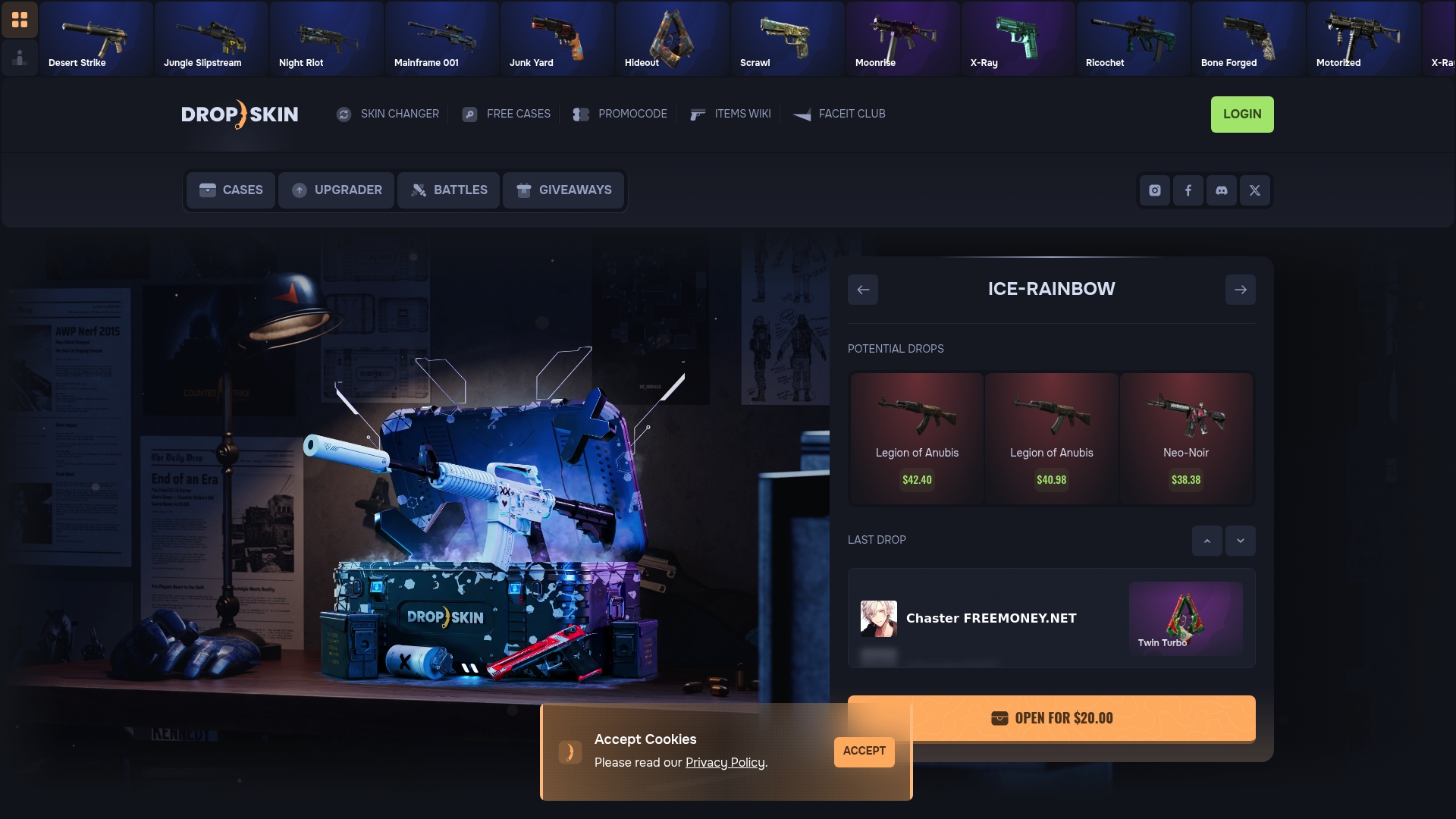
The skin upgrader lets you turn lower-value skins into premium ones, with the community watching and competing alongside you. Leaderboard rankings, giveaways, and promo codes add a social layer that pure trading platforms simply do not offer. If you want to trade CS2 skins in an environment where the community is part of the game, Dropskin is where that happens.
FAQ
What are social features in trading sites?
Social features in trading sites are community tools built directly into a trading platform, including live feeds, leaderboards, copy trading, and asset-specific group discussions. They let traders interact, share verified performance data, and learn from each other without leaving the app.
How does copy trading work on social trading platforms?
Copy trading lets you automatically mirror the trades of a verified top trader, with configurable risk limits that cap how much capital you allocate. Platforms like Leverate show that this model keeps novice traders engaged by reducing research friction.
Why are verified performance metrics important in social trading?
Verified metrics like P&L records and win rates shown inside the app prevent misinformation and hype that are common on external social networks. They create accountability, so advice from a trader is backed by a real, visible track record.
What is a cashtag system in a trading platform?
A cashtag system uses asset-specific tags (such as $BTC or $CS2Skin) to organize discussions around a specific asset or skin. OKX launched this approach with its Orbit network in 2026, and the same model applies to gaming skin trading communities.
How do social features benefit CS2 skin traders specifically?
Social features give CS2 skin traders real-time sentiment signals, community-verified trade strategies, and leaderboard competition that makes the trading experience more engaging. Dropskin builds on this by combining skin battles, upgrades, and community visibility in one platform.