TL;DR:
- The CS2 skin market is valued at over 5 billion dollars with high trading volumes.
- Skin trading involves buying, selling, and exchanging cosmetic items driven by profit, rarity, and social status.
- Strategic trading, based on factors like rarity and demand, can yield significant financial returns.
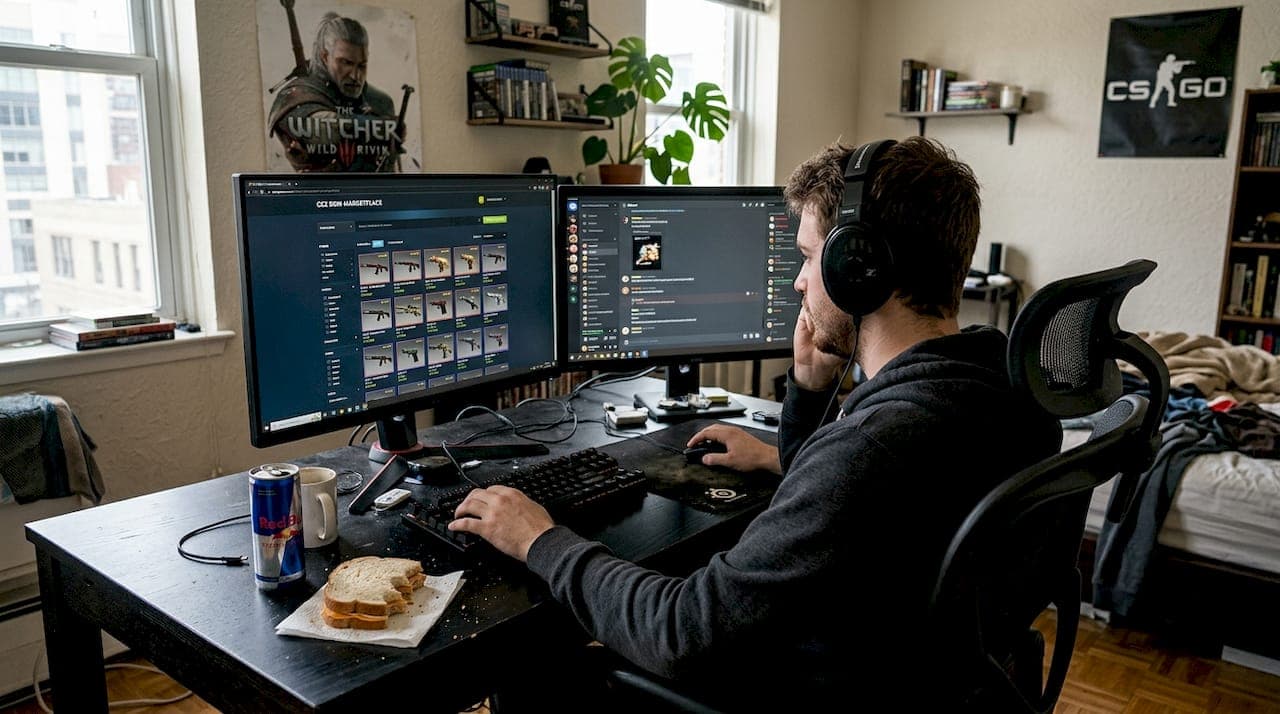
The CS2 skin market is sitting at a valuation of $5 to $6 billion in 2026, with annual trading volumes exceeding $3.3 billion. Most outsiders assume skin trading is a vanity exercise, something you do to make your AK-47 look cooler before a match. But that completely misses the picture. Active skin traders are operating inside a sophisticated digital economy driven by profit, rarity speculation, social status, and genuine market strategy. So why do so many gamers trade skins? The answer is layered, and understanding it changes how you approach your entire collection.
Table of Contents
- Understanding the world of skin trading
- Motivations: Why gamers trade skins
- How skin value is determined: Rarity, demand, and market forces
- Trading strategies and tips for maximizing value
- The truth about skin trading: More than profit and pretty weapons
- Upgrade your trading experience with DROP.SKIN
- Frequently asked questions
Key Takeaways
| Point | Details |
|---|---|
| Skin trading basics | Gamers trade CS2 skins for profit, personalization, status, and excitement. |
| Value drivers | Rarity, supply, demand, and unique features like pattern and stickers determine worth. |
| Profit potential | CS2 skins can offer higher returns than traditional assets, but carry risks. |
| Practical strategies | Smart trading uses market research, strategic timing, and safe platforms. |
Understanding the world of skin trading
Skin trading is the buying, selling, and exchanging of cosmetic weapon skins in CS2 and CS:GO. These are purely visual items, meaning they do not change how a weapon shoots or performs. What they do change is everything else: how your loadout looks, how others perceive you, and what your account is worth.
Trades happen across several channels. The Steam Community Marketplace is the most well-known, but CS2 and CS:GO skin culture has grown far beyond it. Third-party platforms, peer-to-peer trades, and in-game trade-up contracts all play a role in how skins move between players.
Here are the main types of skin trading activity:
- Swapping: Directly trading one skin for another of similar or agreed value
- Upgrading: Using trade-up contracts to exchange 10 lower-tier skins for one higher-rarity skin
- Investing: Buying undervalued or trending skins and holding them to sell later at a profit
- Gambling: Wagering skins on matches, case openings, or upgrade rolls
- Arbitrage: Spotting price differences across platforms and flipping for quick margins
As skin traders profit through resale, arbitrage, and trade-up contracts, the strategies involved start looking a lot like real financial activity. Because they are.
Pro Tip: Always verify a skin's float value, exterior condition, and current market price on at least two platforms before committing to any trade. Prices vary significantly, and a quick check can save you serious money.
Motivations: Why gamers trade skins
Now that you understand the mechanics, what actually pushes players to become active traders? It is rarely just one thing. Most traders are motivated by a blend of the following:
- Profit: Identifying skins before they spike in value and selling at peak price
- Personalization: Building a loadout that feels uniquely yours, visually and emotionally
- Status: Rare and expensive skins signal prestige in the community
- Upgrading: Moving up the rarity ladder through trade-ups or case openings
- Market excitement: Tracking trends, reacting to tournament-driven demand, and speculating on future value
"Skins give players a way to customize weapons for both aesthetic appeal and social status, creating real economic incentives that mirror traditional collecting markets."
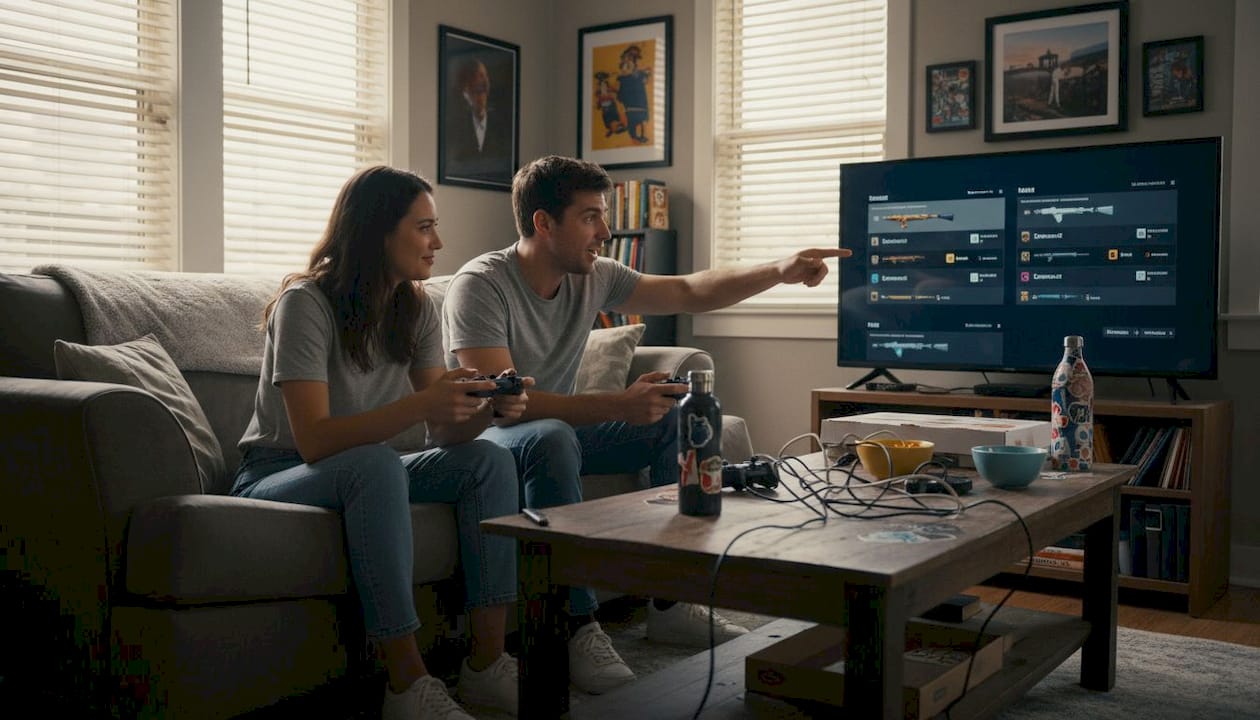
The advantages of skin trading go beyond surface-level perks. You are participating in a market with real liquidity, real supply constraints, and real demand signals. Compare the main motivations side by side:
| Motivation | What drives it | Typical outcome |
|---|---|---|
| Profit | Price arbitrage, investment holding | Cash or higher-value skins |
| Personalization | Aesthetic preference | A standout, personal loadout |
| Status | Rarity, prestige, community recognition | Social capital in-game |
| Upgrading | Trade-up contracts, case openings | Higher-tier skin collection |
| Market excitement | Speculation, trend-following | Engagement, occasional big wins |
Understanding how skins influence trading and betting behaviors helps you figure out which motivation dominates your approach, and adjust your strategy accordingly.
How skin value is determined: Rarity, demand, and market forces
Not every skin is worth chasing. Value in the CS2 market comes from a combination of factors that traders learn to read over time. Here is what actually moves the needle:
- Rarity tier: Skins range from Consumer Grade up through Mil-Spec, Restricted, Classified, Covert, and the coveted Contraband. Higher tiers mean lower supply and higher desirability.
- Supply mechanics: When Valve discontinues a case, the skins inside become scarcer over time. Supply scarcity from discontinued cases and limited drops is one of the biggest value drivers in the market.
- Demand triggers: Tournament seasons, pro player spotlights, and influencer streams can spike demand overnight. A skin seen in a major tournament final can double in price within hours.
- Float value: Every skin has a float value between 0 and 1 that determines its wear level. A Factory New skin with a float close to 0 is far more valuable than a Battle-Scarred version of the same skin.
- Pattern ID: Certain skins like the Case Hardened have pattern IDs that produce rare color distributions, the famous Blue Gem being the most extreme example. A single pattern ID can push a skin's value into the tens of thousands.
Applied stickers, especially those from early major tournaments, add another layer of value. A Katowice 2014 sticker on a coveted skin can make it worth exponentially more than the base item. What drives CS2 skin value is ultimately a combination of these overlapping factors, and skin rarity and price often move together in predictable patterns once you know what to watch.
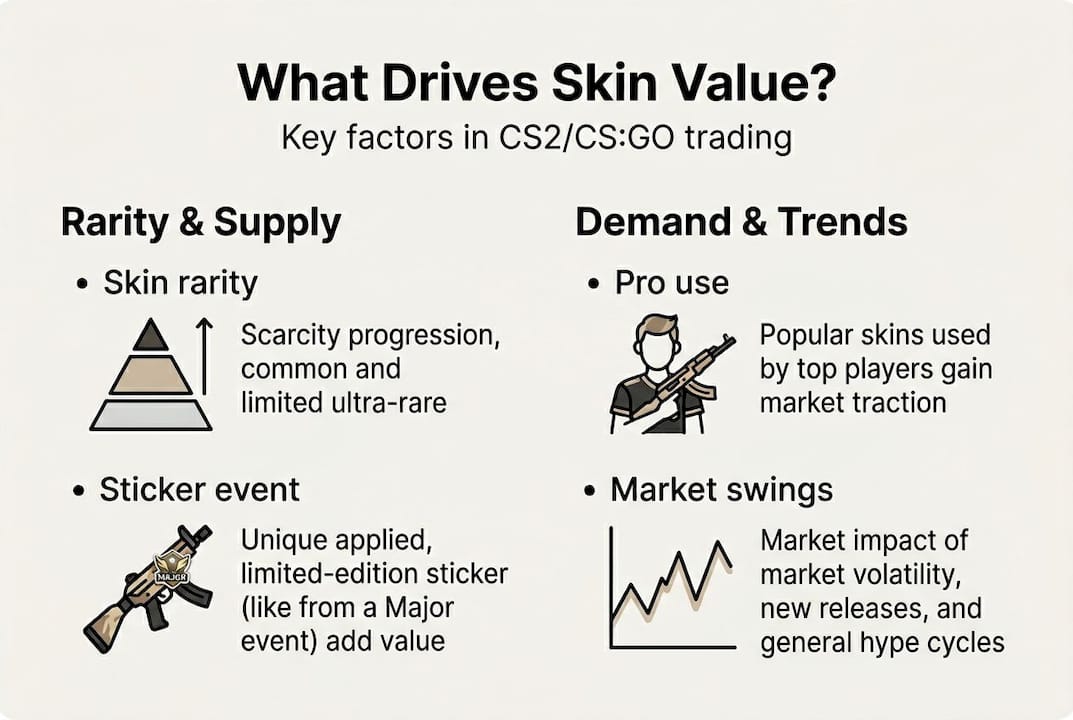
The market is also genuinely volatile. Prices can swing on patch notes, new case releases, or shifts in the competitive scene. Knowing the factors affecting skin value gives you a real edge over casual collectors who just buy based on looks.
Trading strategies and tips for maximizing value
Knowing the theory is one thing. Applying it in the market is another. Here are concrete steps to give yourself a real advantage:
- Hunt for underpriced skins: Use market tools and price trackers to spot skins trading below their historical average. These are often buying opportunities before demand picks back up.
- Diversify your holdings: Do not put your entire budget into one flashy skin. Spread across a few different rarity tiers and categories to cushion against sudden drops.
- Time your sales around events: Major CS2 tournaments and new case drops create demand spikes. Selling just before or during peak hype usually nets better returns than selling in quiet periods.
- Stick to trusted platforms: Scams are common in P2P trading. Always use verified platforms with escrow protection and transparent pricing structures.
- Set price alerts: Use third-party tools to get notified when a skin you are tracking hits your target buy or sell price.
The numbers back this up. Average annual returns from CS2 skin portfolios have hit 41.2%, with a Sharpe ratio of 0.34 compared to Bitcoin's 0.21. That is not a random result. It reflects a market with genuine inefficiencies that informed traders can exploit.
Pro Tip: Combine the esports skin collecting tips from experienced traders with real-time data from third-party skin trading platforms to build a strategy that fits your budget and risk tolerance.
The truth about skin trading: More than profit and pretty weapons
Here is what most guides will not tell you. The traders who do best long-term are not the ones obsessed with quick flips or bragging about their inventory. They are the ones who actually enjoy being part of the market itself.
Skin trading is, for a lot of players, their first real encounter with investment thinking. Tracking skins as alternative investments with returns that outperform traditional assets is not just a financial curiosity. It is a gateway into understanding supply, demand, timing, and risk management in a context that feels personal and engaging.
The deeper pull is community. When a rare Blue Gem surfaces on the market, the entire trading community reacts. When Valve drops a new case, thousands of traders simultaneously adjust their strategies. You are not just managing a collection. You are participating in a shared, evolving story with real stakes. The impact of skin collectibles on community identity is something traditional investing cannot replicate. That blend of social belonging, financial thinking, and genuine excitement is why skin trading keeps pulling players back, regardless of whether the market is hot or cooling off.
Upgrade your trading experience with DROP.SKIN
If you are ready to move beyond passive collecting and actually grow your skin inventory, having the right platform makes all the difference. DROP.SKIN is built for exactly this: a space where you can open CS2 cases and upgrade your skins safely, with full transparency and a huge selection of cases and collections.
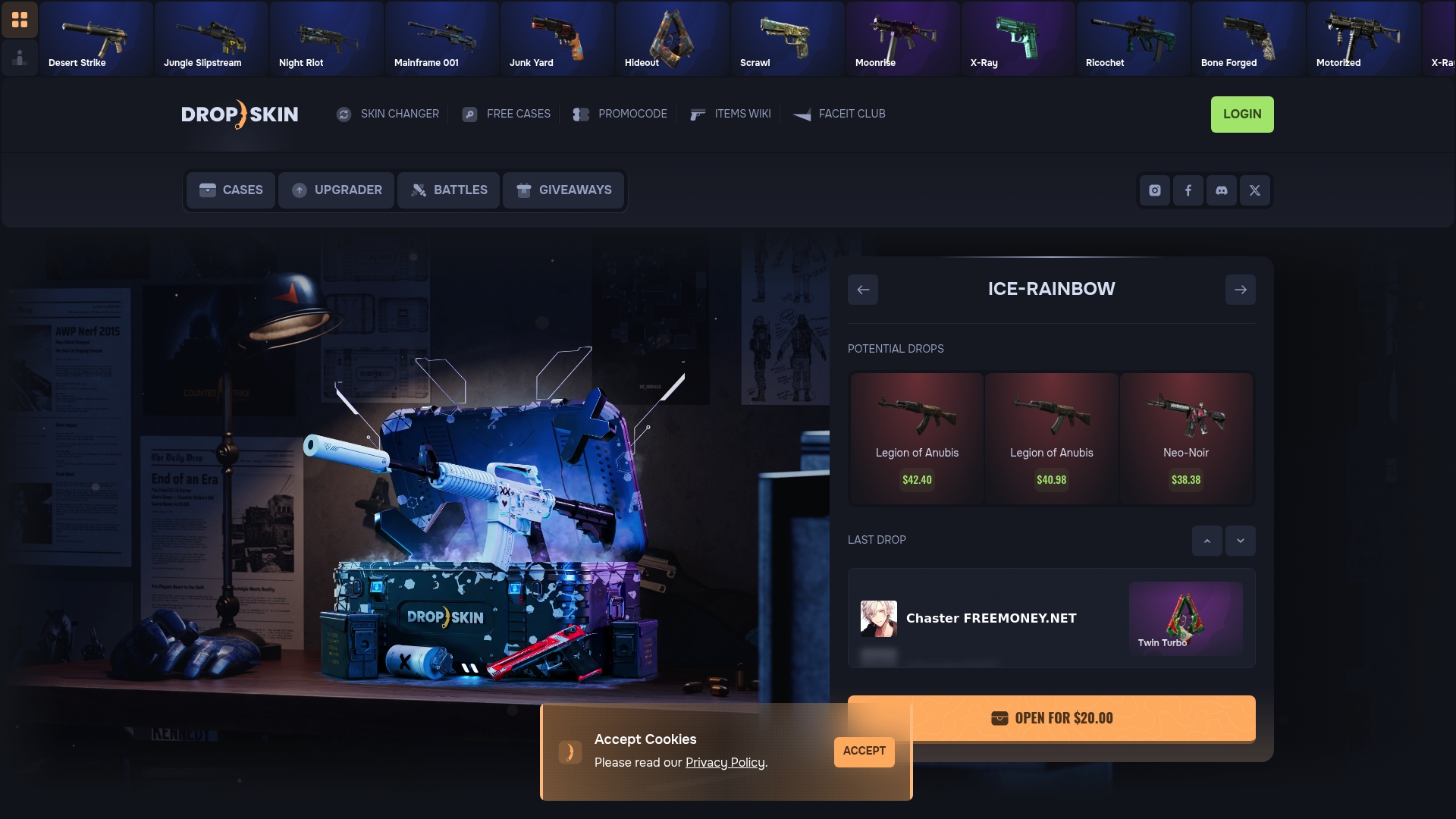
Whether you want to try the CS2 skin upgrader to transform lower-value skins into higher-rarity items, or you want to explore case openings to build your collection from scratch, DROP.SKIN gives you the tools to do it without the risk of scammy third-party deals. Jump in, use one of the available promo codes, and see what your next skin could be worth.
Frequently asked questions
What are the main risks of skin trading?
The biggest risks are falling for scams on unverified platforms, getting caught in volatile markets where values drop fast, and making trades without checking item authenticity first. Always use trusted platforms with clear pricing.
How do I determine if a CS2 skin will increase in value?
Look for limited supply from discontinued cases, growing demand linked to tournaments or influencer activity, and special attributes like rare pattern IDs or major stickers affecting value. These factors consistently correlate with price appreciation.
Do skins affect gameplay, or are they only cosmetic?
All CS2 skins are purely cosmetic and change weapon appearance without altering performance, accuracy, or damage in-game. No skin gives a competitive advantage.
Can skin trading really be profitable compared to traditional investments?
Yes. Empirical studies show 41% annual returns from CS2 skin portfolios, outperforming stocks, gold, and Bitcoin on a risk-adjusted basis. It is a niche but legitimate alternative asset class for informed traders.