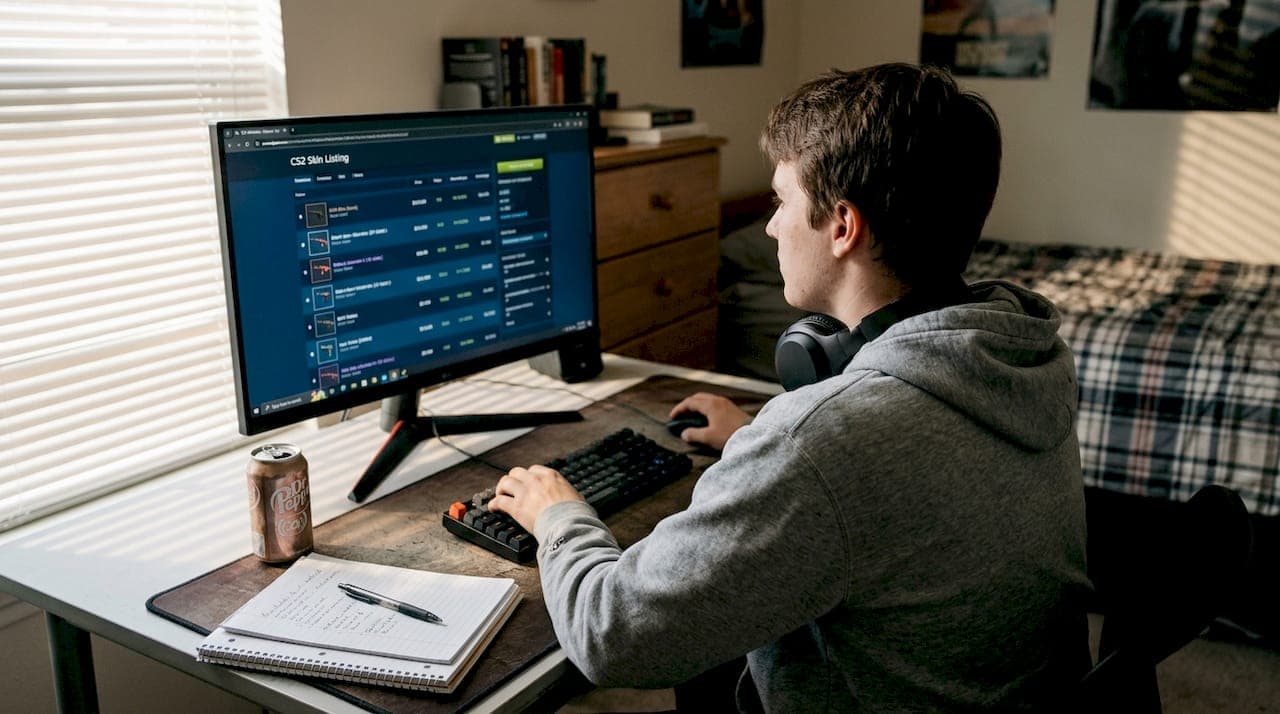
Most CS2 players assume Steam is the only place to trade skins. That assumption is costing them real money. Third-party skin sites operate as full marketplaces where you can buy, sell, and trade CS2 skins for actual cash, with prices running 10 to 30% lower than Steam. Whether you are a collector chasing low-float knives or a competitive player who wants to flex a clean AWP, understanding how these platforms work gives you a serious edge in the skin economy.
Table of Contents
- Why third-party skin sites matter in CS2 trading
- How third-party skin sites work: Mechanisms and features
- Comparing third-party platforms vs Steam: Price, liquidity, and safety
- Regulations, risks, and Valve changes: What every gamer should know
- Optimizing your experience: Collectibles, competitive flexing, and practical tips
- Upgrade your CS2 skin collection with trusted platforms
- Frequently asked questions
Key Takeaways
| Point | Details |
|---|---|
| Cash payouts | Third-party skin sites let you sell CS2 skins for real money, offering options Steam doesn't. |
| Lower fees | Most platforms charge 2-12% seller fees, much less than Steam's standard 15%. |
| Trusted platforms | Sites with high Trustpilot ratings, EU regulation, and escrow are safer for transactions. |
| Regulatory shifts | Valve's new rules affect skin trading, requiring API compliance and banning gambling site sponsorships. |
| Optimal collectible value | Rare patterns, low float numbers, and clean skin designs drive the highest value for competitive play and collecting. |
Why third-party skin sites matter in CS2 trading
Steam built the skin system, but it never built a real economy around it. You can trade on Steam, sure, but every dollar you earn stays locked in your wallet forever. Third-party platforms broke that wall down. They let you cash out, reinvest, and treat your inventory like an actual asset.
The numbers back this up. The CS2 skin market is valued between $4.7 and $6 billion in 2025 and 2026, with over 400 million cases opened every year. That is not a hobby. That is an economy. And third-party sites are the engine driving liquidity inside it.
Here is what these platforms actually enable that Steam cannot:
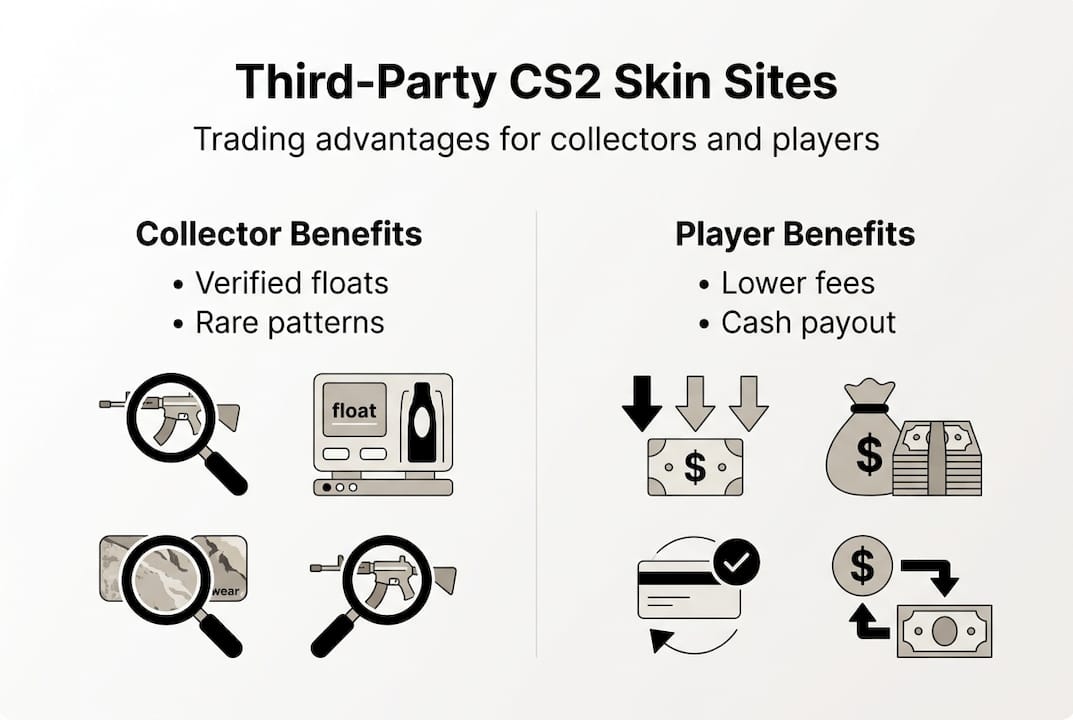
- Real cash payouts via PayPal, crypto, or bank transfer
- Lower prices across the board, often 10 to 30% below Steam listings
- Float and pattern inspection so you know exactly what you are buying
- Instant bot trades that skip the peer-to-peer waiting game
- Broader inventory access including rare collectibles not listed on Steam
For collectors, this means access to skins with verified float values and pattern indexes. For competitive players, it means affordable premium skins that actually look good in-game without paying Steam's inflated prices. Our skin marketplace guide breaks down how these ecosystems are structured if you want a deeper look. The influence of CS2 skins on competitive culture is also worth understanding before you start building your collection.
How third-party skin sites work: Mechanisms and features
Every major third-party platform follows a similar structure, but the details matter a lot when you are choosing where to trade.
The top platforms right now include Skinport, DMarket, SkinBaron, CSFloat, and ShadowPay. All of them carry Trustpilot ratings between 4.3 and 4.9 out of 5. They use escrow protection, API compliance, and float inspection tools to keep trades secure and transparent.
Here is how the fee structures compare:
| Platform | Seller fee | Payout options |
|---|---|---|
| Steam | 15% | Wallet only |
| Skinport | 5 to 12% | PayPal, crypto |
| CSFloat | 2% | Bank, crypto |
| SkinBaron | 5 to 15% | PayPal, bank |
| DMarket | 5 to 7% | Crypto, card |
The user flow on most platforms works like this:
- Connect your Steam account via API key
- List your skins with your asking price
- A buyer purchases through escrow or an instant bot trade
- Funds land in your platform wallet
- Withdraw to your preferred payment method
The advantages of skin trading go beyond just saving money. You get access to market data, price history, and float filters that Steam simply does not offer. If you are serious about skin collecting, these tools are not optional. They are essential.
Pro Tip: Always check a platform's withdrawal minimums before listing. Some sites hold funds until you hit a $10 or $20 threshold, which can slow down your cash flow if you are trading low-value skins.
Comparing third-party platforms vs Steam: Price, liquidity, and safety
Steam is convenient. But convenience has a cost. Here is a direct comparison of what you get on each side:
| Feature | Steam | Third-party sites |
|---|---|---|
| Seller fee | 15% | 2 to 15% |
| Cash payout | No | Yes |
| Float inspection | No | Yes |
| Escrow protection | Basic | Advanced |
| Price vs market | Higher | 10 to 30% lower |
Seller fees on third-party platforms range from 2% at CSFloat to 15% at the high end, compared to Steam's flat 15%. That gap adds up fast when you are moving high-value skins.
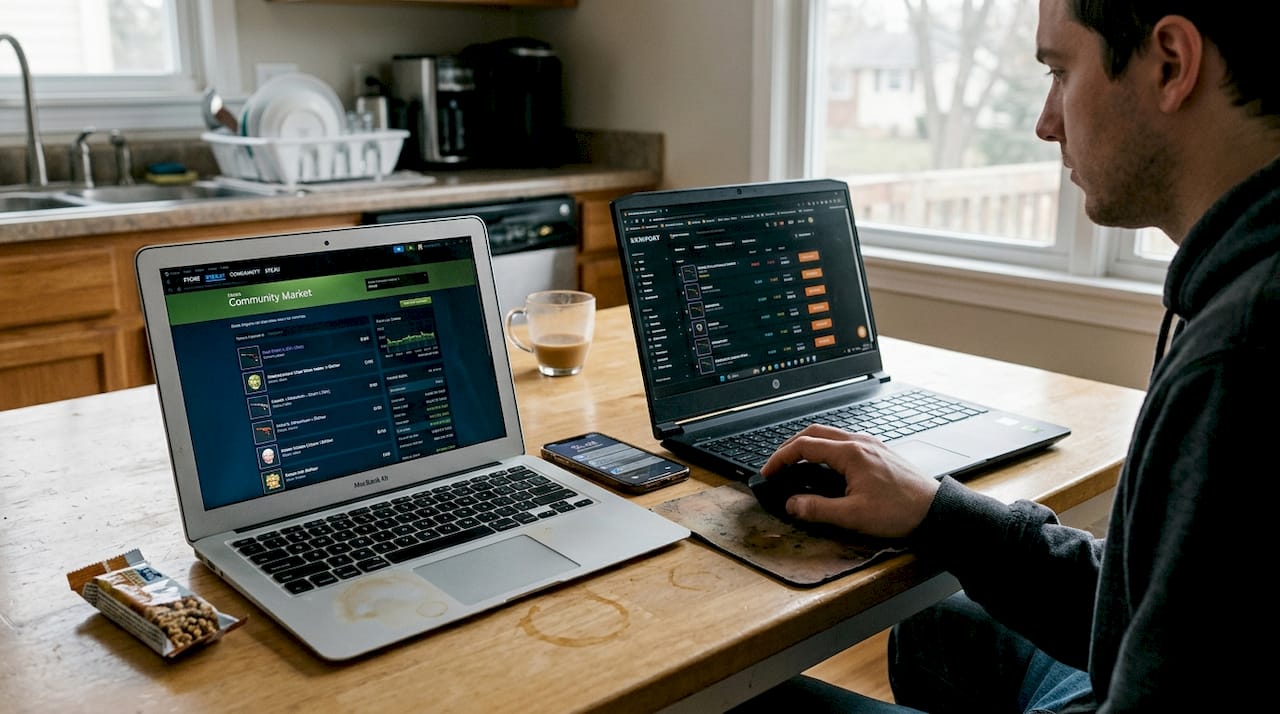
Safety is where a lot of players get nervous, and rightfully so. The good news is that the leading platforms are EU-regulated, use escrow to protect both sides of a trade, and require API compliance to prevent unauthorized access. The Steam vs external marketplaces breakdown shows exactly where each option wins and loses.
Always enable two-factor authentication on both your Steam account and your trading platform. This single step blocks the majority of account takeover attempts.
When you are comparing platforms, also consider liquidity. Steam has volume, but third-party sites often move rare skins faster because buyers there are specifically hunting for collectibles. Understanding the differences between CS:GO and CS2 skins also helps you price correctly and avoid listing legacy items at the wrong value. For a full walkthrough of the process, our CS2 skin trading guide covers every step in detail.
Pro Tip: Stick to EU-regulated platforms when possible. They operate under stricter consumer protection rules, which gives you more recourse if something goes wrong with a transaction.
Regulations, risks, and Valve changes: What every gamer should know
The regulatory landscape around CS2 skin trading shifted significantly in 2025. Valve rolled out several changes that every trader needs to understand before they move inventory.
First, Valve introduced Trade Protection with a 7-day reversal window, API and 2FA mandates for all trading activity, and in December 2025, a full ban on skin gambling and trading site sponsorships at competitive tournaments. These changes were designed to clean up the ecosystem, but they also added friction to the trading process.
Here is how to protect yourself in this environment:
- Enable 2FA on Steam and every platform you use
- Verify platform API compliance before connecting your account
- Use escrow for all peer-to-peer trades, no exceptions
- Double-check wallet addresses before any crypto withdrawal
- Avoid platforms with no Trustpilot presence or verifiable reviews
The skin market is vulnerable to price manipulation around major game updates. If a skin spikes 40% overnight, wait 48 hours before buying. The price almost always corrects.
Volatility is real. Skins tied to specific operations or limited-time events can swing hard in either direction. Understanding key factors affecting skin value helps you make smarter decisions about when to buy, hold, or sell.
Optimizing your experience: Collectibles, competitive flexing, and practical tips
Now that you know the risks, here is how to actually get the most out of third-party skin sites for both collecting and competitive play.
Float value is the single biggest driver of premium pricing. Low float skins in the 0.00 to 0.10 range command premiums of 2 to 5 times the base price. Doppler Phase 4 is currently the most valuable pattern variant, and clean designs with minimal wear are what serious collectors target.
Here is what to prioritize when building your collection:
- Float range: Always inspect before buying. A 0.01 float knife is worth significantly more than a 0.09.
- Pattern index: For marbled fade and case-hardened skins, specific patterns carry massive premiums.
- Doppler phase: Phase 4 and Black Pearl variants are the top tier for value retention.
- Wear visibility: Some skins show wear more than others. Check screenshots, not just the float number.
- Platform verification: Only buy from platforms with escrow and API compliance.
For competitive players, the flex factor is real. Top players in pro matches and ranked games use skins to signal status and style. You do not need to spend thousands to look the part. Smart trading on third-party sites lets you rotate skins, upgrade gradually, and build a collection that reflects your playstyle. Check out the skin value market drivers to understand what moves prices before you invest.
Pro Tip: Use the skin changer on DROP.SKIN to preview how skins look in-game before committing to a purchase. It saves you from buyer's remorse on expensive items.
The best CS2 skins for value retention share a few traits: low float, rare pattern, and strong visual appeal. If a skin checks all three boxes, it tends to hold value even through market dips.
Upgrade your CS2 skin collection with trusted platforms
You now have the knowledge to trade smarter, collect better, and protect yourself from the risks that trip up most players. The next step is putting it into practice with platforms built for exactly this purpose.
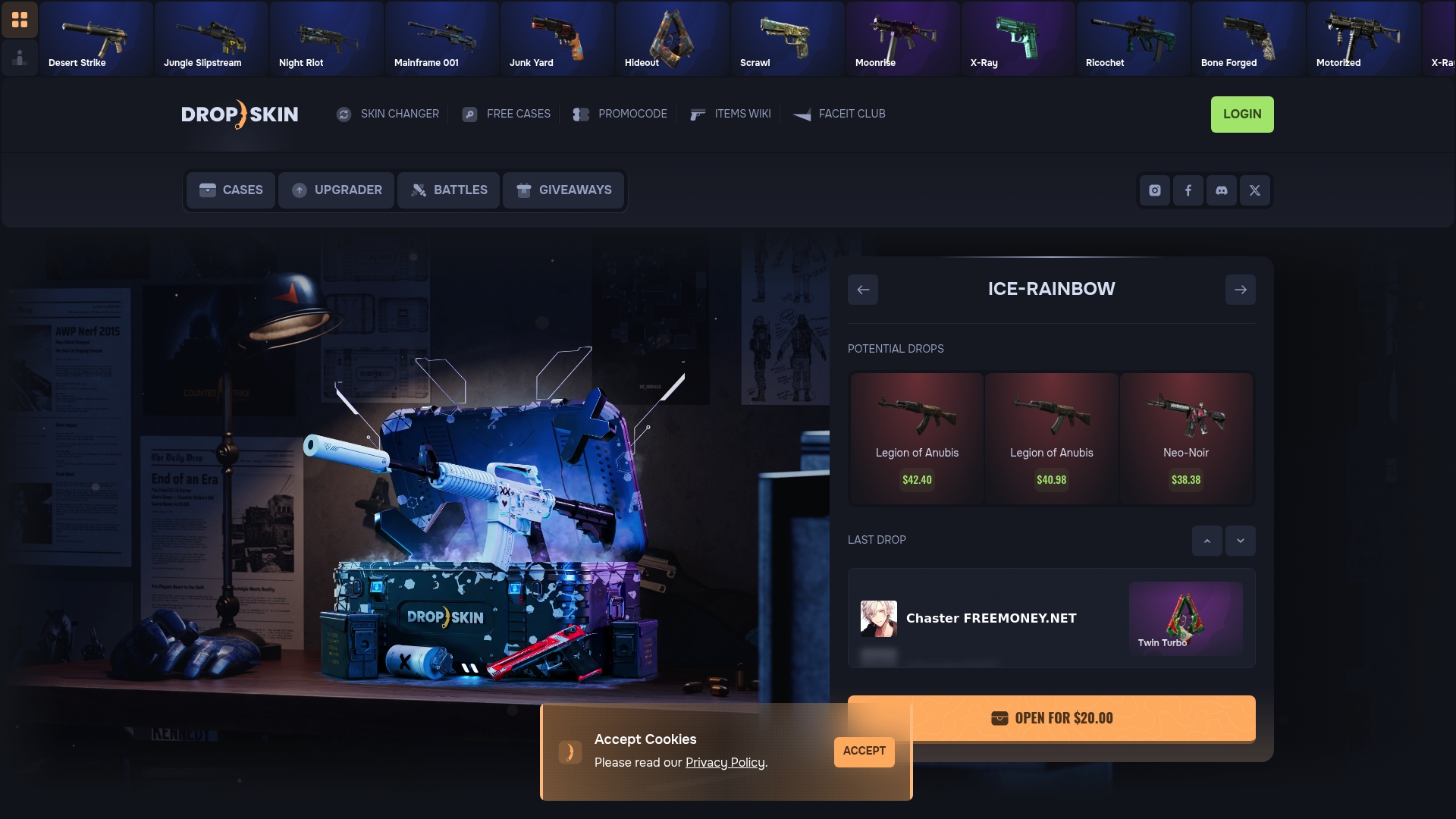
DROP.SKIN gives you a full suite of tools to take your skin game to the next level. You can open CS2 cases from an extensive collection designed to give you real shots at premium skins without the Steam markup. If you already have skins you want to improve, the skin upgrader lets you trade up your current inventory for higher-value items in a transparent, entertaining format. Whether you are chasing a low-float knife or building a themed loadout for competitive play, DROP.SKIN combines the excitement of case openings with the strategy of smart skin trading in one place.
Frequently asked questions
How do third-party skin sites differ from Steam?
Third-party skin sites let you buy, sell, and trade CS2 skins for real cash with lower fees and advanced features, while Steam restricts all earnings to wallet credit only.
Are third-party CS2 skin sites safe?
The top platforms like Skinport, CSFloat, and DMarket carry Trustpilot ratings of 4.3 to 4.9 out of 5 and use escrow and API compliance. Always enable 2FA and stick to verified platforms.
What are the main risks in skin trading on third-party sites?
Scams, price volatility, and market manipulation are the primary risks. Using platforms with API compliance and 2FA and checking reviews before trading cuts your exposure significantly.
How do recent Valve regulations affect skin trading?
Valve's 2025 changes introduced a 7-day trade reversal window, mandatory API and 2FA requirements, and a December 2025 ban on skin gambling sponsorships at competitive tournaments.
What makes a skin valuable for collectors and competitive players?
Low float values between 0.00 and 0.10 carry premiums of 2 to 5 times the base price, and rare patterns like Doppler Phase 4 are the most sought-after for both collectors and competitive players.