TL;DR:
- The CS:GO and CS2 skin economy is a $6 billion unregulated market, larger than many casinos.
- Reputable third-party marketplaces offer better pricing, instant withdrawals, and more entertainment than Steam.
- Long-term success relies on strategic trading, safe platform choices, and patience over chasing lucky drops.
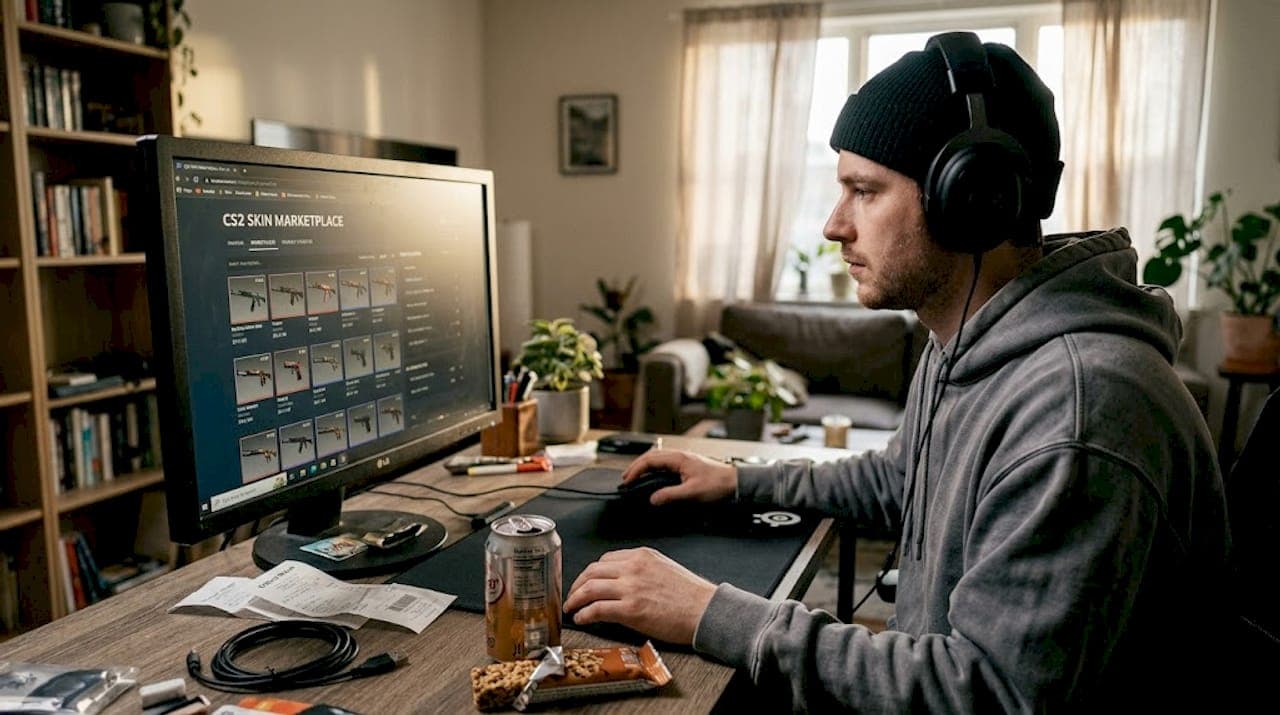
The CS:GO and CS2 skin economy is far bigger than most players realize. We're talking about a $6B unregulated market that dwarfs the revenue of many Las Vegas casinos, yet the majority of players treat it like a casual hobby. The confusion is real: trading, battles, upgrades, and case openings all live inside the same ecosystem, but they play by very different rules. Get them mixed up and you'll lose value fast. This guide cuts through the noise, explaining exactly how skin marketplaces operate, what separates smart strategies from costly mistakes, and how to pick platforms that work in your favor.
Table of Contents
- What is a skin marketplace in CS:GO and CS2?
- How do battles, cases, and upgrades work on marketplaces?
- Trading strategies: Cross-market pricing, trade-ups, and float arbitrage
- Staying safe: What makes a marketplace trustworthy?
- Why most gamers misunderstand the true value of skin marketplaces
- Ready to maximize your skin marketplace experience?
- Frequently asked questions
Key Takeaways
| Point | Details |
|---|---|
| Understand platform types | Third-party skin marketplaces offer more features, but also require careful selection for safety. |
| Know your strategy | Consistent profits usually come from trading and trade-ups rather than gambling. |
| Apply bankroll discipline | Limit risk to 1-2% of your funds per play for safer, longer-term gains. |
| Prioritize safety | Choose trusted sites with provably fair tech and fast withdrawals to minimize risk. |
What is a skin marketplace in CS:GO and CS2?
Now that you know the sheer size and complexity of the skin market, let's break down exactly what a skin marketplace is and why they've become essential for CS gamers.
A skin marketplace is any online platform that lets you trade, sell, or gamble CS:GO and CS2 skins outside of Valve's native Steam environment. Steam's own Community Market exists, but it comes with serious limitations: you can only cash out to your Steam wallet, fees eat into your profits, and there's zero entertainment value beyond a basic listing system. Third-party marketplaces solve all three problems.
The industry trends in skin gambling show a clear shift toward platforms that offer multiple activity types under one roof. These generally fall into four categories:
- Trading: Direct peer-to-peer exchanges or bot-powered instant swaps at market-driven prices.
- Case openings: Paying a fee to open a virtual case with randomized skin rewards.
- Case battles: Competing against other players to see who gets the highest-value drops from simultaneous case openings.
- Skin upgrades: Wagering a skin for a chance to win one of higher value, usually with adjustable odds.
The CS skin market is not just big, it's operating in a largely unregulated space. That means the platform you choose can make the difference between a great experience and a painful loss with no recourse.
Third-party skin sites are where the real action happens, and third-party skin sites consistently offer better pricing, real cash withdrawal options, and far more entertainment value than Steam alone. That said, quality varies wildly. The best reputable skin gambling platforms combine transparency, fairness verification, and fast payouts. The worst ones are designed to keep your money and give you little in return.
Understanding that distinction is the single most important thing you can do before depositing anything.
How do battles, cases, and upgrades work on marketplaces?
With the basics clear, let's dig into the most popular activities: battles, cases, and upgrades, and see how they actually work on these platforms.
Each activity has a specific flow, and knowing the mechanics lets you approach them with a strategy rather than pure luck.
How these activities typically work:
- Case opening: You select a case, pay the opening fee, and a random skin is revealed. Odds are fixed but rarely in your favor for high-tier items.
- Case battle: Two or more players each open the same case simultaneously. The player with the highest combined drop value wins everyone's skins. Low-variance cases give more consistent outcomes in battles, which is why experienced players prefer them over high-risk cases with wild swings.
- Skin upgrade: You put up a skin and select a target skin of higher value. The system calculates odds based on the value difference. Aiming for incremental upgrades at 40 to 60 percent win odds keeps your risk manageable while still building your inventory.
- Trade or sell: You list a skin or use instant-sell features, often getting real money or site credit faster than Steam allows.
Here's a quick comparison to help you decide which activity fits your goals:
| Activity | Skill factor | Risk level | Potential return |
|---|---|---|---|
| Case opening | Low | High | High but unlikely |
| Case battle | Medium | Medium | Medium to high |
| Skin upgrade | Medium | Medium | Controlled growth |
| Direct trading | High | Low to medium | Consistent |
For why battle for skins has become so popular, it comes down to the social element and the rush of head-to-head competition. But popularity doesn't mean it's the safest bet. You should also review case opening risks before committing real value to a case.

Pro Tip: Never risk more than 1 to 2 percent of your total skin balance on a single battle or upgrade. Treating each session like a bankroll protects you from emotional decisions and lets you stay in the game longer.
Also take time to learn which skin betting mistakes to avoid before you start spending seriously. The patterns are predictable and avoidable once you know them.
Trading strategies: Cross-market pricing, trade-ups, and float arbitrage
Once you know how marketplaces function for gaming and fun, it's time to get serious about strategies that actually grow your inventory or profit.
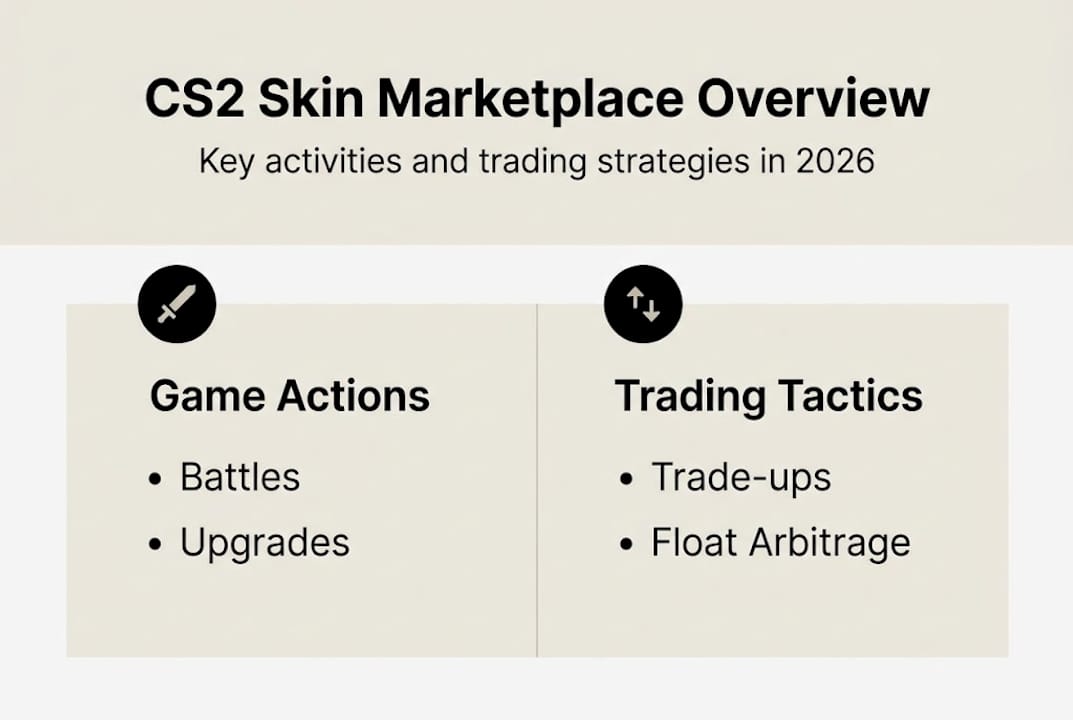
The advantages of skin trading over gambling are well documented, but most players never apply them consistently. Experts who commit to smart trading see 20 to 50 percent ROI from trade-ups compared to the negative expected value you get from most gambling formats.
Here are the three core strategies worth mastering:
- Cross-market pricing: Prices for the same skin vary significantly across platforms. A skin listed at $18 on one site might sell for $24 on another. Checking marketplaces for better trading regularly lets you buy low and sell high without any luck involved.
- Trade-up contracts: You feed 10 skins from the same collection into a trade-up contract to receive one rarer skin. The math favors you when you buy underpriced commons (roughly 90 percent of inputs) and target collections where the rare outputs are consistently in demand.
- Float arbitrage: Every CS2 skin has a float value between 0 and 1, representing wear. Lower float (closer to 0) generally means better condition. But some collections have rare float ranges that make a skin dramatically more valuable. Spotting an underpriced skin with a rare float is like finding a mismarked item at a pawn shop.
Here's a snapshot of average performance by strategy type:
| Strategy | Skill required | Avg. ROI | Time investment |
|---|---|---|---|
| Cross-market pricing | Low to medium | 10 to 25% | Daily |
| Trade-up contracts | Medium | 20 to 50% | Weekly |
| Float arbitrage | High | 30 to 60% | Ongoing research |
Pro Tip: Use price tracking tools or community-built spreadsheets to monitor price gaps across platforms. Even a 10 percent gap is worth acting on at scale.
Keeping up with skin trading trends in 2026 is equally important. The market shifts with game updates, new case releases, and player sentiment, so what worked six months ago may not work today. Bookmark the best skin trading alternatives so you always have options when one platform's prices go stale.
Staying safe: What makes a marketplace trustworthy?
Before you jump into any marketplace, remember that not all sites are created equal. Here's what separates legit platforms from risky ones.
Most marketplace scams target newer users who haven't yet learned what to look for. The good news is that evaluating a platform isn't complicated once you know the checklist.
What to look for in a trustworthy marketplace:
- Provably fair system: The platform should publicly disclose its randomness algorithm so you can verify results independently.
- Instant or fast withdrawals: Delays over 48 hours with no explanation are a red flag. Reputable platforms prioritize instant withdrawals and low house edge as competitive features.
- Strong community reputation: Check Reddit, Discord, and review sites. Consistent patterns of complaints about payouts or support should be disqualifying.
- Responsive support: A site with no live support or that takes days to respond is not a site you want holding your skins.
- Clear rules and terms: If the terms of service are buried, vague, or change frequently, walk away.
Red flags to avoid:
- No verifiable fairness system
- Withdrawal minimums that are suspiciously high
- Bonus offers that require massive playthrough before withdrawal
- No public track record or community presence
- Fake or paid reviews dominating their profile
Following safe steps for skin betting removes most of the risk before you ever deposit. The single best habit is treating a shiny bonus offer as a warning sign rather than a reward. Legitimate platforms earn your trust with performance, not promises.
Pro Tip: Stick to sites actively used by experienced community members and that have undergone public fairness audits. Popularity alone isn't proof of safety, but transparency always is.
Also revisit what avoiding skin betting mistakes looks like in practice. The overlap between safety habits and profit habits is bigger than most people think.
Why most gamers misunderstand the true value of skin marketplaces
Now that you've seen the essentials of safety and profit, here's a candid truth you won't get from most hype videos or forums.
Most players come to skin marketplaces chasing a big moment: the legendary drop, the battle win that doubles their balance overnight. That excitement is real, and we get it. But the players who consistently grow their inventories aren't the lucky ones. They're the boring ones, in the best possible way.
The honest reality is that case battles and openings are entertainment products first. They're designed to be thrilling, not profitable. Long-term value almost always comes from patient trading, not quick bets. When you start approaching your skin portfolio like a small business, things change. You track your average return. You avoid emotional trades after a bad session. You use tools like a skin upgrader strategically rather than impulsively.
Applying even basic bankroll discipline and prioritizing informed platform choices over flashy bonuses puts you ahead of 80 percent of the marketplace. The market rewards patience, knowledge, and selectivity. Not luck.
Ready to maximize your skin marketplace experience?
If you're ready to level up your skin trading safely and efficiently, here's how to get started with one of the top-rated sites in 2026.
DROP.SKIN brings together everything covered in this guide under one roof: case openings, skin battles, and upgrades, all backed by a provably fair system and instant withdrawals. Whether you're testing the waters with small transactions or ready to run focused upgrade sessions, the platform is built to give you full control over your risk and reward.
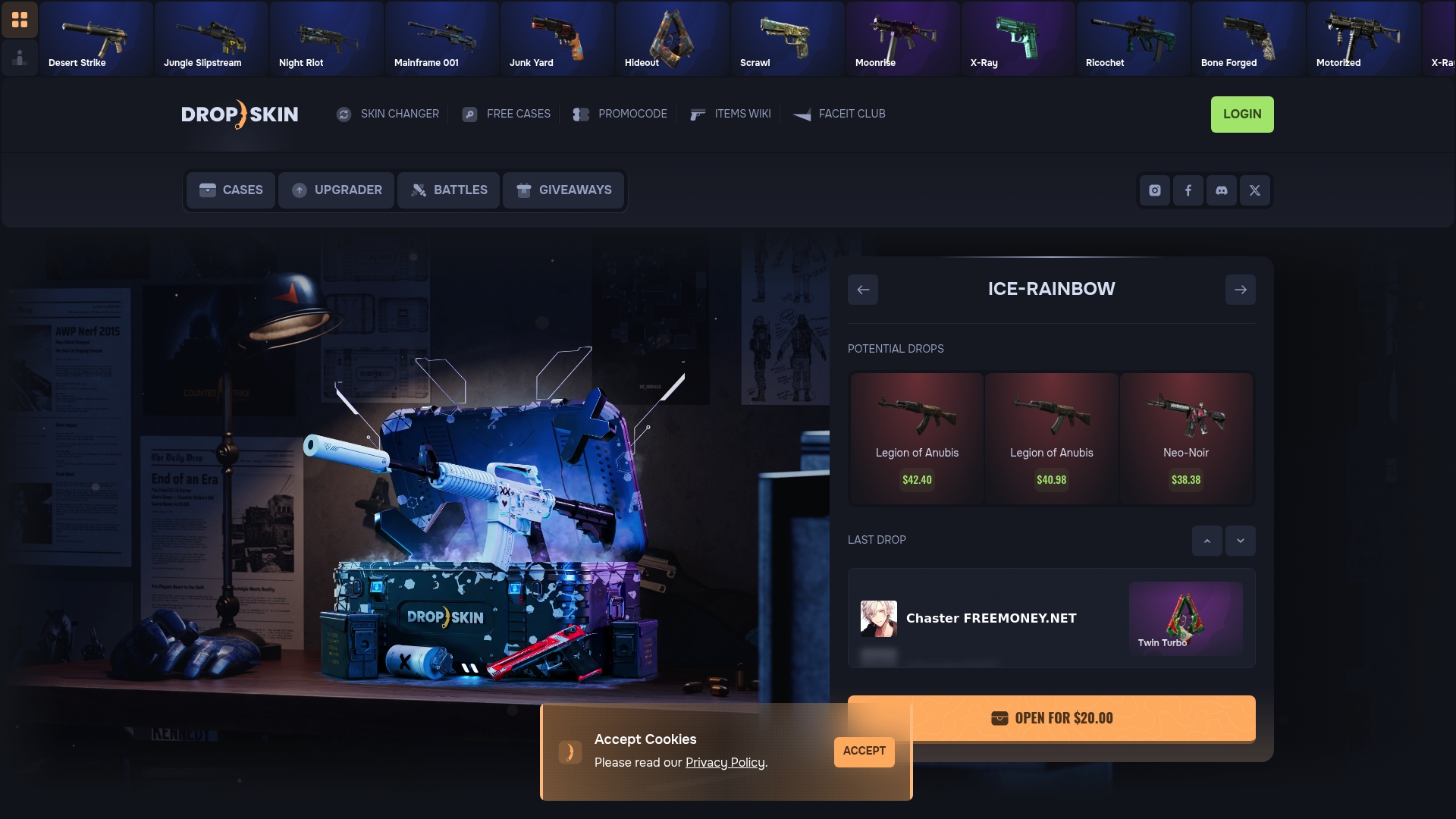
The CS2 skin upgrader at DROP.SKIN lets you move through incremental value jumps at your own pace, with clear odds displayed before every attempt. Start small, get familiar with the interface, and scale up once you're comfortable. This is exactly how experienced traders build consistent gains without burning their balance in a single session.
Frequently asked questions
What are the safest CS2 skin marketplaces?
Choose platforms with provably fair systems, instant withdrawals, and consistently strong community reviews. These three factors together are the most reliable signal of a trustworthy site.
Can you earn real profit by trading skins instead of gambling?
Yes. Expert traders regularly see 20 to 50 percent ROI through trade-up strategies, which consistently outperforms the negative expected value built into most gambling formats.
What is a case battle and how does it work?
In a case battle, two or more players open cases at the same time, and whoever gets the highest total drop value wins all the skins. Picking low-variance cases gives you more consistent outcomes than high-risk alternatives.
How do float values impact skin trading strategies?
Float values measure wear on a skin, and rare float ranges can dramatically boost a skin's market value. Traders who spot underpriced skins with desirable floats can flip them for significant profit without any gambling involved.
Why avoid unregulated skin marketplaces?
Unregulated marketplaces have no accountability for withdrawals, fairness, or dispute resolution, which makes them prime environments for scams and financial loss with no way to recover your assets.