
TL;DR:
- CS:GO case battles are head-to-head competitions where players open identical cases simultaneously to compete for the highest total skin value.
- Success depends on pre-battle decisions, choosing stable cases, and managing risk within a fixed budget, as the game is inherently high variance.
CS:GO case battles are head-to-head competitions where multiple players simultaneously open identical cases, and the player whose skins total the highest value wins everything. This format, also called a skin battle, transforms solo unboxing into a competitive, social event with real stakes. Platforms like Key-Drop and SkinClub have built entire ecosystems around this format. Understanding CSGO case battles means knowing not just the mechanics but the math, the strategy, and the risks before you commit a single skin to the pot.
How do CS:GO case battles work and what are the different battle formats?
A CS:GO case battle starts when all players in a room deposit the same cases. The platform opens every case simultaneously, tallies each player's total skin value, and awards the entire pot to the highest scorer. No trading happens mid-battle. The result is determined purely by drop values.
The format you choose changes your odds significantly. 1v1 battles offer around a 50% win chance, while a 1v1v1v1 format drops each player's individual win probability to roughly 25%. That tradeoff is the core tension in every battle room you enter.
| Format | Players | Win Probability | Pot Size | Variance |
|---|---|---|---|---|
| 1v1 | 2 | ~50% | 2x entry | Low |
| 1v1v1 | 3 | ~33% | 3x entry | Medium |
| 1v1v1v1 | 4 | ~25% | 4x entry | High |
| 2v2 Team | 4 | ~50% per team | 4x entry | Medium |
Platform commissions typically range from 5–10%, deducted from the total pot before payout. That fee compounds over time and is the primary reason most players lose value across many sessions.
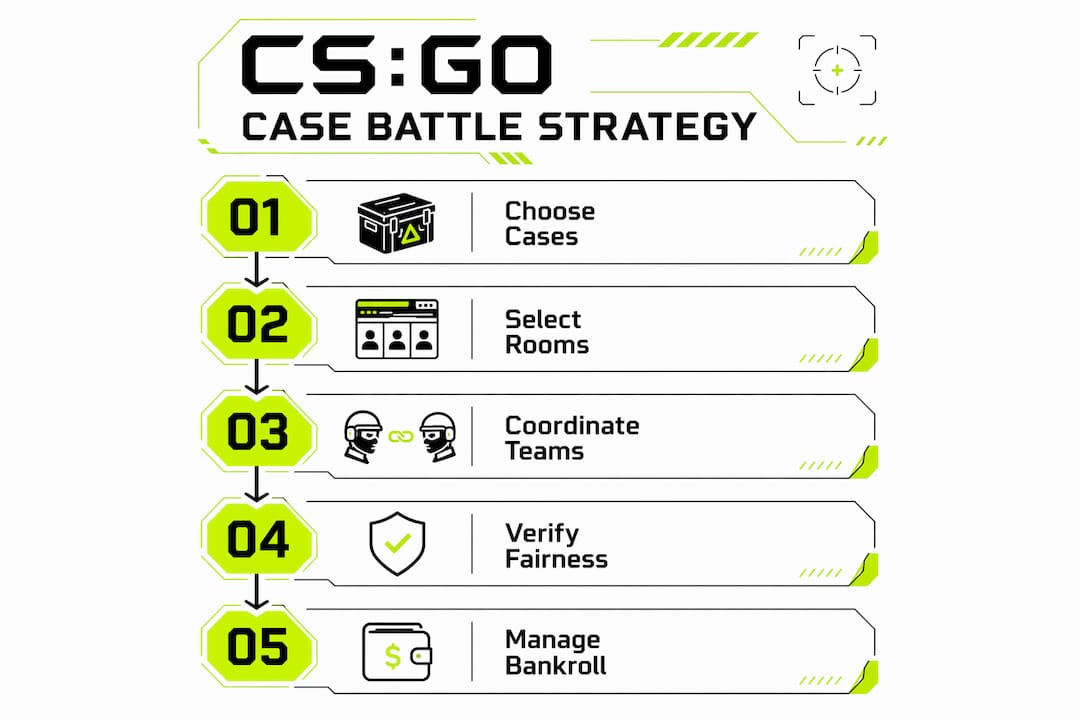
Reputable platforms use SHA-256 seed hash commitments to verify fairness before a battle starts. Players can check the seed before and after each round to confirm the result was not manipulated. This provably fair system is the baseline standard you should expect from any platform you use.
Pro Tip: In 2v2 team formats, your partner's drops count toward your team total. Coordinate case selection with your teammate to reduce variance across the combined pool.
What strategies and case selection techniques improve winning chances?
The real skill in case battles lies in pre-battle decisions, specifically which cases you pick and which rooms you enter. The unboxing itself is random. Everything before it is not.

Experienced players analyze case contents and drop distributions rather than chasing the most famous skins. A case with one legendary knife and mostly worthless filler is a high-variance trap. A case with a tighter spread between its best and worst drops gives you more consistent outcomes across multiple battles.
Here are the core case selection principles that separate informed players from casual ones:
- Favor stable drop distributions. Cases with a favorable filler-to-winner ratio outperform high-variance cases in competitive formats. You want your floor to be decent, not just your ceiling to be high.
- Avoid prestige cases for volume play. High-profile cases with expensive knives look attractive but punish you hard when the knife does not drop, which is most of the time.
- Match case cost to your bankroll. Entering a $50-per-case battle when your total budget is $150 leaves no room to absorb variance. Three losses and you are out.
- Read the room before joining. Some platforms show the cases already selected by other players. If opponents have loaded high-variance cases, your stable selection becomes a relative advantage.
- Use low-cost cases for volume. Low-cost cases allow volume grinding to offset the house edge better than chasing rare expensive drops. More battles mean more chances to run positive over a session.
Understanding CSGO skins at a mechanical level also helps. Skin rarity tiers, float values, and StatTrak status all affect drop value. A player who knows the difference between a Factory New and a Battle-Scarred drop can estimate expected value more accurately than one who only recognizes skin names.
Pro Tip: Before entering any battle room, look up the case's full drop table on a community database. Calculate the average expected drop value across all rarities. If that number is significantly lower than the case cost, the house edge on that case is steep.
What are the risks and rewards involved in CS:GO case battles?
Case battles are high-variance PvP-based gambling with an inherent house edge. The majority of players lose value over time. That is not a warning to scare you off. It is the mathematical reality you need to factor into every session.
The winner-takes-all structure means one player walks away with the full pot while everyone else loses their entry entirely. Unlike traditional solo case opening, where you at least keep your drops, a losing battle leaves you with nothing. That asymmetry is what makes the format exciting and what makes it financially punishing for unprepared players.
"Players should approach case battles strictly as entertainment due to inherent negative expected value and high variance, not as a guaranteed way to make profit." — CS2REF
The emotional side matters too. Case battles add social and competitive elements that increase entertainment value despite the negative expected value. The dopamine hit from watching your skins race against an opponent's in real time is genuinely different from opening a case alone. That engagement is real. So is the risk of chasing it past your budget.
Key risks to keep in mind before entering any battle:
- Inventory depletion is fast. High-value case battles can drain a skin inventory in minutes if variance runs cold.
- Commission compounds. A 10% rake on every battle means you need to win more than half your 1v1s just to break even.
- Emotional decisions cost money. Tilting after a loss and immediately entering a bigger battle is the most common way players blow their bankroll.
- Platform reliability varies. Not every site uses verified provably fair systems. An unverified platform can manipulate outcomes without detection.
For a deeper look at the risks and rewards of skin gambling, the financial mechanics apply directly to case battle participation.
How to choose the best platforms for CS:GO case battles in 2026?
Platform selection is the single most controllable variable in your case battle experience. The cases are random. The platform fee is not.
Major platforms processed over 50,000 case battles daily by Q4 2025, which reflects both the format's popularity and the liquidity you need for fast matchmaking. A platform with low user volume means longer waits to fill battle rooms and fewer format options available at any given time.
Serious players prefer platforms with lower or zero rake to reduce long-term losses. Key-Drop, for example, has built a reputation partly on its commission structure. SkinClub offers a wide case catalog with active battle rooms. When comparing platforms, prioritize these factors:
| Factor | What to look for |
|---|---|
| Rake/commission | 0–5% is favorable; avoid platforms above 10% |
| Provably fair system | SHA-256 seed verification before and after each battle |
| User base | High daily volume means faster room fill times |
| Deposit/withdrawal | Skin-based and crypto options reduce friction |
| Bonus offers | Welcome bonuses can offset early losses if terms are fair |
Security and withdrawal speed matter as much as the battle mechanics. Platforms that delay withdrawals or require excessive verification for small amounts are a red flag. Check community reviews on Reddit's r/GlobalOffensive and r/csgomarketforum before depositing anything significant.
For a broader view of CS2 skin gambling trends shaping platform development in 2026, the competitive dynamics between platforms are pushing commission rates down and fairness standards up.
What are common mistakes to avoid in CS:GO case battles?
Most losses in case battles come from predictable, avoidable decisions. Knowing the format is not enough if your habits undermine your bankroll.
The most expensive mistake is entering visually impressive battle rooms without checking the case math. A room filled with expensive-looking cases can have terrible expected value if the drop distribution is top-heavy. The skin art does not tell you the drop rate. The case contents do.
- Do not chase losses with bigger battles. Increasing your stake after a losing streak is the fastest path to a depleted inventory.
- Avoid 4-player battles when your bankroll is thin. The 25% win probability in a 1v1v1v1 format requires a larger sample size to smooth out variance. Stick to 1v1 formats when funds are limited.
- Do not ignore the rake over time. A 10% commission on 20 battles is two full battle entries lost to the house. Winning consistently means treating case battles as bankroll exercises, not lottery tickets.
- Do not skip the provably fair check. Verifying the seed hash takes 30 seconds and confirms the platform is not manipulating your results.
Pro Tip: Set a hard session limit before you start. Decide the maximum number of battles or total case value you will spend in one sitting. Stop when you hit it, win or lose. This single habit separates disciplined players from those who consistently overspend.
Key takeaways
CS:GO case battles are negative-expected-value competitions where pre-battle decisions, platform selection, and bankroll discipline matter far more than luck alone.
| Point | Details |
|---|---|
| Format affects odds | 1v1 gives ~50% win probability; 4-player formats drop individual odds to ~25%. |
| Platform rake compounds | A 5–10% commission on every battle erodes bankroll faster than most players expect. |
| Case selection is the real skill | Stable drop distributions outperform high-variance cases in competitive formats. |
| Treat it as entertainment | Negative expected value is built in; responsible play means setting firm session limits. |
| Verify platform fairness | SHA-256 provably fair systems are the minimum standard for any reputable battle site. |
Dropskin's take on why strategy matters more than luck here
Most players enter case battles thinking the outcome is purely random. It is not. The randomness is in the drops. The edge, or lack of it, comes from every decision you make before the cases open.
I have watched players with identical budgets produce wildly different results over a month of play. The ones who lasted longer were not luckier. They picked lower-variance cases, stayed in 1v1 formats, and chose platforms with minimal rake. They also stopped when they said they would. The ones who burned through their inventory fast did the opposite on every count.
The social and competitive appeal of case battles is real and worth acknowledging. This format is genuinely more engaging than solo unboxing. Watching your skins race against an opponent's in real time creates a tension that keeps players coming back. That engagement is the product. The skins are the stakes.
The honest truth is that no strategy eliminates the house edge. What strategy does is slow the rate at which variance works against you and give you more sessions, more entertainment, and occasionally more wins per dollar spent. That is the realistic ceiling. Play within it and case battles are a genuinely fun part of the CS2 ecosystem. Ignore it and you will fund someone else's inventory.
— Dropskin
Dropskin: open cases and battle for better skins
Dropskin gives you a direct way to put these strategies into practice. The platform offers a wide catalog of CS2 cases, fast battle room creation, and a skin upgrader that lets you convert lower-value skins into higher-tier items without waiting for a battle to fill.
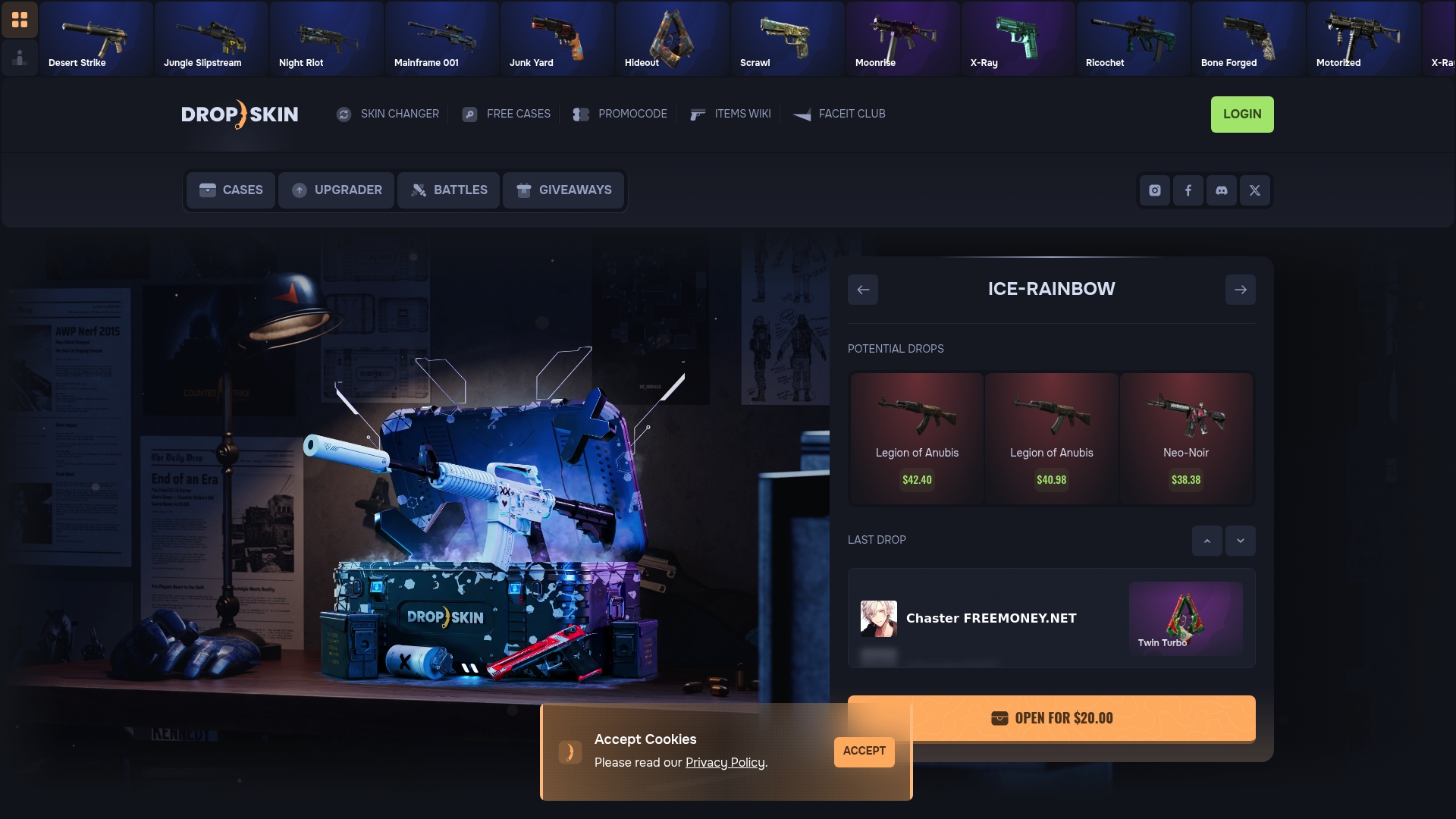
Deposit bonuses and promocodes reduce your effective entry cost, which directly offsets the house edge discussed throughout this guide. Withdrawals are processed quickly, and the case selection covers everything from budget-friendly options for volume play to premium cases for players comfortable with higher variance. Visit Dropskin to browse current cases, check active battle rooms, and start applying the strategies covered here with real skin stakes.
FAQ
What is a CS:GO case battle?
A CS:GO case battle is a multiplayer format where all players open identical cases simultaneously, and the player whose skins total the highest value wins the entire pot.
How does the house rake affect case battle returns?
Platform commissions of 5–10% are deducted from the pot before payout, meaning players must win more than their statistical share of battles just to break even over time.
What battle format gives the best odds?
1v1 battles offer the highest individual win probability at around 50%, making them the best format for players focused on managing variance and preserving bankroll.
How do I know if a case battle platform is fair?
Look for platforms that publish SHA-256 seed hashes before each battle starts. Players can verify the hash after the battle to confirm the result was not altered.
Are CS:GO case battles worth playing?
Case battles offer genuine entertainment value through competitive social play, but carry negative expected value by design. They are worth playing as entertainment with a set budget, not as a reliable way to grow your skin inventory.