
TL;DR:
- Skin battles are multiplayer competitions where players open identical cases and compete for highest value.
- They offer faster, more engaging gameplay with real-time results and social interaction.
- Long-term, skin battles are entertainment with a house edge, not a reliable profit source.
Solo case openings used to be the default for CS2 skin hunters, but that era is quickly fading. Skin battles have pulled in over 2 million monthly players, turning what was once a lonely click-and-hope experience into a live, competitive showdown where your pulls are measured directly against other players in real time. The appeal is obvious once you understand the format: you're not just gambling against the house, you're competing against real opponents, and the winner takes everything. This guide breaks down exactly why skin battles have become the most exciting format in CS2 skin gaming and how you can get the most out of every session.
Table of Contents
- What are skin battles and how do they work?
- Why skin battles are more engaging and rewarding
- Social interaction and community benefits
- Risks, budgeting, and smart strategies for skin battles
- A smarter approach: Skin battles as entertainment, not investment
- Level up your case battles with DROP.SKIN
- Frequently asked questions
Key Takeaways
| Point | Details |
|---|---|
| Competitive thrill | Skin battles transform solo case opening into exciting multiplayer competitions with real-time results. |
| Higher reward potential | Winning a battle can multiply your inventory, earning you more skins than solo openings if you maintain strong win rates. |
| Community engagement | Battles offer chat, leaderboards, and streamer-friendly features that make skin gaming more social and interactive. |
| Risk and budget | Skin battles amplify variance and carry a house edge, so managing your spend and treating them as entertainment is vital. |
What are skin battles and how do they work?
Skin battles are fundamentally different from opening a case by yourself. When you open a solo case, you get whatever the algorithm gives you, and that's the end of it. No competition, no stakes beyond your own entry cost, no one to beat.
CS2 case battles are multiplayer competitions where 2 to 4 players open identical cases simultaneously, and the player with the highest combined skin value wins all items from every participant. That single mechanic changes everything. Your result isn't just about what you got; it's about whether you got more than everyone else.
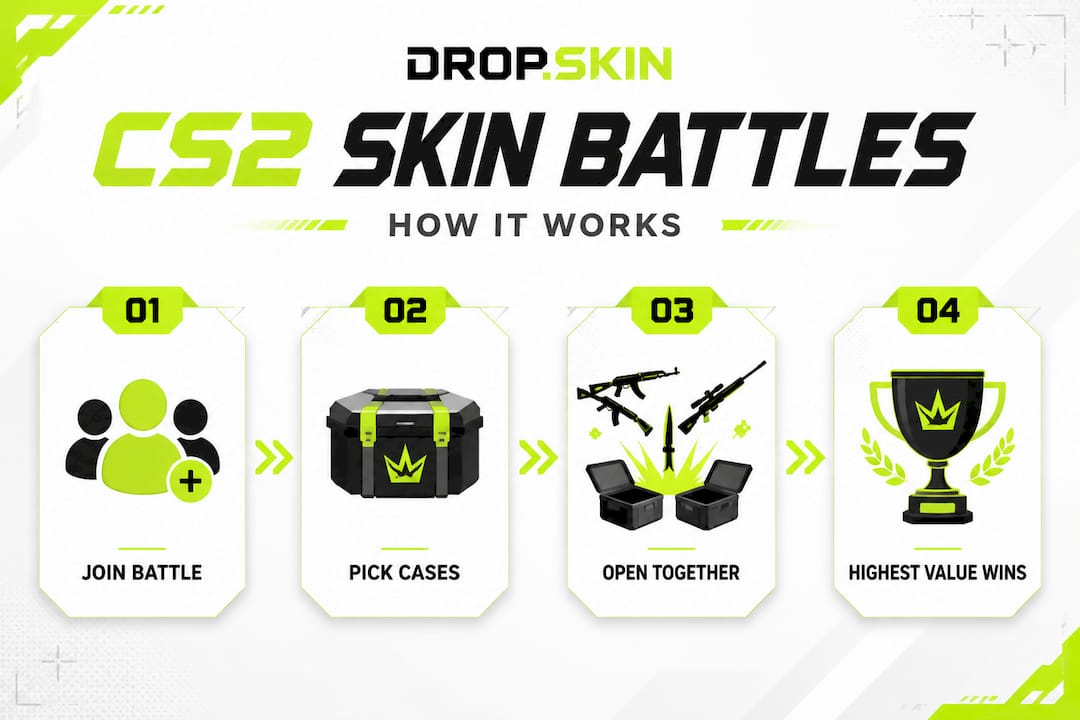
Players join for real-time competition and live PvP results that play out in seconds. You watch your opponents' skins drop in real time, the tension builds, and the winner is declared almost instantly. It's the difference between scratching a lottery ticket alone at your kitchen table versus competing head-to-head in a game show where everyone can see the results.
Before you jump in, it helps to understand the CS2 skin battle guide basics and the types of skin battles available, since formats vary quite a bit across platforms.
Here's a side-by-side look at how the two formats compare:
| Feature | Solo case opening | Skin battles |
|---|---|---|
| Number of players | 1 | 2 to 4 |
| Competition | None | Direct PvP |
| Reward potential | Fixed to your own pull | Winner takes all items |
| Social interaction | None | Live chat, real-time results |
| Duration | Seconds | 2 to 5 minutes |
| Excitement level | Low to moderate | High |
| Strategic depth | Minimal | Case selection, opponent reading |
Key features that define the skin battle format:
- Identical cases: Every player opens the same case type, keeping the competition fair
- Simultaneous opening: All skins drop at the same time, so results are visible to everyone
- Winner takes all: The player with the highest combined value walks away with every skin from every participant
- Live interface: Real-time animations and chat make the experience feel like a live event
- Flexible player count: 1v1 battles, 3-way, and 4-way formats each offer different risk and reward profiles
Why skin battles are more engaging and rewarding
Now that the mechanics are clear, let's see why skin battles deliver superior excitement and potential benefits compared to grinding solo openings.
The math is the first thing worth understanding. Winners take all skins from all participants, which means your potential upside scales directly with the number of players in the battle. A 1v1 battle where both players open 5 cases each means the winner walks away with 10 cases worth of skins. Solo, you'd only ever get 5. That's a straightforward doubling of inventory potential if your win rate is above 50%.
Over 2 million monthly players have figured this out, and empirical data backs it up: a 1v1 battle yields 10 items for the winner versus 5 items from solo opening, making the math significantly more favorable for players who win more than they lose.
| Battle format | Cases opened per player | Total items in play | Winner receives |
|---|---|---|---|
| Solo opening | 5 | 5 | 5 items |
| 1v1 battle | 5 each | 10 | 10 items |
| 3-way battle | 5 each | 15 | 15 items |
| 4-way battle | 5 each | 20 | 20 items |
The reward multiplier is real, but it only pays off with a positive win rate. That's where strategic depth enters the picture.
"The competitive format of skin battles transforms a passive gambling experience into an active, skill-influenced contest where case selection and opponent awareness genuinely matter."
Choosing the right cases is one of the most underrated skills in skin battles. Cases with a balanced value spread, meaning a healthy mix of low, mid, and high-value skins, give you more consistent results than high-variance cases that are either massive wins or near-zero drops. High-variance cases can be thrilling, but they punish inconsistency hard.
Opponent selection matters too. In open lobbies, you can often see a player's history or recent activity. Joining battles against newer players or those on losing streaks can tilt the odds slightly in your favor, though variance always plays a role.

Pro Tip: Focus on maximizing skin battle value by choosing cases with a wide range of skin values rather than cases that are dominated by low-tier drops. The goal is to give yourself more chances at a high-value pull that can swing the battle in your favor.
The fast pace is another genuine advantage. Most battles resolve in under 5 minutes, which means you can run multiple sessions in an evening without the slow grind of trading or marketplace flipping. For players who want action and results quickly, this format delivers. Understanding the case opening advantages alongside the skin gambling benefits helps you frame battles as part of a broader skin strategy rather than a standalone activity.
Social interaction and community benefits
Beyond rewards, the social component is a major draw, and here's what it adds to the experience.
Skin battles are not a solo activity even when you're playing them on a screen by yourself. The live chat systems built into most battle platforms let players trash-talk, celebrate, and commiserate in real time. That social layer transforms a mechanical gambling format into something that feels closer to a competitive gaming session.
Social interaction via chat, leaderboards, and community features enhances engagement, and the format has become especially popular among streamers for viewer retention. When a streamer runs a skin battle live, the audience can see every skin drop in real time, react to the results, and feel like they're part of the outcome. That shared tension is powerful content.
"Streamers who incorporate skin battles into their broadcasts consistently report higher viewer engagement compared to solo case opening streams, because the competitive element gives audiences a reason to stay until the final result."
Community features that make skin battles more than just gambling:
- Live leaderboards: Track your rank against other players on the platform, giving you a long-term goal beyond any single battle
- Battle history and stats: Review your past performance to identify patterns and improve case selection
- Public lobbies: Join open battles and meet new players organically through competition
- Streamer integration: Many platforms support stream overlays that display battle results directly to viewers
- Giveaways and events: Platforms often run community events tied to battle milestones, rewarding active participants
- Chat reactions: Real-time emoji and message systems make each skin drop feel like a shared moment
The way CS2 skins influence gameplay and community identity is well-documented, and skin battles amplify that effect by making your collection a public competition rather than a private collection. Staying aware of skin gambling industry trends also helps you understand where the community is heading and which formats are gaining traction.
Risks, budgeting, and smart strategies for skin battles
As you dive into battles for fun and rewards, it's critical to understand risk management and make informed choices before you commit real value.
The most important fact every player needs to internalize: the house edge of 5 to 15% ensures a long-term negative expected value. This means that over hundreds of battles, the platform will always come out ahead. Skin battles are entertainment with the potential for short-term wins, not a reliable income stream. Treating them as an investment is the fastest way to drain your inventory.
Expert strategies include selecting balanced value cases and managing your bankroll with monthly caps. The recommended guideline is to limit skin battle spending to 5 to 10% of your monthly gaming budget. If you set aside $100 per month for gaming, that means no more than $10 in battle stakes per month. It sounds conservative, but it's the approach that keeps the activity fun instead of stressful.
Practical strategies for smarter skin battles:
- Set a monthly budget cap before you start and treat it as a hard limit, not a suggestion
- Choose balanced cases with a healthy distribution of skin values rather than all-or-nothing knife cases
- Withdraw wins immediately instead of rolling them back into more battles; this prevents the "chasing losses" trap
- Start with 1v1 formats to minimize variance before moving to 3 or 4-player battles
- Track your results in a simple spreadsheet so you have an honest picture of your win rate over time
- Avoid high-variance knife-only cases unless you're comfortable with the possibility of near-zero returns on most pulls
- Take breaks after losing streaks rather than trying to recover losses in the same session
Pro Tip: Before entering any battle, check the case contents and calculate the floor value (the lowest possible skin value in that case). Cases with a higher floor value give you a safety net that reduces the chance of a near-zero result even when your top-tier pulls don't land.
Exploring winning skin battles strategies in detail before committing real value is time well spent. You can also browse best skin cases to identify which case types align with your risk tolerance and budget.
A smarter approach: Skin battles as entertainment, not investment
Armed with strategy and awareness, here's the real takeaway that most players miss, and it's one we feel strongly about.
The skin battle format is genuinely exciting. The competitive structure, the live results, the social interaction, the chance to walk away with double your inventory in a single session. All of it is real and all of it is fun. But the players who enjoy skin battles the most over the long term are the ones who never confuse that excitement with financial opportunity.
The house edge of 5 to 15% is a structural reality that no strategy can fully overcome. You can improve your win rate through smart case selection and opponent awareness, but you cannot turn a negative expected value game into a reliable profit engine. The players who try end up frustrated, overextended, and no longer having fun.
Case battles enhance CS2 skin trading and betting by providing competitive unboxing, the potential for inventory upgrades, and genuine social gambling thrills. That's the correct frame. You're not here to get rich. You're here to compete, to feel the rush of a high-value drop landing at exactly the right moment, and to potentially upgrade your inventory in a way that solo opening rarely delivers.
The players we see enjoying skin battles most consistently are those who treat every session as an entertainment expense rather than an investment. They set their budget, they pick their cases thoughtfully, and they walk away when the budget is gone regardless of the results. They also celebrate wins by withdrawing skins rather than immediately reinvesting them.
Keeping up with industry trends in skin gambling also helps you stay ahead of format changes, new case releases, and platform developments that can affect the value of specific skin types. Knowledge is your best edge in a game where the house always has a structural advantage.
The uncomfortable truth is this: the most profitable thing you can do in skin battles is enjoy them responsibly and walk away when you've had your fun. That approach keeps the experience sustainable, keeps your inventory healthy, and keeps the competitive thrill alive for the long term.
Level up your case battles with DROP.SKIN
If you're ready to put these strategies into practice, DROP.SKIN case battles give you a clean, competitive platform to jump straight into the action. The battle interface is built for speed and transparency, with live results, real-time chat, and a wide selection of cases to match any budget or risk preference.
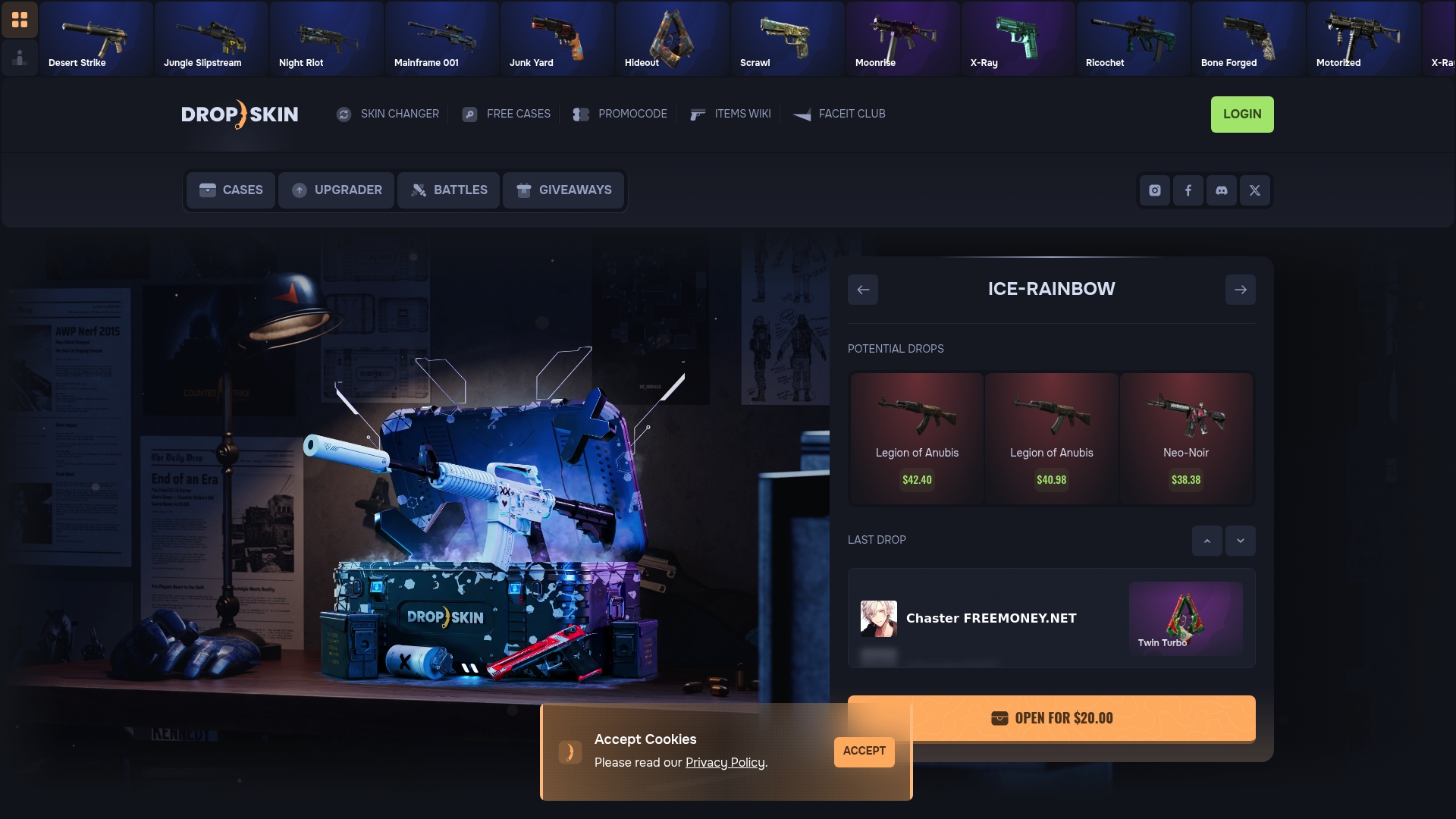
For players who want to go beyond battles and actively grow their inventory, the CS2 skin upgrader lets you trade up lower-value skins for a shot at premium drops. Whether you're grinding battles, upgrading skins, or hunting for that one rare item, DROP.SKIN brings together all the tools you need in one place. Giveaways, promo codes, and community events run regularly, so there's always something extra on the table for active players.
Frequently asked questions
How do skin battles differ from solo case opening?
Skin battles involve multiple players opening the same cases and competing for the highest skin value, with the winner taking all items, while solo opening only gives you your own skins with no competitive element.
What is the typical duration of a skin battle?
Most skin battles last 2 to 5 minutes, making them one of the fastest formats in CS2 skin gaming with near-instant results.
Can you lose your skins in a battle?
Yes, all participants risk their skins in every battle, and only the winner walks away with the full pool of items from all players.
Is joining skin battles profitable long-term?
Due to the house edge of 5 to 15%, skin battles carry a long-term negative expected value and are best treated as entertainment rather than a reliable profit strategy.
How can you maximize your chances in skin battles?
Selecting balanced value cases, sticking to monthly budget caps, and withdrawing wins immediately instead of reinvesting them are the core expert-recommended strategies for sustainable play.