
TL;DR:
- A hybrid skin platform is a gaming service that layers Steam's verification system on top of external marketplaces, enabling secure trades and real money withdrawals. It reduces risks associated with traditional trading by utilizing Steam confirmation and offers features like skin upgrading and case openings, often with lower fees. Understanding this architecture helps traders maximize their inventory value while avoiding untrustworthy platforms that misuse the hybrid term.
If you've spent any time in CS:GO or CS2 skin trading circles, you've almost certainly stumbled across the term "what is a hybrid skin platform" and gotten a different answer every time. Some gamers assume it's a new piece of technology. Others confuse it with AI beauty apps. The reality is that hybrid skin platform means something specific and genuinely useful in gaming contexts, and understanding it can change how you approach skin trading, case openings, and inventory building. This guide cuts through the noise and tells you exactly what it means for collectors and traders in the CS2 ecosystem.
Table of Contents
- Understanding hybrid skin platforms: definitions and contexts
- How hybrid platforms shape CS:GO and CS2 skin trading
- Comparing hybrid skin platforms with traditional skin trading methods
- Maximizing your virtual inventory with hybrid skin platforms
- Why the hybrid skin platform concept is misunderstood in gaming
- Get started with Drop.Skin: your hybrid platform for CS2 skin upgrades
- Frequently asked questions
Understanding hybrid skin platforms: definitions and contexts
The phrase "hybrid skin platform" gets used loosely across several industries, which is where most of the confusion starts. In medical aesthetics, it describes laser systems that combine two energy types in a single device. In beauty tech, hybrid skin platforms combine multiple technologies or system layers to deliver unified outcomes. In AI-driven beauty apps, skin analysis platforms unify quantitative scoring and visual overlay maps. None of that has anything to do with your AK-47 | Redline.
In gaming, the term means something more practical. A hybrid skin platform refers to a site or service that layers Steam's native trade infrastructure on top of an external marketplace. You get the security of Steam's own systems combined with features that Steam itself does not offer, like real money withdrawals, skin upgraders, or case opening mechanics. It's not one thing. It's an architectural pattern.
Here's a quick breakdown of where you'll encounter the term across different fields:
- Medical tech: Devices combining laser wavelengths for skin rejuvenation treatments
- AI beauty apps: Software that blends numeric skin scoring with heat-map visual analysis
- Gaming marketplaces: Platforms that merge Steam inventory verification with external buy, sell, and upgrade tools
- Skin changers: Client-side tools (usually unofficial) that alter how skins appear locally within the game
For CS2 traders, only that third category matters. And within gaming, hybrid skin systems vary widely in quality, security, and feature depth. Knowing how to tell the difference is where real value lies.
Now that you know the term is broad, let's zoom in on how it applies to gaming and skin trading platforms.

How hybrid platforms shape CS:GO and CS2 skin trading
The practical mechanics of a hybrid skin platform in CS2 are straightforward once you see how the layers connect. Skin exchange platforms link Steam inventories via OpenID and the Steam Web API and use Steam confirmation for secure trades. That means the platform never touches your Steam password. Instead, it authenticates your identity through Steam's own login system and processes trades through Steam's confirmation flow.
Here's how a typical hybrid skin system works step by step:
- Log in via Steam OpenID. You authenticate through Steam's official system, not through any third-party credentials. Your password stays private.
- Connect your Steam inventory. The platform reads your available skins using the Steam Web API, so you see real-time inventory data.
- Deposit skins for platform currency. You send items to a platform bot, which credits your account with equivalent platform funds. This is where the "conversion layer" of the hybrid model activates.
- Trade, upgrade, or open cases. With your balance loaded, you can buy other skins, use an upgrader, or participate in case openings, all off-Steam but secured by Steam's confirmation system.
- Withdraw to your Steam inventory. When you're ready to cash out in skins, the process reverses. When you want real money, platforms with withdrawal features send funds to your card, e-wallet, or crypto address.
Pro Tip: Always verify that the trade offer in your Steam confirmation matches exactly what the platform showed you before accepting. Bait-and-switch scams work by sending a near-identical offer hoping you confirm quickly without checking.
This hybrid design matters because it solves a real problem. Steam's built-in marketplace is locked to Steam Wallet funds. You can't withdraw to PayPal or a bank account. CS2 skin trading platforms built on the hybrid model break that limitation while keeping Steam's security intact. If you want a deeper breakdown of current fee structures and trade speeds, the skin trading guide 2026 covers what's changed this year.
Comparing hybrid skin platforms with traditional skin trading methods
Traditional skin trading meant one of two things: direct Steam trades between players, or using a trading bot service. Both carry real limitations. Direct trades require both parties to be online simultaneously and depend entirely on trusting someone you often don't know. Bot-based trading historically involved third-party clients that needed deeper system access, which opened doors to account compromise.
Hybrid platforms reduce risks by relying on Steam's official confirmation system rather than invasive client-side manipulation. That's the core architectural difference and it matters enormously for anyone with a valuable inventory.
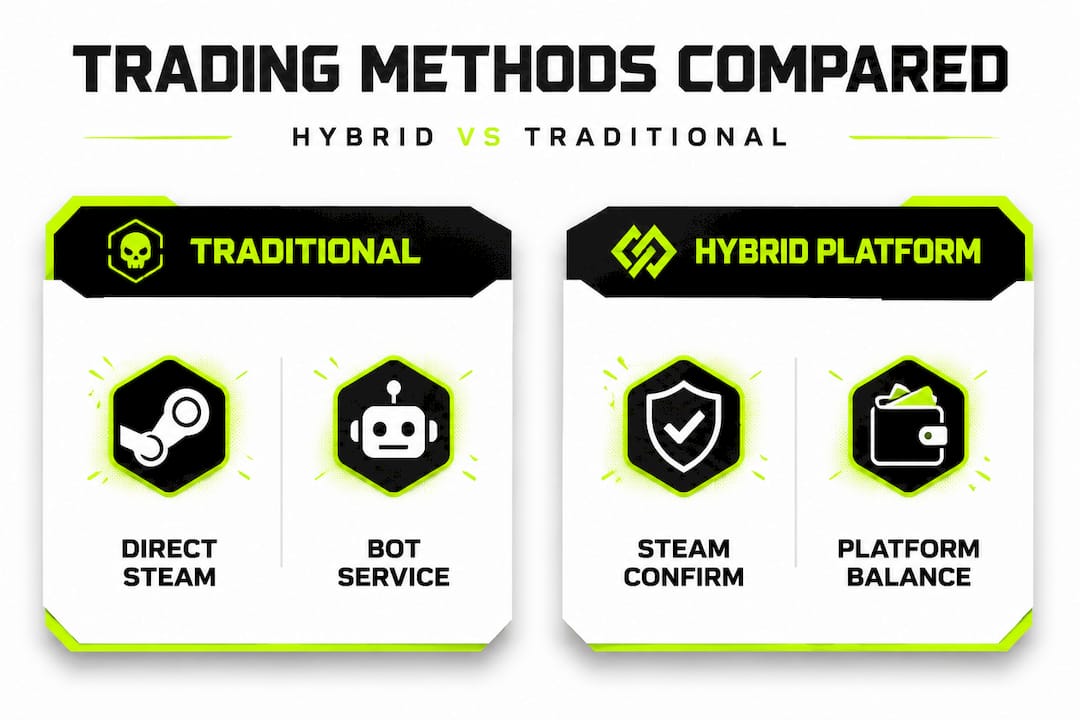
| Feature | Traditional Steam trading | Hybrid skin platform |
|---|---|---|
| Password required | No | No |
| Real money withdrawal | No | Yes (on most platforms) |
| Skin upgrader tools | No | Yes |
| Trade speed | Variable, depends on both users | Fast, often under 60 seconds |
| Fee structure | Steam takes 15% on marketplace | Varies, often lower |
| Security model | Steam confirmation only | Steam confirmation + platform layer |
| Case openings | Not available | Available on many hybrid platforms |
| 24/7 availability | Limited by other party | Always on |
The advantages of hybrid skin systems are most visible when you're trading frequently. A collector moving 20 to 30 skins a month on Steam's native marketplace loses a significant cut to Steam's 15% fee. Hybrid platforms often charge less, sometimes significantly less, which compounds into real savings over time.
There are risks worth noting too. Not every platform claiming to be a hybrid skin system is legitimate. Platforms that ask for your Steam credentials, use browser extensions to control your account, or don't route trades through Steam's confirmation system are red flags. Reviewing safe skin trading practices before depositing anything valuable is worth your time. It's also worth noting that AI is increasingly improving the overall game experience and platform features, making legitimate platforms more capable than ever.
Key benefits of hybrid platforms worth remembering:
- Real money withdrawals beyond Steam's closed ecosystem
- Faster trades with no dependency on another player's schedule
- Access to skin upgraders, case openings, and battle match mechanics
- Lower fees than Steam's standard marketplace on many platforms
- One dashboard view of your inventory, trades, and balance
Maximizing your virtual inventory with hybrid skin platforms
Knowing how a hybrid skin system works is one thing. Using it strategically is another. Third-party platforms transform skins into tradable assets with real money value, enabling strategic buying, trading, and selling that Steam alone can't match. Here's how to make the most of it:
- Know your skin values before you deposit. Use the platform's built-in evaluation tools or cross-reference with community price trackers before sending anything. The deposit rate on a platform might differ from market value, and knowing this gap helps you decide when to trade and when to wait.
- Use the upgrader strategically, not impulsively. Skin upgraders let you trade lower-value items for a chance at higher-value ones. The math usually favors the house over time, so treat upgrading as entertainment with strategic spots, not a guaranteed return path. Set a skin value threshold you're comfortable risking.
- Watch the market cycle. New CS2 operations, case releases, and patch updates move skin prices. Hybrid platforms with real money withdrawals let you time exits more precisely than Steam's marketplace, where fund access is restricted.
- Participate in case openings and battle matches selectively. Features like CS2 skin gambling trends show that smart players engage with these mechanics with set budgets rather than chasing losses.
- Always confirm trades through Steam, not just on the platform's interface. The Steam confirmation is the real authorization step. Double-check item names, float values, and quantities before accepting.
Pro Tip: Convert skins you no longer use into platform balance during high-demand periods (new case releases, major tournaments) when prices spike. That balance can then be used to buy skins at off-peak prices for better long-term inventory value.
Why the hybrid skin platform concept is misunderstood in gaming
Here's the uncomfortable truth most articles won't say directly: the phrase "hybrid skin platform" is often used as marketing language rather than a technical descriptor. The term is often loosely used without clarity, causing confusion among gamers and collectors who assume it describes something standardized when it doesn't.
What actually distinguishes a good platform from a bad one has nothing to do with what it calls itself. The key practical difference is how platforms handle inventory and trade logic with strong Steam integration rather than arbitrary client-side controls. A platform can call itself hybrid all day and still ask for your Steam login credentials, which is a dead giveaway that something is wrong.
Gamers chasing the newest feature set or the flashiest interface often miss this. The platforms that genuinely protect your inventory are the ones that never need your password, always route confirmations through Steam's native system, and make their fee structures transparent before you deposit. That's it. Everything else, the skin changers, the case animations, the battle match mechanics, is a bonus built on top of that foundation. If you want to understand how those visual elements work on the game client side, skin changers for gamers explains the distinction between client-side visual tools and marketplace-level hybrid platforms.
The players who build the best CS2 inventories over time are not the ones who know the most buzzwords. They're the ones who understand how trades actually move, where value leaks through fees, and which platforms keep their funds genuinely accessible.
Get started with Drop.Skin: your hybrid platform for CS2 skin upgrades
You now know what separates a real hybrid skin platform from one that just borrows the label. The next step is finding one that puts those principles into practice.
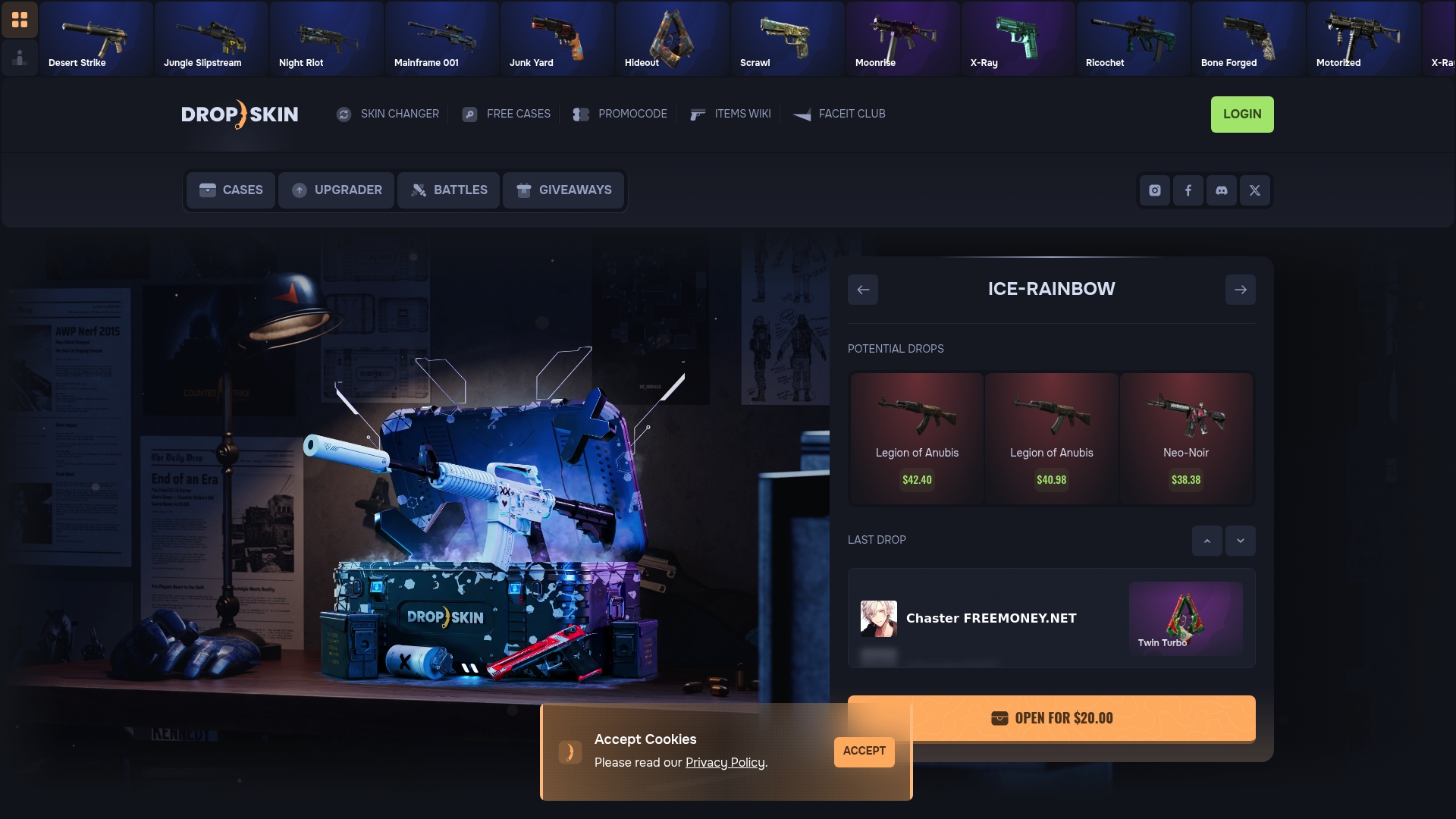
Drop.Skin operates exactly on the hybrid model this article describes: Steam OpenID authentication, Steam confirmation-based trades, and a full suite of external marketplace features including case openings, battle matches, and giveaways. You never hand over your Steam credentials. Your inventory stays yours. The Drop.Skin skin upgrader lets you move up in skin value with transparent mechanics, so you always know what you're working with before you commit. It's the kind of platform where understanding the hybrid model gives you a genuine edge, because you know exactly how to use it safely and strategically.
Frequently asked questions
What exactly does hybrid skin platform mean in the context of CS:GO and CS2?
In CS:GO and CS2, a hybrid skin platform is a third-party site that merges Steam inventory verification with an external marketplace for buying, selling, and upgrading skins, all without requiring your Steam password.
Is using a hybrid skin platform safe for my CS:GO or CS2 inventory?
Yes, as long as the platform authenticates via Steam OpenID and uses Steam's confirmation system for trades, your inventory remains protected because your Steam password is never shared or stored externally.
Can I convert my skins to real money using hybrid skin platforms?
Yes, many hybrid platforms allow you to sell skins for platform balance that can be withdrawn as real money, since platforms act as intermediaries selling skins and returning funds minus their commission.
How does a hybrid skin platform differ from AI-based skin analysis technology?
They share a name but nothing else: AI skin platforms focus on medical or beauty applications using scoring and visual overlays, while gaming hybrid platforms are about marketplace trading mechanics and Steam integrations.