TL;DR:
- Marketplace mechanics cause third-party CS2 skin prices to be 20-35% lower than Steam prices due to fees and liquidity differences.
- Understanding these platform differences allows traders to optimize profits, minimize fees, and avoid scams effectively.
You spot two identical AWP | Asiimov skins listed for sale. One costs $85 on Steam, the other $68 on a third-party platform. That 20% gap isn't a glitch or a scam. It's the result of marketplace mechanics that most players never bother to understand, and it costs them real money every time they trade. Third-party prices often run 20 to 35% below Steam for identical skins because of fees, payout restrictions, and liquidity differences. Understanding why that gap exists, and how to use it, is the difference between smart trading and leaving money on the table.
Table of Contents
- What are skin marketplaces and how do they work?
- Fees, security, and cash-outs: Comparing marketplace dynamics
- How marketplaces affect skin prices and market trends
- Taking advantage of marketplace differences: Practical strategies
- What most traders get wrong about CS skin marketplaces
- Ready to use your marketplace insights?
- Frequently asked questions
Key Takeaways
| Point | Details |
|---|---|
| Marketplace choice impacts profit | Fees, payout types, and price levels vary widely between Steam and third-party venues, affecting your real earnings from trades. |
| Security varies by platform | Using escrow and avoiding unverified peer trades can significantly reduce scam risk in CS skins trading. |
| Price trends are fragmented | Market events and platform differences can cause big swings in skin values, rewarding those who monitor multiple sites. |
| Cross-market strategy unlocks value | Traders who compare prices and fees across venues have the best shot at maximizing their returns. |
What are skin marketplaces and how do they work?
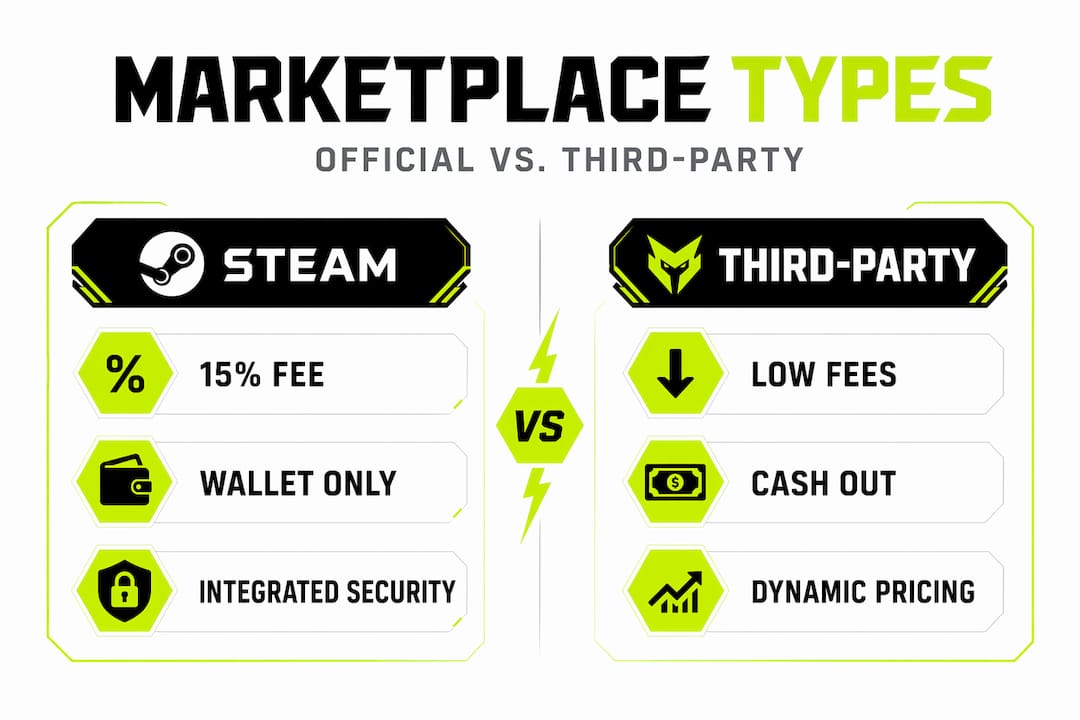
The CS2 skin economy runs on two distinct types of trading venues, each built with a different audience and purpose in mind. If you want to understand what a skin marketplace actually does, the most useful place to start is the Steam Community Market.
The Steam Community Market is Valve's official venue for CS2 skin buying and selling. Valve runs an integrated marketplace where sellers receive proceeds as Steam Wallet balance, and Valve takes a 15% cut per transaction. That 15% is non-negotiable, and the payout is locked inside the Steam ecosystem. You can't withdraw it to PayPal or your bank. That restriction is the single biggest reason why prices look higher on Steam. Sellers bake that limited liquidity into their listing prices.
Third-party platforms like Skinport and DMarket work differently. These third-party skin marketplaces allow users to connect their Steam inventory, deposit skins, and receive real cash payments through methods like PayPal, bank transfer, or cryptocurrency. These platforms materially affect skin trading dynamics by enabling cash-outs, charging lower fees, and operating under different security models.
Here's a basic comparison of how the main venues stack up:
| Feature | Steam Community Market | Third-party (e.g., Skinport, DMarket) |
|---|---|---|
| Payout type | Steam Wallet only | Real money (PayPal, crypto, bank) |
| Seller fee | 15% | 5 to 12% depending on platform |
| Withdrawal to cash | Not possible | Yes |
| Security model | Valve-backed, escrow | Platform escrow, varies by site |
| Price relative to cash value | Higher (fee-inflated) | Lower (more accurate to cash value) |
| Buyer base | Steam users only | Broader, includes non-Steam traders |
Key things every trader should know about these venues:
- Steam's wallet lock means money you earn stays in the Steam ecosystem unless you spend it on games or other skins.
- Third-party platforms carry varying levels of verification and trust. Stick to platforms with visible transaction histories and escrow protection.
- Not all third-party sites are created equal. Some have strict KYC (Know Your Customer) requirements before cash payouts, which adds friction but improves safety.
- Prices on Steam act as a kind of ceiling for many skins, while third-party platforms reflect closer to the real cash market value.
Understanding this structure is essential before you make a single trade. The venue you choose shapes your net outcome before a buyer even sees your listing.
Fees, security, and cash-outs: Comparing marketplace dynamics
With the basics clear, choosing where to trade comes down to the details: fees, safety, and payout options.
Let's run a real example. You're selling a skin worth $100. Here's what you actually receive on each platform:
| Platform | Fee | Net payout on a $100 skin | Payout type |
|---|---|---|---|
| Steam Community Market | 15% | $85 | Steam Wallet only |
| Skinport | 12% | $88 | Real money |
| DMarket | 5 to 8% | $92 to $95 | Real money |
Skinport charges an all-in 12% seller fee, DMarket charges 5 to 8% depending on category and promotions, and Steam sits at 15%. That might seem like a small difference, but across 20 or 30 trades, the gap becomes significant. A trader doing $1,000 in monthly skin sales saves between $70 and $100 per month just by choosing DMarket over Steam.
Security is the other major variable. Escrow and hold-and-release mechanisms on marketplaces reduce the classic "ship first" counterparty risk that kills peer-to-peer trades. In a direct peer-to-peer deal, one party has to move first. That creates an opening for scammers. Established platforms hold the skin in escrow until the buyer pays, then release funds to the seller. This eliminates the most common fraud vector.
Peer-to-peer Discord or forum trades might seem like you're dodging fees, but the scam risk often outweighs the savings unless you're dealing with verified, long-standing community members.
The most dangerous trades happen outside any platform. Scammers pose as buyers, rush sellers into sending skins first, then vanish. If you use a platform with escrow, this attack fails completely because neither side has to trust the other.
Pro Tip: Before committing to any high-value sale, check the platform's escrow policy, user reviews, and withdrawal limits. A 2% difference in fees is not worth using a platform with a history of payout delays or account freezes.
There's also the key factors affecting skin value to consider when pricing your listings. Float value, wear rating, stickers, and pattern index all affect how quickly a skin sells and at what price. A skin with a rare pattern can command a premium well above market average on any platform.
How marketplaces affect skin prices and market trends
It's not just about what each site offers. It's about how prices and opportunities shift between them, and why that matters for your strategy.
Skin prices fragment across platforms because of structural differences in fees, cash-out friction, and buyer demographics. Third-party venues generally run different price levels from Steam because of withdrawal and cash-out friction and lower fees, and experienced traders monitor multiple venues simultaneously to exploit cross-market price differences. This practice is called arbitrage. You buy on the platform where the skin is underpriced, then sell on the one where it commands a higher price.
External events hit the market fast and hard. Skin trading behavior responds to demand shocks from visible narratives like CS2 major tournaments, game updates, or a pro player suddenly making a specific weapon famous. When a top AWP player dominates a major tournament with a specific skin, that skin's price can spike 15 to 30% within 48 hours across all platforms simultaneously.
What drives those spikes? Supply and demand shifts. If a new case drops and floods the market with a previously scarce skin, prices fall. If Valve removes a case from active drops, prices on that collection's skins tend to climb. Understanding what drives skin value requires watching both the game itself and the marketplace data.
Here's how to compare prices across major market venues effectively:
- Pull up the skin's Steam listing and note the lowest current ask price.
- Search for the same skin on at least one major third-party platform and record the lowest ask there.
- Calculate the fee-adjusted value: if the Steam price is $90, subtract 15% to get your true selling return ($76.50). Compare that to what the third-party platform would net you after its fee.
- Check recent sales history on both platforms. A price that looks great might reflect a recent spike, not stable value.
- Factor in withdrawal time and payment method. A slightly lower net return with instant PayPal withdrawal may be better than a higher nominal amount stuck in Steam Wallet.
This five-step process takes under five minutes per skin and can save you 10 to 20% on high-value trades. The esports skin collecting guide goes deeper on timing your purchases around tournament cycles, which is one of the most reliable ways to buy low and sell high.
Taking advantage of marketplace differences: Practical strategies
Understanding the map is only the start. Here's how to actually get an edge as you navigate the market.
Your first decision is matching your goal to your platform. Not every trade has the same objective.
- Upgrading your inventory: If you're keeping skins in-game and don't need cash, Steam's market is fine. The locked wallet isn't a problem if you're spending it on more skins.
- Cashing out: Use third-party platforms with verified cash-out options. DMarket or similar platforms with low fees and reliable payout history are your best options here.
- Collecting investment-grade skins: Prioritize escrow-protected platforms and always verify pattern index and float value before buying at a premium.
- Skin gambling and battle formats: Platforms like DROP.SKIN that offer marketplace battles and upgrades let you use your skins directly in games, potentially turning a $5 skin into something far more valuable through strategy and luck.
Treating marketplaces as separate micro-markets with different fee, payout, and security properties is the foundation of smart trading. Pick your venue per trade type and verify across at least two platforms before committing to any sale or purchase above $20.
Diversified skin portfolios have achieved average annual returns up to 66.9%, though that figure comes with real caveats. High transaction fees, price volatility, and liquidity risk can erase gains quickly if you're not careful. Diversification reduces but doesn't eliminate those risks.
Common mistakes that cost traders real money:
- Ignoring fees when calculating profit: If you buy a skin for $50 and sell for $55, a 12% fee means you actually lost money.
- Trusting Steam price as cash value: Steam's price includes a liquidity premium from the wallet lockup. It's not what you'd get if you needed to cash out.
- Missing event-driven volatility: Buying during a price spike caused by a tournament can mean you're overpaying by 25% for a skin that returns to baseline within a week.
- Skipping platform verification: New or unverified third-party platforms occasionally disappear with user funds. Stick to platforms with established track records and active communities.
- Over-concentrating in one skin or collection: When a case gets price-floored or a collection falls out of meta favor, concentrated positions take major losses.
Pro Tip: Never assume the Steam listing price represents real cash value. Cross-check at least one reputable third-party site before pricing any skin you plan to sell, especially for high-value items above $50.
What most traders get wrong about CS skin marketplaces
Here's the uncomfortable truth: most players treat Steam's market price as the authoritative number for a skin's value. They shouldn't.
Steam prices function as a fee-inflated baseline rather than true cash value, and the distinction matters enormously if your goal involves cashing out or trading across platforms. Steam's 15% fee gets absorbed into listing prices by sellers who need to recoup it. What looks like an $80 skin is really a $68 skin that's been price-padded to cover Valve's cut.
The real insight most traders miss isn't about finding one "better" platform and staying loyal to it. It's about fluid platform selection based on what each specific trade demands. Loyalty to one marketplace is a strategy that costs you money over time as fee structures, payment options, and skin liquidity shift.
Arbitrage is still underused in the CS2 community despite being one of the lowest-risk profit strategies available. Skin value fluctuation explained shows how prices lag across platforms when news breaks or an event fires up demand. That lag is your window to buy low on the platform that hasn't updated yet and sell high on the one that has.
The other major blind spot is volatility tolerance. Too many traders either panic-sell during a price dip caused by a case release or hold too long through an event spike hoping for even higher prices. Smart traders set rough target margins before entering a position, then execute without emotion when those targets hit. The data on annual returns is compelling, but volatility can wipe out a year of gains in a single week if you're not disciplined.
Market fragmentation is increasing, not decreasing. More platforms, more skin cases, and more international interest in CS2 as a property mean that price gaps between venues will remain. Players who build the habit of cross-market comparison now will have a structural advantage over those who don't.
Ready to use your marketplace insights?
Armed with a clearer picture of how skin marketplaces actually work, you can start making trades that align with your real goals, whether that's cashing out, upgrading your loadout, or building a collection worth serious money.
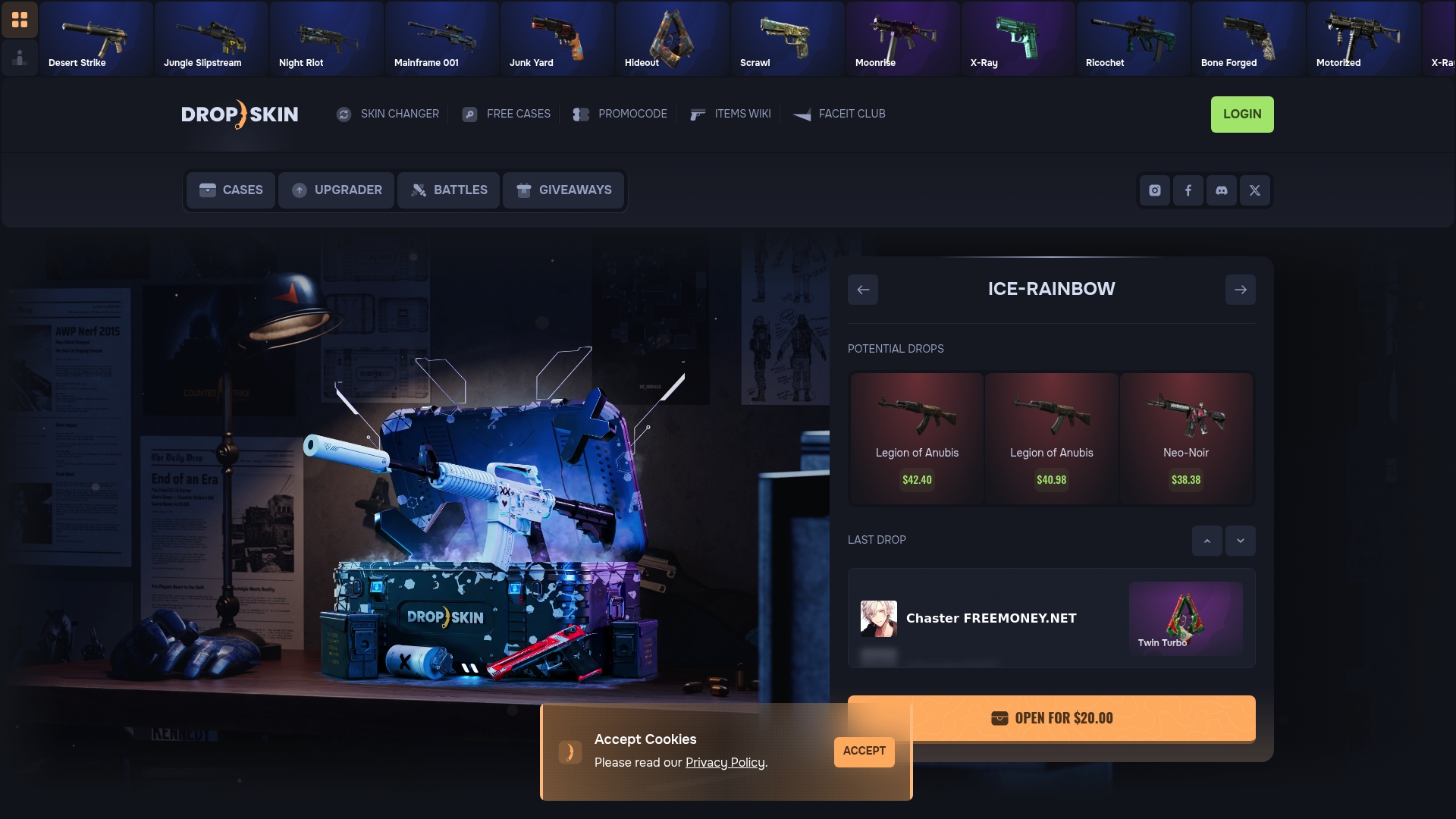
DROP.SKIN gives you direct tools to act on what you've learned. If you want to open CS2 cases and build your skin portfolio from scratch or level it up through smart pulls, the platform has an extensive case library designed for players at every budget. For traders looking to move up fast, the CS2 skin upgrader lets you put your existing skins to work, trading up toward higher-value items without needing a massive starting bankroll. Apply what you know about marketplace value and use DROP.SKIN's features to turn strategic thinking into real results.
Frequently asked questions
Why are CS2 skin prices different on Steam and third-party marketplaces?
Price differences come from Steam's higher fees and wallet-only payouts that prevent cash withdrawal, while third-party sites offer lower fees and real money payouts, leading sellers on Steam to inflate asking prices to offset costs.
How do I avoid scams when trading CS2 skins?
Escrow and hold-and-release mechanisms on platforms eliminate the risk of sending a skin before receiving payment. Avoid peer-to-peer trades with unknown parties and always use verified platforms with public transaction histories.
Can you really make money trading CS2 skins?
Some traders do see strong returns, with research reporting returns up to 66.9% annually in some cases, but high fees and price volatility create real risk that can quickly erase gains.
What factors can change the value of a CS2 skin the fastest?
CS2 events, major updates, and esports trends create rapid demand shocks that can move skin prices 15 to 30% within 48 hours, making event timing one of the most important variables to track.