TL;DR:
- The CS2 skin trading ecosystem has evolved from risky third-party lounges to secure P2P and bot escrow platforms, increasing liquidity and safety. Third-party sites offer lower fees and better price discovery, significantly impacting trading volume, skin demand, and profit potential. Choosing the right marketplace depends on your region, skin value, and risk tolerance to optimize your trading success.
If you think the Steam Community Market is the only place to buy and sell CS2 skins, you're leaving serious money on the table. The skin trading ecosystem has grown into a multi-million dollar daily exchange, with third-party platforms processing roughly $16 million USD in transactions every single day. This article breaks down how marketplaces evolved, how the main trading models work, what fees actually cost you, and which platform fits your goals as a trader, collector, or skin gambler.
Table of Contents
- How CS2 skin marketplaces evolved
- Marketplace models: Bot escrow vs. P2P explained
- Fee structures and liquidity: Steam vs. third-party sites
- Marketplace impact: Trading volume, value, and skin demand
- Choosing the right marketplace: Region, value, and risk factors
- Why marketplace choice shapes your skin trading experience
- Get more from your skin trading journey
- Frequently asked questions
Key Takeaways
| Point | Details |
|---|---|
| Marketplace models matter | The choice between bot escrow and P2P trading impacts security, flexibility, and cost. |
| Fee differences affect profits | Third-party platforms offer lower fees than Steam, critical for cashing out high-value items. |
| Volume drives demand | Marketplaces with large inventories and active users boost skin value and trading activity. |
| Regional access is key | Your location and market focus determine which platform is most suitable for trading or collecting. |
| Smart trading requires nuance | Understanding marketplace design, risks, and valuation ensures safer and more profitable skin trading. |
How CS2 skin marketplaces evolved
The early days of CS skin trading were a wild west. Players relied on trade lounges and bot-based services where you essentially handed your items to a third party and hoped they'd follow through. Scams were common, bot impersonation was rampant, and there was no standardized way to verify who you were actually dealing with. For anyone trading high-value knives or rare stickers, the risk was often not worth it.
Then came a fundamental shift. Peer-to-peer (P2P) platforms emerged, connecting buyers and sellers directly through the Steam API while removing the risky middleman. The evolution from lounge/bot to P2P models transformed chaotic trading into a far more efficient economy, where trust is built through platform reputation rather than individual promises.
"The shift toward P2P platforms improved both security and accessibility, making it possible for serious traders to move high-value items without depending on unreliable bots or escrow services that could disappear overnight."
Here's what that evolution unlocked for traders:
- Casual traders now had a familiar, low-risk option in the Steam Marketplace, even if fees were high
- Serious traders and collectors gained access to transparent third-party platforms with cash withdrawal options
- High-volume traders could list and delist items quickly without losing access to their inventory
- Regional markets emerged, giving global traders access to different price benchmarks and liquidity pools
Understanding this history matters because it explains why certain platforms are built the way they are. The marketplace battles and upgrades you see today on platforms like Dropskin exist precisely because the ecosystem matured enough to support entertainment-driven trading alongside pure buying and selling. The CS2 skin marketplace advantages you can access in 2026 are a direct result of years of platform evolution responding to user demands.
Marketplace models: Bot escrow vs. P2P explained
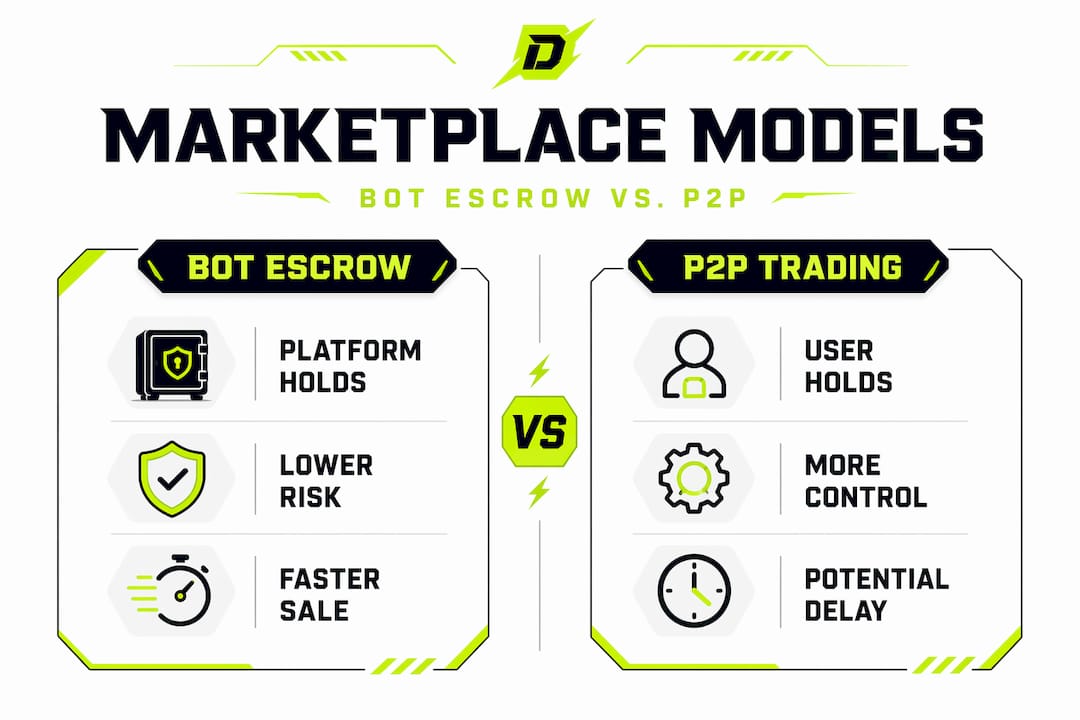
There are two primary ways a marketplace facilitates trades, and understanding the difference is critical before you commit your inventory to any platform. As third-party markets explain, marketplaces operate through two models: bot-based escrow, where the platform holds your item until payment clears, and P2P, where sellers list from their own inventory via Steam API and complete the trade directly upon sale.
Bot escrow works like this: you send your skin to a platform-controlled bot, the bot holds it, and once a buyer pays, the bot releases the item. It removes the "ship first" problem common in direct trades. However, the risks are real. Scammers create fake bots and phishing sites designed to steal your items the moment you send them, and API hijacks can intercept trade offers before you even realize what happened.
P2P trading keeps your skin in your own inventory until the moment of sale. A buyer purchases the item, and only then do you receive a trade offer. This means you can still use your listed knife in a game while it's sitting on the marketplace. P2P reduces risks like losing deposits when sites shut down, and because platforms don't maintain expensive bot infrastructure, fees tend to be lower.
Here's a direct comparison of how the two models stack up:
| Feature | Bot escrow | P2P |
|---|---|---|
| Item custody | Platform holds item | Seller keeps item |
| Primary risk | Fake bots, phishing | Trade hijacks, chargebacks |
| Fee level | Higher (bot maintenance) | Lower |
| Cash withdrawal | Sometimes | Usually yes |
| Play during listing | No | Yes |
| Instant liquidity | High | Moderate |
Pro Tip: Before sending any item to a bot, verify the trade offer URL manually. Scammers use near-identical bot names with one character changed. Always cross-check the Steam profile link against the platform's official bot list.
Here's a practical decision guide for choosing your model:
- New traders with low-value skins should start with P2P platforms to avoid losing items to bot scams
- Collectors who want instant sales might prefer bot escrow platforms with high buyer traffic
- High-frequency traders benefit from P2P since their inventory stays accessible at all times
- Anyone withdrawing cash needs a platform that supports real-money payouts, which bot-escrow sites don't always offer
For a deeper look at how direct trading works between users, the peer-to-peer trading explained guide covers the mechanics in detail. And if you want to protect yourself before listing a single item, brushing up on safe trading practices is time well spent.
Fee structures and liquidity: Steam vs. third-party sites
Fees don't sound exciting, but they're one of the most important variables in whether you actually profit from trading. The Steam Community Market charges a 15% seller fee, split between a 10% publisher cut (to Valve/CS2) and a 5% Steam transaction fee. On top of that, every cent you earn stays locked in your Steam wallet. You cannot move it to a bank account, PayPal, or crypto wallet.

Third-party platforms tell a very different story. Buff163 charges roughly 2.5% seller fees, Skinport charges 12%, and CSFloat sits between 2% and 5%, with all of them supporting real cash withdrawals. That fee difference compounds fast on expensive items.
Let's make this concrete. Imagine you're selling a StatTrak AK-47 Redline worth $200:
| Platform | Seller fee | Your payout | Withdrawal |
|---|---|---|---|
| Steam Market | 15% ($30) | $170 (wallet only) | No |
| Buff163 | 2.5% ($5) | $195 USD | Yes |
| CSFloat | 2-5% ($4-10) | $190-196 USD | Yes |
| Skinport | 12% ($24) | $176 USD | Yes |
That $25 difference between Steam and Buff163 on a single $200 item adds up to hundreds of dollars across a year of active trading.
Beyond fees, liquidity shapes how quickly you can move items and at what price. Buff163 sets global price benchmarks due to its massive trading volume, and third-party prices typically run 20 to 35 percent below Steam prices as a direct result of lower fee structures. This means a skin listed at $100 on Steam might realistically sell for $70 to $80 on a third-party market, but your actual cash-in-hand could still be higher after accounting for Steam's wallet lock-in.
Key takeaways on liquidity and fees:
- Steam is best for casual trades where you'll reinvest proceeds into more CS2 content anyway
- Buff163 offers the lowest fees and deepest market depth, making it ideal for high-value liquidations
- CSFloat excels for float-conscious transactions where item quality commands premiums
- Skinport hits a sweet spot for Western users wanting balanced fees and Euro/USD withdrawals
For a full breakdown of where each platform ranks, the top trading platforms guide provides a current overview. If you're newer to trading, the CS2 skin trading guide walks through the full process step by step.
Marketplace impact: Trading volume, value, and skin demand
The scale of this market surprises most casual players. In Q1 2026, third-party CS2 markets held roughly 975.6 million items in inventory, with 27.9 million owners, daily transactions of approximately 3.23 million items, and a daily value close to 115 million RMB, which translates to roughly $16 million USD. That is not a niche hobby. That is a functioning economy.
What drives that volume? Several interconnected forces:
- Skin gambling sites create constant demand by cycling skins through betting pools and back into the market
- Rarity and collectible status of items like Souvenir packages and sticker capsules sustain long-term price floors
- Competitive trading communities that treat skin portfolios like investment assets
- Case openings and upgrades that continuously introduce new supply while demand for specific patterns stays concentrated
Gambling sites drive skin demand indirectly, boosting marketplace volume and ultimately benefiting both third-party platforms and Valve. Even as regulators debate skin gambling, the volume effect on markets is undeniable. When popular streamers open cases or betting sites process thousands of wagers per hour, the ripple effect shows up in marketplace liquidity and pricing within hours.
Understanding how skin value drivers interact with marketplace dynamics helps you time your trades better. Similarly, knowing the skin collectibles impact on market demand explains why stickered items or factory new rarities often command prices that seem disconnected from the base skin value alone. If you want to understand the risks that come alongside this activity, the skin betting risks guide is worth reading before you put real-value items into gambling pools.
Choosing the right marketplace: Region, value, and risk factors
No single platform is universally best. The right marketplace depends on your location, the value and type of skins you're trading, and what you want to do with your proceeds.
Regional access is a genuine barrier. Buff163 dominates volume and offers the lowest fees, but the platform is Chinese-facing and can be difficult to navigate or access for traders in Europe and North America. It also drives significant premiums for high-end items because Chinese buyers actively compete for rare float values and patterns.
Steam is safest for low-tier items with no cashout needs, Buff is cheapest and deepest for those who can access it, and Skinport balances fees with Western accessibility. CSFloat sits in a unique position, catering to traders who care about float values and pattern indexes where a slightly better float can mean a 30% price premium.
Here's a practical breakdown by trader profile:
- Casual player selling spare skins: Steam Marketplace is frictionless and perfectly fine for sub-$20 items
- Active trader wanting real-money returns: CSFloat or Skinport for Western users; Buff163 if you can access it
- High-value collector: CSFloat for float-graded transactions, Buff163 for price discovery and premium premiums
- Gambler reinvesting winnings into better skins: Any P2P platform with low fees so your reinvestment capital goes further
Pro Tip: Always cross-reference Buff163 prices before listing anywhere else. Even if you're selling on a Western platform, Buff's prices reflect what serious buyers globally are willing to pay. If your listing is more than 40% above Buff, expect it to sit unsold.
For a detailed look at how third-party trading sites compare on collectible-specific transactions, that resource breaks down which platforms treat sticker and souvenir premiums most accurately.
Why marketplace choice shapes your skin trading experience
Here's the perspective most trading guides skip: obsessing over fees alone is a trap. Traders who optimize purely for the lowest percentage cut often overlook three factors that matter just as much. Liquidity, security infrastructure, and community depth all shape whether a cheap fee actually translates into a better outcome.
Think about it this way. A 2.5% fee on a platform with thin order books means your item sits unsold for two weeks. A 5% fee on a platform with active buyers means it moves in hours. The actual cost of time, opportunity missed on price movement, and mental overhead is rarely captured in a fee percentage.
There's also the question of risk tolerance. If your inventory is worth $5,000 and you're listing on a platform with a shaky reputation to save 3%, the risk-to-reward math is unfavorable. Sticking to safe trading wisdom means choosing platforms that have transparent dispute processes, active support, and a track record of handling API exploits appropriately.
The most successful traders we've seen in the CS2 ecosystem don't pick one platform and stay loyal to it. They use Steam for quick reinvestment of low-value drops, a high-volume P2P platform for medium-tier items, and Buff or CSFloat for their prize pieces. That layered approach captures the advantages of each ecosystem without overexposing your portfolio to any single platform's risks or limitations. Marketplace mastery is not about finding the one best option. It's about knowing when each tool applies.
Get more from your skin trading journey
Marketplace knowledge is powerful, but it only gets you so far if you're working with a limited inventory to begin with. Whether you're looking to move up from budget skins into something more competitive, or you want to turn a lucky case drop into a premium item, having the right tools makes the difference.
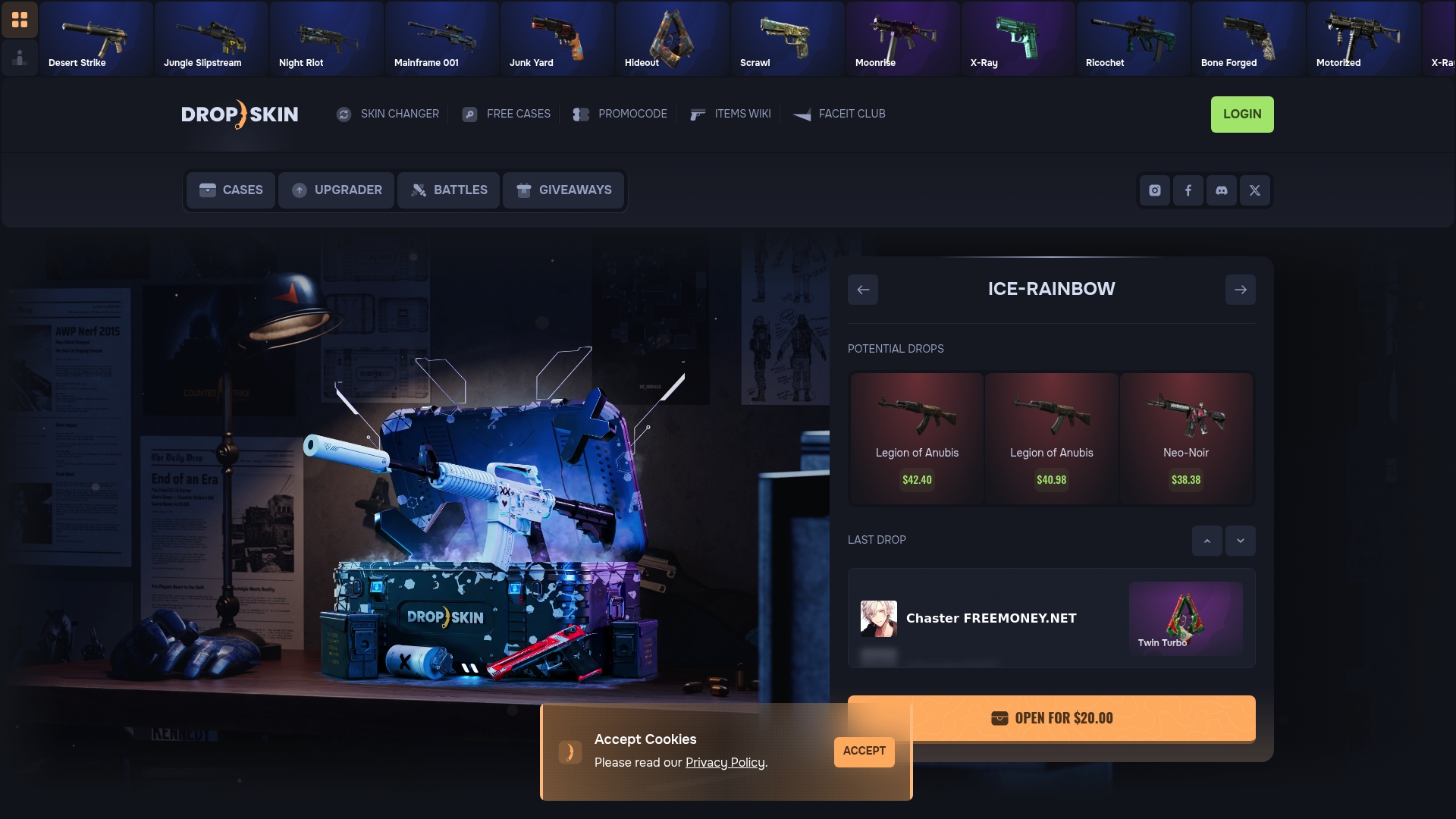
At Dropskin, we built our platform around exactly that challenge. You can open CS2 cases and upgrade your inventory through a system designed to help you climb from cheap drops to genuinely valuable skins. Our skin upgrading tools let you put weaker skins to work, staking them in upgrades for a shot at items worth trading on the major platforms you've just learned about. Combine marketplace knowledge with smart upgrading, and your inventory stops being static. It becomes a portfolio you're actively building.
Frequently asked questions
What are the main risks when trading skins on marketplaces?
Bot escrow platforms expose you to fake bots, API hijacks, and phishing, while P2P trading risks include trade hijacks and payment chargebacks. Always verify bot profiles manually and use platforms with active security monitoring.
Why are third-party marketplace prices lower than Steam?
Third-party platforms charge lower seller fees and allow real-money cashouts, which drives prices 20 to 35 percent below Steam levels. Steam's wallet-only payouts inflate prices because sellers must recover the locked funds.
How do marketplaces affect skin value and demand?
Marketplaces increase liquidity and visibility, with platforms like Buff163 setting global price benchmarks due to volume. Gambling-driven demand also indirectly boosts market activity, raising prices on frequently wagered skins.
Which marketplace is best for cashing out high-value skins?
Buff163's 2.5% fees and deep order books make it the strongest choice for high-value cashouts, but Western traders often prefer Skinport or CSFloat due to access barriers on the Chinese-facing platform.