TL;DR:
- Peer-to-peer skin trading offers lower fees and real-money payouts compared to Steam Market.
- Risks include scams, chargebacks, and fake payments, requiring vigilant verification and escrow use.
- Experienced traders prioritize platform reputation, timing, and trust networks over minor fee differences.
Most CS2 players assume the Steam Market is the safest, most reliable way to sell skins. That assumption is costing them real money. Peer-to-peer skin trading is a direct exchange of in-game cosmetic skins between individual players, cutting out the middleman and giving you actual control over your inventory's value. Steam takes a flat 15% fee on every sale. P2P platforms often charge just 2% to 3%. On a $150 skin, that difference is not trivial. This guide breaks down exactly what P2P trading is, how it works step by step, what you stand to gain, and what risks you need to watch out for before you trade.
Table of Contents
- What is peer-to-peer skin trading?
- How peer-to-peer skin trading works: Step-by-step
- Benefits of peer-to-peer trading: More value and flexibility
- Risks and protections: What every trader needs to know
- A Counter-Strike veteran's take: Trading smarter in 2026
- Want to maximize your CS2 skin trading experience?
- Frequently asked questions
Key Takeaways
| Point | Details |
|---|---|
| Direct player trading | Peer-to-peer trading lets you exchange skins directly with other players for more control. |
| Higher returns | You can earn up to 15–20% more per trade compared to Steam Market by using P2P methods. |
| Mind the risks | Scams and chargeback fraud are real risks, so use trusted platforms and follow safe trading tips. |
| Flexible platforms | Sites like CSFloat and BUFF163 offer negotiation, low fees, and real cash-out options. |
What is peer-to-peer skin trading?
Now that you know why maximizing value is so important, let's start by clarifying what peer-to-peer skin trading actually means.
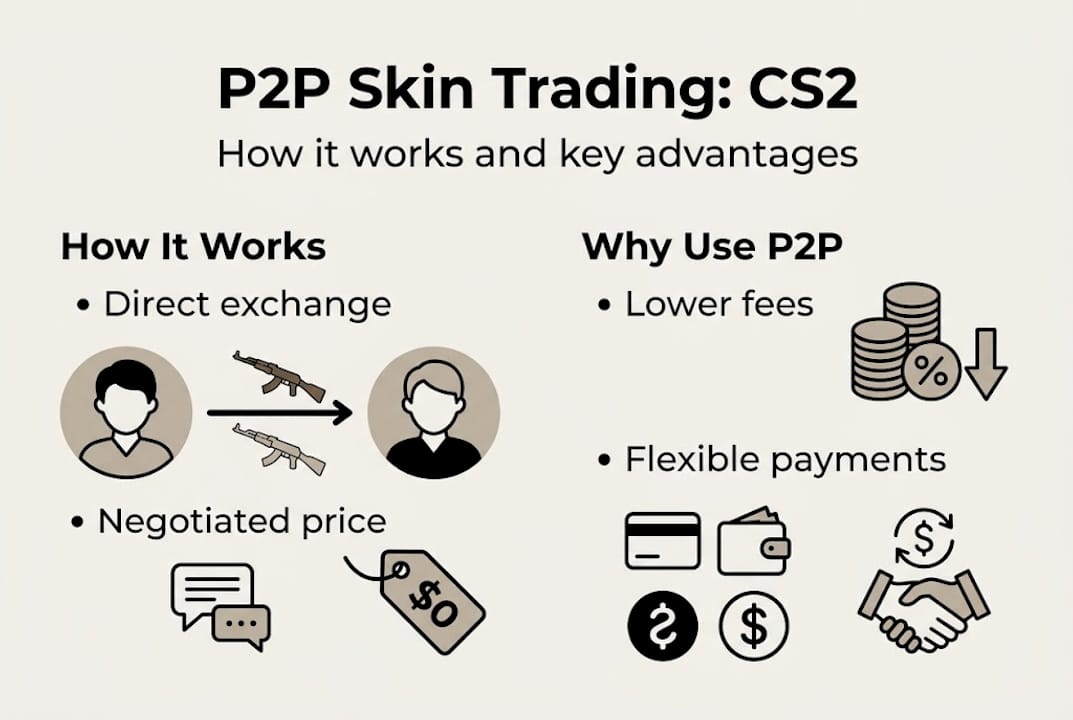
In the CS2 ecosystem, not all trading is created equal. The Steam Market is fully automated: you list a skin, Valve handles the transaction, and you receive Steam wallet credit. You never touch real money. Bot-based third-party marketplaces work similarly, where an automated bot holds the inventory and completes trades without any human on the other side. P2P trading is fundamentally different.
P2P skin trading puts two real people directly in contact. You negotiate price, agree on payment method, and execute the trade through a platform that facilitates but does not automate the exchange. That distinction matters enormously for collectors who care about float values, rare patterns, or sticker combinations that bots simply cannot price accurately.
Understanding the skins' role in CS:GO helps explain why this matters. Skins are not just cosmetic. They are assets with real market value, and their price is determined by condition, pattern index, applied stickers, and community demand. A bot prices a skin by its category. A human buyer prices it by its actual rarity.
Here is what separates P2P trading from the alternatives:
- Negotiation: You set the price and can adjust based on offers.
- Real-money payouts: Receive PayPal, crypto, or bank transfer instead of Steam wallet credit.
- Lower fees: Most P2P platforms charge 2% to 3% versus Steam's 15%.
- Buyer selection: You choose who you trade with, reducing exposure to bad actors.
- Accurate rare-item pricing: Unusual floats and rare patterns get properly valued.
"P2P allows negotiation for better prices, lower fees than Steam (15%), and real-money withdrawals, unlike Steam Market."
The advantages of player-to-player trading go beyond just saving on fees. For serious collectors, the ability to negotiate and receive real cash is the difference between treating skins as a hobby and treating them as a genuine asset class.
How peer-to-peer skin trading works: Step-by-step
With a solid definition in place, let's dig into the specifics of how peer-to-peer skin trades are actually conducted.
Sellers list skins on P2P platforms like CSFloat, BUFF163, and Waxpeer, including details like float value, pattern index, and applied stickers. From there, the process follows a predictable sequence.
- List your skin. Connect your Steam account to a P2P platform and list your item with a price, photos, and relevant details.
- Negotiate with buyers. Interested buyers message you or submit offers. You can counter, accept, or decline.
- Agree on payment. Both parties settle on a method: PayPal, crypto, or bank transfer. Some platforms hold funds in escrow until the trade completes.
- Send the Steam trade offer. Once payment is confirmed or escrowed, you send the official Steam trade offer to the buyer.
- Wait out the hold. Valve's 7-day trade hold applies to most transactions. Neither party can back out cleanly during this window.
- Trade confirmed. The buyer receives the skin, the seller receives payment, and the platform releases escrow if applicable.
Here is how the major best skin trading platforms compare on fees and core features:
| Platform | Seller fee | Buyer fee | Payment options | Escrow system |
|---|---|---|---|---|
| CSFloat | 2% | None | PayPal, crypto | Yes |
| BUFF163 | 2.5% | None | WeChat Pay, Alipay | Yes |
| Waxpeer | 2-3% | None | Crypto, Skrill | Yes |
| Steam Market | 15% | None | Steam wallet only | N/A |
Valve updated its trade policies in 2025, introducing a formal Trade Protection system. This added a 7-day reversal window but also introduced a 30-day account restriction risk for users who abuse it. If you are using third-party trading sites, understanding these rules is non-negotiable.

Pro Tip: Before agreeing to any trade, check the other party's reputation score on the platform, look for completed trade history, and verify their Steam profile age. Accounts created recently with no game time are a red flag.
Benefits of peer-to-peer trading: More value and flexibility
Understanding the mechanics is only half the story. Let's look at why P2P trading attracts more serious skin collectors.
The financial case for P2P trading is straightforward. P2P platforms result in sellers netting 15% to 20% more than the Steam Market after fees. On a $150 AK-47 Bloodsport, that gap is real money.
| Sale method | Gross price | Platform fee | Net payout | Payment type |
|---|---|---|---|---|
| Steam Market | $150 | $22.50 (15%) | $127.50 | Steam wallet |
| CSFloat (P2P) | $150 | $3.00 (2%) | $147.00 | PayPal/crypto |
| BUFF163 (P2P) | $150 | $3.75 (2.5%) | $146.25 | Real currency |
The difference on a single trade is nearly $20. Multiply that across a serious inventory and you are looking at hundreds of dollars left on the table by defaulting to Steam.
Beyond fees, the benefits of skin trading through P2P include:
- Liquidity: You get real cash, not Steam credit locked inside Valve's ecosystem.
- Rare item premiums: Buyers who understand float values and pattern indexes will pay above market rate for the right item.
- Flexible timing: You are not locked into Steam's automated pricing window.
- Buyer choice: You can reject lowball offers or suspicious accounts.
Keeping an eye on trends in skin trading also helps you time your sales. High-demand skins spike during major CS2 tournaments and new case releases. Selling at peak demand through P2P, where you control the price, puts significantly more money in your pocket than letting Steam's algorithm set the ceiling.
One area worth noting: if you are consistently earning real money from skin sales, local tax regulations may apply. This varies by country, but it is worth a quick check if your trading volume is significant.
Risks and protections: What every trader needs to know
Greater value comes with greater responsibility. Let's unpack the risks and the best ways to mitigate them.
P2P trading carries real risks: scams, chargebacks, fake payments, and a higher fraud potential than bot-based trades. Unlike automated platforms where the bot cannot lie to you, P2P puts a real person on the other side, and some of those people are not honest.
Valve's 2025 Trade Protection introduced a 7-day reversal window, which sounds helpful but actually creates a new problem. A buyer can receive your skin, initiate a chargeback through PayPal, and then trigger the reversal, potentially leaving you with nothing. The 30-day account ban risk discourages abuse but does not eliminate it.
Scams to watch for:
- Chargeback fraud: Buyer pays via PayPal, receives skin, then disputes the charge as unauthorized.
- Impersonation: Fake accounts mimicking trusted traders or platform support staff.
- Fake payment screenshots: Doctored images showing a completed transfer that never happened.
- Off-platform pressure: Someone asking you to complete the trade outside the platform to avoid fees.
- Middleman scams: A fake escrow service that disappears with both the skin and the money.
"P2P scams claim 10-15% of high-value trades."
Avoiding common skin trading mistakes starts with one rule: never complete any part of the trade outside the platform's official workflow. Always use escrow. Always verify payment before sending the trade offer.
Pro Tip: Prefer crypto over PayPal for high-value trades. Crypto transactions are irreversible, which eliminates chargeback risk entirely. Yes, it adds a step, but it is worth it above $100.
For more on protecting yourself, safe trading tips and a clear breakdown of skin betting risks are worth reviewing before your first high-value trade.
A Counter-Strike veteran's take: Trading smarter in 2026
With the essentials and risks clear, here is an insider's perspective to help you avoid hard lessons.
Most traders fixate on fees. They spend hours comparing 2% versus 2.5% and miss the bigger picture entirely. Platform reputation and security architecture matter far more than a half-percent difference in fees. A platform with better fraud detection and a stronger user verification system is worth paying slightly more for. Getting scammed on a $400 knife costs you a lot more than an extra 0.5% ever would.
Experienced traders also know that timing beats hustle. Holding a skin through a major CS2 tournament and selling at peak hype through P2P, where you control the asking price, consistently outperforms panic-selling at any fee rate. The market rewards patience.
Here is the part most guides will not tell you: the highest-value trades happen off-market, through trust networks built over months of reliable dealing. Reputation is currency. Traders who consistently deliver clean, fast trades get access to buyers willing to pay premiums. No platform algorithm replicates that.
In 2026, regulatory pressure on skin trading is increasing across several regions. Smart traders are already diversifying across alternatives to popular sites to reduce platform dependency. Do not build your entire trading operation on a single site.
Want to maximize your CS2 skin trading experience?
Ready to put this knowledge to work? There is a safer, easier way to trade and upgrade your skins.
DROP.SKIN gives you a secure, community-driven environment to trade CS2 skins without the friction of traditional P2P platforms. Whether you are looking to flip budget skins into premium items or test your luck in case openings, the tools are all in one place.
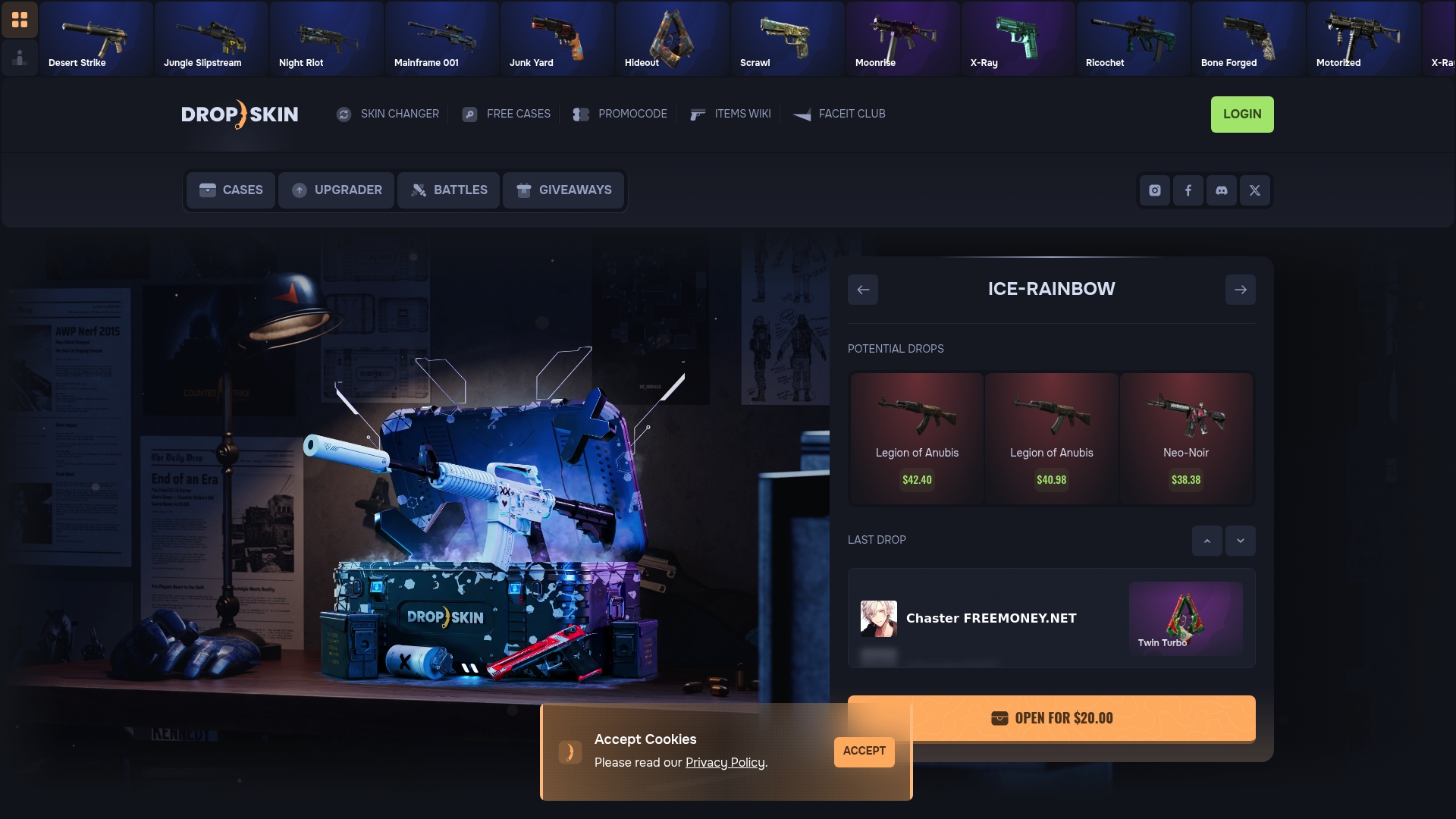
If you want to stretch your inventory further, the CS2 skin upgrader lets you combine lower-value skins for a shot at something significantly better. It is a smart way to apply the value-maximizing mindset from this guide directly to your collection. Jump in, explore the upgrader, and see what your inventory is really worth.
Frequently asked questions
Is peer-to-peer skin trading legal in CS2?
P2P trading is not against Steam's rules, but users must follow Steam's terms of service and their local laws regarding currency transfers and income reporting.
Are third-party P2P platforms safe?
Top platforms use escrow and reputation systems to protect users, but scams still occur in 10% to 15% of high-value trades, so always verify both the site and the other party.
How can I avoid scams when trading skins peer-to-peer?
Always use platforms with escrow, check the other user's trade history and reviews, and never complete trades outside the platform's official workflow.
What fees should I expect with P2P trading?
Most P2P platforms charge between 2% and 3% per sale, which is significantly lower than Steam Market's 15% fee.