
TL;DR:
- Skin float value is a permanent decimal from 0.00 to 1.00 that precisely indicates a skin's wear condition. Different float decimals within the same wear label can cause price variations of up to 500 percent, making float essential for smarter trading and valuation. Checking float before buying or trading, using inspect links and float checker tools, allows traders to identify true rarity and avoid overpaying based solely on wear labels.
Two skins. Same name. Same wear label. Yet one sells for three times the price of the other. If you've ever wondered why that happens, skin float value is your answer. This guide breaks down what is skin float value, how it works across every wear tier, how to check it before you buy, and how to use it to make smarter trading decisions in CS:GO and CS2 in 2026. By the end, you'll see float numbers the same way experienced traders do — as the real price tag hiding behind the label.
Table of Contents
- Key takeaways
- What skin float value actually means
- Float ranges for each wear tier
- How to check a skin's float value
- Why float value matters for trading and investing
- Advanced float concepts and common myths
- My take on float after years in the skin market
- Put your float knowledge to work on Dropskin
- FAQ
Key takeaways
| Point | Details |
|---|---|
| Float is a decimal, not a label | Every skin gets a permanent number from 0.00 to 1.00 that defines its exact wear condition. |
| Five wear tiers have fixed float ranges | Factory New, Minimal Wear, Field-Tested, Well-Worn, and Battle-Scarred each cover a specific float range. |
| Some skins have float caps | Certain skins cannot reach low floats, limiting their available wear tiers and affecting rarity. |
| Float drives serious price differences | Price gaps of 50% to 500% can exist between skins sharing the same wear label but different float decimals. |
| Always check float before trading | Use Steam inspect links with dedicated float checker tools to verify float before any high-value purchase. |
What skin float value actually means
Most players treat the wear label printed on a skin as the full story. Factory New means clean, Battle-Scarred means wrecked. Done. But that label is just a bucket, and every bucket holds dozens of skins that look noticeably different from each other.
Skin float value is the precise decimal number, ranging from 0.00 to 1.00, that determines exactly how worn a skin appears. The lower the float, the cleaner and more pristine the skin looks. The higher the float, the more scratches, scuffs, and wear marks cover the surface. Two Field-Tested skins can sit at 0.16 and 0.37 respectively, and while both carry the same wear label, they look like entirely different items to any buyer paying close attention.
Here is what makes float distinct from other skin characteristics:
- Float range: Always a decimal from 0.00 (theoretically perfect) to 1.00 (maximum wear).
- Permanence: Float is set permanently when a skin drops from a case or is produced through a trade-up contract. It never changes.
- Visual impact: Float directly controls how much of the skin's design remains visible versus covered in wear marks.
- Market position: Float is the number serious traders reference first, before checking any other detail.
The wear label is just Valve's shorthand. Float is the specification. Understanding this difference is what separates casual players from traders who actually profit in the skin economy.
Float ranges for each wear tier
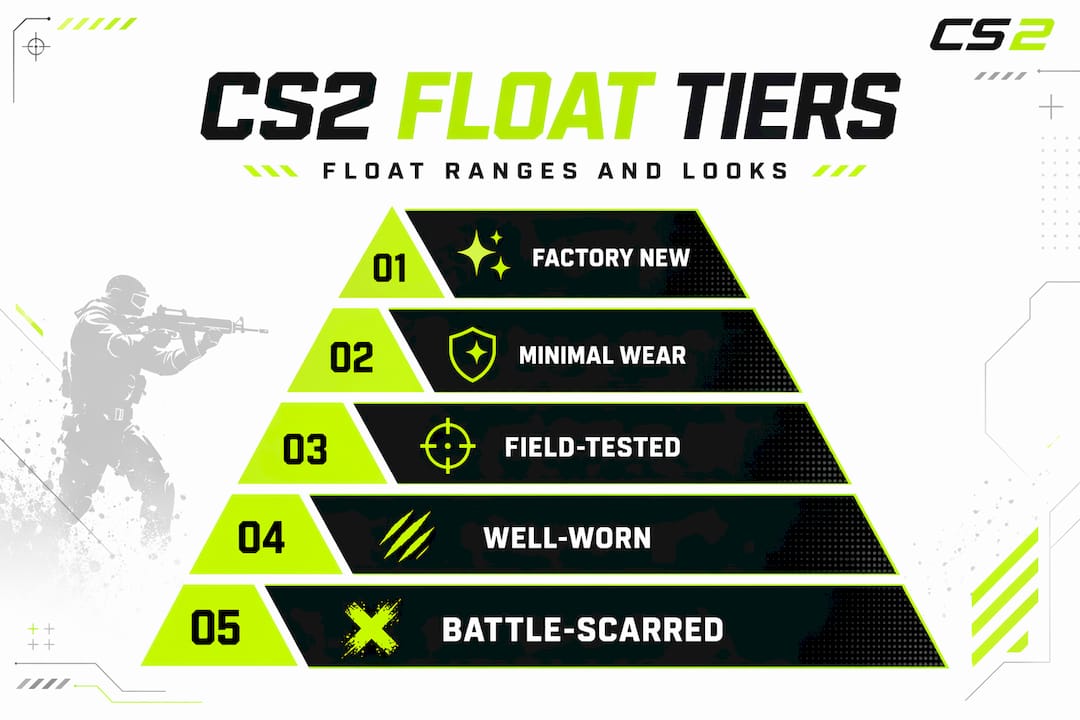
Valve uses five wear tiers to organize all skin conditions. Each tier covers a specific float range, and the boundaries between them are fixed. Here is exactly how they break down:
| Wear tier | Float range | Visual result |
|---|---|---|
| Factory New | 0.00 to 0.07 | Near flawless, minimal marks |
| Minimal Wear | 0.07 to 0.15 | Slightly used, still clean |
| Field-Tested | 0.15 to 0.38 | Noticeable wear, widely available |
| Well-Worn | 0.38 to 0.45 | Significant scuffing |
| Battle-Scarred | 0.45 to 1.00 | Heavy wear, often discolored |
The catch is that some skins have float caps that prevent them from reaching the lowest or highest ends of the spectrum. A float cap is a built-in minimum or maximum float that Valve bakes into a specific skin, overriding the standard tier boundaries. The AWP Asiimov is the most cited example: its minimum float is 0.18, which means it can never appear Factory New or Minimal Wear. The cleanest Asiimov you will ever find is a Field-Tested, and even that sits at the lower end of the tier.
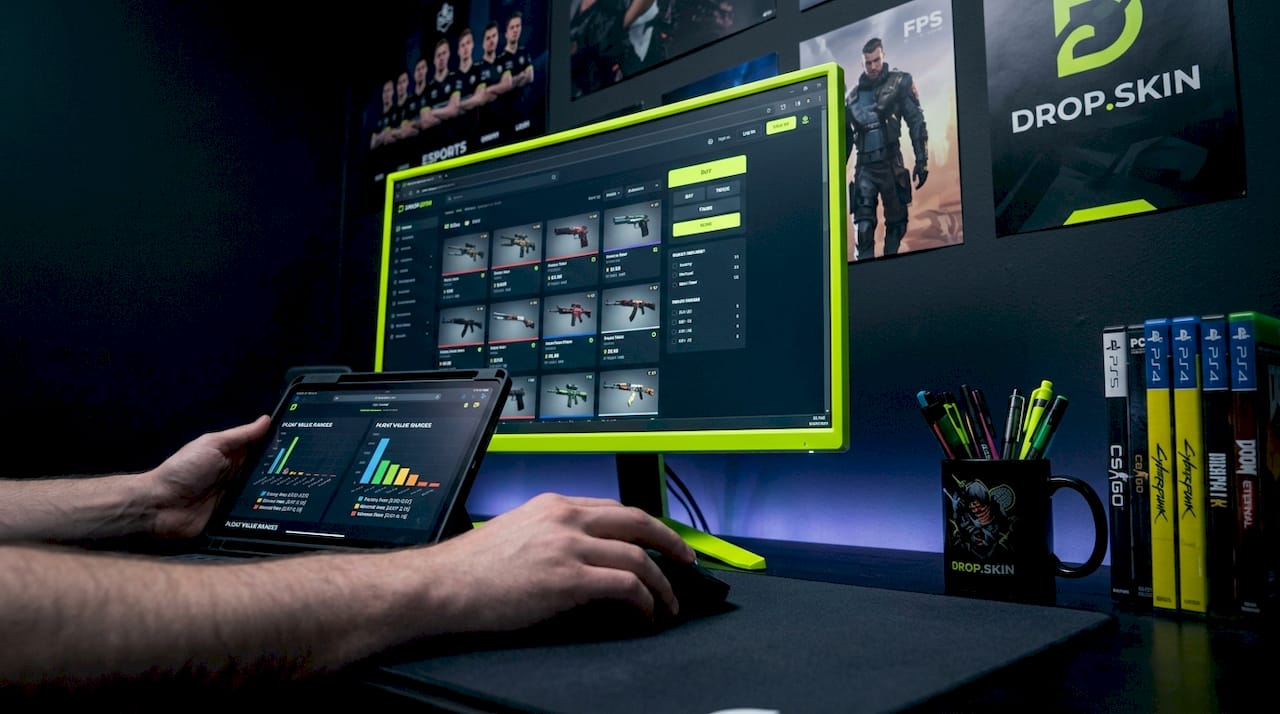
Float caps work in both directions. Some skins have maximum float caps that prevent them from reaching full Battle-Scarred territory. This artificial scarcity at certain float thresholds pushes prices upward for the skins that do exist close to those caps.
Pro Tip: Before assuming a skin exists in a specific wear tier, look up its float cap. Chasing a Factory New version of a skin that cannot drop below 0.18 is a waste of time and budget.
How to check a skin's float value
Float is not displayed by default on the Steam Community Market. You see the wear label on the listing, but not the actual decimal. This is where most uninformed buyers leave real money on the table.
Here is how to get the exact float before buying or trading any skin:
- Inspect in-game. Open your CS2 inventory, hover over a skin, and click "Inspect." The details panel shows the float value under the skin condition section. This works for skins you already own.
- Grab the Steam inspect link. For market listings or trade offers, right-click the skin and copy the inspect link. This is a direct URL that points to the skin's data.
- Use a float checker tool. Paste the inspect link into a dedicated float checking website. These tools pull the exact float decimal instantly. The inspect link method is the fastest and most reliable approach for evaluating skins you do not yet own.
- Compare floats across listings. When you find a skin you want, check multiple listings for the same item. You will often find significant float variation at the same price point.
- Verify before every high-value trade. Never finalize a trade on a skin worth more than a few dollars without confirming the float first.
The fastest float checking approach pairs a Steam inspect link with a dedicated float checker tool, which also matters for bulk evaluation when you are assessing multiple skins in a single session.
Pro Tip: Bookmark a reliable float checker and make it part of your pre-trade checklist. Skipping this step even once on a high-value skin can cost you significantly more than the time you saved.
Why float value matters for trading and investing
Float is where skin trading gets genuinely interesting. A skin's wear label tells you which category it falls into. Its float tells you where inside that category it lands, and that location controls pricing in ways most casual traders never realize.
Price gaps of 50% to 500% can exist between two skins sharing the exact same wear label. A Field-Tested AK-47 skin at 0.16 (just above the Minimal Wear border) can sell for dramatically more than the identical Field-Tested skin at 0.35, even though both carry the same label. This matters deeply when you understand the role float plays in skin value across the market.
Here is why experienced traders think in floats rather than labels:
- Near-border floats carry premium pricing. A skin sitting at 0.069 is technically Factory New. A skin at 0.071 is technically Minimal Wear. The visual difference is minimal, but the price gap can be dramatic. Traders who spot the Minimal Wear priced without that knowledge can buy low and resell strategically.
- Trade-up contracts are float-sensitive. Trade-up contract outputs depend directly on the float values of the input skins. If you want a specific float tier output, you need to feed in inputs with floats calibrated to produce it. Ignoring this leads to unpredictable results.
- Collector demand clusters around extreme floats. Very low floats in Factory New and very high floats in Battle-Scarred attract serious collector interest. Certain communities specifically hunt for floats like 0.001 or 0.999 because of their rarity.
- Pricing mistakes create opportunities. Sellers who do not know their skin's float often list items without factoring in float premium. Buyers who check float routinely find underpriced gems that less informed buyers scroll past.
Understanding how skin rarity drives price becomes much clearer once you factor float into the equation. Float is one of the most direct levers affecting where a skin sits in demand and perceived rarity.
Advanced float concepts and common myths
Float knowledge goes deeper than tiers and price checks. Several persistent misconceptions confuse players and lead to bad decisions.
- Float does not change. Float is permanent from the moment of creation. Playing with a skin, trading it, holding it for years, none of those actions touch the float. The decimal you see today is the decimal that skin had on day one.
- Float and pattern are different things. Pattern seed is a separate number that determines where the artwork is positioned on the skin's 3D model. It matters most for skins with unique visual layouts like the AK-47 Case Hardened, where specific blue patterns command massive premiums. Float determines wear universally across every skin. Pattern seed differs from float in both what it controls and how much it matters by skin type.
- You cannot repair skins. No mechanic in CS2 lets you reduce a skin's float or restore its appearance. Products or services claiming to "clean" or "restore" skins are myths or scams.
- Float affects resale in both directions. A high float Factory New is still Factory New, but its 0.06 reading will hold less value than a 0.01 from the same skin. Sellers sometimes hide high floats hoping buyers skip the check.
Float is the closest thing the skin economy has to a serial number. It does not lie, it does not change, and once you train yourself to look for it, you will never evaluate a skin the same way again.
My take on float after years in the skin market
I've watched traders make the same mistake over and over: they read the wear label, glance at the price, and pull the trigger. I've done it myself early on, and it's an expensive habit to break.
The moment I started treating float as a non-negotiable check before every trade, my win rate on purchases improved noticeably. I've found Battle-Scarred skins priced as common trash that had floats sitting near the well-worn border visually indistinguishable from a lower tier. I've also seen Factory New listings priced as if they were pristine when their float sat at 0.068. One decimal. Massive price difference. Traders who prioritize exact float decimals over wear labels consistently find value that the rest of the market misses.
My honest advice: add float checking to your routine the same way you'd check a used car's mileage before buying. It takes 30 seconds and it tells you more about the skin's actual condition and market value than any label ever could. The skin trading terminology around float exists for a reason. Learn it, use it, and you will stop overpaying immediately.
— Dropskin
Put your float knowledge to work on Dropskin
Now that you understand how float works, you need a platform where that knowledge actually pays off. Dropskin gives you real tools to act on what you've learned.
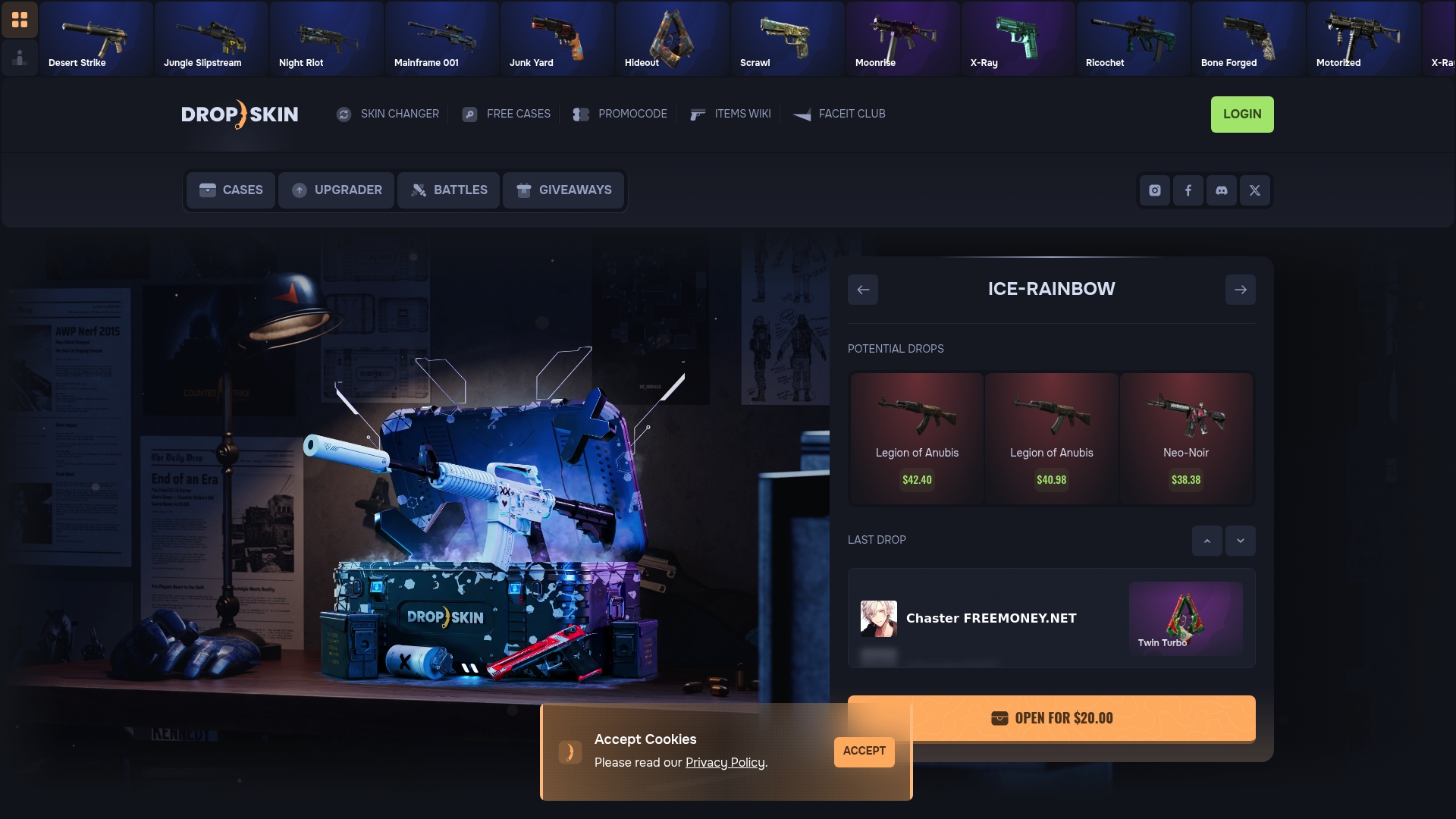
The CS2 Skin Upgrader on Dropskin lets you take lower-value skins and trade them toward better ones, making float awareness directly useful when evaluating upgrade paths and expected outputs. You can also jump into competitive case battles where the stakes are real and the skins you fight for have genuine market value. Whether you're looking to grind smarter upgrades or compete for premium drops, Dropskin combines the entertainment of skin opening with tools that reward informed players. Check out what's live on the platform and put your float knowledge to use.
FAQ
What is skin float value in simple terms?
Skin float value is a decimal number from 0.00 to 1.00 that defines exactly how worn a CS2 or CS:GO skin looks, with lower numbers meaning cleaner skins and higher numbers meaning more wear.
Does float value change over time or with gameplay?
No. Float value is permanent and never changes regardless of gameplay, trading, or how long you hold the skin.
How do I check the float value of a skin?
You can inspect a skin you own in-game to see its float, or copy its Steam inspect link and paste it into a dedicated float checker tool for any market listing.
Why do two skins with the same wear label have different prices?
The exact float decimal creates visual and rarity differences within the same tier. Near-border float values are especially sought after, pushing prices well above other skins sharing the same label.
What is a float cap and which skins have one?
A float cap is a built-in minimum or maximum float that prevents a skin from reaching certain wear tiers. The AWP Asiimov, for example, has a minimum float of around 0.18, making Factory New and Minimal Wear versions physically impossible to obtain.