
TL;DR:
- Staking in skin battles involves wagering skins or platform balance to compete in synchronized case-opening matches.
- Players analyze case return rates and separate gambling skins from valuable assets to improve results and reduce risks.
Staking in skin battles is defined as wagering CS2 skins or platform balance as an entry fee to compete in synchronized case-opening matches where the player with the highest total skin value wins the entire prize pool. Up to 45% of players on major skin gambling sites participate in this format monthly as of Q2 2026. That scale reflects how deeply skin battle staking has moved from a niche activity into a mainstream competitive format. Platforms like Dropskin have built entire ecosystems around it, combining case openings, skin upgrades, and live battles into one experience. Understanding what is staking in skin battles, and how it works mechanically, is the first step to playing with any real awareness.
What is staking in skin battles and how does it work?
Staking in skin battles is the act of committing skins or balance to enter a battle room, where all players open cases at the same time and the highest cumulative value wins everything. The industry term for this format is a "case battle," and the staking mechanic is what separates it from solo case openings. Public battle actions have overtaken solo case openings in popularity since 2022. That shift happened because battles add a competitive layer that solo openings simply cannot replicate.
The step-by-step flow of a skin battle works like this:
- Join or create a battle room. A player selects a case type and sets the number of rounds. Other players join by staking the same value in skins or balance.
- Stake your entry. Each participant commits skins or balance equal to the cost of the selected cases. Once staked, those assets convert to platform credits and leave your inventory.
- Open cases simultaneously. All players open their cases at the same time. The platform uses a provably fair system to randomize and verify every outcome, which players can audit after the battle using post-battle hashes.
- Tally the results. The platform calculates each player's total skin value across all rounds.
- Winner claims the pot. The player with the highest cumulative value wins all staked skins or their equivalent balance. Some formats split the pot between top finishers, but winner-takes-all is the most common structure.
Pro Tip: Always verify a platform's provably fair system before staking. Legitimate sites publish the algorithm and let you check results independently after each battle.
The prize pool is simply the sum of every player's entry. A four-player battle where each person stakes $10 worth of skins creates a $40 pot. The house does not add to the pot. It takes its cut through case drop rates, which are built into the case pricing itself.

What staking strategies actually improve your results?
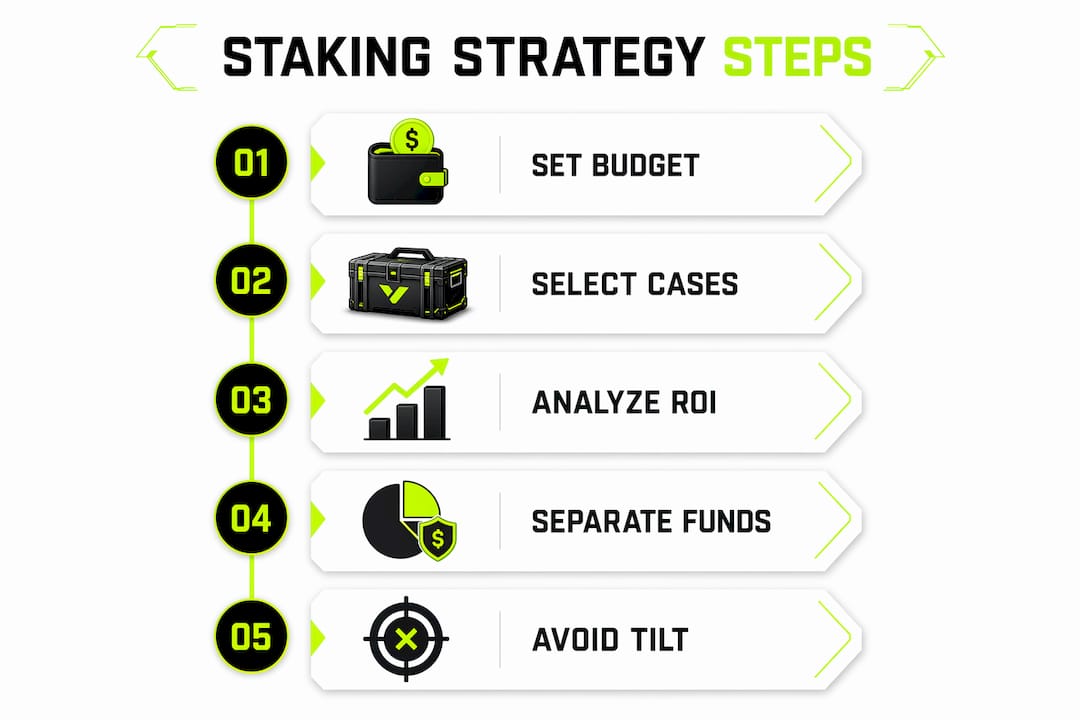
Success in skin battles relies less on luck alone and more on analyzing ROI, risk profiles, and opponent behavior. Luck is still the dominant factor, but smart case selection and bankroll discipline separate casual players from consistent ones.
The most effective staking strategies center on these principles:
- Evaluate case ROI before entering. Every case has a published drop table. Calculate the average expected return by weighting each skin's probability against its market value. Cases where the average return is close to or above the entry cost offer the best risk-reward ratio.
- Separate your gambling inventory. Expert players keep gambling inventories separate from valuable or sentimental skins. Mixing them creates the risk of accidentally staking a skin you did not intend to lose.
- Use promotions and bonus codes. Platforms including Dropskin offer promo codes and giveaways that add free balance. Using that balance for battles reduces your real-money exposure without cutting you out of the prize pool.
- Observe opponent patterns. In open lobbies, you can often see which cases opponents prefer. Players who consistently pick low-variance cases are playing defensively. Matching their case selection in a multi-round battle reduces the gap that luck can create.
- Set a hard session limit. Decide your maximum stake before you open the platform. Stop when you hit it, regardless of results. Chasing losses in skin battles accelerates losses because the house edge is always present.
Pro Tip: Treat each battle as a standalone event. Your results from the last battle have zero statistical impact on the next one. Platforms that show "hot streaks" are displaying entertainment data, not predictive signals.
The ROI analysis point deserves extra attention. Platforms like Clash GG publish case history and run promotions that savvy players use to identify which cases have recently paid out above average. That data does not guarantee future results, but it helps you avoid cases with documented poor return rates.
What risks should players know about skin battle staking?
The primary risks in skin battle staking are total loss of staked items, the house edge embedded in case pricing, and skin market value volatility. Leading skin sites have 2–3 million registered users, which means the scale of potential loss across the player base is significant. Understanding these risks before you stake is not optional.
The key risks break down as follows:
- Total loss on every battle. Unlike trading, staking offers no partial recovery. You either win the pot or lose your entire entry. There is no middle ground in a winner-takes-all format.
- House edge through case drop rates. House commissions are embedded in case pricing, meaning the actual cost of entering a battle is higher than the visible skin value of the pot. The house always retains a margin.
- Skin market volatility. Skin value fluctuates in real-time on marketplaces like Steam. A skin worth $50 when you win a battle might be worth $42 by the time you withdraw or trade it. Winning a battle does not guarantee a profit in real-world terms.
- Loss of trading flexibility. Once skins are staked, ownership transfers to platform credits. You cannot trade those skins independently while they are committed to a battle. If the market moves during a long multi-round battle, you absorb that loss.
- Psychological pressure from competition. Leaderboards and live results create urgency. That urgency pushes players toward larger stakes and longer sessions than they originally planned.
Staking is gambling, not asset management. Once your skins enter a battle room, they are platform currency subject to house rules. Treat every staked skin as already spent.
Responsible bankroll management means setting a fixed budget for skin battles that you are genuinely comfortable losing entirely. The players who enjoy this format long-term are the ones who fund it from entertainment budgets, not from skin collections they care about.
How do social features shape staking behavior in battles?
Platform designers moved from solo case openings to public battles specifically to use social competition as a retention tool. Session length increases by 28% on sites with chat-enhanced battles compared to solo formats. That number reflects a deliberate design choice, not a side effect.
The table below shows how specific social features affect player behavior:
| Social feature | Effect on player behavior |
|---|---|
| Live chat during battles | Creates real-time social pressure and emotional investment |
| Spectator feeds | Increases impulse staking from observers who want to join |
| Public leaderboards | Triggers competitive drive and encourages larger stakes |
| Battle history visibility | Normalizes high-stakes play by displaying big wins prominently |
| Synchronized case openings | Builds shared tension that solo openings cannot replicate |
Spectator and chat features increase impulse staking and risk escalation. Platform designers understand this well. The entertainment value is real, but so is the behavioral pressure these features create.
Understanding social pressure from leaderboards and spectator interaction helps players recognize when they are reacting to the environment rather than making deliberate decisions. The fix is simple in theory. Decide your stake before entering the lobby, not after watching someone else win a big pot. The community atmosphere in skin battles is genuinely entertaining. The risk is letting that atmosphere override your pre-set limits.
You can read more about why skin battles attract players and how the competitive design drives engagement on the Dropskin blog.
Key Takeaways
Staking in skin battles is a gambling format where case selection, bankroll discipline, and awareness of social pressure determine long-term enjoyment more than any single lucky outcome.
| Point | Details |
|---|---|
| Core mechanic | Players stake skins or balance as entry fees; the highest cumulative case value wins the full pot. |
| House edge is real | Case drop rates embed platform commissions, making the true entry cost higher than the visible pot value. |
| Separate your inventories | Keep gambling skins apart from valuable ones to avoid accidental high-stakes losses. |
| Social features drive risk | Live chat, leaderboards, and spectator feeds are designed to extend sessions and increase stakes. |
| Set limits before you play | Decide your maximum budget before entering any lobby. Adjust nothing mid-session based on results. |
Dropskin's take on playing skin battles with your head on straight
The players who burn out on skin battles fast share one trait. They start treating staking as a way to grow their inventory rather than as entertainment. That mental shift is where the trouble begins. Once you expect a return, every loss feels like a failure instead of a known risk you accepted.
The case selection advice in this article is real and worth applying. Analyzing drop tables and separating your gambling inventory from your main collection are habits that cost you nothing and protect you from the worst outcomes. But no strategy eliminates the house edge. The math always favors the platform over a long enough session.
What I have seen work consistently is starting small, learning how different case types behave across multiple battles, and treating any win as a bonus rather than an expectation. The social energy in a live battle room is genuinely fun. Leaderboard pressure and big-win spectator moments are exciting. The key is recognizing when that excitement is pushing you past your limit rather than adding to your enjoyment.
Skin battles are one of the most entertaining formats in CS2 skin gaming. They reward players who stay disciplined and punish players who chase. Start with low-stakes rooms, learn the battle mechanics before scaling up, and you will get far more out of the experience.
— Dropskin
Try skin battles and upgrades on Dropskin
Dropskin gives CS2 players a full toolkit for skin gaming in one place. The platform combines case openings, custom battle rooms, and a skin upgrader that lets you convert lower-value skins into higher-tier ones without a separate marketplace.
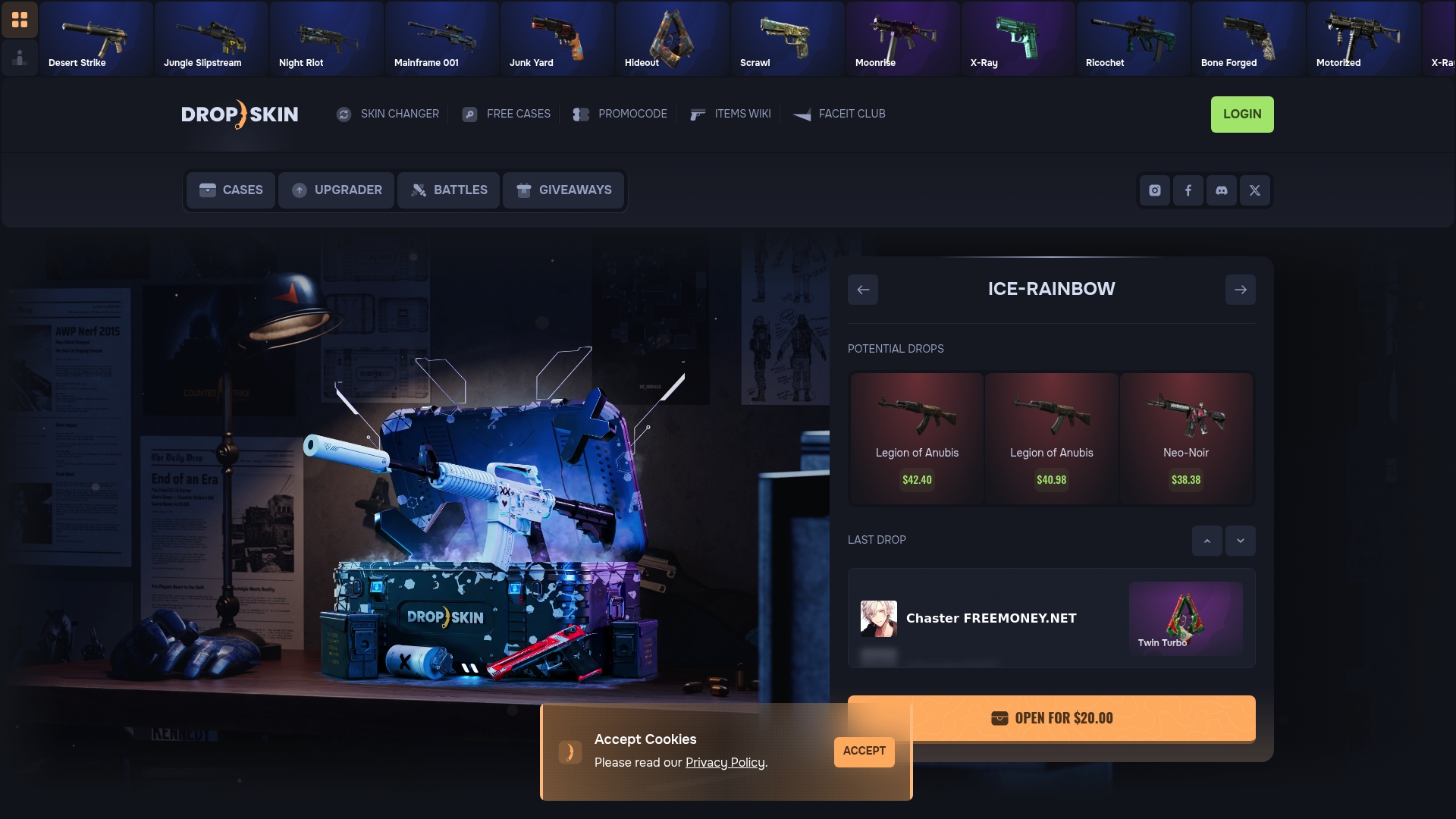
Battle rooms on Dropskin let you pick your cases, set your stake, and compete against other players in real time. The case catalog covers a wide range of price points, so you can start with low-stakes battles and scale up as you get comfortable with the format. Promo codes and regular giveaways add free balance that reduces your real-money exposure. If you want to put the strategies in this article to work, open your first case on Dropskin and see how the battle format plays out firsthand.
FAQ
What is staking in skin battles?
Staking in skin battles means wagering CS2 skins or platform balance as an entry fee to compete in a synchronized case-opening match. The player with the highest total skin value across all rounds wins the entire prize pool.
How does skin staking work step by step?
Players join a battle room, stake skins or balance equal to the case cost, open cases simultaneously with opponents, and the platform awards the full pot to the highest-value winner. Outcomes are verified through provably fair systems that players can audit after each battle.
What are the biggest risks in skin battle staking?
The three main risks are total loss of your staked entry, the house edge embedded in case drop rates, and skin market price fluctuation that can reduce the real-world value of winnings. Once skins are staked, they convert to platform credits and cannot be traded independently.
Do staking strategies actually make a difference in skin battles?
Strategy improves your decision-making but does not override luck. Analyzing case ROI, separating gambling skins from your main inventory, and using platform promotions all reduce unnecessary losses. No strategy eliminates the house edge over a long session.
Are skin battle platforms provably fair?
Reputable skin battle platforms use provably fair algorithms that generate verifiable random outcomes. Players can check post-battle hashes to confirm results were not manipulated. Always verify a platform's fairness system before staking real skins or balance.