TL;DR:
- Skin staking involves placing skins as collateral in competitive or trading activities with associated risks and rewards.
- Trusted platforms follow specific steps, emphasizing security, transparency, and quick withdrawal to ensure safety.
- Effective skin staking requires strategy, community engagement, and understanding market dynamics to grow collections responsibly.
Most players hear "skin stake" and immediately picture someone tossing their AWP Dragon Lore into a random gambling site and hoping for the best. That picture is incomplete, and that misunderstanding costs people real money. Skin staking in CS:GO and CS2 is actually a multi-layered practice that blends trading strategy, market awareness, and community dynamics into a single activity. Whether you want to grow your inventory, chase rare items, or simply make your gaming sessions more exciting, understanding how skin staking truly works gives you a meaningful advantage over players who are guessing their way through it.
Table of Contents
- What is a skin stake?
- How skin staking works on popular platforms
- Benefits and risks of staking skins
- Where to stake skins safely: platform options
- Why most players misunderstand skin staking—and how to get ahead
- Take your skin staking to the next level with DROP.SKIN
- Frequently asked questions
Key Takeaways
| Point | Details |
|---|---|
| Skin stake meaning | A skin stake involves using digital cosmetic items as bets or collateral in games like CS:GO and CS2. |
| Staking workflow | The process includes selecting a skin, picking a platform, confirming the stake, and resolving the outcome. |
| Profit and risk | Staking skins can increase your collection but always comes with the risk of loss or scams if done carelessly. |
| Choosing platforms | Select reputable sites with safeguards and instant withdrawals to stake skins safely. |
| Advanced strategy | Treat both staking and your inventory like a portfolio for long-term value and smarter gaming decisions. |
What is a skin stake?
With the main question in focus, let's break down what "skin stake" really means for CS2 and CS:GO players.
A skin stake means placing one or more of your digital cosmetic items, commonly called skins, as collateral or as a bet in a competitive or trading exchange. The outcome determines whether you keep your items, win new ones, or lose what you put in. This is different from simply buying and selling skins on the Steam Marketplace. Staking introduces an element of risk and reward that is more dynamic than a standard transaction.
The confusion around terminology is real. Many players use "staking," "betting," "trading," and "upgrading" interchangeably, but each term refers to a distinct activity. The skin staking complete guide explains these differences clearly for CS gamers at every level. Getting the terminology right helps you choose the right platform for what you actually want to do.
Here is a quick comparison to keep things clear:
| Activity | What you put in | What you get back | Risk level |
|---|---|---|---|
| Betting | Skin(s) as a wager | Win opponent's skins or lose yours | High |
| Trading | Skin(s) as exchange value | Different skin(s) of agreed value | Medium |
| Upgrading | Skin(s) as upgrade fuel | Higher-tier skin or nothing | Medium-High |
| Staking (general) | Skin(s) as collateral | Outcome-based reward or loss | Varies |
Why do players bother with skin staking at all? The motivations are more varied than you might expect:
- Profit potential: A well-timed stake can turn a common AK-47 skin into a Covert-tier item worth ten times more
- Collection growth: Staking lets you target specific skins you want without spending cash directly
- Competitive thrill: The outcome uncertainty adds intensity that regular grinding simply cannot replicate
- Community participation: Many staking platforms host tournaments, leaderboards, and social events around skin battles
Pro Tip: Before placing any skin as a stake, verify the platform's legitimacy by checking its Terms of Service, user reviews on Reddit or Trustpilot, and whether it clearly discloses its fees and payout mechanics. Skipping this step is the number one mistake new stakers make.
How skin staking works on popular platforms
Now that the concept is clear, let's see how skin staking is actually performed on trusted CS2 platforms.
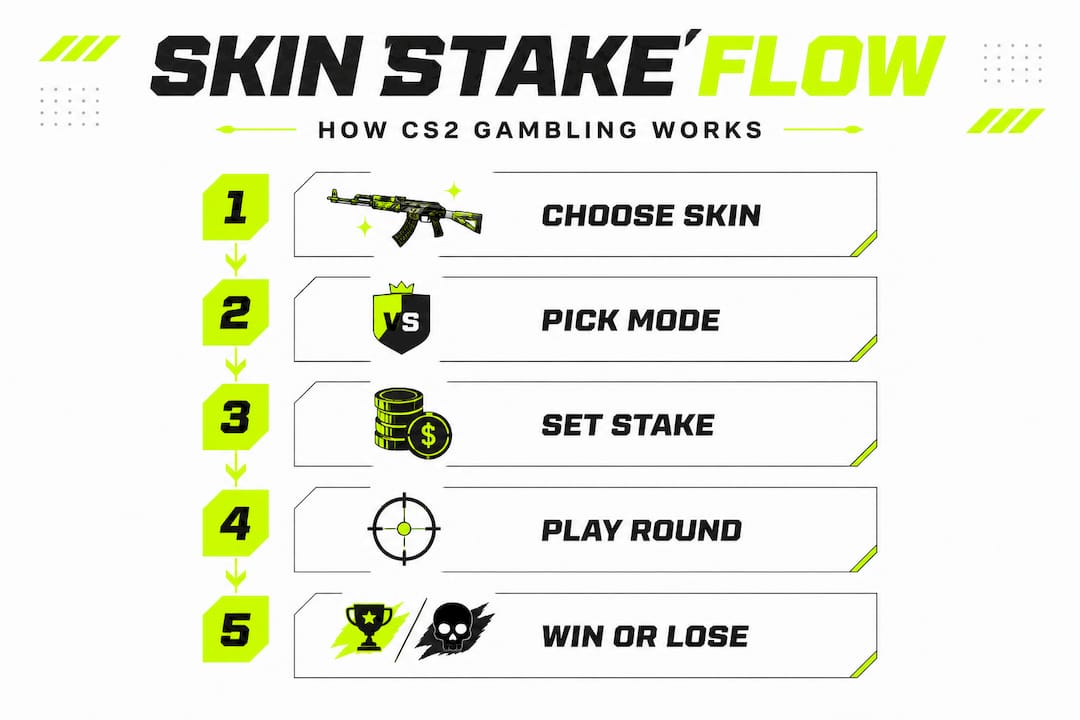
The workflow for skin staking is more structured than most beginners realize. Every reputable platform follows a recognizable sequence of steps, and knowing that sequence helps you move confidently instead of second-guessing every click. Here is the typical process broken down into numbered steps:
- Create and verify your account on the chosen platform, linking your Steam profile securely
- Deposit your skins from your Steam inventory into the platform's secure wallet or trade system
- Choose your staking mode, whether that is a battle match, a coin flip, an upgrade spin, or a peer trade
- Set your stake terms, specifying which skins you are putting in and what outcome you are targeting
- Confirm the stake and let the platform's algorithm or the opposing player finalize the match
- Receive your outcome, either collecting your winnings or acknowledging your loss
- Withdraw your skins back to your Steam inventory if you have won or retained any items
The skin betting workflow expands on each of these steps with safety checks that protect your inventory at every stage. Skipping the withdrawal step promptly is also a mistake because leaving skins on a platform longer than necessary always carries some level of risk.
Different staking modes have different timelines and mechanics. Here is how the three main modes compare:
| Mode | Time to complete | Skill involved | House edge typical |
|---|---|---|---|
| Coin flip / battle | Seconds to minutes | Low | 5 to 10 percent |
| Skin upgrading | Instant | Low to Medium | 10 to 20 percent |
| Peer-to-peer trade | Minutes to hours | High | Near zero |
Notice that peer-to-peer trading has almost no house edge, which makes it the most economically favorable option for experienced collectors. Betting and upgrading are faster and more exciting but come with a built-in cost that eats into your returns over time.
The CS2 skin gambling trends in 2026 show that battle-style modes, where two players each put up a skin collection and one winner takes all, are growing faster than any other format. The social element and the visual drama of watching your skins go head-to-head is a big part of the appeal.

Pro Tip: Only use trusted third-party sites with strong community reputations. Look for platforms that use provably fair algorithms, which means you can independently verify that each outcome was not manipulated. If a site does not offer this feature, treat it as a serious red flag.
Benefits and risks of staking skins
Knowing the process, it's crucial to weigh the potential gains and the risks before you stake your skins.
Skin staking offers real, tangible benefits for players who approach it with a strategy. The gaming value and impact of digital skins goes far beyond cosmetics, and staking amplifies that value by putting your collection to work rather than letting it sit idle.
Benefits of skin staking:
- Faster collection growth: A single successful battle win can net you three or four skins that would have taken weeks to earn through drops
- Higher-tier access: Upgrading systems let you combine cheaper skins to chase StatTrak or Factory New versions you might not afford outright
- Increased gaming excitement: Stakes make every match or spin feel meaningful, which many players find extends their engagement with CS2 significantly
- Market education: Actively staking forces you to learn skin prices, float values, and wear conditions, knowledge that makes you a sharper trader overall
- Community connection: Staking platforms have active chat rooms, leaderboards, and Discord servers where serious collectors share tips and trades
The esports skin advantages also extend into professional gaming culture, where rare skins signal credibility and status in the community. That social currency is real and should not be dismissed.
Risks you need to take seriously:
- Permanent skin loss: Unlike in-game deaths, losing a skin in a stake is final. It leaves your inventory and goes to the winner or the platform
- Platform scams: Fake staking sites exist specifically to steal deposited skins. They often look professional and offer suspiciously generous bonuses
- Account bans: Valve's Terms of Service have gray areas around third-party skin gambling. Some accounts have been flagged for excessive third-party activity
- Price volatility: A skin worth $50 today might drop to $30 after a major game update or when a new operation floods the market with similar items
- Emotional decision-making: Chasing losses is a pattern that can drain your entire inventory in a single session if you are not disciplined
"A little risk adds excitement, but always know what you can afford to lose. Treat your staking budget like entertainment spending, not investment capital. The moment you stake skins you cannot afford to replace, the game stops being fun."
This mindset is the clearest dividing line between players who enjoy skin staking long-term and players who burn out after a few bad sessions. Set a staking budget before you open any platform, and do not touch your core collection items.
Where to stake skins safely: platform options
Ready to try skin staking? Here's where you can stake your skins and what to look for before committing.
Choosing the right platform is not just about finding the best odds. It is about finding a platform that protects your skins, pays out quickly, and operates transparently. The drop.skin alternatives list for 2026 covers several reputable options with detailed comparisons that go beyond surface-level ratings.
When you are evaluating any staking platform, run through this checklist before depositing a single skin:
- Provably fair system: The platform must let you verify every outcome independently
- Clear fee structure: You should know exactly what percentage the house takes before you commit
- Instant or fast withdrawals: Any site that delays withdrawals without clear reason is a warning sign
- Active user community: Check Reddit, Discord, and Trustpilot for recent, authentic reviews
- Two-factor authentication: Security features for your account protect against unauthorized withdrawals
- Responsive customer support: Test their support response before you deposit anything valuable
- License or regulatory compliance: Where applicable, look for platforms that operate under a gambling license or equivalent oversight
The third-party skin sites landscape has matured significantly since the early CS:GO days when scams were rampant. Today's reputable platforms invest heavily in security infrastructure because their business depends on trust. Still, new fraudulent sites appear regularly, which is why checking reviews from the past 30 days matters more than reading year-old testimonials.
For players focused on trading rather than gambling-style stakes, the skin trading platforms guide highlights peer-to-peer marketplaces where you can negotiate directly with other collectors. These platforms minimize house edge and give experienced traders the most control over outcomes.
Pro Tip: Always check the platform's withdrawal policy before depositing. Some sites impose minimum withdrawal amounts or cooldown periods that effectively trap your skins. A platform with instant withdrawals and no minimum is almost always more trustworthy than one that creates friction around getting your items back.
Why most players misunderstand skin staking—and how to get ahead
Here is the honest truth that most staking guides skip over entirely: they treat skin staking as a one-dimensional activity focused on winning or losing skins. That framing misses the most valuable thing that consistent staking actually teaches you.
When you stake skins regularly across different platform types, you begin developing skills that professional traders and even financial analysts use every day. Reading market conditions, recognizing when a skin is overvalued or undervalued, timing your stakes around game updates or major esports events, and managing your inventory as both a collection and a portfolio are real analytical skills. They are just disguised as gaming.
Most casual players ignore the community and safety angle entirely. They jump straight into coin flips on whatever site ranked first on Google, lose a few skins, and decide staking is a scam. The players who stick around and thrive are the ones who spent time on the research phase, learned which platforms are legitimate, and approached staking with the same patience they would bring to mastering a new weapon in CS2.
The winning strategies for CS2 skin gambling are not about lucky streaks. They are about understanding variance, setting realistic expectations, and recognizing that the house always has some edge in gambling-style modes. Smart stakers know this and gravitate toward upgrading or peer trading when they want the most control over outcomes.
Our take at DROP.SKIN is that your inventory should be treated as a living collection, not just a pile of cosmetics. Every skin in it has a story, a market position, and a potential role in a future stake or trade. When you start thinking that way, staking stops feeling like gambling and starts feeling like portfolio management inside a game you already love. That shift in perspective is what separates collectors who grow their inventories year over year from those who repeatedly start from scratch.
Take your skin staking to the next level with DROP.SKIN
Now that you know how to stake skins wisely, here's how you can put your new skills into practice safely and effectively.
DROP.SKIN gives CS2 and CS:GO players a secure, feature-rich environment designed for exactly the kind of strategic skin staking this article covers. Whether you want to open CS2 cases to build a foundation inventory or use the CS2 skin upgrader to convert lower-tier items into something more valuable, the platform is built around transparency, speed, and community trust.
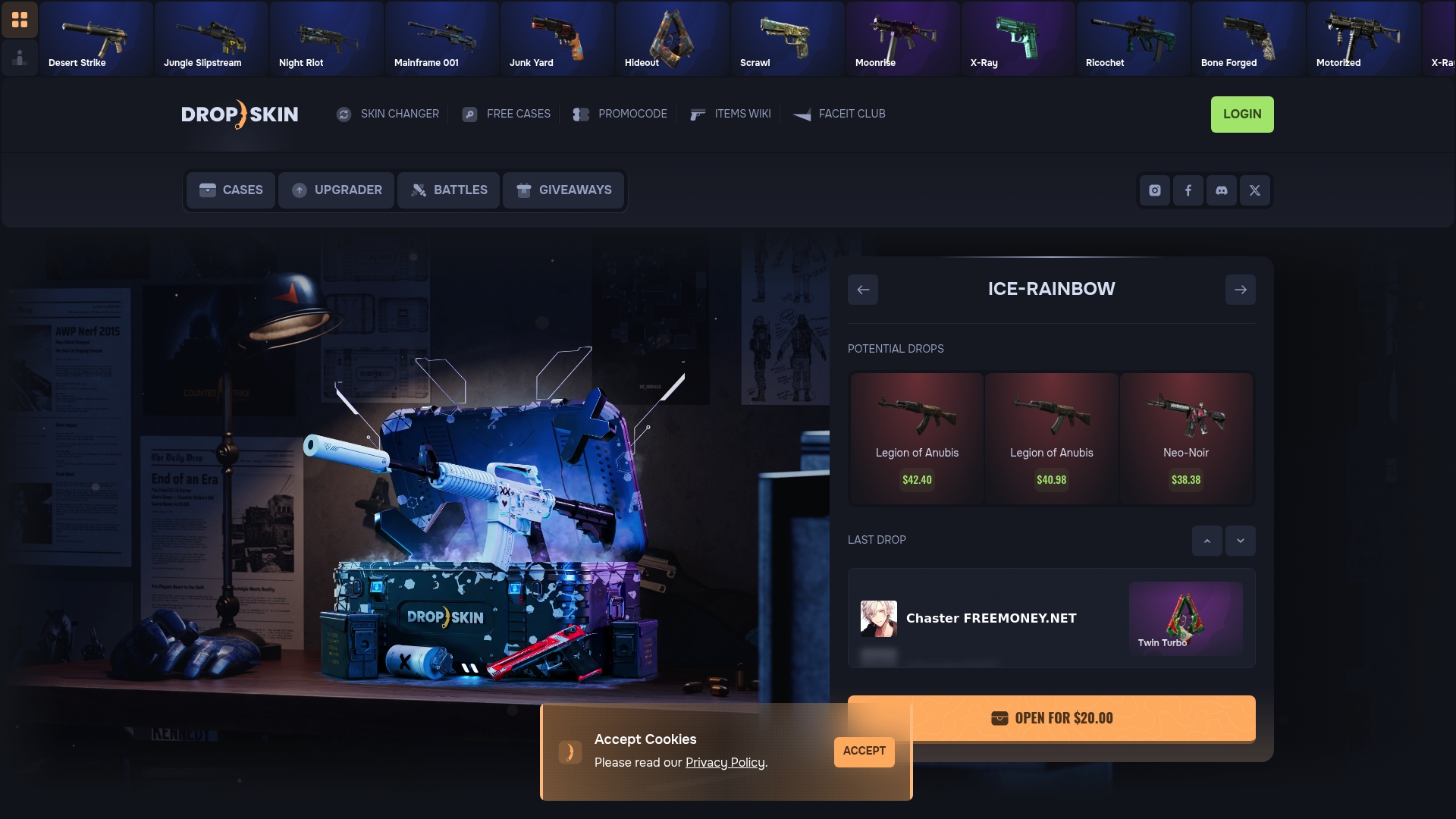
DROP.SKIN also runs regular giveaways and promocode events that give new players a low-risk entry point into skin staking without immediately putting their best items on the line. Battle mode, skin changers, and an extensive case catalog round out a platform that serves both casual collectors and serious stakers. If you are ready to move from understanding skin staking to actually doing it, DROP.SKIN is a smart place to start.
Frequently asked questions
Is skin staking legal in CS2 and CS:GO?
Skin staking is permitted where local laws allow, but always use reputable, licensed platforms to stay within legal boundaries and avoid account complications.
Can I lose my skins permanently while staking?
Yes, losing skins permanently is a real outcome if your bet does not succeed or you use an unsafe platform, so never stake items you cannot afford to replace.
What are the safest sites for staking CS2 skins?
Stick to platforms with transparent fees, provably fair systems, and fast withdrawal policies. The safe staking platforms list for 2026 is a solid starting point for finding vetted options.
Can staking skins help me grow my collection faster?
Yes, successful staking can accelerate collection growth significantly, but you should always balance potential rewards against the real risk of losing the skins you stake.