
TL;DR:
- Skin staking involves depositing skins via Steam trade to wager on various CS2 betting platforms.
- Risks include trade holds, platform scams, and unregulated sites with minimal protections.
- Using provably fair platforms and implementing risk-management strategies improve safety and outcomes.
Most Counter-Strike players assume skin staking is just regular betting with a cosmetic twist. It isn't. The mechanics are different, the risks are less obvious, and the strategies that work for cash betting often fail here. Skin staking sits at the intersection of trading, gambling, and gaming culture, and misreading it costs players real value. Whether you're depositing your first knife skin or building a serious staking strategy, understanding exactly how this works matters. This guide breaks down the mechanics, walks through real scenarios, exposes the risks most players ignore, and gives you practical frameworks to make smarter decisions.
Table of Contents
- Understanding skin staking: Mechanics and terminology
- Skin staking in action: Steps and typical scenarios
- Risks versus rewards: What most players miss
- Smart strategies for skin staking and safer betting
- Our take: Why skin staking is changing—and what truly matters
- Upgrade your CS2 skin staking experience with DROP.SKIN
- Frequently asked questions
Key Takeaways
| Point | Details |
|---|---|
| Skin staking basics | Skin staking lets Counter-Strike players risk digital skins to bet on matches or games, converting them to credits for betting. |
| Major risks involved | Scams, regulatory bans, and withdrawal delays make skin staking risky for gamers and traders. |
| Smart staking strategies | Using a percentage of your bankroll per bet and choosing provably fair sites helps minimize risk. |
| Changing landscape | Valve bans and regional laws are reshaping skin staking, making safe, regulated sites more important. |
Understanding skin staking: Mechanics and terminology
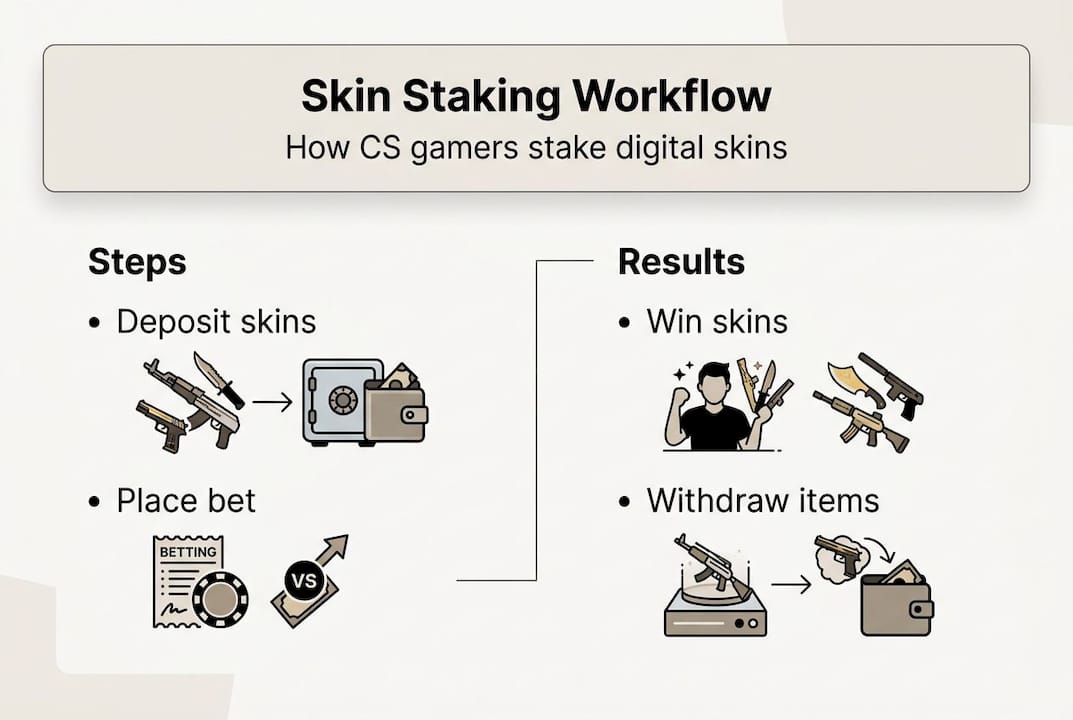
Skin staking is the practice of using CS2 or CS:GO cosmetic skins as wagered assets on betting platforms. Instead of depositing cash, you send skins from your Steam inventory to a third-party site, which converts them into platform credits or coins. Those credits become your betting currency. It sounds simple, but the process involves several moving parts that most players don't fully understand before they start.
Players deposit skins via Steam trade to sites, where those skins are converted to credits or coins for betting. Once converted, the skins are no longer freely accessible. They're locked to the platform until you withdraw. That lock-in is one of the most important mechanics to understand before you stake anything.
Here's a quick breakdown of the key terms you'll encounter:
- Credits/coins: Platform-specific currency representing your skin's market value
- Steam trade: The official Valve mechanism used to transfer skins from your inventory to a site
- Skin withdrawal: Requesting your winnings back as actual skins from the site's inventory
- Provably fair: A cryptographic system some sites use to prove bet outcomes weren't manipulated
- Trade hold: A Valve-imposed delay (up to 7 days) on skin transfers for security reasons
The types of games you can stake skins on vary widely. Most platforms offer roulette, crash games, coinflip, case openings, and esports match betting. Each game type carries different odds, house edges, and payout structures.
| Game type | Typical house edge | Outcome speed | Skill involved |
|---|---|---|---|
| Roulette | 2.7% to 7.7% | Seconds | None |
| Crash | 1% to 5% | 30 to 90 seconds | Timing judgment |
| Coinflip | 0% to 5% | Seconds | None |
| Esports match | Variable | Hours to days | High |
| Case openings | 10% to 30%+ | Seconds | None |
Understanding the skin staking workflow before you deposit is critical. Skin staking differs from traditional betting because your "bankroll" is tied to the volatile CS2 skin market. A skin worth $50 today might be worth $40 next week, which means your effective stake changes even before you place a bet. The advantages of skin gambling over cash betting include lower entry barriers and the ability to win rare skins directly, but those advantages come with unique complications.
Skin staking in action: Steps and typical scenarios
With a clear understanding of the mechanics, let's walk through what actually happens when you stake your skins for a bet.
Here's the step-by-step process on a typical skin betting site:
- Select your skins from your Steam inventory and initiate a trade offer to the site's bot
- Accept the trade within the time window (usually 10 to 15 minutes or the offer expires)
- Receive credits in your platform account, reflecting the market value of your deposited skins
- Place your bet on your chosen game type, whether that's a match, roulette spin, or crash round
- Wait for the outcome (seconds for casino games, hours for esports matches)
- Withdraw winnings as skins from the site's inventory or convert to cashout if supported
Skins are locked during bets; winners receive equivalent value in skins or cashout options after the bet resolves. This is a key difference from cash betting, where your money is always liquid.

Let's compare how skin staking stacks up against traditional cash betting:
| Factor | Skin staking | Cash betting |
|---|---|---|
| Deposit method | Steam trade | Bank transfer, card, crypto |
| Liquidity | Low (trade holds apply) | High (instant) |
| Entry barrier | Low (cheap skins work) | Varies by platform |
| Withdrawal speed | 1 to 7 days | Hours to 3 days |
| Regulatory oversight | Minimal to none | Moderate to high |
| Winnings format | Skins or credits | Cash |
For esports match betting specifically, the process is longer but more strategic. You're analyzing team form, map pools, and recent results before locking skins into a bet that won't resolve for hours. Check out these esports skin collecting tips if you want to build a smarter inventory for staking.
Pro Tip: Always use provably fair platforms like CSGOEmpire when staking skins. Provably fair systems let you independently verify that each bet outcome was generated fairly before the round started, removing the possibility of manipulation.
Risks versus rewards: What most players miss
After seeing how skin staking works, let's spotlight the most overlooked risks and rewards that make or break your experience.
The risks in skin staking go well beyond losing a bet. Here's what actually catches players off guard:
- 7-day trade hold: Valve enforces this on most skin transfers, meaning your winnings are frozen for up to a week after withdrawal
- Live bet lockups: During an ongoing esports match, your staked skins are completely inaccessible, sometimes for 12+ hours
- Unregulated platforms: Many sites operate without licenses, meaning no consumer protection if they shut down or refuse withdrawals
- Phishing and scam sites: Fake platforms mimic legitimate ones to steal your Steam credentials and skins
- Psychological traps: Near-miss mechanics, loss-disguised-as-win features (like opening a case and getting a skin worth less than your stake), and fast-paced games are designed to keep you betting
Regulatory bans in some regions treat skin staking as gambling, and scams are common due to the largely unregulated nature of these platforms. The UK Government's review of skins gambling found harmful mechanics embedded in many platforms, targeting younger players in particular.
"The potential for harm is significant, particularly given the overlap between gaming audiences and gambling mechanics in skin staking environments."
Read more about specific skin betting risks and how to recognize skin changer risks before committing skins to any platform. You should also review common errors in our guide on how to avoid skin staking mistakes.
The rewards are real, though. Winning a rare knife or gloves through a well-placed esports bet feels different from buying it outright. The entertainment value is genuine, and skilled traders can use betting wins to upgrade their inventories strategically. The key is going in with eyes open about what you're actually risking.
Smart strategies for skin staking and safer betting
Knowing the risks is key, but here's what separates successful skin stakers from the rest: proven strategies and safer approaches.
Here's a practical framework to follow:
- Set a staking budget in skins, not dollars. Decide which skins you're willing to lose entirely before you deposit anything.
- Use percentage-based staking. Stake 5% of your bankroll per bet on esports or match outcomes via skin sites, and prioritize provably fair platforms like CSGOEmpire for best results.
- Separate your collection from your staking inventory. Never deposit skins you'd regret losing. Keep your prized items in a separate Steam account or locked in your inventory.
- Research the platform before depositing. Check community reviews on Reddit and Steam forums. Look for withdrawal complaints and licensing information.
- Stick to esports betting over pure casino games. The house edge in roulette and crash is fixed against you. Esports betting rewards research and knowledge of the CS2 competitive scene.
- Track your results. Log every bet, win, and loss. Most players dramatically overestimate their win rate without data.
Post the Valve crackdowns on skin gambling API access, the landscape has shifted. Many larger platforms now operate under real-money licenses, which actually offers better consumer protection than the old unregulated skin-only model. Choosing between skin staking and real-money betting now depends heavily on your region's laws.
Pro Tip: Before depositing, always test a site's withdrawal process with a low-value skin first. If withdrawal takes longer than stated or requires unexpected verification steps, treat it as a red flag and move on.
For deeper frameworks, explore winning strategies for skin gambling and our detailed skin trading guide to understand how trading and staking intersect.
Our take: Why skin staking is changing—and what truly matters
As you weigh strategies and risks, here's a fresh take you won't find in mainstream guides.
Most articles about skin staking focus on tactics. Ours doesn't stop there. The bigger story is structural change. Valve's API restrictions, regional gambling legislation, and platform shutdowns are reshaping what skin staking even means in 2026. The wild-west era of anonymous, unregulated skin betting is closing.
What most guides miss is the community dimension. Skin staking isn't purely financial for most players. It's tied to identity, collection pride, and the social fabric of CS2 culture. The gaming value of skins goes beyond market price, and esports skin engagement shows how deeply skins are woven into competitive play.
The UK Government review confirms that risks outweigh rewards for most casual participants, and harmful mechanics are deliberately embedded in many platforms. That's uncomfortable, but it's the reality. The long-term edge in this space belongs to skilled traders and collectors, not gamblers chasing rare drops.
Regulated platforms are becoming the smarter choice, not just the safer one.
Upgrade your CS2 skin staking experience with DROP.SKIN
If you're ready to enjoy skin staking in safer, more engaging ways, here's where to start upgrading your experience.
DROP.SKIN is built for CS2 players who want more than just a bet. Whether you're looking to open CS2 cases from an extensive collection or push your inventory further with the skin upgrader, the platform gives you real control over how you engage with your skins.
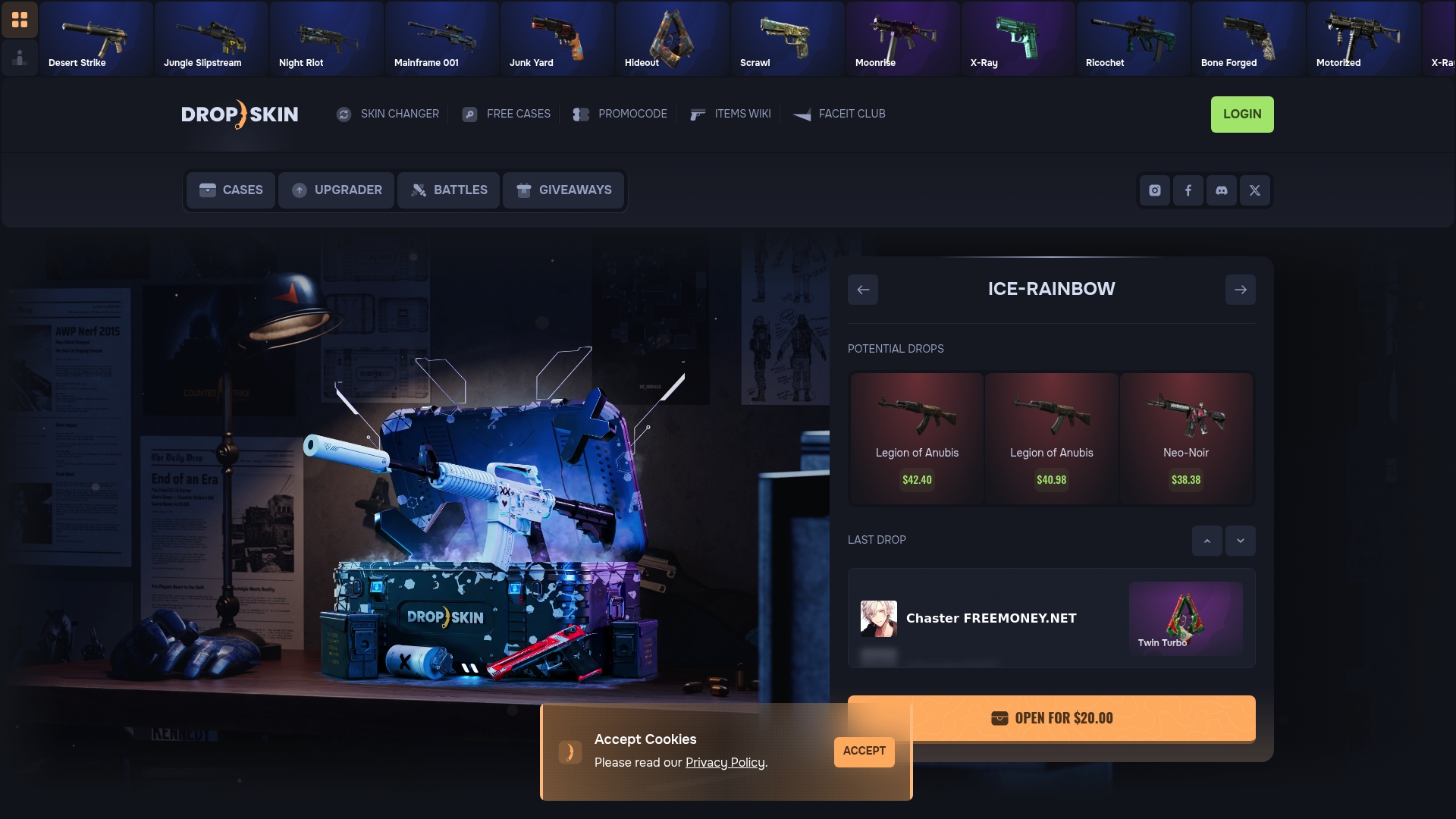
Every feature on DROP.SKIN is designed around community-driven skin trading and entertainment. Custom battle matches, skin upgrades, giveaways, and promo codes make it easy to build your inventory strategically without relying on luck alone. If the goal is smarter skin staking with better tools and a safer environment, DROP.SKIN is where that experience starts.
Frequently asked questions
How does skin staking differ from traditional betting?
Skin staking uses digital skins as wagered assets, while traditional betting involves cash. Skins are deposited via Steam trade and converted to credits, then locked in bets until the outcome resolves.
Is skin staking legal and regulated?
Legality varies by region. Regulatory bans in some regions treat it as gambling, so players should verify local laws and only use reputable, licensed platforms.
What are the main risks in skin staking?
The biggest risks include scam platforms, skins locked during live bets, and the 7-day Steam trade hold that delays withdrawals after winning.
How much should I stake per bet for best results?
Experts recommend staking no more than 5% of your total skin bankroll per bet to manage risk and extend your staking sessions.
Can I cash out skins for money after betting?
Most platforms offer skin or cashout options after bets resolve, but trade holds and withdrawal processing times commonly apply before you receive anything.