
TL;DR:
- Successful skin staking requires proper account security, platform verification, and strategic planning.
- Tracking results and adjusting strategies over time lead to better long-term returns.
- Community engagement and disciplined routines enhance safety and increase chances of consistent gains.
You've got a solid CS2 inventory and a rough sense that skin staking could turn those skins into something more valuable, but without a clear plan, most players either leave money on the table or make costly errors that wipe out their gains. Jumping into skin staking without a structured process is like queuing for a ranked match without knowing the map: you might survive, but you definitely won't thrive. This guide covers everything from setting up your account correctly, executing each staking step with confidence, avoiding the traps that catch even experienced players, and measuring your results so you keep improving over time.
Table of Contents
- Understanding skin staking and core requirements
- Step-by-step skin staking process
- Avoiding common mistakes and ensuring safety
- Evaluating staking outcomes and expected returns
- The overlooked truth about skin staking success
- Ready to step up your skin staking?
- Frequently asked questions
Key Takeaways
| Point | Details |
|---|---|
| Set up properly first | Preparing your accounts and verifying platforms is the first step to safe skin staking. |
| Follow a proven process | A structured staking workflow minimizes mistakes and boosts your skins' value. |
| Review your staking results | Tracking and learning from your outcomes is vital for long-term CS:GO and CS2 profit. |
| Prioritize account safety | Security measures like two-factor authentication and avoiding scams protect your investments. |
Understanding skin staking and core requirements
Before you stake a single skin, it pays to understand exactly what you're doing and why it works the way it does. Skin staking, at its core, allows players to lock in their CS:GO/CS2 skins in betting pools, offering chances to multiply value. Think of it like a raffle system where your ticket count is determined by how much your skins are worth: the more valuable your contribution, the higher your odds of winning the combined pot.
Staking happens across several community-driven platforms that connect directly with your Steam account. These platforms use Steam's trade offer system to move skins between your inventory and a secure pool. Winners receive skins from the pool, typically worth more than their original stake. The format rewards research, patience, and discipline over random impulse.
What you need before you start
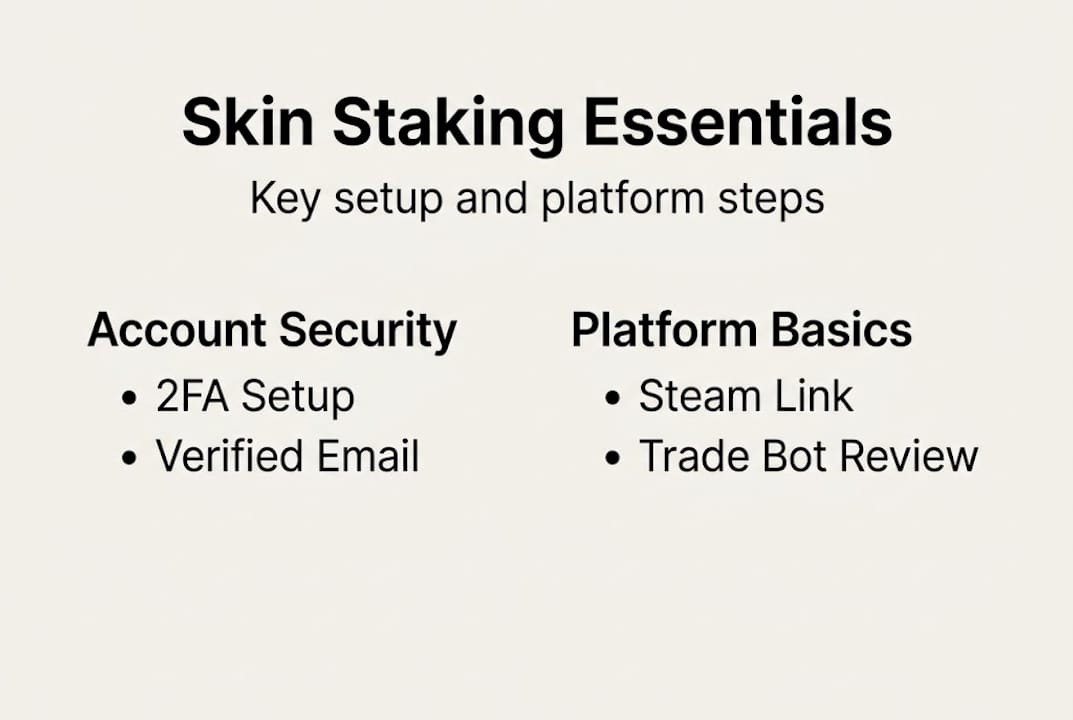
Getting started requires a few specific things in place. Use this checklist to confirm you're ready:
- Active Steam account with a valid email and phone number linked for two-factor authentication (2FA, a security method that requires a second confirmation step when logging in)
- CS2 inventory with tradeable skins (skins must not be on a trade cooldown, which is a waiting period Steam enforces after a skin is received)
- Steam Mobile Authenticator enabled for at least 15 days before trading
- A trusted skin staking platform account with identity verification where required
- A clear budget for how many or which skins you're willing to stake
| Requirement | Why it matters | Common mistake |
|---|---|---|
| 2FA enabled | Protects account from hijacking | Skipping this step entirely |
| Trade hold cleared | Skins must be tradeable | Staking skins still in cooldown |
| Platform verification | Confirms site legitimacy | Using unverified platforms |
| Budget set in advance | Prevents over-staking | Staking your entire inventory |
| Trade URL ready | Needed to receive winnings | Using an outdated trade URL |
Pro Tip: Before linking your Steam account to any staking platform, review the site's trade bot history. Legitimate platforms show thousands of completed trades publicly. A thin or hidden trade history is a warning sign worth taking seriously.
The skin staking basics come down to one core principle: preparation before participation. Players who rush into a staking round without checking their trade status, updating their trade URL, or verifying the platform's reputation tend to run into preventable problems fast. A few minutes of prep can save hours of frustration.

Step-by-step skin staking process
With all your tools ready, you can move into the actual process. A structured staking process mitigates user mistakes and increases returns. Follow these steps exactly, especially when you're starting out.
-
Choose your platform carefully. Not all staking sites offer the same rules, pool sizes, or security standards. Research player reviews, check for active customer support, and confirm the site uses official Steam trade bots. Look for public provably fair records, which are cryptographic logs that prove each round's result wasn't manipulated.
-
Connect your Steam account. Use the platform's official Steam login button. Never enter your Steam username and password directly into a third-party form. The authentic method redirects you to Steam's official login page.
-
Update your trade URL. Your Steam trade URL is the address other accounts use to send you items. Find it in Steam under your privacy settings and paste it accurately into the platform. A single wrong character means you won't receive winnings.
-
Select skins based on your risk tolerance. Lower value skins in a large pool mean lower risk but smaller potential reward. High value skins in a smaller pool mean greater risk with higher reward. Decide before each round, not during.
-
Deposit skins into the staking pool. The platform sends a trade offer to your Steam account. Review it carefully, confirm the items match what you intended to stake, and only then accept the trade.
-
Set a session limit before you start. Decide how many rounds you'll participate in or how much total skin value you'll stake before you begin. Players who set limits before staking, rather than during, consistently manage their inventories better.
-
Track each entry. Note which skins you staked, the pool size, and your odds for each round. Keeping even a basic record gives you data to evaluate later.
-
Cash out or convert winnings. If you win skins that don't fit your play style or build, consider trading them through a skin marketplace or using them in upgrade features to target a specific skin you actually want.
| Strategy type | Best for | Risk level | Potential return |
|---|---|---|---|
| Low value, high volume | New stakers learning the flow | Low | Moderate |
| Mid-tier skin pools | Experienced players building steadily | Medium | High |
| High value single skin | Confident players with spare inventory | High | Very high |
| Event-timed staking | Players who follow CS2 tournaments | Variable | High during majors |
Pro Tip: Major CS2 tournament periods tend to drive up skin values and staking pool activity. Timing your entries around events like CS2 Majors gives you access to larger, more active pools and occasionally better odds due to higher participant volume.
Following the skin betting steps in this order is not about being overly cautious. It's about building a repeatable routine. Once you've done it three or four times methodically, the process becomes second nature and you make smarter decisions under pressure. You can also explore a CS2 staking guide that goes deeper into platform-specific strategies if you want to tailor your approach.
Avoiding common mistakes and ensuring safety
Having learned the process, it's vital to address what can go wrong, because staking mistakes can lead to lost items or compromised accounts. Some of these errors are made by total beginners. Others trap players who have been staking for months and get overconfident.
The top five mistakes to avoid:
- Staking without a session limit. One bad round leads to another, and before you notice, you've staked far more than intended. Set your limit before the session starts.
- Using unverified platforms. Fraudulent sites look identical to legitimate ones. Always check third-party review sites and community forums for recent user feedback before depositing anything.
- Ignoring trade offer details. Always read the trade offer fully before accepting. Scam bots sometimes send offers that look legitimate but include extra items being taken from your inventory.
- Reusing old trade URLs. Steam lets you reset your trade URL. If yours was ever shared publicly or you suspect a security issue, generate a new one immediately.
- Chasing losses. If you lose several rounds in a row, taking a break is the correct move. Increasing your stake to recover losses fast is a pattern that rarely ends well.
"The single biggest vulnerability in skin staking isn't the platform mechanics, it's the player's state of mind. Frustration and impatience cause more inventory losses than any system flaw ever will." This insight comes from experienced community members across CS2 staking forums and reflects a pattern seen repeatedly by seasoned players.
Check these safe staking tips as a recurring habit, not just a one-time read. Security is an ongoing practice. Scam tactics evolve, and a platform that was safe six months ago may have changed ownership or introduced questionable practices.
Security habits every player should maintain:
- Enable Steam Guard Mobile Authenticator and never disable it
- Use a unique, strong password for your staking platform account separate from your Steam password
- Avoid accessing staking sites on public Wi-Fi networks, where traffic interception is a real risk
- Check that the site URL uses HTTPS and matches the exact domain you've previously used
- Log out of staking platforms when you're done, especially on shared devices
Evaluating staking outcomes and expected returns
Once you've participated in staking, the next task is to make sense of your results. Tracking performance and analyzing returns improves long-term results for skin staking players. This is the step most players skip, and it's exactly why most players plateau or decline over time.
Start with a simple return on investment (ROI) calculation. ROI in skin staking means comparing the total value of skins you've staked against the total value you've received back, expressed as a percentage.
| Staking session | Total value staked | Value returned | ROI |
|---|---|---|---|
| Session 1 | $20 | $14 | -30% |
| Session 2 | $15 | $22 | +47% |
| Session 3 | $30 | $38 | +27% |
| Session 4 | $25 | $18 | -28% |
| Combined | $90 | $92 | +2.2% |
Even a slight positive ROI over time indicates a sound strategy. The goal isn't to win every round. It's to finish ahead over a meaningful sample size, typically at least 20 to 30 rounds before drawing firm conclusions.
How to review and adjust your strategy:
-
Review your results weekly. Look at your total staked value vs. total returned value. Are you trending up, flat, or down?
-
Identify patterns. Did you perform better in smaller pools or larger ones? At specific times of day or around events? Data reveals patterns that gut feel never will.
-
Adjust your skin selection. If mid-tier skins consistently outperformed high value ones for your play style and risk preference, lean into that approach more heavily.
-
Set a review threshold. Commit to reviewing strategy after every 10 rounds rather than after a single bad session. Single-session data is almost always misleading.
-
Know when to pause. If you've tracked a consistent negative ROI over 20 or more rounds, take a full break. Review your platform choice, your skin selection strategy, and your session limits before returning.
Exploring staking strategies beyond the basics gives you the edge that separates casual participants from players who consistently grow their inventory over time. Data is your most valuable asset in this process. Use it.
The overlooked truth about skin staking success
Here's a take you won't read in most staking guides: the setup phase gets all the attention, but the review phase is where the real edge lives. Most content focuses on which platform to use, how to deposit, and how to pick skins. That's useful, but it creates a false impression that staking success is mainly about making smart choices at the start.
The players who build value consistently are the ones who treat each round as a data point. They compare results, notice patterns, and adjust. They're not relying on lucky streaks or gut instinct. They're making incremental improvements based on what actually happened, not what they hoped would happen.
There's also a community element that's often underestimated. Staking is not a solo activity. Sharing results, strategies, and platform experiences with other players sharpens everyone's approach. Active community members spot scam platforms faster, identify favorable pool conditions sooner, and recover from bad streaks more efficiently because they're learning from collective experience rather than just their own.
The advantages of skin staking are real, but they only compound when you combine disciplined tracking with genuine community engagement. The players who treat staking as a pure luck activity will always underperform the ones who treat it as a skill they're actively developing.
Ready to step up your skin staking?
You now have the full picture: what skin staking is, how to execute it safely step by step, what mistakes to avoid, and how to measure your progress. The next move is putting that knowledge to work on a platform built for exactly this.
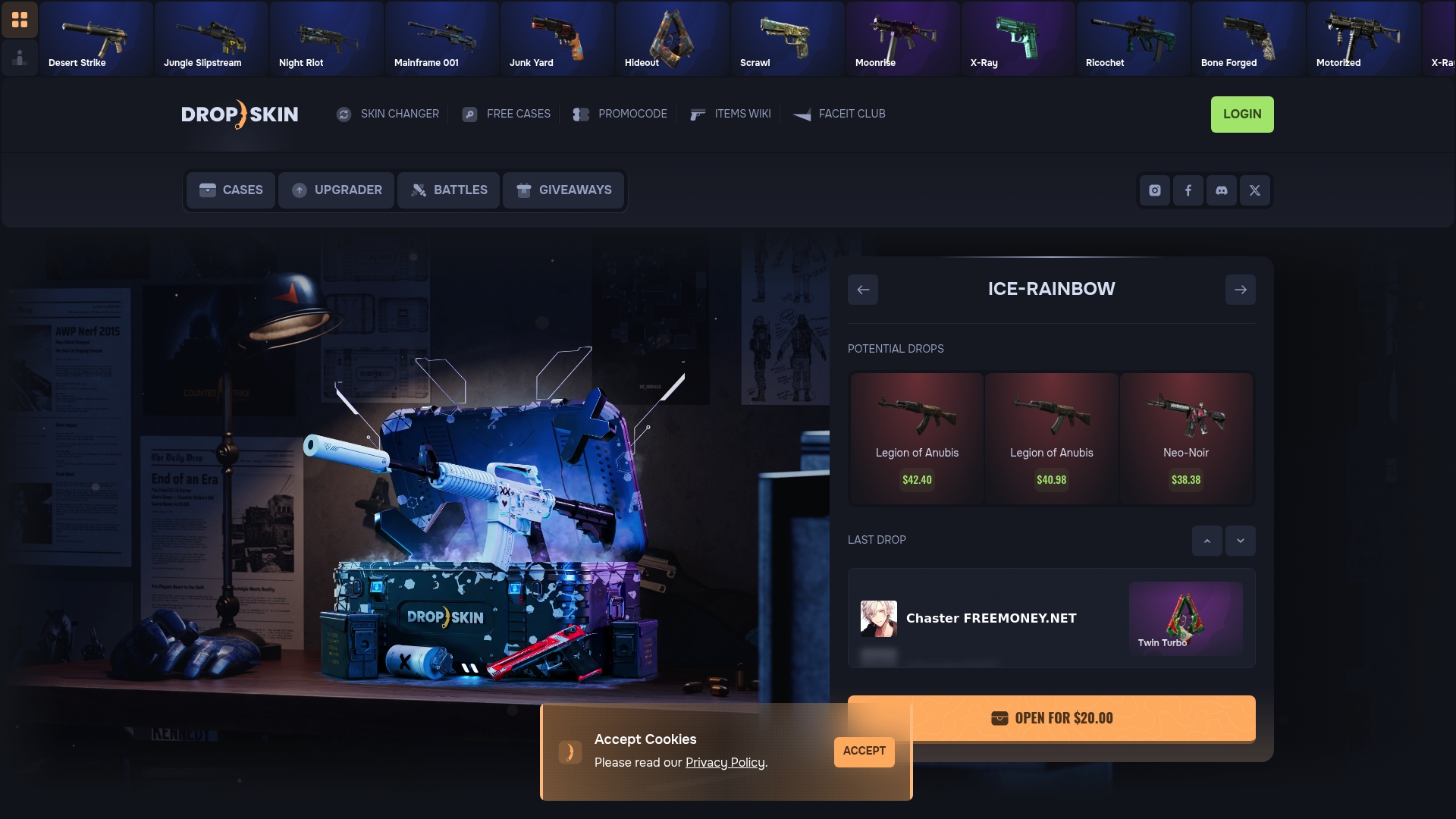
At DROP.SKIN, you get access to feature-rich tools designed for serious CS2 skin players. Whether you want to upgrade individual skins through the CS2 Skin Upgrader or explore value through CS2 skin cases, the platform gives you multiple ways to grow your inventory strategically. Custom battle modes, giveaways, and an active community make it a natural home for players who want more than just a transaction, they want an experience built around skins they care about.
Frequently asked questions
What is the difference between staking and betting skins?
Staking and betting are often used interchangeably but involve different risk profiles and mechanics. Staking typically means locking your skins in a shared pool for a chance at rewards, while betting involves directly wagering skins on match results or events.
Is skin staking safe for my CS:GO and CS2 inventory?
Skin staking is safe when you use reputable platforms and follow strong account security habits. Always verify site authenticity and enable two-factor authentication before depositing any skins.
How can I maximize my returns from skin staking?
Maximize returns by diversifying your skin selections across different pool sizes and consistently tracking your outcomes. Tracking results and learning from each staking round is essential for optimizing gains over time.
What should I do if a skin staking site asks for my trade URL?
Only provide your trade URL to platforms with a verified track record and confirmed community trust. Untrusted sites may steal your items if you share sensitive account information without proper verification in place.