
TL;DR:
- The CS2 skin market is valued at approximately $4.5 billion in mid-2026, driven by scarcity, demand, and engine upgrades. Strategic focus on discontinued cases, rare skins, and managing risks from Valve policies is essential for investors. Market growth relies on proven liquidity, long-term thinking, and disciplined trading approaches.
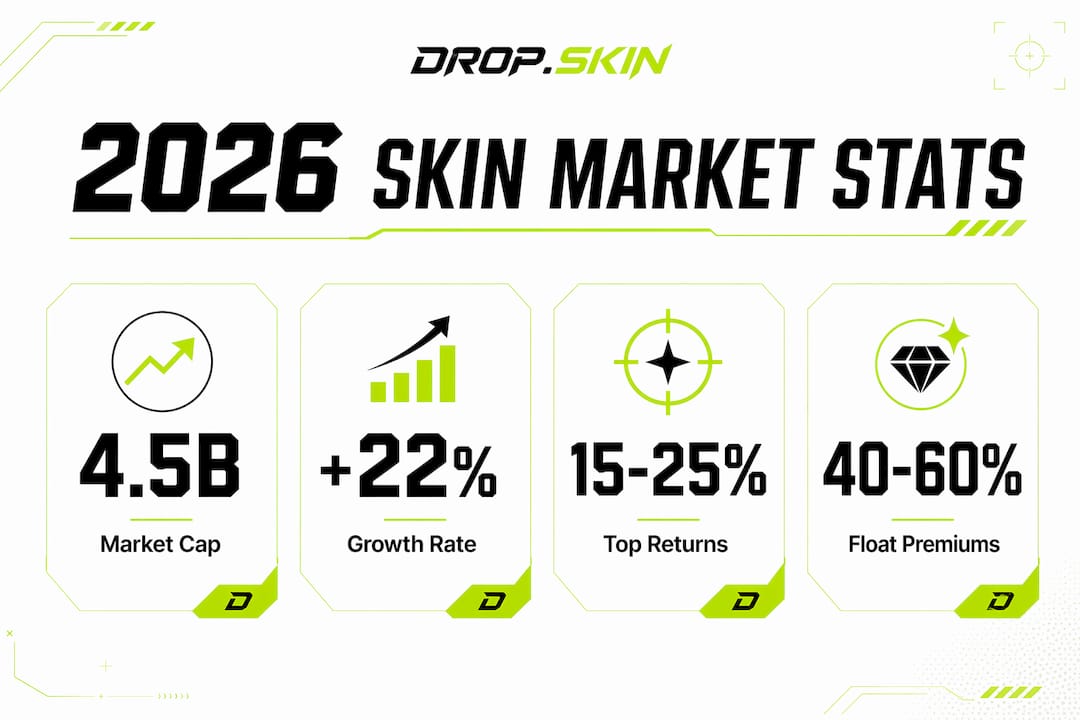
The CS2 skin market is defined by a total capitalization of approximately $4.5 billion as of mid-2026, making it one of the most mature digital asset ecosystems in gaming. The future of CS:GO skins in 2026 is shaped by three converging forces: mechanical supply scarcity from discontinued cases, a recovering trading economy after the 2025 crash, and Source 2 engine visuals that have made certain skins genuinely desirable again. For collectors, players, and investors, this is not speculation. It is a market with measurable price cycles, documented return rates, and real liquidity data worth understanding before you trade.
What market factors are driving the future growth of CS:GO skins in 2026?
The CS2 skin market recovered strongly in Q1 2026 after a significant 2025 downturn, with knife prices rebounding 245% from crash lows and daily Steam turnover returning to over $5 million per day. That recovery was not random. It reflects structural demand from a growing player base combined with a supply side that Valve has deliberately constrained.
Several forces are compressing supply and pushing prices upward:
- Discontinued cases no longer enter the active drop pool, meaning the total supply of their contents is permanently capped. This is the single most reliable price driver in the market.
- Trade hold durations reduce short-term liquidity, which discourages casual flipping and concentrates ownership among serious collectors. Thinner sell-side pressure supports prices.
- Valve policy shifts can move the market 20 to 40% within days, which means patch notes and trade policy announcements are as important to monitor as price charts.
- Source 2 visual upgrades have renewed demand for skins that look dramatically better under the new engine, particularly high-contrast patterns like Fade and Marble Fade.
The market cap grew over 22% between January and May 2026. That pace of growth reflects genuine demand expansion, not just speculative inflation.
Pro Tip: Set up Steam Market price alerts and follow Valve's official blog for patch notes. A single trade policy announcement can shift your portfolio value faster than any price trend.

Understanding how skin trading behaviors are shifting in 2026 gives you an edge before price movements happen, not after.
Which skin categories show the strongest investment potential?
Not all skins appreciate equally. The 2026 market rewards specificity. Broad exposure to random skins produces mediocre results. Targeted exposure to proven categories produces measurable returns.
Here are the four categories with the strongest documented appreciation potential this year:
- Discontinued case reds. These are the rarest drops from cases no longer in active rotation. Projected annual returns sit at 15 to 25% for this category, driven purely by capped supply and steady collector demand.
- High-demand knife patterns. Doppler, Fade, and Marble Fade variants on popular knife models project 10 to 18% annual returns. These are liquid assets with active buyer pools, which matters as much as appreciation rate.
- Rare Souvenir skins from 2015 to 2018 Majors. These carry the strongest projected returns at 20 to 30% annually. Supply is permanently fixed, provenance is verifiable, and demand from legacy collectors is consistent.
- Low-float Factory New mid-tier skins. The float market matured significantly in 2026. Sub-0.01 float premiums for mid-tier skins now reach 40 to 60%, up from 15 to 25% in 2023. Buyers with certified low-float items can capture meaningful premiums that increase overall annual appreciation by 8 to 12%.
| Skin category | Projected annual return | Liquidity level |
|---|---|---|
| Discontinued case reds | 15 to 25% | Medium |
| High-demand knife patterns | 10 to 18% | High |
| Rare Souvenir skins (2015 to 2018) | 20 to 30% | Low to medium |
| Low-float Factory New mid-tier | 8 to 12% premium boost | High |
One critical distinction: high-tier skins can require multi-week holding periods to sell near fair market value. Mid-tier skins with faster turnover are often better for traders who need flexibility. Knowing your own liquidity needs before buying is as important as knowing the return projections.
For a deeper breakdown of what drives these valuations, the Dropskin guide on how skins gain value covers the mechanics in detail.
How have CS2 updates shaped the 2026 skin market?
CS2's Source 2 engine did not just improve graphics. It restructured which skins people want. Patterns that looked flat in the old engine now render with depth and reflectivity that makes them visually striking in-game. That aesthetic shift has direct price consequences.
The 2026 market infrastructure has also changed in ways that affect how you trade:
- Peer-to-peer platforms now reduce bid-ask spreads by 1.5 to 3 percentage points compared to legacy marketplaces, with zero fees and instant payouts. This is a structural cost reduction that compounds over multiple trades.
- New case release cycles have become more predictable, which has created a repeatable price pattern. New case skins typically lose 40 to 50% of value in the first 90 days, then stabilize. The Revolution Case, for example, peaked at $12.40 and corrected to $3.80 within 30 days. Buying after the correction rather than at launch is a documented strategy.
- Hype-driven price spikes are faster and steeper in 2026 than in prior years. The 2026 market is more selective, meaning initial hype inflates prices sharply before steep corrections follow. Timing matters more than it did in 2022 or 2023.
- Float value tools integrated into modern platforms have made it easier to verify and price low-float items accurately, which has deepened the premium market for certified near-zero float skins.
The shift toward peer-to-peer infrastructure is particularly significant for active traders. Reducing transaction costs by even 2% per trade changes the math on short-term strategies considerably. The advantages of modern CS2 marketplaces go beyond fees and include escrow protection and verified float data that legacy platforms still lack.
What risk management strategies should collectors and investors use?
Valve's policy changes remain the biggest unpredictability factor in the entire market. Trade holds, case rotations, and souvenir mechanics can shift prices rapidly and broadly, often with no advance warning. No return projection survives a major policy change intact.
Managing that risk requires a structured approach. Start by diversifying across liquidity tiers. Hold some high-liquidity mid-tier skins you can sell within 48 hours, some medium-liquidity discontinued case items, and a smaller allocation to illiquid Souvenir or high-tier pieces. This structure gives you flexibility when Valve makes a move that forces a sell decision.
Avoid overexposure to speculative skins without proven transaction volume. A skin that looks undervalued but trades fewer than 10 units per month on the Steam Market is a liquidity trap. You may be right about the value and still unable to exit at a fair price. Successful traders prioritize liquidity and diversification as the primary risk controls, not just return potential.
Knife and glove skins lead premium market repricing and saw over 2% average price momentum in Q1 2026, but they also represent high-volatility assets that overreact to news. Treat them as a smaller, higher-risk allocation rather than the core of a portfolio.
Pro Tip: Before buying any skin above $50, check its 90-day transaction history on the Steam Market. Consistent volume above 20 trades per month signals genuine liquidity. Anything below that requires a longer exit timeline.
For collectors building long-term holdings, the esports skin collecting guide from Dropskin covers portfolio construction specifically for the 2026 market.
Key takeaways
The CS2 skin market in 2026 rewards collectors and investors who focus on mechanical scarcity, proven liquidity, and disciplined risk management over speculative hype.
| Point | Details |
|---|---|
| Market cap at $4.5 billion | The CS2 skin market grew over 22% in early 2026, signaling sustained structural demand. |
| Scarcity drives sustainable value | Discontinued cases and fixed-supply Souvenir skins produce the most reliable long-term appreciation. |
| New case skins correct sharply | Buying after the 90-day correction window captures value without absorbing the initial 40 to 50% drop. |
| Float premiums have expanded | Sub-0.01 float skins now command 40 to 60% premiums, adding 8 to 12% to annual returns. |
| Valve policy is the top risk | Policy changes can move prices 20 to 40% in days. Liquidity diversification is the primary defense. |
Dropskin's take on the 2026 skin market
The most common mistake we see from newer collectors is treating every price spike as a buying signal. It is not. The 2026 market is faster and more punishing than it was three years ago. Hype cycles compress. Corrections arrive before most people have time to react. The traders who came out of the 2025 crash in good shape were not the ones who called the bottom perfectly. They were the ones who held discontinued case items and blue-chip knives through the volatility because those assets had real scarcity behind them.
Mechanical scarcity is the bedrock of this market. A skin from a discontinued case will never have more supply than it does today. That is a simple, verifiable fact that no patch note can change. Everything else, including new case skins, hype-driven patterns, and speculative mid-tier items, requires active management and a clear exit plan.
The advice we give consistently: be patient through Valve updates, stay liquid enough to act when corrections create genuine value, and resist the pull of chasing whatever spiked this week. The collectors building real wealth in CS2 skins are playing a longer game than most people realize.
— Dropskin
Upgrade your CS2 skin collection with Dropskin
If the 2026 market data has you thinking about upgrading your current inventory, Dropskin gives you practical tools to act on that. The platform combines case openings with a skin upgrader that lets you convert lower-value skins into higher-tier items without waiting weeks for a buyer.
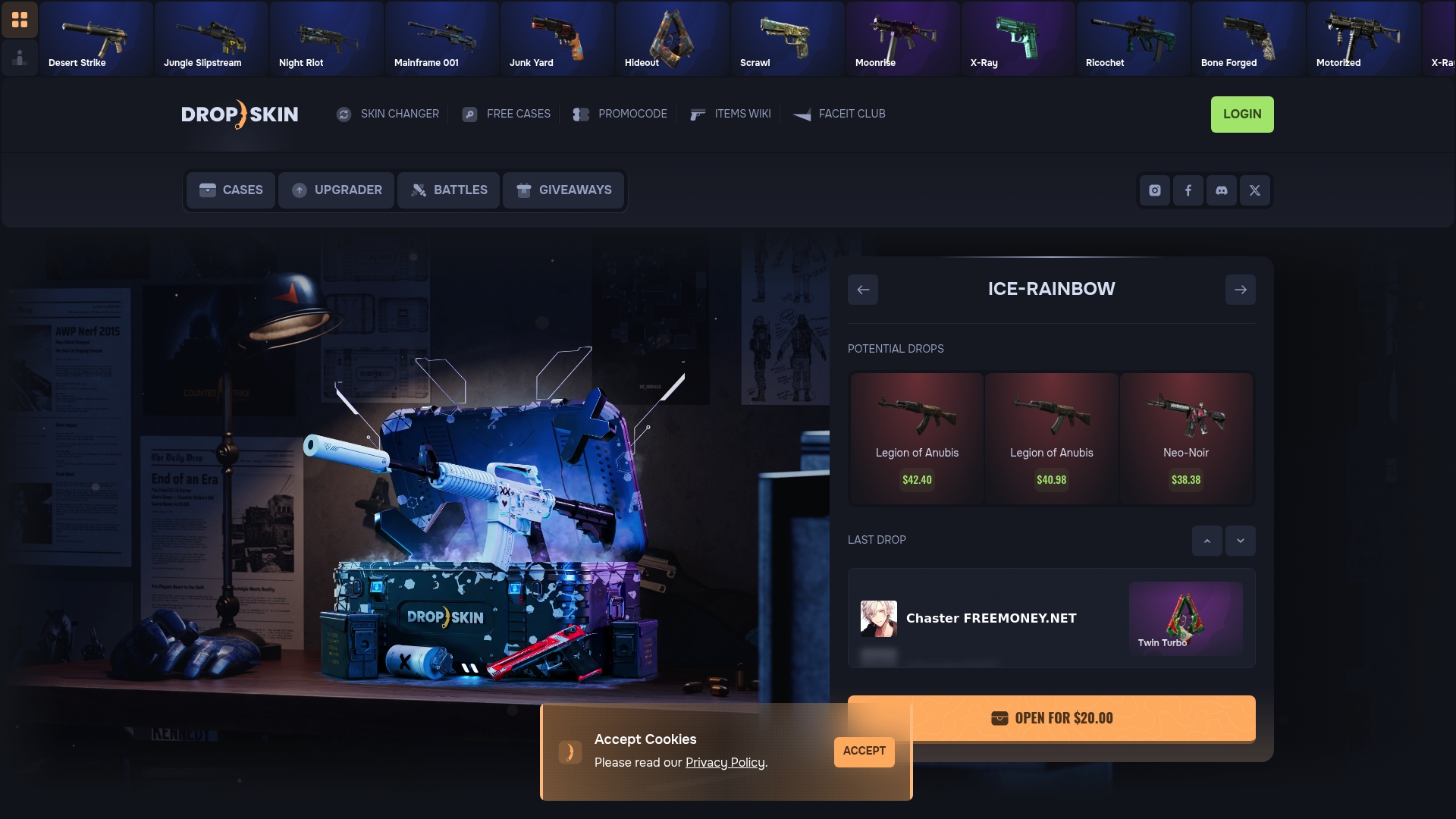
Dropskin's CS2 case openings and upgrades cover a wide range of 2026 skins, including discontinued case items and current-cycle releases. For collectors specifically targeting value growth, the skin upgrader tool lets you move up tiers efficiently. Giveaways and promo codes make the platform accessible whether you are building a serious collection or just looking to improve your loadout before the next major.
FAQ
What is the CS2 skin market worth in 2026?
The total CS2 skin market capitalization reached approximately $4.5 billion as of mid-2026, growing over 22% between January and May 2026.
Will CS:GO skins increase in value by 2026?
Discontinued case reds, rare Souvenir skins from 2015 to 2018 Majors, and high-demand knife patterns are all projected to appreciate, with returns ranging from 10 to 30% annually depending on category.
What are the biggest risks in CS:GO skin investment in 2026?
Valve's policy changes remain the top risk, capable of moving prices 20 to 40% within days. Illiquid high-tier skins and new case skins bought at launch also carry significant downside.
How do float values affect CS2 skin prices in 2026?
Sub-0.01 float Factory New skins now command premiums of 40 to 60% over standard float equivalents, up from 15 to 25% in 2023, adding 8 to 12% to annual appreciation rates.
What is the best strategy for CS2 skin investing in 2026?
Prioritize mechanical scarcity through discontinued cases and fixed-supply Souvenir skins, maintain liquidity across tiers, and buy new case skins after the 90-day correction window rather than at launch.