
TL;DR:
- CS:GO and CS2 skin values rely on scarcity from discontinued cases, float precision, patterns, and demand-driven premiums. External updates and platform liquidity significantly impact prices, emphasizing patience and strategic storage for long-term gains. Dropskin offers tools for active trading and upgrading, helping collectors capitalize on these layered market dynamics.
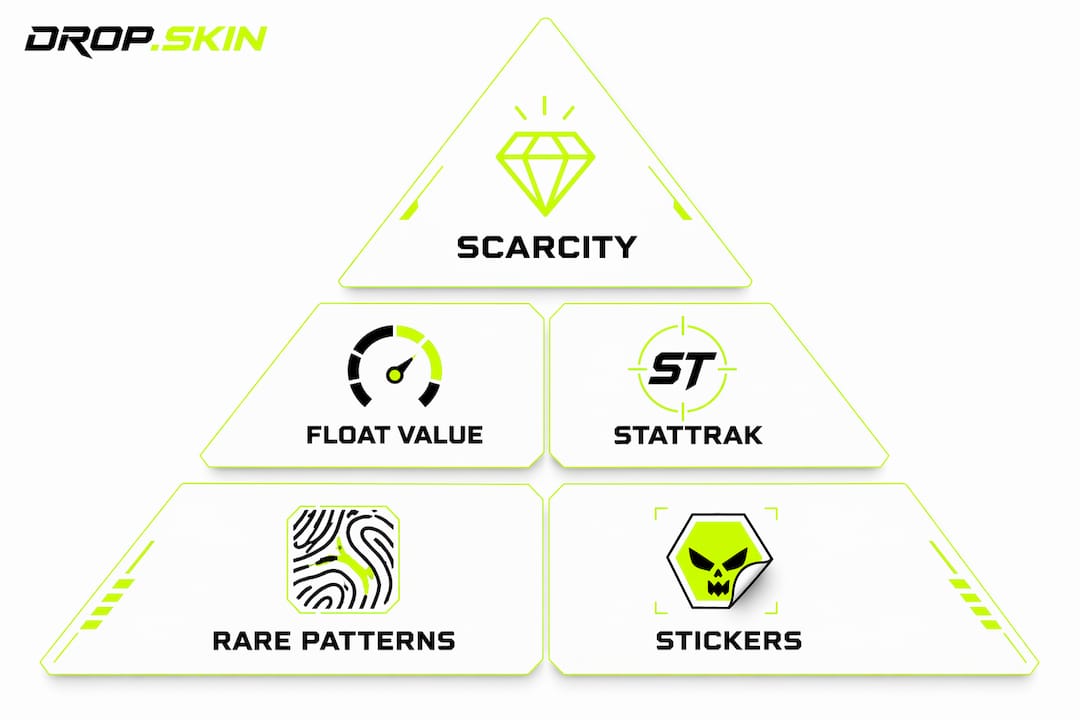
CS:GO and CS2 skins gain value through a combination of fixed supply scarcity, rarity attributes like float values and special patterns, and shifting player demand that creates price premiums across the market. Understanding how csgo skins gain value means looking beyond surface-level rarity tiers and into the precise mechanics that separate a $50 skin from a $5,000 one. The AK-47 Fire Serpent, the Karambit Case Hardened Blue Gem, and Katowice 2014 sticker-adorned rifles all follow the same underlying logic: scarcity multiplied by demand equals price. This guide breaks down every layer of that equation using 2026 market data.
How supply scarcity drives CS:GO skin value over time
Supply scarcity is the single most reliable engine behind long-term skin price appreciation. When Valve discontinues a case, no new copies of its skins enter the market. Every skin that gets deleted, traded away, or locked in an inactive account permanently reduces the circulating supply. That fixed ceiling is why skins from discontinued cases appreciate at 18 to 35% annually on average.
The AK-47 Fire Serpent is the clearest proof of this mechanism. Dropped exclusively from the discontinued Operation Bravo case, the Field-Tested version rose approximately 75% in value from early 2023 to early 2026. That appreciation did not come from a viral moment or a streamer showcase. It came from a shrinking pool of available copies meeting a steady base of demand from collectors and traders who recognized the pattern early.
Trade hold policies and player hoarding accelerate this contraction. Steam's seven-day trade hold discourages frequent selling, which keeps more skins off the market at any given time. Serious collectors who identify a skin as a long-term hold actively remove it from circulation, tightening supply further. The result is a self-reinforcing cycle where perceived scarcity increases price, which encourages more hoarding, which increases scarcity again.
Understanding skin value fluctuation means recognizing that supply contraction is the foundation everything else builds on. Float value premiums, sticker bonuses, and StatTrak multipliers all matter more when the base skin is already scarce. A rare pattern on a common skin from an active case is worth far less than the same pattern on a skin from a case Valve stopped dropping three years ago.
| Supply factor | Effect on price |
|---|---|
| Case discontinuation | Caps new supply, drives annual appreciation of 18 to 35% |
| Player hoarding | Reduces circulating supply below total existing supply |
| Steam trade holds | Slows market velocity, keeping more skins off active listings |
| Account inactivity | Permanently removes skins from tradeable supply |
Pro Tip: Check a case's status on the CS2 in-game store before buying skins from it. If the case is still actively dropping from matches, supply is not yet capped and long-term appreciation is far less predictable.
What is float value and why does it affect skin price?
Float value is a hidden decimal number assigned to every skin at the moment it drops, ranging from 0.00 to 1.00, and it controls exactly how worn or pristine the skin looks in-game. The wear tier labels (Factory New, Minimal Wear, Field-Tested, Well-Worn, Battle-Scarred) are just broad brackets. The actual visual quality within each bracket is determined by the precise float. Two Factory New skins can look noticeably different from each other if one has a float of 0.001 and the other sits at 0.065.
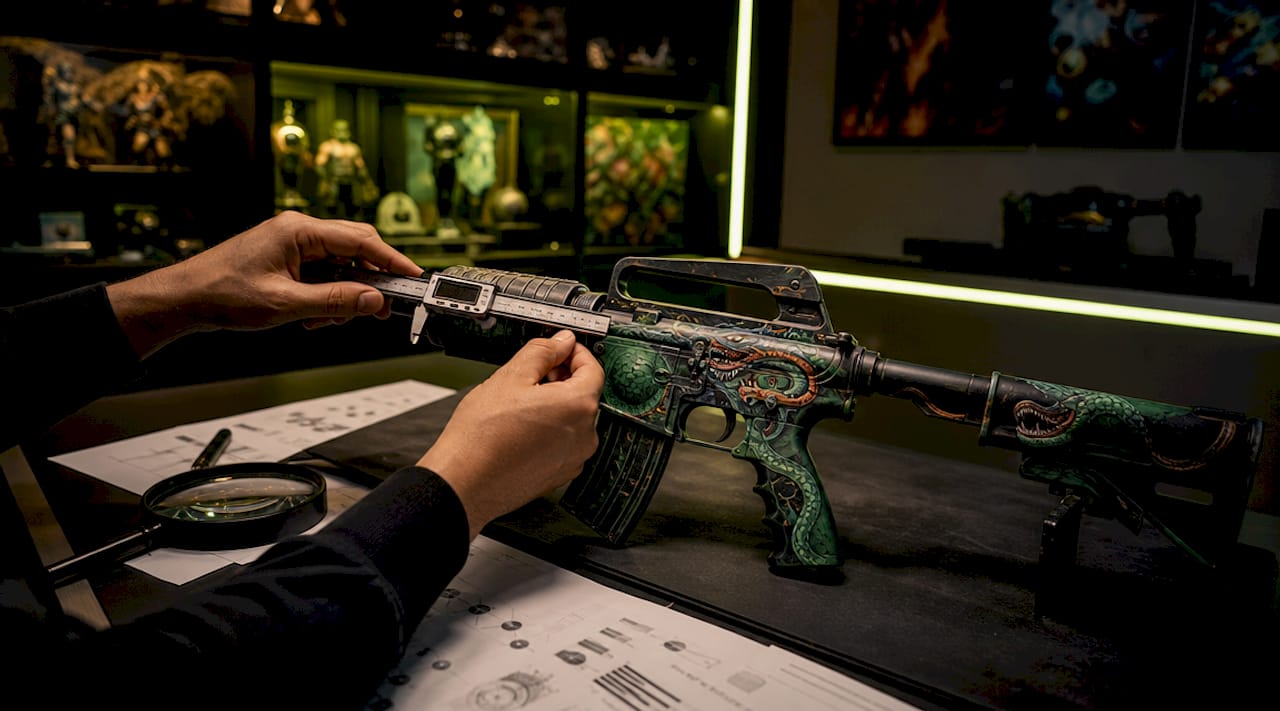
The market prices this difference aggressively. Factory New skins below 0.01 float command 40 to 60% price premiums over those near the 0.06 boundary, a significant expansion from the 15 to 25% premiums seen in 2023. That shift reflects a maturing collector base that now understands float granularity and pays accordingly. For high-demand skins like the M4A4 Howl or the Butterfly Knife Fade, a sub-0.01 float can mean a price difference of hundreds of dollars on what appears to be the same item.
The practical implication for buyers is that you should always check float before purchasing, not just the wear tier label. Tools like CSFloat and third-party market filters let you sort listings by exact float value. Paying the Factory New price for a skin sitting at 0.065 float when a 0.003 float version exists at a modest premium is a common mistake that costs collectors real money when they go to resell.
Pro Tip: When evaluating skin rarity and price, treat float value as a sub-tier within every wear category. A 0.14 Minimal Wear skin and a 0.15 Field-Tested skin are technically in different tiers but may look nearly identical. The float number is the truth; the label is just a shortcut.
| Wear tier | Float range | Premium for low-end float |
|---|---|---|
| Factory New | 0.00 to 0.07 | 40 to 60% over high-end FN |
| Minimal Wear | 0.07 to 0.15 | 15 to 30% for sub-0.08 floats |
| Field-Tested | 0.15 to 0.38 | Moderate, varies by skin design |
| Well-Worn | 0.38 to 0.45 | Minimal premium, low collector interest |
| Battle-Scarred | 0.45 to 1.00 | Rare "max float" premiums on specific skins |
How StatTrak and rare patterns multiply skin value
StatTrak is a factory-installed kill counter that tracks confirmed kills with the weapon, and it adds a measurable price premium to every skin that carries it. StatTrak adds 15 to 40% for common skins and up to 50 to 100% for prized knives and rifles. A StatTrak AK-47 Asiimov in Field-Tested condition typically sells for 1.4 to 1.6 times the price of its non-StatTrak equivalent. The premium reflects both scarcity (StatTrak versions drop less frequently) and the psychological appeal of a personalized, trackable history.
Rare visual patterns operate on a different level entirely. Some skins use procedurally generated textures where the exact placement of colors creates dramatically different appearances across individual copies. Certain rare patterns like Blue Gems on the Karambit Case Hardened or Phase 4 (Ruby) and Phase 2 (Sapphire) Doppler knives command multiples of the base skin price, sometimes several hundred percent above the standard version. A Karambit Case Hardened with a high Blue Gem pattern index can sell for tens of thousands of dollars while a standard copy of the same knife sits at a fraction of that price.
Here is what drives pattern-based premiums in practice:
- Pattern index: Each skin has a seed number from 0 to 999 that determines texture placement. Specific seeds produce the most desirable visual outcomes and are tracked in community databases.
- Blue Gem percentage: For Case Hardened skins, the percentage of blue coverage on the blade or body is the primary value driver. Higher blue coverage means exponentially higher price.
- Doppler phases: Doppler knives have four phases plus Ruby and Sapphire variants. Phase 4 (Ruby) and the full-blue Sapphire are the rarest and most expensive, with Black Pearl also commanding a significant premium.
- Verification risk: Pattern identification requires cross-referencing the pattern index against community-maintained databases. Misidentified patterns are a real risk when buying from less reputable sources.
StatTrak and pattern premiums stack with float value premiums. A low-float, StatTrak, high-pattern-index knife represents the ceiling of what the market will pay for a single CS2 item.
How stickers, player demand, and Valve updates shape prices
Stickers applied to a skin can add substantial value, but only under specific conditions. Katowice 2014 Holo Titan stickers in prime condition can add thousands of dollars to a skin's market price, and a four-sticker application of matching Katowice holos on a top-tier rifle can push total value into five or six figures. The key variable is the sticker's own rarity combined with its condition on the skin. Scraped stickers lose value rapidly, and most stickers recover only 3 to 7% of their standalone market value once applied.
Player demand creates shorter-term price spikes that can be just as significant as structural scarcity. The sequence below describes how demand-driven price movements typically unfold:
- A top-tier streamer or pro player is seen using a specific skin in a high-viewership match or stream.
- Viewer demand spikes within hours, driving up listings on the Steam Community Market and third-party platforms like Buff163 and Skinport.
- Speculators buy up available stock anticipating further price increases, reducing supply and accelerating the spike.
- Prices stabilize or correct once the initial demand wave passes, often settling above the pre-spike baseline if the skin gains lasting cultural recognition.
- The skin enters a new price floor, which becomes the reference point for future appreciation.
Valve updates represent the most unpredictable force in the market. The October 2025 update caused a 40%+ drop in glove skin indices due to supply shifts from trade-up contract changes. Speculative valuations collapsed almost overnight. This illustrates a core risk: Valve updates are exogenous shocks that can override supply-demand fundamentals entirely. Platform fees also affect net returns. Steam Market fees total approximately 15%, with proceeds locked to Steam wallet funds, while third-party platforms like Buff163 and Skinport offer real-money payouts at discounts of 25 to 50% compared to Steam prices.
Key takeaways
CS:GO and CS2 skin value is determined by layered scarcity mechanics, where supply contraction from discontinued cases forms the foundation and float value, patterns, StatTrak, and stickers each add compounding premiums on top.
| Point | Details |
|---|---|
| Supply scarcity is the foundation | Discontinued cases create fixed supply ceilings, driving 18 to 35% annual appreciation. |
| Float value commands real premiums | Sub-0.01 Factory New floats carry 40 to 60% price premiums over high-end floats in the same tier. |
| Patterns and StatTrak multiply value | Rare patterns like Blue Gems and StatTrak versions can push prices several hundred percent above base. |
| Stickers add value selectively | Only ultra-rare stickers like Katowice 2014 holos meaningfully increase a skin's market price. |
| Valve updates create sudden corrections | The October 2025 glove correction proves that external updates can override all other value drivers instantly. |
The part of this market most collectors learn too late
After watching the CS2 skin market closely, the single most underestimated factor is platform liquidity. Most collectors focus entirely on what a skin is worth and almost never think about where they can actually sell it and at what net return. The Steam Community Market price is a reference point, not a cashout number. Real cashout value on third-party markets varies heavily based on float, stickers, and patterns, and the 15% Steam fee means you are always working with a smaller margin than the listed price suggests.
The other thing worth saying plainly: not every skin deserves to be treated as an investment. Collectors who understand the difference between playskins and investment pieces make better decisions because they are not emotionally attached to the wrong items. A skin you play with every day will accumulate wear in screenshots and trade listings, and that affects perception even if the float technically stays the same. Keep your investment-grade skins in storage and your playskins separate.
Patience is the actual edge in this market. The collectors who bought AK-47 Fire Serpents in 2023 and held through two years of flat trading are the ones sitting on 75% gains now. The people who panic-sold gloves during the October 2025 correction locked in losses that the market partially recovered from within two quarters. Knowing what affects skin value is only useful if you have the patience to let those factors play out.
— Dropskin
Start upgrading your skins on Dropskin
Understanding skin value is the first step. Acting on it is where the real opportunity starts. Dropskin gives you direct tools to put that knowledge to work, whether you want to open cases targeting specific rarity tiers or use the skin upgrader to trade up lower-value skins toward higher-tier pieces with better float and pattern potential.
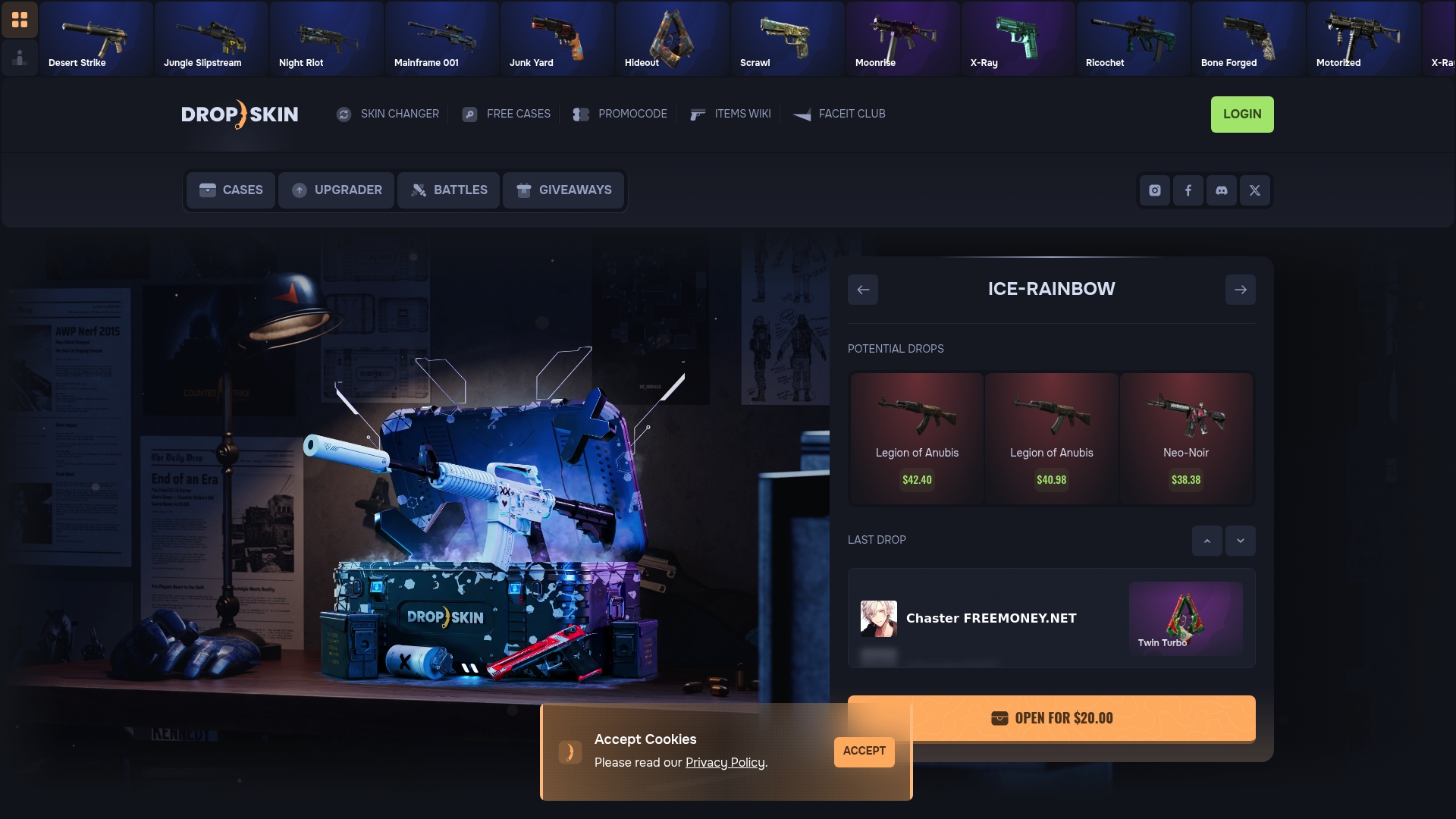
The platform is built for collectors and traders who want more than passive browsing. With case openings, skin battles, and upgrade mechanics all in one place, Dropskin lets you engage with the market actively. Giveaways and promo codes also give you ways to build your inventory without always paying full market price. If you are serious about CS2 skins in 2026, this is where to start.
FAQ
What makes a CS:GO skin increase in value?
CS:GO skins increase in value primarily through supply scarcity from discontinued cases, low float values, rare patterns, StatTrak versions, and high-demand sticker applications. Skins from discontinued cases appreciate at 18 to 35% annually on average.
How does float value affect a skin's price?
Float value is a decimal from 0.00 to 1.00 that controls a skin's visual wear, and Factory New skins below 0.01 float command 40 to 60% premiums over those near the 0.06 boundary. Always check the exact float before purchasing, not just the wear tier label.
Do stickers always add value to a skin?
Most stickers recover only 3 to 7% of their standalone value once applied to a skin. The exception is ultra-rare stickers like Katowice 2014 Holo Titan, which can add thousands of dollars to a skin's market price in prime condition.
How do Valve updates affect CS2 skin prices?
Valve updates can cause rapid and severe market corrections that override supply-demand fundamentals. The October 2025 trade-up update caused a 40%+ drop in glove skin indices, demonstrating that speculative segments are especially vulnerable to policy changes.
Where is the best place to sell CS2 skins for real money?
Third-party platforms like Buff163 and Skinport offer real-money payouts but typically price items at 25 to 50% below Steam Community Market prices. Steam itself charges approximately 15% in fees and locks proceeds to Steam wallet funds, limiting cash flexibility.