
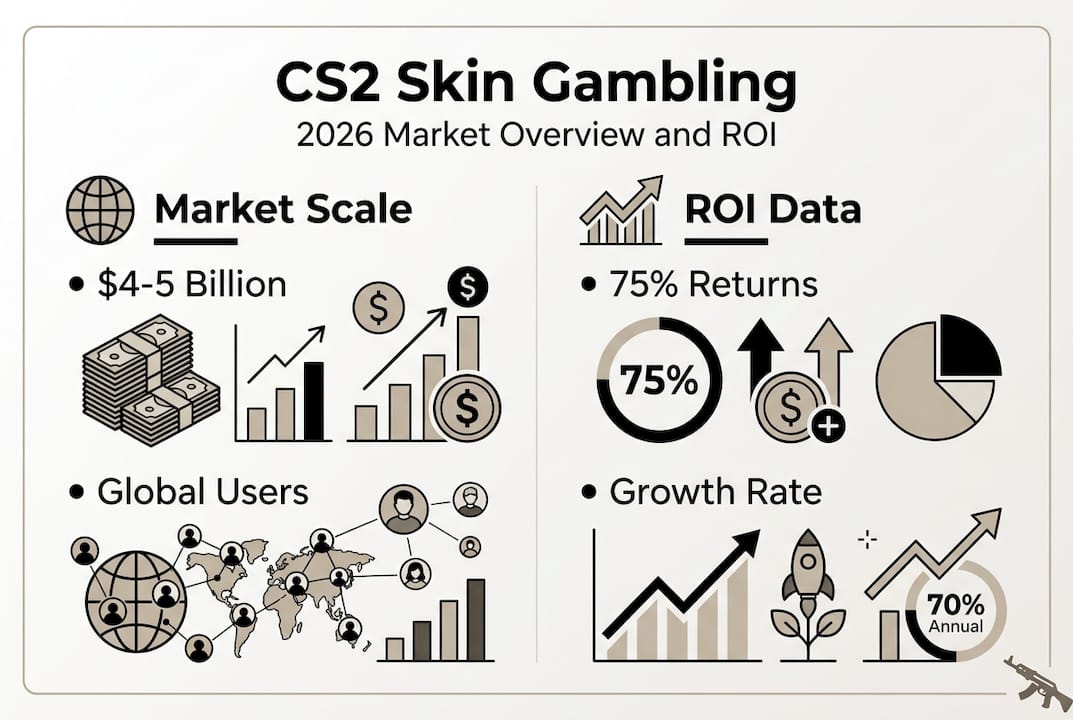
Counter-Strike 2 skins can sell for thousands of dollars, yet most players don't realize they're sitting on tradable assets worth billions collectively. The CS2 skin market reached $4-5 billion in valuation by 2025, creating a thriving ecosystem where skins function as currency for gambling, trading, and speculation. Skin gambling operates in a legal gray area that confuses both new and experienced players, leading to costly mistakes and missed opportunities. This guide breaks down exactly what CS2 skin gambling is, how the market works, the risks you face, and proven strategies to participate safely while maximizing your returns in 2026.
Table of Contents
- Key takeaways
- Understanding CS2 skin gambling: what it is and why it matters
- Legal status and risks of CS2 skin gambling
- Choosing reputable CS2 skin gambling platforms and betting strategies
- The future of CS2 skin gambling and market trends
- Explore premium CS2 skin gambling and upgrading at DROP.SKIN
- What is CS2 skin gambling FAQ
Key Takeaways
| Point | Details |
|---|---|
| Market size and scope | The CS2 skin market reached about 4 to 5 billion in valuation by 2025, with daily trading volumes over 50 million across platforms and skins used for gambling, trading, and collecting. |
| Cash convertibility | Skins can be converted to cash through the Steam Market and third party platforms, with winnings withdrawable as skins back into the inventory. |
| Legal status and risk | Skin gambling operates in a legal gray area with enforcement varying by jurisdiction, making unlicensed sites vulnerable to shutdowns and legal action. |
| Safe participation strategies | To participate safely, check market values on multiple platforms, use reputable sites, understand local laws, and be aware of scams and gambling related harm. |
Understanding CS2 skin gambling: what it is and why it matters
CS2 skins are cosmetic items that change weapon appearances without affecting gameplay mechanics. Players acquire them through case openings, drops, or direct purchases. What makes these digital items remarkable is their convertibility to real money through the Steam Market and third-party trading platforms. Rare skins command prices exceeding $10,000, with the Dragon Lore AWP and Karambit Case Hardened patterns leading premium categories.
Skin gambling transforms these cosmetic items into betting chips. Instead of depositing cash directly, you wager your skin inventory on various outcomes. Common formats include:
- Roulette-style games where skins bet on color outcomes
- Crash games with multiplier-based payouts
- Case opening simulators with randomized rewards
- Match betting on professional CS2 tournaments
- Skin upgrade systems that attempt to trade lower-value items for premium alternatives
The gambling ecosystem emerged because Valve's Steam platform never intended skins to function as currency. This created opportunities for third-party sites to build betting markets around skin values. Players deposit skins, receive site credits based on market prices, then gamble those credits across different games. Winnings convert back to skins that you withdraw to your Steam inventory.
Market statistics reveal the scale of this economy. The total CS2 skin market reached approximately $4-5 billion in valuation by 2025, with daily trading volumes exceeding $50 million across all platforms. Professional traders treat skins as investment vehicles, tracking price fluctuations and market trends like stock portfolios. The appeal extends beyond pure gambling. Collectors seek rare patterns and low-float values, while casual players enjoy the entertainment value of potentially upgrading their inventory through strategic betting.
Pro Tip: Before gambling any skin, check its actual market value on multiple platforms. Site valuations often differ from Steam Market prices by 10-20%, affecting your real returns.
The CS2 skins ecosystem creates unique dynamics where entertainment, collecting, and speculation intersect. Understanding these fundamentals helps you recognize both opportunities and pitfalls in skin gambling markets.
Legal status and risks of CS2 skin gambling
Skin gambling occupies murky legal territory because skins technically aren't currency according to Valve's terms of service. However, their convertibility to cash makes them function as money in practice. Regulatory bodies treat skin gambling as illegal in jurisdictions with strict gambling laws when skins can be exchanged for real-world value. The United Kingdom, Australia, and several US states classify skin betting as unlicensed gambling, subjecting operators to legal action.

Valve's official stance prohibits using Steam accounts for commercial gambling. The company issued cease-and-desist letters to major skin gambling sites in 2016, forcing many to shut down or relocate to less regulated jurisdictions. Despite these actions, hundreds of skin gambling platforms continue operating by avoiding direct Steam API integration or establishing operations in countries with minimal oversight.
The risks extend far beyond legal concerns:
- Unlicensed sites operate without regulatory oversight, offering no protection against rigged games or withheld withdrawals
- Age verification remains virtually nonexistent, exposing minors to gambling at rates significantly higher than traditional casinos
- Exit scams occur when operators suddenly close sites and disappear with user deposits
- Phishing attempts target Steam accounts to steal valuable skin inventories
- Problem gambling develops faster with skins because players don't perceive them as real money
Research indicates youth exposure to skin gambling correlates with higher problem gambling rates later in life. The gamification elements, combined with the perception that skins aren't "real" gambling, creates psychological conditions that encourage excessive risk-taking. Players who start gambling with skins before age 18 show addiction indicators at rates 3-4 times higher than those who begin with traditional gambling as adults.
Valve maintains it doesn't endorse or profit from third-party gambling sites. The company's terms explicitly forbid commercial use of Steam accounts and skins for betting purposes. When platforms violate these terms, Valve can ban associated accounts and revoke API access. However, enforcement remains inconsistent, and new sites constantly emerge to replace banned operators.
"The convertibility of skins to cash in secondary markets transforms them into de facto currency, bringing skin gambling under the same regulatory frameworks as traditional online gambling in most developed jurisdictions."
Protecting yourself requires understanding that skin gambling sites rarely hold legitimate gambling licenses. Even sites claiming regulation often operate under jurisdictions with minimal enforcement. The skin changer and trading features on legitimate platforms offer safer alternatives to high-risk gambling sites, allowing you to modify and trade skins without the addiction potential of betting games.
Choosing reputable CS2 skin gambling platforms and betting strategies
Selecting trustworthy platforms separates successful skin gamblers from those who lose everything to scams. Start by verifying these critical factors:
- Withdrawal history: Check community forums and review sites for consistent withdrawal reports spanning at least six months
- Liquidity depth: Platforms with high daily trading volumes ensure you can cash out winnings without delays
- Transparent odds: Legitimate sites publish provably fair algorithms allowing verification of game outcomes
- Customer support responsiveness: Test support channels before depositing valuable skins
- Coin conversion rates: Compare how sites value your skins against Steam Market prices
Platform rankings by liquidity and speed reveal significant differences in user experience. Top-tier sites process withdrawals within 24 hours and offer coin rates within 5% of market value. Lower-tier platforms may take weeks to process requests and undervalue skins by 20-30%.
| Platform Feature | Premium Sites | Budget Sites | Red Flags |
|---|---|---|---|
| Withdrawal time | Under 24 hours | 3-7 days | Over 2 weeks |
| Coin conversion | 95-100% market value | 70-85% market value | Under 70% |
| Trading fees | 2-5% | 5-10% | Over 10% |
| Liquidity | $500K+ daily | $50K-500K daily | Under $50K |
| Support response | Under 2 hours | 12-24 hours | No response |
Bankroll management determines long-term success more than any betting system. Professional skin gamblers follow strict rules that casual players ignore. The fundamental principle: never risk more than 1-5% of your total skin inventory on a single bet. If your inventory totals $1,000 in skins, individual bets should range from $10 to $50 maximum. This approach survives losing streaks that would bankrupt aggressive bettors.
Match betting strategies incorporate team performance data, map statistics, and recent form. Analyzing gameplay patterns and historical matchups provides edges over casual bettors who rely on team names alone. Track these metrics:
- Team map win rates over the last 30 days
- Head-to-head records between specific opponents
- Player roster changes and their performance impacts
- Tournament stage implications affecting team motivation
Pro Tip: Use the CS2 skin upgrader to consolidate multiple low-value skins into fewer high-value items before gambling. This simplifies bankroll tracking and reduces the psychological temptation to "just bet one more cheap skin."
Advanced bettors incorporate AI trading insights that analyze thousands of historical matches and market movements. These tools identify value bets where odds don't accurately reflect actual win probabilities. AI-driven approaches outperform traditional strategies by recognizing patterns human analysts miss, though they require technical knowledge to implement effectively.
The most critical strategy remains emotional discipline. Set daily loss limits before starting any session. When you hit that limit, stop completely regardless of how confident you feel about the next bet. Chasing losses destroys more bankrolls than bad betting systems ever could.
The future of CS2 skin gambling and market trends
The skin gambling landscape is evolving rapidly as technology and regulation reshape how players interact with these markets. AI trading tools represent the most significant innovation, with backtesting showing 75% better returns compared to traditional buy-and-hold strategies over 12-month periods. These systems analyze price patterns, tournament schedules, and market sentiment to execute trades at optimal moments.
Market maturity brings increased sophistication. Early skin gambling relied on luck-based games with house edges exceeding 10%. Modern platforms compete on transparency, speed, and lower fees. The benchmark for premium services now includes:
- Transaction fees under 3%
- Withdrawal processing within 12 hours
- Provably fair algorithms with public verification
- Insurance funds protecting against platform insolvency
- Mobile-optimized interfaces for trading on the go
Regulatory pressure continues mounting as governments recognize skin gambling's scale and youth appeal. The European Union is considering framework legislation that would require age verification and gambling licenses for any platform facilitating skin betting. If implemented, this could force hundreds of sites to either obtain expensive licenses or cease operations entirely. Some operators are proactively seeking licenses in jurisdictions like Malta and Curacao to establish legitimacy before regulations tighten further.
User behavior is shifting toward risk management and portfolio diversification. Experienced traders now allocate skin inventories across multiple asset classes: stable blue-chip skins for value preservation, volatile items for speculation, and gambling allocations limited to 10-15% of total holdings. This mirrors traditional investment strategies adapted for the unique characteristics of skin markets.
"AI algorithms can process market data at speeds impossible for human traders, identifying arbitrage opportunities that exist for only minutes before the market corrects. This technological edge will increasingly separate profitable traders from casual gamblers."
The integration of blockchain technology may revolutionize skin ownership and trading. Several projects are developing NFT-based skin systems that operate independently of Steam, offering true ownership and cross-game compatibility. If successful, these could fragment the current centralized market while creating new gambling opportunities around blockchain-based items.
Community-driven platforms are emerging as alternatives to corporate-owned gambling sites. These decentralized autonomous organizations allow users to participate in house profits while maintaining transparent, community-verified fairness systems. Early adoption remains limited, but the model addresses trust issues that plague traditional skin gambling platforms.
Staying informed about CS2 skin trading developments helps you adapt strategies as the market evolves. Following major tournament schedules, tracking Valve policy changes, and monitoring regulatory news provides the context needed to make informed decisions about when to bet, trade, or hold your skin investments.
Explore premium CS2 skin gambling and upgrading at DROP.SKIN
Navigating skin gambling safely requires reliable tools and transparent platforms. DROP.SKIN provides the infrastructure you need to open cases, upgrade skins, and participate in battles without the risks associated with unlicensed gambling sites. The platform emphasizes fast withdrawals and fair odds, addressing the primary concerns educated skin gamblers prioritize when choosing where to invest their inventories.
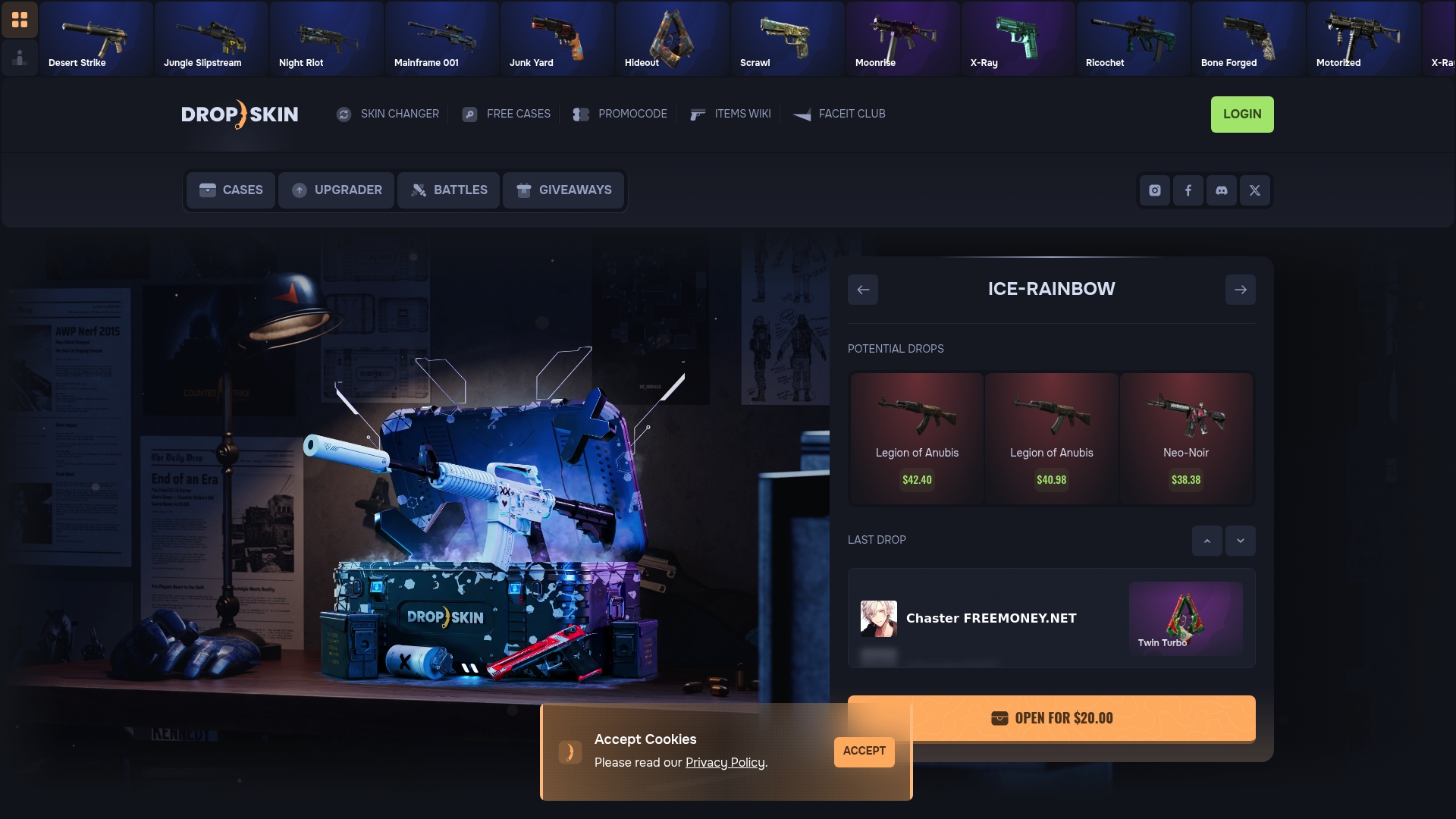
The upgrader feature lets you transform multiple low-value skins into premium items, consolidating your inventory before gambling sessions. This approach maximizes your betting power while maintaining bankroll discipline. When you're ready to test strategies discussed in this guide, DROP.SKIN's case opening system offers transparent odds and immediate access to your winnings. The platform's battle system adds competitive elements where your skill in selecting matchups influences outcomes beyond pure luck.
Pro Tip: Start with the skin upgrader tool to practice risk management before committing to higher-stakes gambling. Understanding how value fluctuations affect your inventory builds the foundation for smarter betting decisions.
What is CS2 skin gambling FAQ
How does CS2 skin gambling differ from regular online gambling?
Skin gambling uses virtual items as currency instead of direct cash deposits, operating in legal gray areas because skins technically aren't money according to platform terms. However, their convertibility to real currency through trading makes them function identically to cash in practice, with the same addiction risks and financial consequences.
What's the safest way to start CS2 skin gambling in 2026?
Begin with low-value skins you can afford to lose completely, never exceeding 1-5% of your inventory per bet. Research platform reputations thoroughly through community forums, verify withdrawal histories, and test customer support before depositing valuable items. Understanding why skins hold value helps you make informed decisions about which items to risk.
Is skin gambling legal in my country?
Legality varies dramatically by jurisdiction, with many countries classifying it as unlicensed gambling subject to existing gambling laws. Check your local regulations specifically, as penalties can include account bans and legal action. Even where not explicitly illegal, participating in unlicensed gambling offers zero consumer protections if disputes arise.
How can I avoid CS2 skin gambling scams?
Verify sites through multiple independent review sources, never click links from unsolicited messages, enable Steam Guard authentication, and avoid platforms offering unrealistic odds or guaranteed wins. Legitimate gambling always carries house edges. If withdrawal times exceed 48 hours consistently or support stops responding, withdraw remaining funds immediately.
Can CS2 skins maintain value outside of gambling?
Absolutely. Many players collect rare patterns and low-float items purely for aesthetic enjoyment or investment purposes. Strategic acquisition of premium skins through trading and market timing often yields better returns than gambling, without the addiction risks or legal complications associated with betting sites.