
TL;DR:
- Item escrow is a payment protection system where a neutral third party holds funds until the seller delivers the item and the buyer confirms receipt. It reduces fraud risk, provides dispute mediation, and removes trust requirements in peer-to-peer digital trades, especially for high-value items. Success depends on precise agreements, active management, and understanding the difference between true escrow and internal platform holds.
Item escrow is a payment protection mechanism where a neutral third party holds a buyer's funds until the seller delivers the agreed item and the buyer confirms receipt. For gamers and collectors trading CS2 skins, rare in-game items, or digital collectibles, understanding what is item escrow can be the difference between a clean trade and a costly scam. The peer-to-peer digital item market carries real financial risk. Escrow removes the need to trust a stranger by making trust irrelevant. Platforms like Dropskin build this protection directly into their trading infrastructure, giving both sides a governed checkpoint before any money moves.
What is item escrow and how does it work step by step?
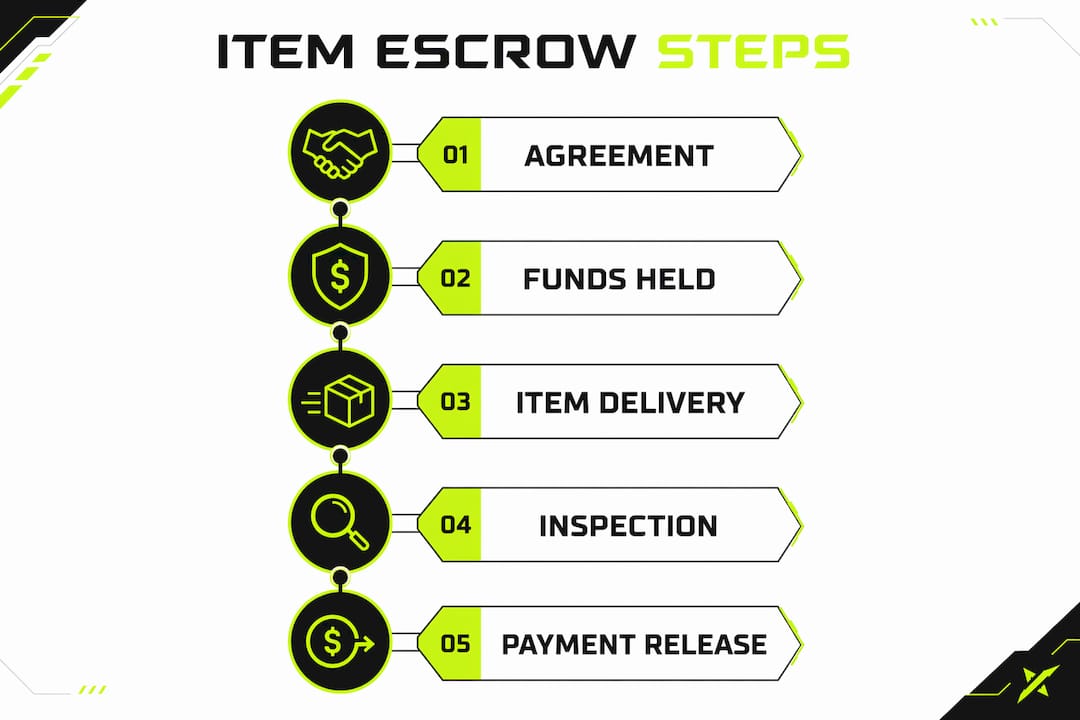
The escrow process follows a consistent 6-step lifecycle: agreement, deposit, delivery, inspection, release, and dispute resolution. Each checkpoint prevents the next phase from starting until verification is complete. That structure is what makes escrow reliable rather than just a payment delay.
Here is how each stage plays out in a typical gaming item trade:
- Agreement. Buyer and seller agree on the item, price, condition, and inspection period. This agreement forms the escrow contract. Vague terms at this stage cause most disputes later.
- Buyer deposit. The buyer sends funds to the escrow agent or platform. The seller cannot access the money yet. This removes the seller's ability to take payment and disappear.
- Seller delivery. The seller transfers the item, whether a CS2 skin, a rare weapon finish, or a digital collectible. The escrow agent logs the delivery as a transaction checkpoint.
- Buyer inspection. The buyer reviews the item against the agreed description. The inspection window typically ranges from 1 to 30 days. Acting within this window is the buyer's responsibility, not the platform's.
- Fund release. If the buyer approves, the escrow agent releases payment to the seller. Domestic wire transfers settle within hours, while ACH transfers take 1–2 business days.
- Dispute resolution. If the buyer disputes the delivery, the escrow agent reviews the documented conditions. Neither side receives funds until the dispute is resolved.
Pro Tip: Screenshot or record every agreed item condition before the trade starts. If a dispute opens, the escrow agent can only act on what is documented in the original agreement.
The escrow agent's role is strictly mechanical. They confirm whether documented conditions are met. They do not judge item quality or resolve disagreements that the original contract did not anticipate. Clear terms at step one determine how well every later step works.

Why item escrow protects gamers and collectors
Escrow transforms risky peer-to-peer exchanges into governed transactions where neither side holds an advantage. Industry experts call this a "third-party buffer," and in digital item markets, that buffer is the only structural protection available between two strangers.
The core benefits for gamers and collectors include:
- Fraud prevention. The seller cannot receive payment before delivering the item. The buyer cannot reclaim funds after delivery without a documented dispute. Neither side can run with the money or the item.
- Neutral dispute mediation. When a disagreement arises, the escrow agent holds funds during the review. Platforms can suspend disbursement pending investigations and return funds if the seller fails conditions. That suspension is what separates escrow from a simple payment transfer.
- Reduced counterparty risk. You do not need to verify a stranger's reputation when escrow governs the trade. The mechanism removes the trust requirement entirely.
- Fee transparency. Online escrow services typically charge fees between 1% and 5% of the transaction, decreasing as deal size increases. Knowing the fee upfront prevents surprises at settlement.
"Escrow is essential in digital trades to create a trustless transaction environment where neither party risks unilateral loss. The mechanism does not require good faith. It enforces good outcomes."
For collectors trading high-value CS2 skins, that enforcement matters more than any reputation system. A seller with a strong profile can still scam. An escrow agreement cannot be bypassed by charm or history.
Common misconceptions about item escrow in digital trades
Escrow does not guarantee item quality. This is the most common misunderstanding among new traders. Escrow agents cannot intervene beyond contractually defined conditions. If the contract says "AK-47 skin, Factory New condition" and the seller delivers a skin labeled Factory New but visually worn, the escrow agent cannot make that call without explicit quality criteria in the original agreement.
The escrow agreement is the critical legal document. Vague instructions limit the escrow agent's ability to assist. The agent's role is to confirm documentation validity, not to arbitrate quality disputes that the contract never defined. Buyers who write precise item descriptions protect themselves. Buyers who write "CS2 knife skin, good condition" leave themselves exposed.
Inspection windows are the buyer's active responsibility. Expired inspection periods typically trigger automatic escrow release to the seller, regardless of buyer satisfaction. Missing the window hands payment to the seller by default. Many traders lose disputes not because they were wrong, but because they waited too long to file.
Pro Tip: Set a calendar reminder for the last day of your inspection window the moment the trade opens. Escrow systems do not send warnings before auto-releasing funds.
Escrow also does not verify item authenticity in the way a human expert would. Modern digital marketplaces often combine AI and automated verification but rely heavily on buyer confirmations. Automation reduces friction but does not replace the buyer's own review. Treat escrow as payment protection, not a quality guarantee.
True escrow vs. platform payment holds: what's the real difference?
Many digital marketplaces label internal payment holds as "escrow," but these often lack the legal neutrality, insurance, and dispute mediation features of licensed escrow services. Understanding this distinction directly affects how much protection you actually have.
| Feature | True legal escrow | Platform payment hold |
|---|---|---|
| Fund custody | Neutral licensed third party | Platform's own accounts |
| Legal protection | Governed by escrow law | Subject to platform terms only |
| Dispute mediation | Independent agent review | Platform's internal team |
| Insurance coverage | Often included | Rarely included |
| Neutrality | Contractually enforced | Platform decides outcomes |
True legal escrow requires a neutral third party holding funds under a formal escrow agreement. The agent has no financial stake in the outcome. Platform payment holds, by contrast, keep funds inside the marketplace's own system. The platform controls both the money and the dispute process. That is a conflict of interest, even when the platform acts in good faith.
For peer-to-peer skin trading in CS2, the distinction matters most in high-value transactions. A $20 trade carries manageable risk under a payment hold. A $500 rare knife trade deserves the full protections of a proper escrow arrangement.
Best practices for using item escrow services as a gamer or collector
Secure trades do not happen by accident. They result from clear preparation before the escrow opens and active management during the inspection window.
- Write precise item descriptions. Include float value, skin name, condition grade, and any stickers or wear patterns. Every detail you specify becomes a condition the escrow agent can verify.
- Agree on the inspection period upfront. Confirm the exact number of days in writing before the trade starts. Short windows favor sellers. Longer windows give buyers time to verify thoroughly.
- Choose reputable escrow providers. Understand whether the platform uses true legal escrow or an internal payment hold. Ask directly if the documentation does not specify. The answer changes your risk profile.
- Keep all communication records. Save chat logs, screenshots, and item condition images. If a dispute opens, documentation wins. Verbal agreements outside the platform carry no weight.
- Act immediately if something is wrong. Do not wait to see if an issue resolves itself. File the dispute the moment you identify a problem, well before the inspection window closes.
Pro Tip: For high-value CS2 skin trades, check the safe skin trading practices guide before opening any escrow. Preparation before the trade is worth more than any dispute process after it.
Escrow should be used alongside due diligence. Research the seller's trade history, verify item details independently, and confirm platform policies before committing funds. Escrow protects the payment. You still protect the decision.
Key Takeaways
Item escrow is a payment protection tool, not a quality guarantee. Its value depends entirely on how precisely the escrow agreement is written and how actively the buyer manages the inspection window.
| Point | Details |
|---|---|
| Core definition | Escrow holds buyer funds with a neutral party until seller conditions are confirmed met. |
| Inspection window | Buyers have 1–30 days to approve or dispute; expired windows auto-release funds to the seller. |
| Escrow vs. payment hold | True legal escrow offers neutral custody and dispute mediation; platform holds do not. |
| Contract precision | Vague escrow terms limit agent authority; detailed item descriptions protect both parties. |
| Fee structure | Escrow fees typically run 1%–5% of transaction value, decreasing at higher deal sizes. |
Dropskin's take on escrow in gaming markets
Escrow fills a real gap in digital item trading, and I have watched it become more relevant as CS2 skin values climb. The trust problem between strangers online is not a social problem. It is a structural one. Escrow solves it structurally, which is why it works even when reputation systems fail.
What concerns me most is how many traders misread escrow as a complete safety net. They assume the platform handles everything and stop paying attention during the inspection window. That is exactly when scams succeed. The escrow mechanism is sound. The human behavior around it is where trades fall apart.
The rise of automated verification in gaming marketplaces is genuinely useful, but automation increases confidence without always increasing accuracy. Buyers who rely entirely on platform AI to confirm item condition are taking on risk they do not realize they carry. Escrow protects your payment. You still have to protect your judgment.
The next evolution I expect to see is smarter dispute resolution tied to blockchain-verified item provenance. That would close the quality verification gap that current escrow agreements cannot address. Until then, precise contracts and active inspection remain the best tools available.
— Dropskin
Dropskin: secure CS2 skin trading with built-in protection
Dropskin builds transaction security directly into its CS2 skin trading platform, so you are not relying on a stranger's word when real money is on the line.
Whether you are opening CS2 cases, upgrading skins, or trading with other collectors, Dropskin's platform applies fund-holding and release mechanisms that protect both sides of every transaction. The process is transparent, the fees are clear, and the dispute pathway is defined before any trade opens. For gamers who want to grow their inventory without gambling on trust, Dropskin gives you the structure to trade with confidence. Check out what Dropskin's skin marketplace offers and see how secure trading actually feels.
FAQ
What is item escrow in simple terms?
Item escrow is a system where a neutral third party holds the buyer's payment until the seller delivers the agreed item and the buyer confirms it is correct. Neither side can access the funds until the conditions are met.
How does item escrow protect against scams?
Escrow prevents sellers from receiving payment before delivering the item and stops buyers from reclaiming funds after delivery without a documented dispute. That structure removes the opportunity for either party to run a simple scam.
What happens if I miss the inspection window?
Expired inspection windows typically trigger automatic fund release to the seller, regardless of whether the buyer is satisfied. Always file a dispute before the deadline, not after.
Is a platform payment hold the same as true escrow?
No. True legal escrow requires a neutral licensed third party, while platform payment holds keep funds inside the marketplace's own accounts. Platform holds lack independent dispute mediation and legal neutrality.
How much does item escrow cost?
Escrow fees typically range from 1% to 5% of the transaction value, with larger deals attracting lower percentage fees. Always confirm the fee structure before opening an escrow agreement.