TL;DR:
- CS:GO skins serve as social status symbols, collectibles, and emotional assets within the gaming community. Their value is driven by rarity, condition, community demand, and market dynamics influenced by community culture and esports. Most players view case openings as entertainment, with trading and collecting offering deeper psychological and economic engagement.
Few things in gaming generate as much genuine curiosity outside the player base as CS:GO skins. Ask someone who has never touched Counter-Strike why a digital gun texture sells for thousands of dollars, and you will get a skeptical stare. Yet understanding why CS:GO skins are popular requires looking beyond the game itself. These cosmetics, officially called "weapon finishes" by Valve, function as social status markers, speculative digital assets, and emotional experiences all at once. This article unpacks the cultural, psychological, and economic forces behind one of gaming's most fascinating phenomena.
Key Takeaways
| Point | Details |
|---|---|
| Skins signal social status | Rare weapon finishes display wealth, dedication, and taste to every player in the lobby. |
| Psychology drives spending | Case openings trigger dopamine-fueled anticipation loops that encourage repeated purchases. |
| Rarity creates real value | Discontinued cases and micro-variations in float create price dynamics comparable to physical collectibles. |
| Community amplifies demand | Streamers and pro players can spike a skin's value 30 to 50% in a single day. |
| The market is large and liquid | Steam Marketplace daily turnover rebounded to approximately $5.2 million in April 2026, confirming sustained demand. |
Why CS:GO skins are popular: the status signal you cannot hide
The most direct answer to why people obsess over weapon finishes comes down to visibility. Every skin you equip is on display during weapon inspections, kill cams, and inventory showcases. There is no private ownership here. Your loadout broadcasts your identity to every opponent and teammate in real time.
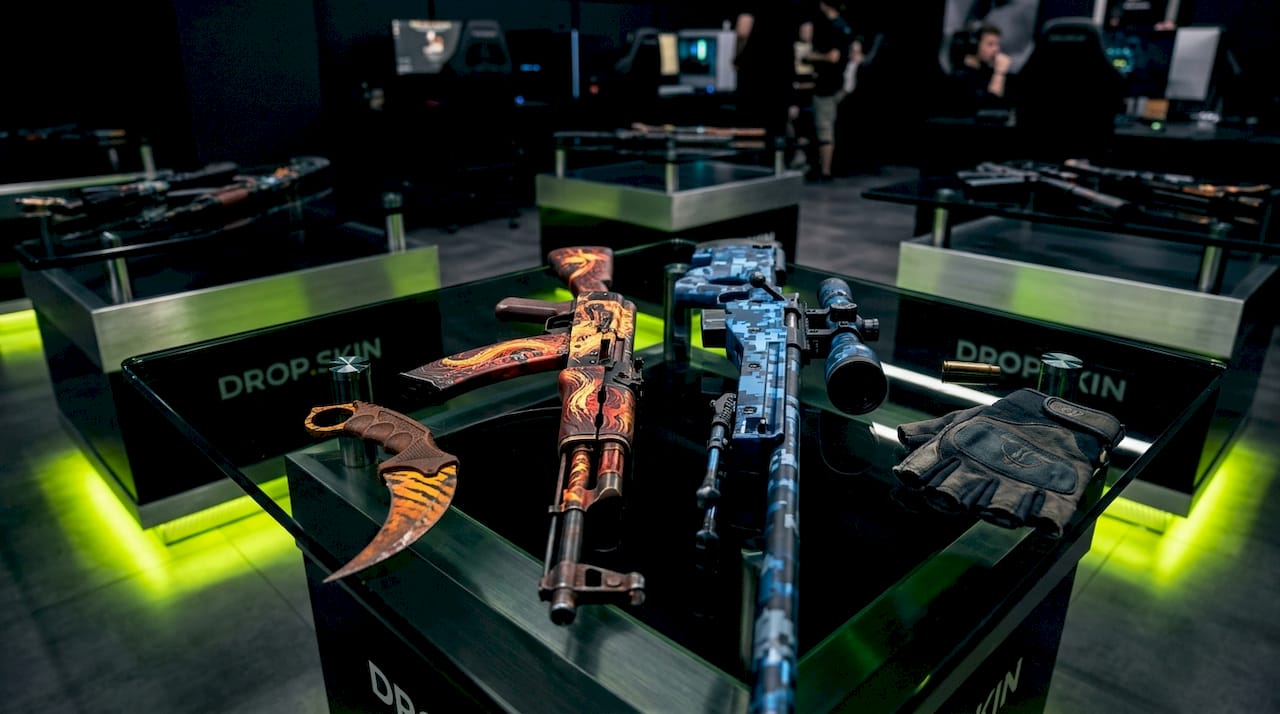
This "always on display" dynamic is what transforms skins into status symbols within the Counter-Strike community. Carrying a factory-new AK-47 Case Hardened with a rare blue gem pattern does not make you a better rifler. It tells the lobby something about who you are before you fire a single shot.
The concept of "flex culture" in CS:GO goes well beyond individual items. Experienced players build coordinated loadouts where knife, gloves, and rifles share a color scheme or aesthetic theme. It is closer to fashion than gameplay. CS:GO skins and player identity are deeply intertwined, with the skin collection functioning as a personal brand visible to the entire competitive community.
Streamers add another layer. When a popular content creator equips a specific skin during a high-viewership stream, demand spikes almost immediately. Esports professionals carry their own influence too. Seeing a skin in a major tournament broadcast ties it to prestige and performance in viewers' minds, which is a driver that goes far beyond any marketing campaign Valve could run.
Here is what actually shapes skin-based status in practice:
- Rarity grade: Consumer Grade items are common and cheap. Covert and Exceedingly Rare items are expensive and immediately recognizable.
- Condition (wear): Factory New versions of popular skins command significant premiums over Battle-Scarred versions of the same item.
- Exclusivity: Discontinued cases mean the supply is permanently capped, which means the rarest drops only get scarcer over time.
- Pattern uniqueness: Some skins, especially the Case Hardened series, have pattern indices that create dramatic visual variations. The rarest patterns sell for multiples of the base price.
Pro Tip: If you want to understand skin prestige without spending money, browse community-curated showcases on Steam. You will quickly learn which items signal status and why within about 20 minutes.
The psychology behind case openings
Opening a CS:GO case is structurally identical to pulling a slot machine lever. You pay a fixed entry cost (the key), watch an animated reel spin through items of escalating rarity, and land on a randomized result. The house edge is steep. Most openings return items worth less than the key paid. Yet players open millions of cases every month.
The reason is not ignorance of the odds. It is dopamine. The anticipation of randomized drops is the product being sold, not the skin itself. The visual tease of rare items flashing past during the spin creates a near-miss effect that sustains engagement even when the outcome is disappointing. Research in behavioral psychology has shown this effect can be more compelling than guaranteed rewards.
Three specific mechanisms keep players coming back to case openings:
- Variable ratio reinforcement: Unpredictable rewards are psychologically more compelling than predictable ones. Winning a rare skin after 50 disappointing openings feels more exciting than winning a guaranteed item every time.
- Escalating rarity visuals: The case opening animation deliberately shows higher-value items during the spin, creating a sense that you almost won something extraordinary.
- Social sharing loops: Rare unboxings get clipped, posted, and celebrated in communities. This turns individual wins into social currency, which motivates others to try for the same moment.
Platforms that pay out in actual Steam-tradeable skins rather than locked credits change the psychology significantly. When the reward can be traded, sold, or displayed, players perceive the activity as a hobby rather than a pure gamble. That distinction matters a lot for sustained engagement.
Pro Tip: Before opening cases, calculate the expected value using community tools that track historical drop rates and current market prices. Most openings return roughly 30 to 40 cents on the dollar. Knowing that upfront helps you treat it as entertainment spending rather than investment.
Economic mechanics: rarity, float values, and collectibles
The skin trading market operates on principles that anyone familiar with physical collectibles will recognize immediately. Supply caps, condition grading, and provenance all drive price. What makes it unusual is that these principles apply to purely digital items.
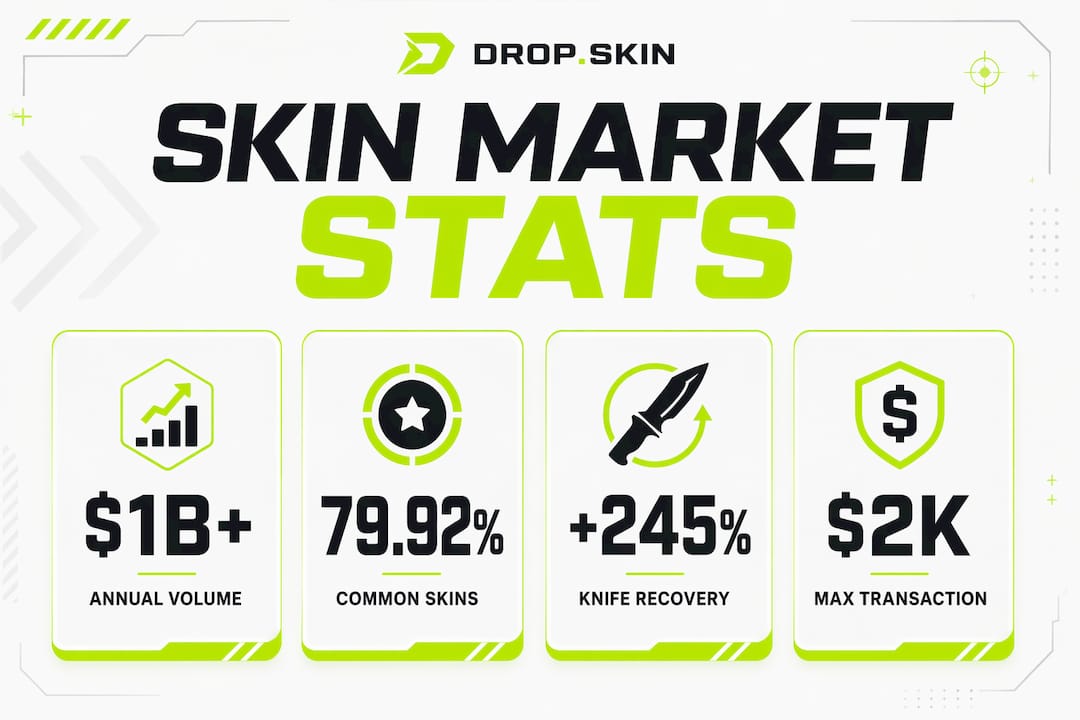
Valve's rarity system runs from Consumer Grade (the most common) through Industrial Grade, Mil-Spec, Restricted, Classified, and Covert, up to Exceedingly Rare items like knives and gloves. The drop probability gap between tiers is enormous. A Covert-grade skin has roughly a 0.64% drop chance from a case. A knife sits below 0.26%. Those probabilities, combined with finite case supply, are why limited supply drives value appreciation over time.
| Rarity Grade | Approximate Drop Rate | Typical Market Range |
|---|---|---|
| Consumer Grade | ~79.92% | $0.03 to $0.50 |
| Industrial Grade | ~15.98% | $0.05 to $2.00 |
| Mil-Spec | ~7.99% | $0.20 to $15.00 |
| Restricted | ~3.20% | $1.00 to $60.00 |
| Classified | ~1.28% | $5.00 to $200.00 |
| Covert | ~0.64% | $20.00 to $1,000.00+ |
| Exceedingly Rare (Knives/Gloves) | ~0.26% | $100.00 to $10,000.00+ |
Float values add another dimension entirely. Every skin generates a float number between 0 and 1 when it drops, representing its wear. Factory New skins have floats below 0.07. Battle-Scarred items sit above 0.45. But within those bands, float precision matters enormously to serious collectors. A knife with a float of 0.001 commands a significant premium over the same knife at 0.065, even though both are technically Factory New.
Lowest float versions of desirable skins can carry premiums of 2 to 10 times the average market price. Add pattern-dependent skins like the Marble Fade (which can have a "full fire" pattern worth dramatically more than a standard version) and you have a collectibles market with genuine depth of valuation. The CS:GO skin market behaves more like rare trading cards or graded sports memorabilia than most people expect.
One more factor most casual observers miss: speculative repricing happens constantly. Prices can shift based on anticipated future supply changes before those changes actually occur, a behavior that mirrors financial markets more than typical gaming economies.
Cultural and community forces shaping desirability
The skin ecosystem did not grow because Valve designed it perfectly. It grew because a community built an entire culture around it. Understanding the importance of CS:GO skins means understanding that community as a driving engine.
Esports played a defining role. When teams compete at majors, the skins their players carry become associated with specific moments and performances. A clutch round watched by hundreds of thousands of viewers, played with a recognizable skin, ties that item to a memory. Demand follows. Streamer visibility can push a skin's value up 30 to 50 percent within a single day when a major content creator features it prominently.
Souvenir skins amplify this further. These are items dropped exclusively during major tournaments, sometimes signed by the professional players competing in the match where the drop occurred. Collectors treat them as memorabilia with provenance, not just cosmetics. A souvenir AWP Dragon Lore from a major final is the gaming equivalent of a signed game jersey.
The collector psychology here includes several distinct motivations:
- Set completion: Many collectors chase full weapon sets for specific cases, treating the exercise like completing a card set.
- FOMO-driven buying: When a case is announced as discontinued, demand for its contents spikes immediately because supply becomes permanently fixed.
- Community recognition: In dedicated trading communities and Discord servers, owning specific ultra-rare items carries reputation value that translates into social standing.
- Investment framing: Some collectors explicitly view skins as alternative assets, tracking portfolio value and timing trades around market cycles.
The CS:GO skin market in 2026: size, liquidity, and trends
The numbers behind the skin economy are striking even to people who have no interest in gaming. Valve generated over $1 billion from CS2 in 2025 primarily through case key sales and marketplace transaction fees. That figure reflects a market with genuine scale, not a niche hobby.
Steam's own Marketplace caps individual transactions at $2,000. For high-value items like rare knives and gloves, that cap pushes trading volume toward third-party platforms where prices can be negotiated freely. Trade holds and marketplace fees create friction that shapes how participants approach liquidity, eliminating quick arbitrage and favoring longer holding strategies.
| Skin Category | Recovery vs. 2024 Lows | Average Transaction Value (2026) |
|---|---|---|
| Knives | +245% | $350 to $4,000+ |
| Gloves | +180% | $150 to $2,500+ |
| Covert Rifles | +120% | $80 to $800+ |
| Classified Pistols | +85% | $20 to $200+ |
The recovery data tells an interesting story. Knives led the rebound by a wide margin because their supply is permanently capped. Every knife from a discontinued case is a finite item with no new production. As the player base grows and more participants want trophy items, fixed supply meets rising demand. The math is straightforward.
Pro Tip: Watch CS2 marketplace trends before buying high-value items. Price history charts on trading platforms show seasonal patterns and event-driven spikes, giving you a clearer picture of whether you are buying at a peak or a reasonable entry point.
My take on why CS:GO skins have become a cultural institution
I have watched the skin market evolve from a curiosity into something that genuinely functions like a collectibles asset class. What surprises me most is how quickly people outside gaming grasp the appeal once you frame it correctly. Tell someone a rare digital gun skin sells for $5,000 and they laugh. Tell them it is a limited-edition item with verifiable scarcity, tradable value, and deep community recognition, and suddenly the logic clicks.
What I find underappreciated in most discussions is the social dimension. The gambling criticism of case openings is fair and worth taking seriously. But critics often miss that the social value of owning a recognized rare skin within a community of millions is real. It functions like wearing a particular watch or carrying a specific bag. The item signals something, and the signal is understood by everyone in that community.
My honest advice is this: treat skin acquisition as entertainment with potential upside, not a reliable investment strategy. The players who enjoy the ecosystem most are those who understand the market mechanics well enough to make informed choices, engage through platforms with transparent payout systems, and set clear spending limits. The hobby is genuinely engaging when you approach it that way.
— Dropskin
Explore skins with Dropskin's case openings and upgrades
Dropskin gives you direct access to the experiences described in this article, whether you want to open cases and chase rare drops or upgrade existing skins to higher-value items through the platform's skin upgrader tool.
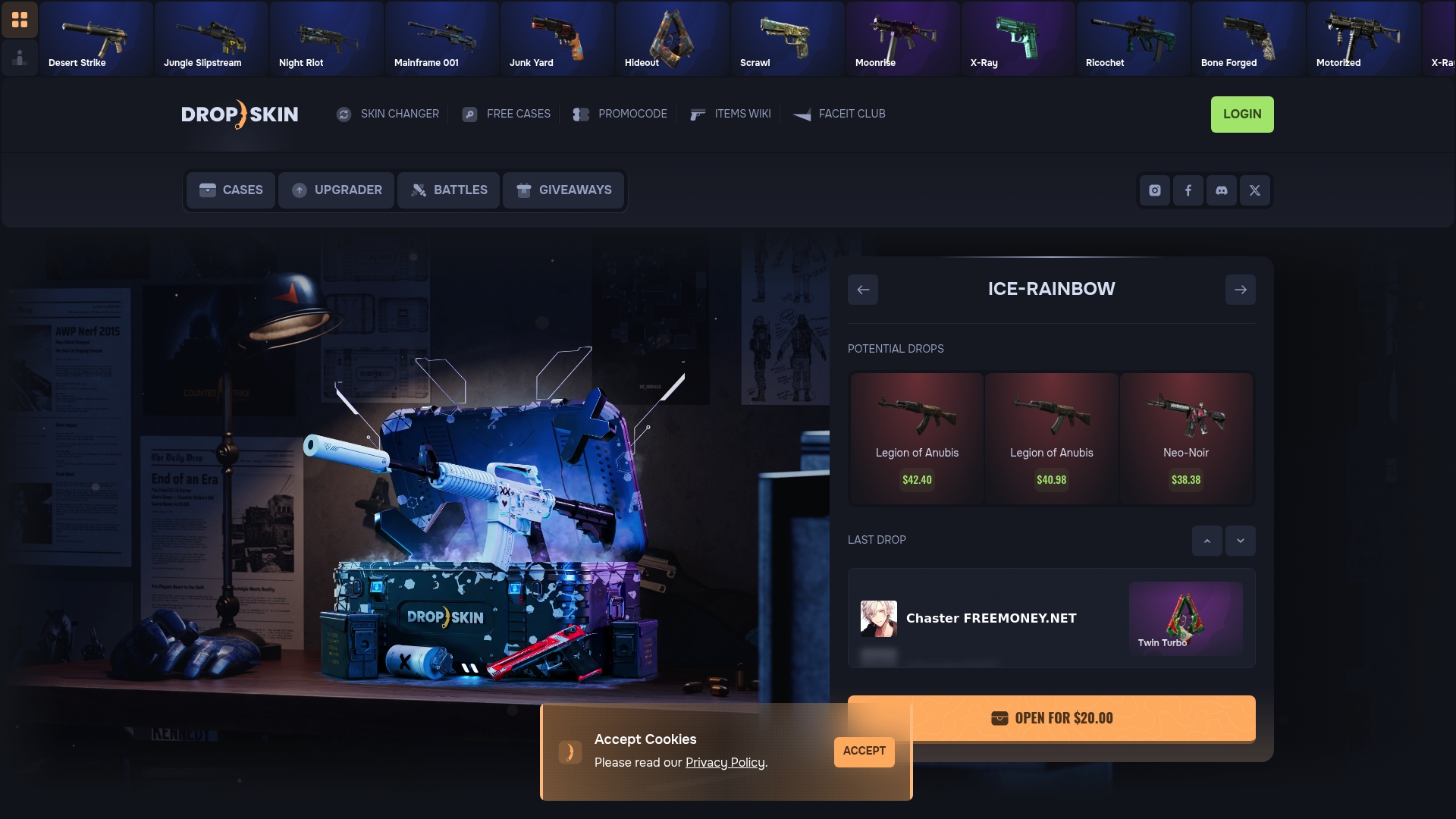
The platform offers case openings, skin upgrades, battles, and giveaways built specifically for CS2 and CS:GO skin collectors. You can open CS2 cases and keep everything you win as real Steam-tradeable skins, making it a genuine part of your inventory rather than platform-locked credits. For players already holding a collection, the skin upgrader tool lets you trade up lower-value items toward rarer ones. Dropskin also runs regular promo codes and giveaways, giving you additional ways to build your collection responsibly.
FAQ
What exactly are CS:GO skins?
CS:GO skins, officially called weapon finishes, are cosmetic textures applied to in-game weapons. They do not affect gameplay performance and exist purely as visual customizations that can be traded, sold, or displayed.
Why are CS:GO skins so valuable?
Skin value comes from a combination of rarity grade, float condition, pattern variation, and market demand. Discontinued cases create permanent supply caps, which drives prices higher over time as demand increases.
Can you make real money trading CS:GO skins?
Yes, though it carries real risk. The Steam Marketplace and third-party platforms allow direct sales. High-value items like knives and gloves have appreciated significantly, but prices are volatile and platform fees reduce margins.
How do streamers affect skin prices?
Streamer-driven price spikes happen when popular content creators feature specific skins during high-viewership streams or events. A single high-profile appearance can push a skin's value up 30 to 50 percent within 24 hours.
Are case openings worth it financially?
Most case openings return roughly 30 to 40 cents for every dollar spent based on expected value calculations. They are best treated as entertainment spending rather than a reliable way to profit, though occasional rare drops do occur.