TL;DR:
- CS2 case openings operate on fixed, unchanging probabilities, regardless of streaks or rituals.
- A well-designed experiment requires pre-planned hypotheses, consistent variables, and accurate data tracking to draw meaningful conclusions from large sample sizes.
Most CS2 players open cases the same way every time: buy a key, click open, hope for the best, and repeat until the budget is gone. That approach is fine for pure entertainment, but if you want to actually understand what you are getting and why, this guide to experimenting with cases gives you a structured method to test, track, and draw real conclusions from your openings. You will learn how to set up experiments, read the results honestly, and avoid the mental traps that cost players money and lead nowhere.
Table of Contents
- Key Takeaways
- Your guide to experimenting with cases: understanding odds first
- Setting up your experiment the right way
- Running your experiment session step by step
- Analyzing what your results actually mean
- Common mistakes that wreck your experiment
- My honest take on case experiments
- Try real case openings on Dropskin
- FAQ
Key Takeaways
| Point | Details |
|---|---|
| Odds are fixed and unchanging | CS2 rarity probabilities never shift based on timing, streaks, or rituals. |
| Pre-plan before you open | Define your hypothesis, budget, and tracking method before touching a single case. |
| Small samples mislead | You need hundreds of openings to see statistically meaningful patterns against known drop rates. |
| Simulators are practice tools | Third-party simulators help you rehearse your method but cannot confirm real drop rates. |
| Treat it as entertainment | The expected value of most cases is negative, so approach experiments as learning, not profit. |
Your guide to experimenting with cases: understanding odds first
Before you design any experiment, you need to understand what you are actually testing. CS2 case openings run on fixed probability tiers. According to verified drop rate data, the breakdown looks like this:
| Rarity Tier | Drop Rate |
|---|---|
| Mil-Spec (blue) | 79.92% |
| Restricted (purple) | 15.98% |
| Classified (pink) | 3.20% |
| Covert (red) | 0.64% |
| Exceedingly Rare (knife/gloves) | 0.26% |
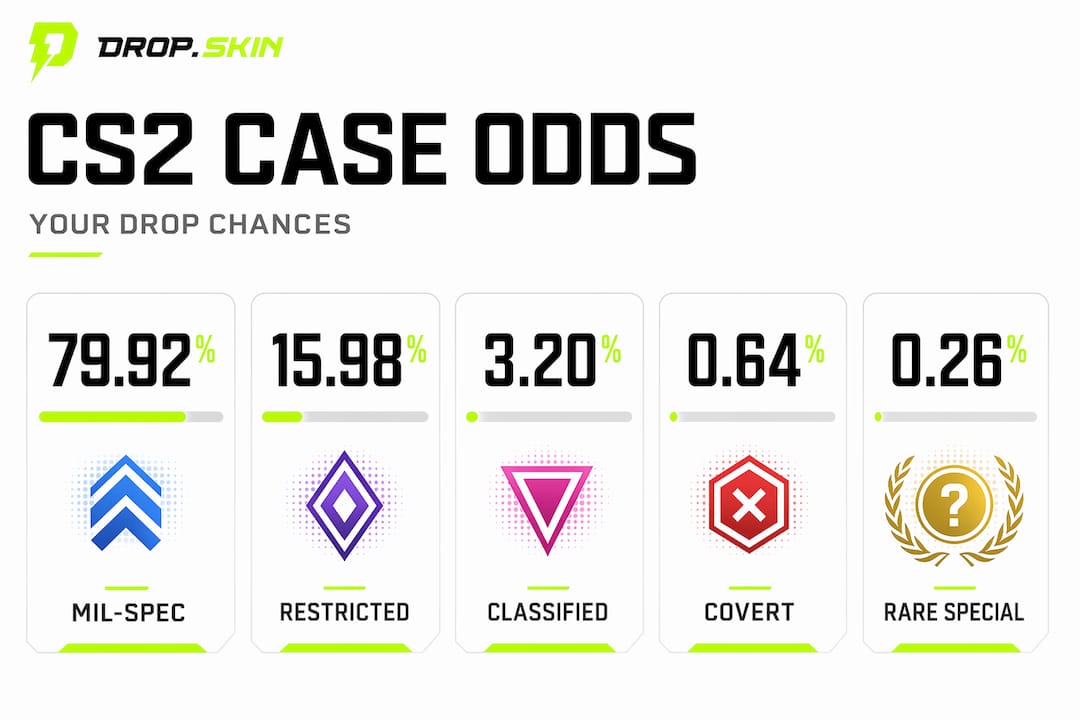
These numbers do not move. They do not warm up after a dry streak, and they do not cool down after a big hit. Each case opening is an independent RNG event with no memory of what came before it. That point alone dismantles the vast majority of "strategies" you will see discussed in forums.
Here is why this matters for your experiments. Because each opening is independent, you are not testing whether the odds change. You are testing your own behavior, your budget management, your case selection logic, and your ability to interpret results against known probabilities. That is a much more useful thing to study.
Understanding how rarity tiers work also shapes your expectations around value. A Covert skin lands roughly once every 156 openings. A knife or gloves lands roughly once every 385. If your experiment budget covers 20 openings, you should expect mostly blue and purple outcomes. That is not bad luck. That is math.
Setting up your experiment the right way
The difference between a useful case experiment and a random spending session is preparation. Good experiments have a defined question, controlled variables, and a method for recording outcomes before the first case is opened.
Start with your hypothesis. A hypothesis is just a clear statement of what you expect to find. For example: "Opening 50 Revolution Cases will produce at least one Classified skin." That is testable, falsifiable, and specific. Avoid vague goals like "see what happens." Vague goals produce vague conclusions.
Next, lock in your variables. According to a lifecycle experimentation framework used in product testing, strong experiments backlog hypotheses, define success metrics, and set stopping rules before launching. The same logic applies here. Decide in advance:
- Which case you are opening (do not switch mid-experiment)
- How many openings you will perform (your batch size)
- What you will track: rarity tier of each drop, estimated market value of each skin
- When you will stop: hit your number and stop, regardless of results
Tracking market value alongside rarity is worth doing carefully. Separating rarity odds from economic value gives you a truer picture of what your experiment actually produced. A Classified skin worth $0.80 is not the same result as a Classified skin worth $12.
Third-party simulators are useful at this stage. They let you run practice rounds at no cost and test your tracking method before real money is involved. That said, simulators are not exact replicas of real case behavior. Floating-point rounding and modeling errors in simulators can skew results in ways that do not reflect the actual Steam back-end. Use them to rehearse, not to validate.
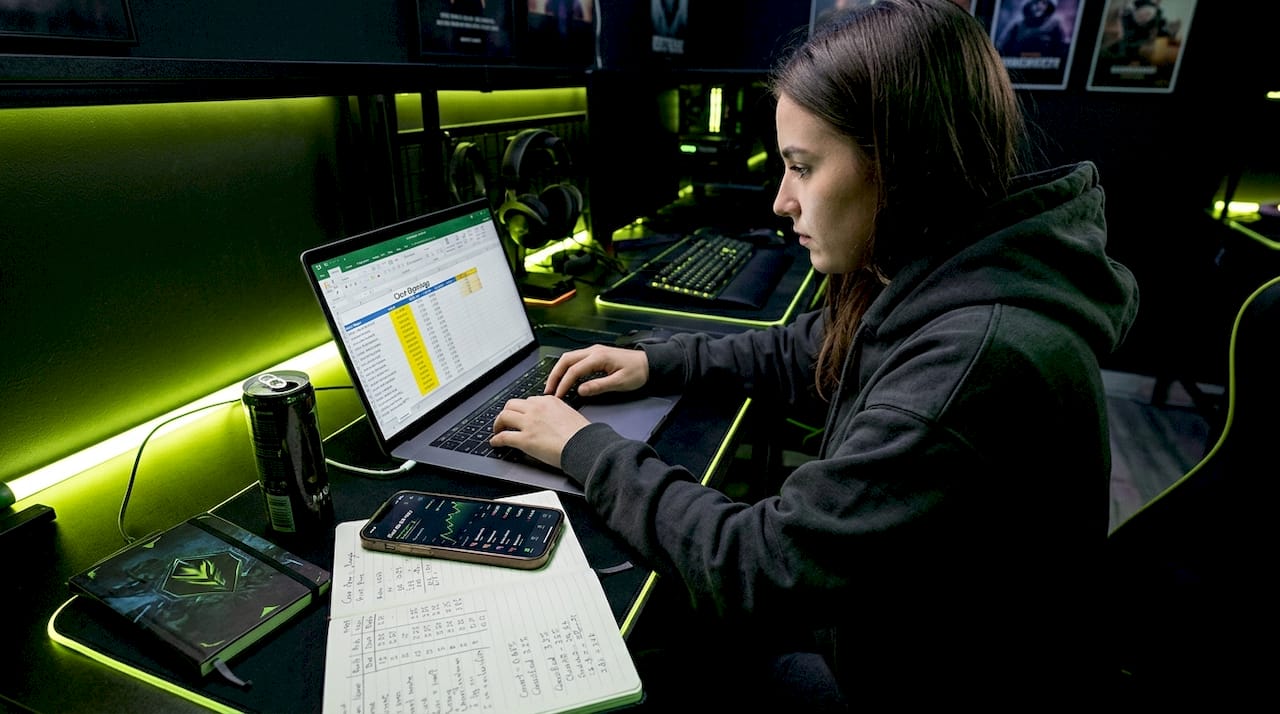
Pro Tip: Use a simple spreadsheet with columns for opening number, rarity tier, skin name, and current Steam Market price. Filling it in after each opening takes 20 seconds and gives you data you can actually analyze later.
Running your experiment session step by step
Once your plan is locked, executing it consistently is the whole job. Here is how to run a clean session:
- Set your budget and write it down. Decide exactly how much you are spending before you open anything. Key price multiplied by batch size equals your total spend. Commit to that number and do not adjust it mid-session.
- Open cases one at a time. Do not batch-click through multiple openings without recording each result. Every single opening gets logged: rarity tier, skin name, StatTrak or not, float value if you care about that.
- Record your results immediately. Memory is unreliable after a long session. Log each outcome right after it appears. Mistakes in your data make your conclusions worthless.
- Hold your variables constant. Do not switch case types partway through because you are running cold. Changing the case mid-experiment is the single most common mistake players make. It collapses your data into noise.
- Stop when you said you would stop. This is the hardest rule to follow. Set the stopping point in advance and treat it as non-negotiable.
Pro Tip: When your results feel surprisingly bad or surprisingly good, that is usually variance, not a real pattern. A run of 15 Mil-Spec drops in a row is expected to happen regularly given the 79.92% drop rate. Do not change your method based on short-term streaks.
The gambler's fallacy is the biggest enemy of clean experiments. Believing that a run of low-rarity drops makes a Covert "due" is statistically wrong. Past outcomes do not influence future opens. Your experiment should reflect that understanding, not fight against it.
Analyzing what your results actually mean
After your session, you have a dataset. Now the real work begins.
Compare your observed rarity frequencies against the expected rates. If you opened 100 cases and got 3 Classifieds, that is exactly on pace with the 3.20% rate. If you got 0, that is within normal variance for a 100-opening sample. The math on this is not forgiving. You need several hundred openings before deviations from expected rates become statistically meaningful.
| Opening Count | Expected Classifieds (3.20%) | Expected Coverts (0.64%) |
|---|---|---|
| 50 | 1.6 | 0.3 |
| 100 | 3.2 | 0.6 |
| 300 | 9.6 | 1.9 |
| 500 | 16 | 3.2 |
The economic side of your analysis matters just as much as the rarity side. Look at the total market value of every skin you received versus the total cost of your keys. Most cases return 40 to 60 percent of the key cost on average. That is the baseline you are comparing against, not profit.
When deciding whether to iterate or stop, ask two questions. First, did your sample size give you enough data to test your hypothesis? Second, did anything in your results suggest a variable worth isolating in a follow-up experiment? If the answer to both is no, the experiment is done. Document your conclusions and move on.
- Be honest about small samples. 30 openings prove nothing about drop rates.
- Note any external factors that may have changed skin values during your session, such as a new operation or sale.
- Avoid comparing simulator results directly to your real opening results. They operate on different models.
Common mistakes that wreck your experiment
Even players with good intentions make these errors. Recognizing them in advance is half the battle.
- The "due next" belief. No rarity tier becomes more likely because it has not appeared recently. The probabilities reset completely with every opening.
- Switching cases mid-experiment. Mixing case types destroys the consistency your experiment depends on. Finish one batch before starting another.
- No stopping rule. Without a pre-set stopping point, sessions expand until the budget runs out or a good drop appears. Both outcomes bias your conclusions.
- Over-trusting simulators. Simulators are useful for practice, but treating their results as proof of real-world behavior is a mistake.
- Ignoring market price shifts. A skin worth $5 today might be worth $2 next week. If you do not check prices at the time of the opening, your value calculations will be off.
Experimentation without discipline is just gambling with extra steps. The method is only as good as your ability to follow the plan you set before you started.
My honest take on case experiments
I have seen hundreds of players run what they call "experiments" that are really just opening sessions with light documentation attached. What separates a real experiment from that is the willingness to accept the result even when it is boring. Most well-designed case experiments confirm what the odds already tell you: blues are common, reds are rare, knives are rarer still, and the house keeps the edge.
That is not a discouraging finding. It is a liberating one. Once you accept the math, you stop chasing patterns that do not exist and start getting more honest value from your sessions.
The experiments I have found most useful were never about beating the odds. They were about understanding variance, getting familiar with specific cases, and figuring out which openings are worth the entertainment cost for my particular budget and preferences. That is case experimentation at its best: not a path to profit, but a path to informed decisions.
Treat every session as entertainment with a data collection side project. Keep your batch sizes manageable, document everything, and never let a bad run push you into changing your plan mid-session. Patience in this process pays off more than any timing ritual or lucky charm ever will.
— Dropskin
Try real case openings on Dropskin
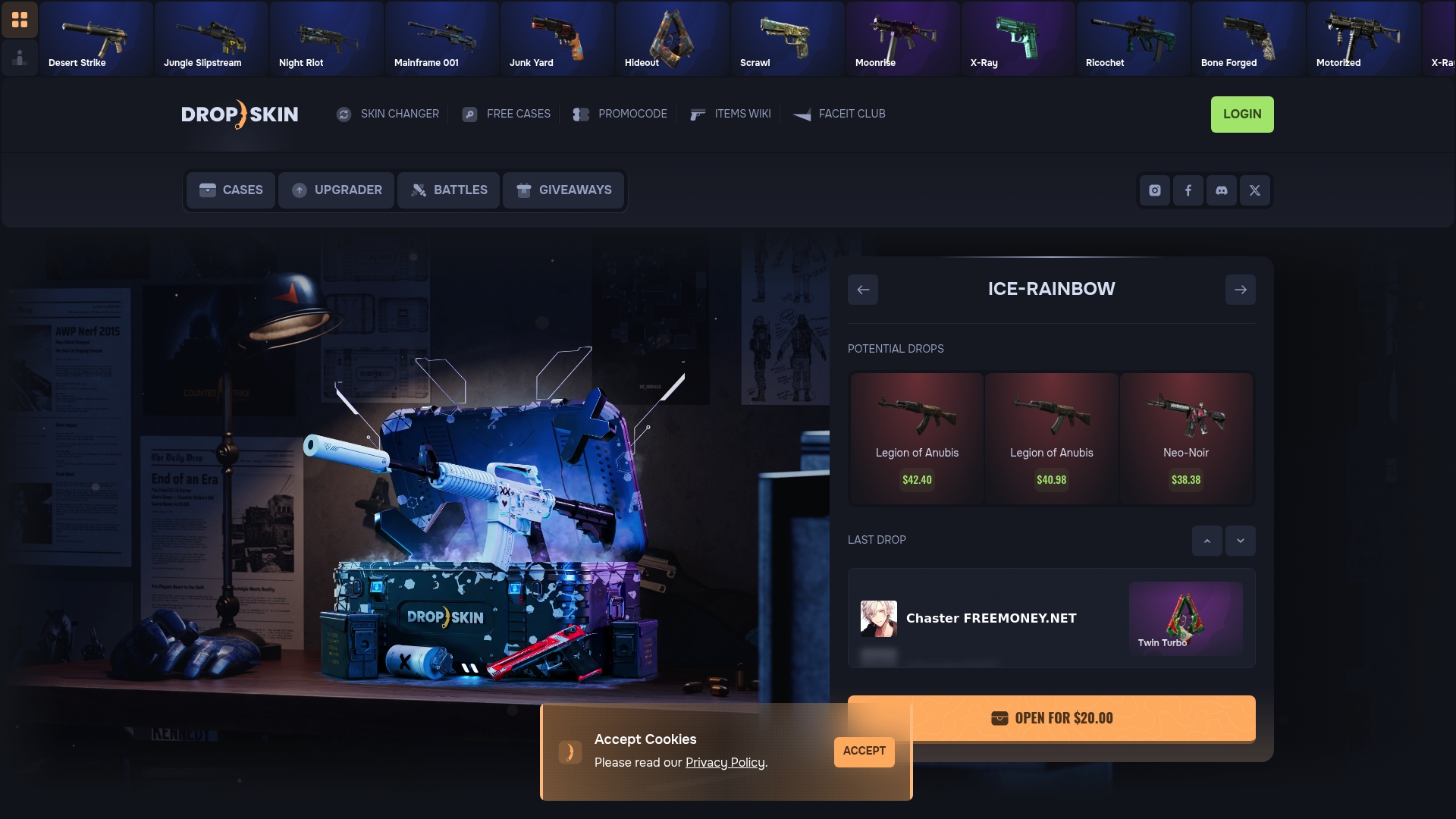
If you are ready to put your experimentation method into practice, Dropskin gives you the tools to do it properly. The platform offers an extensive CS2 case collection where you can open cases across multiple tiers, track your results, and explore different case types without having to juggle multiple platforms. For players who want to take things a step further, the skin upgrader lets you convert lower-value skins into higher-rarity ones, adding another layer of strategy to your experimentation. Dropskin also supports responsible play with budget-friendly options and a community focused on getting more from every session. Start your next experiment with a clear plan and the right case selection behind you.
FAQ
What are the exact odds for CS2 case openings?
The official drop rates are approximately 79.92% Mil-Spec, 15.98% Restricted, 3.20% Classified, 0.64% Covert, and 0.26% Exceedingly Rare. These probabilities are fixed and do not change between sessions.
How many cases do I need to open for a valid experiment?
You need at minimum a few hundred openings before your observed drop rates will meaningfully reflect the expected probabilities. Small samples of 20 to 50 openings are too noisy for reliable conclusions.
Do case opening simulators give accurate results?
Simulators are useful for practicing your tracking method but are not perfectly accurate representations of real CS2 drop behavior. Use them as rehearsal tools, not as data sources for your experiments.
Can I improve my odds by changing when I open cases?
No. Each opening is independent and unaffected by timing, previous outcomes, or any ritual. The probability resets completely every single time.
What is the most common mistake in case experimentation?
Changing variables mid-session, such as switching case types or adjusting batch size after a bad run, is the most frequent error. It makes your data unreadable and your conclusions unreliable.