
TL;DR:
- CS:GO and CS2 skin grades use color-coded rarity tiers that influence market value, trade potential, and drop odds. Rarity signals supply scarcity, while float value determines skin wear and price; both interact to impact overall skin worth. Trade-up contracts allow players to upgrade skins within collection and rarity constraints, but Contraband skins, like the Howl, are permanently untradeable outside the system.
CS:GO and CS2 skin grades are color-coded rarity tiers that define how uncommon a weapon skin is within cases and collections, directly shaping its market value and trade potential. The system runs from Consumer Grade at the bottom to Covert at the top, with a single Contraband outlier sitting above them all. Understanding how to explain CS:GO skin grades correctly separates players who trade blind from those who trade smart. Platforms like the Steam Market, CSFloat, and Dropskin all operate around this rarity framework, so knowing the tiers is the foundation of every informed decision you make.
What are the different skin rarity grades in CS:GO and CS2?
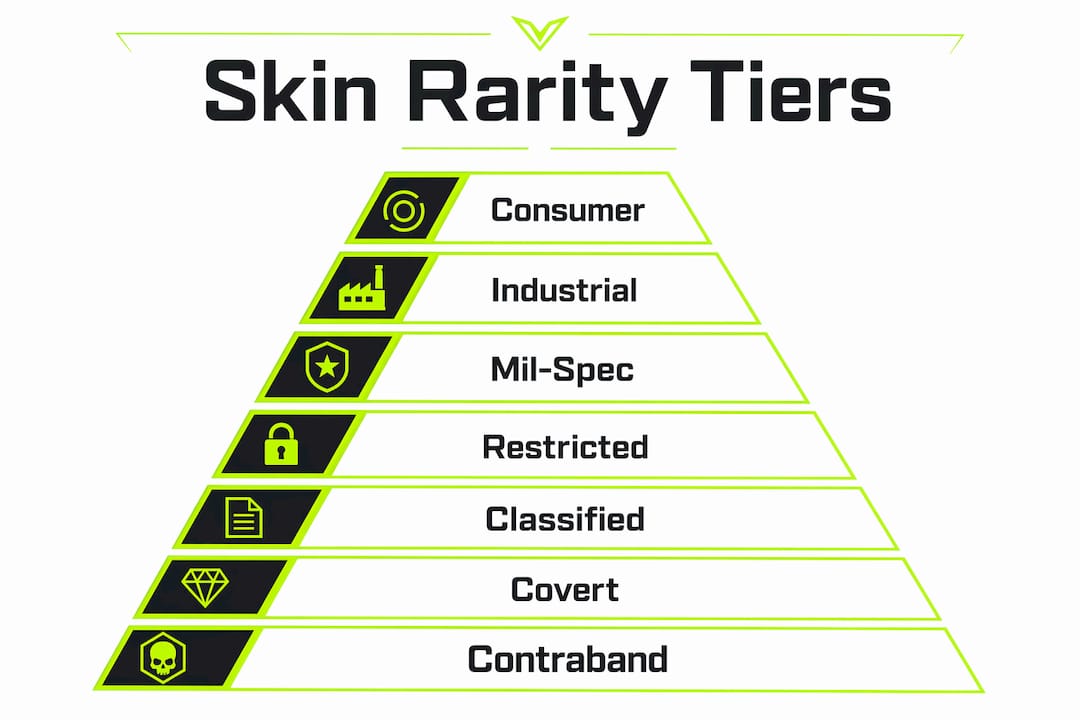
CS2 uses a color-coded rarity tier system that spans seven distinct levels, each tied to a specific color and drop frequency. The color coding is not decorative. It signals supply scarcity, and scarcity drives price. Here is every tier you need to know, from most common to rarest.
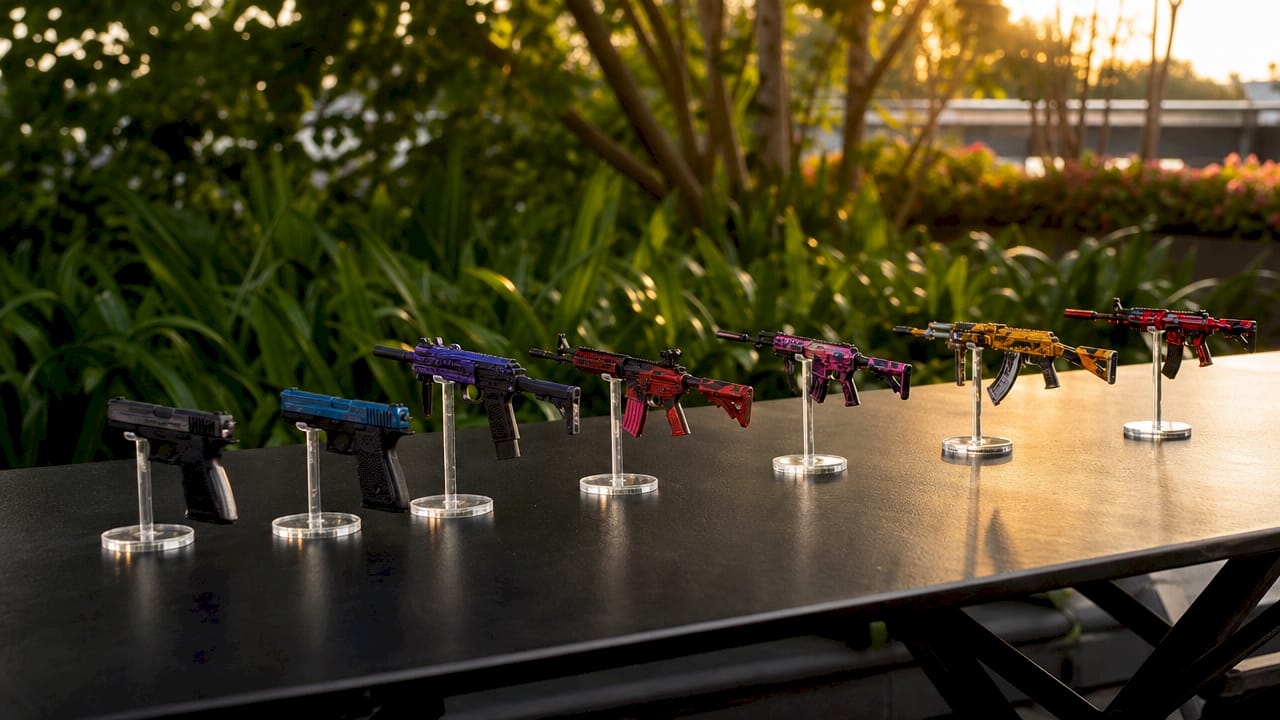
Consumer Grade (white) is the most common tier. These skins drop frequently outside of cases, often through gameplay drops, and carry the lowest market prices. Industrial Grade (light blue) sits one step above Consumer and shares a similarly low price ceiling. Neither tier generates much trading excitement, but they form the bulk of what new players encounter first.
Mil-Spec (blue) is where case openings get interesting. Drop odds for Mil-Spec sit at roughly 79.92% inside standard weapon cases, meaning most case opens land here. That high frequency keeps prices modest despite the blue label. Restricted (purple) drops at approximately 15.98%, making it noticeably rarer and often more visually distinctive.
Classified (pink) drops at around 3.20%, and Covert (red) at just 0.64%. Those two tiers represent the skins most players are chasing when they open a case. Covert skins are roughly 125 times rarer than Mil-Spec skins, which explains why their prices sit in a completely different bracket. Knives and gloves drop separately at roughly 0.26%, making them rarer than any standard weapon skin.
Contraband (gold/orange) is a category of one. The M4A4 Howl is the only skin in this tier, and it earned that status after its original artwork was removed due to a copyright dispute. Contraband is a permanent scarcity category. It cannot be obtained through new drops or trade-up contracts, which makes the Howl one of the most sought-after items in the entire game.
| Rarity tier | Color | Approx. drop odds | Typical price range |
|---|---|---|---|
| Consumer Grade | White | Very high (gameplay drops) | Under $0.10 |
| Industrial Grade | Light blue | High (gameplay drops) | $0.05 to $0.50 |
| Mil-Spec | Blue | ~79.92% (cases) | $0.50 to $5 |
| Restricted | Purple | ~15.98% (cases) | $2 to $30 |
| Classified | Pink | ~3.20% (cases) | $10 to $150 |
| Covert | Red | ~0.64% (cases) | $50 to $1,000+ |
| Contraband | Gold/orange | Not obtainable | $1,000+ |
How does skin wear (float value) affect skin grading?
Float value is a decimal between 0.00 and 1.00 assigned at skin creation that determines a skin's wear condition. It is permanent and cannot be changed. Rarity tells you how rare a skin is. Float value tells you how it looks. These are two separate systems that interact to produce the final price.
The five wear tiers map to specific float ranges. Factory New covers 0.00 to 0.07 and represents the cleanest possible condition. Minimal Wear runs from 0.07 to 0.15, showing only faint signs of use. Field-Tested spans 0.15 to 0.38 and is the most common wear tier you will encounter on the Steam Market. Well-Worn covers 0.38 to 0.45, and Battle-Scarred runs from 0.45 to 1.00, showing heavy scratching and fading.
| Wear tier | Float range | Visual condition |
|---|---|---|
| Factory New | 0.00 to 0.07 | Clean, vibrant finish |
| Minimal Wear | 0.07 to 0.15 | Slight surface wear |
| Field-Tested | 0.15 to 0.38 | Visible scratches and wear |
| Well-Worn | 0.38 to 0.45 | Heavy wear, faded colors |
| Battle-Scarred | 0.45 to 1.00 | Severe scratching and fading |
Not every skin is available in every wear tier. Some skins only drop as Field-Tested or Battle-Scarred, which limits supply at the cleaner end and inflates prices there. A Factory New Classified skin can easily cost three to five times more than the same skin in Battle-Scarred condition, purely because of float value. This is why inspecting float and wear before any purchase or trade is standard practice among experienced traders.
Pro Tip: On CSFloat, you can filter listings by exact float range. A Field-Tested skin sitting at 0.150 (the very bottom of that tier) often looks nearly identical to a Minimal Wear skin but costs significantly less. That gap is where smart buyers find value.
How do rarity and wear interact to drive skin market value?
Rarity is a supply signal, not a fixed price tag. Two Covert skins on the same weapon can differ in price by 100 times or more depending on finish, pattern, and demand. The AK-47 Case Hardened and the AK-47 Vulcan are both Classified, yet their price difference can be enormous based purely on how much the community wants each one.
Wear condition can override rarity tier when it comes to final price within the same skin finish. A Factory New Restricted skin sometimes sells for more than a Battle-Scarred Classified skin. This is a concept that trips up newer traders who assume the pink label always beats the purple one. The key factors affecting skin value include rarity, float, finish type, pattern index, and current market demand, and all five matter simultaneously.
Here is what experienced traders actually evaluate before making a move:
- Rarity tier sets the baseline supply context, not the price floor
- Float value determines visual quality and directly shifts price within the same skin
- Finish type drives demand. Doppler, Fade, and Case Hardened finishes command premiums that plain finishes do not
- Pattern index matters for finishes like Case Hardened, where specific blue percentages can multiply a skin's value by 10 or more
- Market demand fluctuates with pro player usage, content creator exposure, and seasonal trends
"Players often mistakenly equate rarity with price, but market demand and specific skin finishes significantly shift values." — CS2 Items Encyclopedia
Understanding how rarity impacts skin value means accepting that the tier system is a starting point for analysis, not a conclusion. The Steam Market price history and tools like CSFloat give you the real picture.
What role do trade-up contracts play in skin grade progression?
Trade-up contracts let you exchange 10 skins of the same rarity for one skin of the next higher rarity tier. This mechanic is the only way to deliberately move up the rarity ladder through player action rather than luck. The progression runs from Consumer Grade through Industrial, Mil-Spec, Restricted, Classified, and up to Covert.
The process works as follows:
- Collect 10 skins of the same rarity tier (all from the same or compatible collections)
- Open the trade-up contract interface in CS2
- Add all 10 skins to the contract
- Receive one skin of the next rarity tier at random from the eligible output pool
- The output skin's collection depends on which collections your input skins belong to
Collection eligibility is the detail most traders overlook. Only skins from matching collections are eligible in a trade-up contract, and the output skin is drawn from those same collections. If you mix skins from collections with weak Restricted outputs, your Classified result will be underwhelming regardless of input quality. This is why researching collection composition before running a trade-up is non-negotiable.
Knife and glove trade-ups follow different rules. Knife trade-ups require 5 Covert skins instead of the standard 10, and the output is a knife or glove rather than a standard weapon skin. This makes knife trade-ups a higher-stakes, lower-input-count operation compared to normal contracts.
Contraband skins sit entirely outside the trade-up system. The M4A4 Howl cannot be produced through any contract. Its scarcity is locked in permanently, which is a core reason its price remains at the extreme end of the market.
Pro Tip: Before running any trade-up, check the CS2 skin rarity odds for the output collection. A trade-up that costs $30 in inputs but has a 70% chance of producing a $10 Classified skin is a losing contract on average. The math matters more than the excitement.
Key takeaways
CS:GO and CS2 skin grades form a color-coded rarity system where tier, float value, finish, and demand all combine to determine a skin's true market worth.
| Point | Details |
|---|---|
| Seven rarity tiers exist | Consumer, Industrial, Mil-Spec, Restricted, Classified, Covert, and Contraband each carry distinct drop odds. |
| Float value is separate from rarity | A 0.00 to 1.00 decimal determines wear condition and can shift price dramatically within the same rarity tier. |
| Rarity signals supply, not price | Finish type, pattern index, and demand often matter more than the color label on a skin. |
| Trade-ups follow collection rules | Input skin collections determine output possibilities, not just rarity tier alone. |
| Contraband cannot be traded up | The M4A4 Howl is permanently scarce and sits outside every standard drop and trade-up system. |
Dropskin's take on reading skin grades correctly
Most players learn the color tiers quickly. What takes longer to internalize is that the tier is just the starting point. I have seen traders pass on a Factory New Restricted skin because it was "only purple," then overpay for a Battle-Scarred Covert skin because "red means expensive." Both decisions were wrong, and both came from treating the grade as the whole story.
The float inspection habit is the single biggest separator between casual collectors and serious traders. Tools like CSFloat and SteamAnalyst exist precisely because the in-game preview does not show you the exact decimal. A skin sitting at 0.149 versus 0.151 can look identical but land in different wear tiers, and that tier difference changes the price. Checking float before trading takes 30 seconds and can save you real money.
Trade-up contracts are where I see the most costly mistakes. Players focus entirely on rarity progression and ignore collection composition entirely. Running a trade-up without checking which Classified skins are possible from your input collections is gambling without understanding the odds. That is the opposite of a trading strategy. The grade system rewards players who treat it as a multi-variable puzzle, not a simple hierarchy.
— Dropskin
Put your skin grade knowledge to work on Dropskin
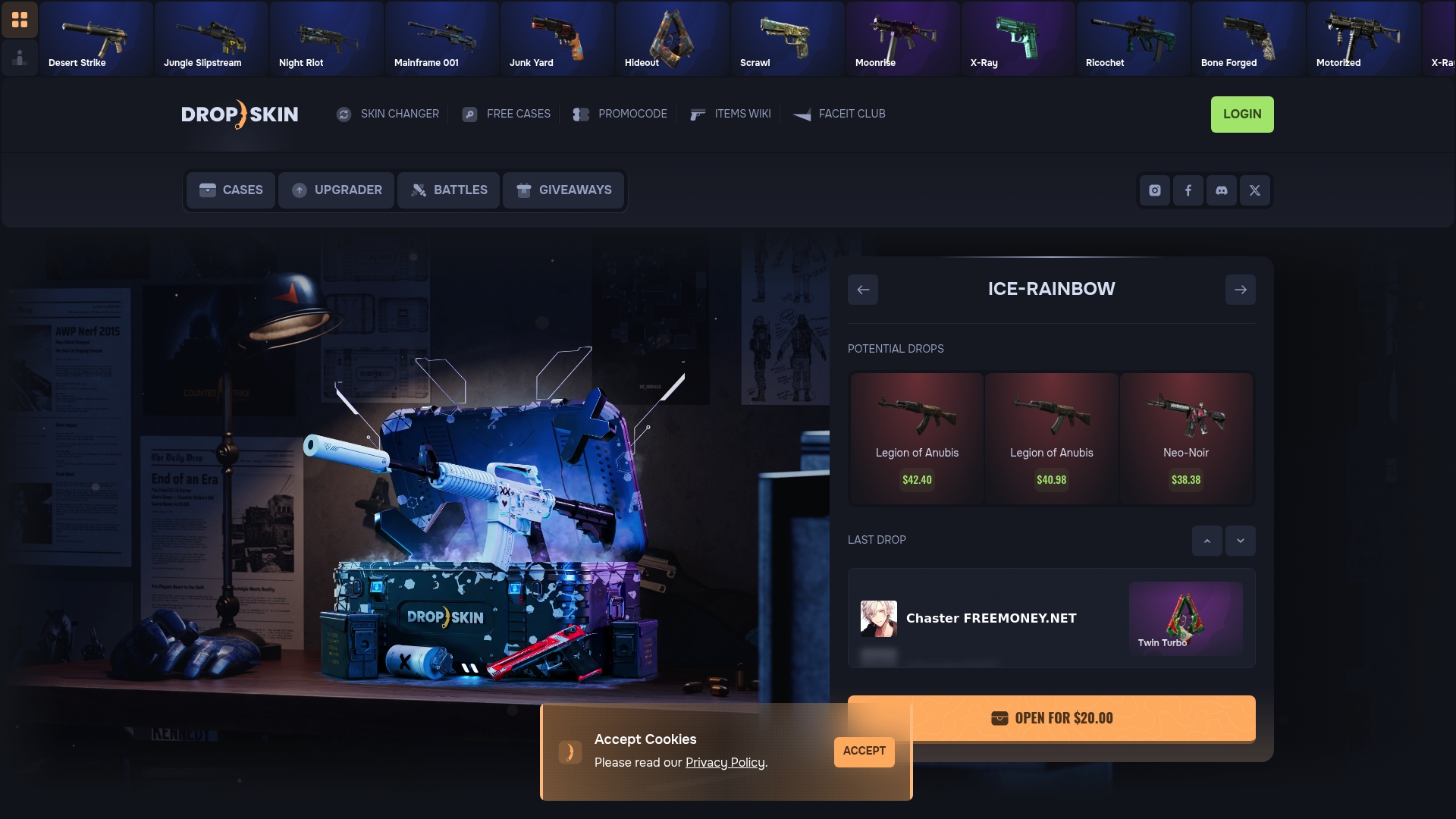
Understanding CSGO skin quality grades is one thing. Applying that knowledge in real case openings and upgrades is where it clicks. Dropskin lets you open CS2 cases across an extensive collection, with rarity tiers displayed clearly so you always know what you are chasing. The skin upgrader tool maps directly to the trade-up concepts covered here, letting you move up rarity tiers with a clear view of the odds before you commit. Whether you are hunting a Covert finish or testing a trade-up strategy, Dropskin gives you the platform to practice with real skins. Use the skin upgrader to see rarity progression in action and build the instincts that make you a smarter trader.
FAQ
What are the CS2 skin rarity grades in order?
The seven tiers from lowest to highest are Consumer Grade, Industrial Grade, Mil-Spec, Restricted, Classified, Covert, and Contraband. Contraband applies only to the M4A4 Howl and cannot be obtained through drops or trade-ups.
Does a higher rarity grade always mean a higher price?
No. Rarity signals supply scarcity, but finish type, float value, pattern index, and market demand all influence final price. A low-float Restricted skin with a popular finish can outsell a Battle-Scarred Covert skin.
What is float value and how does it relate to skin grades?
Float value is a permanent decimal between 0.00 and 1.00 assigned at skin creation that determines wear condition across five tiers: Factory New, Minimal Wear, Field-Tested, Well-Worn, and Battle-Scarred. It operates independently of rarity grade but directly affects market price.
Can you trade up to a Contraband skin?
No. The Contraband tier is permanently locked and cannot be reached through trade-up contracts or case drops. The M4A4 Howl is the only Contraband skin and its scarcity is fixed.
How do trade-up contracts work with skin rarity tiers?
You combine 10 skins of the same rarity to receive one skin of the next higher rarity tier. The output skin comes from the same collections as your input skins, so collection composition determines which specific skins you can receive.