
TL;DR:
- Successful CS2 skin trading requires accounting for fees, timing, and demand to ensure real profitability. Low-margin resale with high volume and community deals offer the most consistent gains, while arbitrage and holding strategies demand more capital and patience. Case opening is generally unprofitable and should mainly serve as entertainment rather than a primary trading approach.
Most CS2 players know skin trading is possible. Far fewer know how to do it consistently without bleeding money to fees, bad timing, or plain bad luck. The examples of profitable trades that actually hold up share a common foundation: they account for marketplace fees, transfer friction, and realistic demand before anyone commits to a buy. This article breaks down the real mechanics behind resale flipping, arbitrage across platforms, and holding strategies, so you can stop guessing and start trading with a framework that works.
Table of Contents
- Key takeaways
- ## 1. Examples of profitable trades: the criteria that matter first
- 2. Real-life resale trade examples in the skin market
- 3. How to identify lucrative arbitrage trades across platforms
- 4. Holding strategies: investing in skins for medium-term gains
- 5. Why case opening is not a profitable trading strategy
- 6. Comparing trade types: a quick-reference breakdown
- My honest take on profitable skin trading
- Start trading smarter with Dropskin
- FAQ
Key takeaways
| Point | Details |
|---|---|
| Fees change everything | Always calculate net profit after marketplace fees before committing to any trade. |
| Arbitrage has a narrow window | Price gaps between platforms close fast; slow execution turns profits into losses. |
| Holding beats rushing | Discontinued or supply-locked skins typically appreciate over 12 to 18 months. |
| Case opening is usually a loss | Average CS2 case opening yields a negative ROI of around 54%, making it a poor trading strategy. |
| Volume wins over lucky flips | Consistent small margins across many trades outperform chasing rare high-value scores. |
## 1. Examples of profitable trades: the criteria that matter first
Before you look at a single real-life trading example, you need a filter. Without one, you will mistake a gross price difference for actual profit.
The biggest trap is ignoring fees. The Steam Community Market charges a 15% tax on every sale, which kills the math on small-margin flips immediately. Third-party platforms like Buff163 or Skinport each have their own fee structures, and the spread between buying on one and selling on another is where real arbitrage lives. Understanding skin marketplace dynamics is the foundation of every profitable move.
Beyond fees, timing and liquidity matter enormously. A skin you cannot sell at your target price within a reasonable window is not a profitable trade. It is capital sitting idle while the market moves against you. Knowing how skin value fluctuates over time lets you pick entry and exit points with more confidence.
Pro Tip: Use buy orders instead of market buys whenever possible. You often save 3 to 8% compared to the current lowest listing, which matters enormously when your target margin is only 10 to 15%.
2. Real-life resale trade examples in the skin market
Resale is the most accessible strategy. You buy an undervalued or below-average-priced skin and sell it at or slightly above market rate. The profit per trade is small. The volume is what builds real gains.
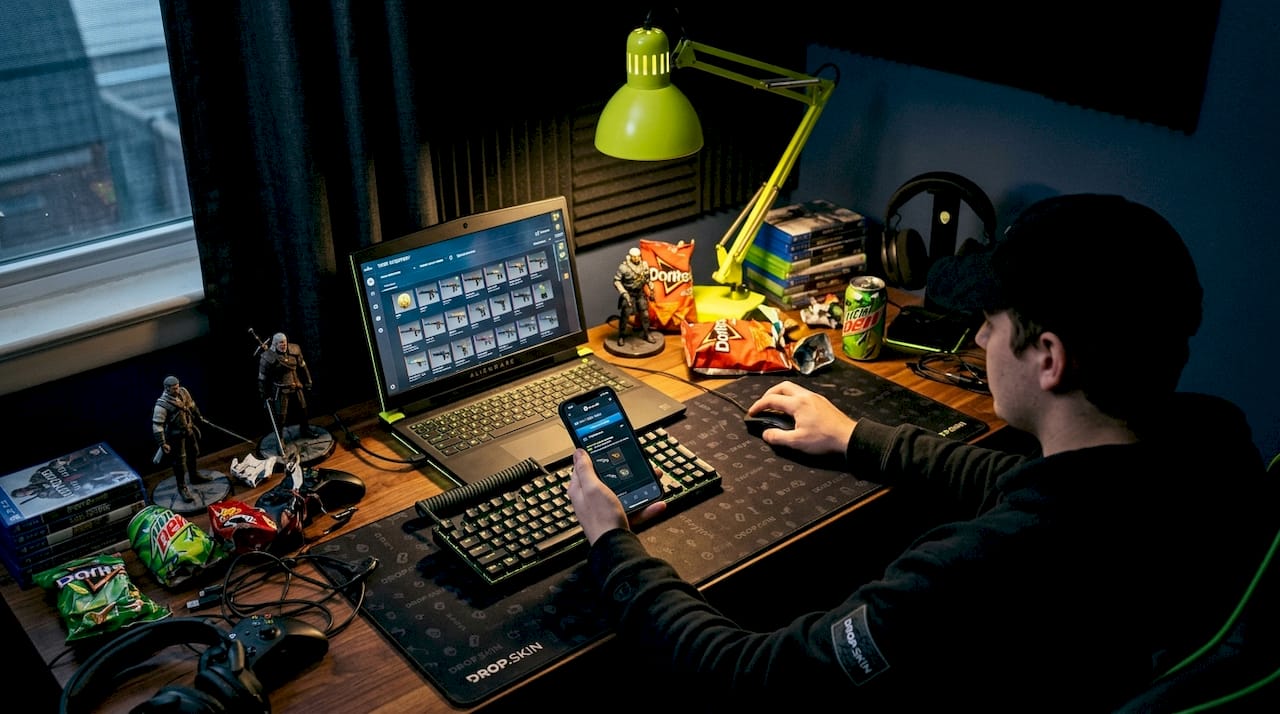
Liquid skins priced between $5 and $50 give you the best turnover. A Glock-18 Water Elemental or an MP9 Hydra might not be glamorous, but they sell within hours rather than weeks. That speed means you cycle your capital faster. A skin sitting unsold for three weeks is costing you opportunity.
Here is what a typical successful resale trade looks like in practice:
- You spot an AK-47 Slate listed 12% below the 7-day average due to someone panic-selling after a bad session
- You buy it using a buy order at $18.50 instead of the listing price of $20
- You list it at $22.50, matching the median recent sale
- After Steam's 15% fee you net roughly $19.10, a profit of about $0.60
That sounds small. But run 20 of those trades in a week and you have made $12 on roughly $370 of capital. That is around a 3% weekly return with low risk. Consistent small margins like these are how experienced traders build meaningful balances.
Community trading groups on Reddit, Discord, and dedicated forums give you access to deals that never hit public marketplaces. Sellers there often prefer a guaranteed trade over waiting for a buyer, so you regularly find skins 5 to 10% below market. Community networks create opportunities that no automated marketplace can replicate.
3. How to identify lucrative arbitrage trades across platforms
Arbitrage is where the most specific and repeatable profitable trading patterns live. The idea is simple: buy on the platform where a skin is cheapest, sell on the platform where it commands a higher price.
The mechanics are not as simple. The only meaningful arbitrage spread is what remains after you account for both sides' fees and any transfer friction. Visible price gaps often mislead less experienced traders who do not run the full fee-adjusted math.
Here is a comparison of major platform fee structures to illustrate where gaps realistically form:
| Platform | Buyer fee | Seller fee | Steam Wallet restriction |
|---|---|---|---|
| Steam Community Market | None | 15% | Yes, Steam Wallet only |
| Buff163 | ~2.5% | ~2.5% | No, real money withdrawal |
| Skinport | ~5% | ~12% | No, real money withdrawal |
A worked example that reflects real arbitrage margins: buy a skin on Buff163 for $45 with a 2.5% buyer fee ($46.13 total), sell it on Skinport where it lists at $58 but after the 12% seller fee you receive $51.04. That gives you roughly $4.91 in net profit. The return on a $46 investment is about 10%. Not explosive, but repeatable.
Pro Tip: Never execute an arbitrage trade unless you have already confirmed active buyers on the selling platform. Gaps close fast and a skin with low demand on the sale side will sit while the spread evaporates.
The biggest limitation of Steam-side arbitrage is the Steam Wallet lock. Steam's 15% fee structure and the inability to withdraw funds as real cash make it unsuitable for arbitrage that requires capital recycling. Off-platform trades between Buff163 and Skinport are where the actionable opportunities concentrate.
4. Holding strategies: investing in skins for medium-term gains
Holding is where patience translates directly into profit. The concept is buying skins tied to discontinued cases or supply-locked collections and waiting for scarcity to push prices up.
This is one of the top profitable trades for players who have capital to park and do not need immediate returns. The recommended holding period is 12 to 18 months, and the items most likely to appreciate are those tied to cases that Valve has stopped actively featuring, or skins with naturally limited supply due to low drop rates.
Strong historical examples include:
- AWP Dragon Lore and AK-47 Fire Serpent from discontinued collections that now command prices multiples above their original market value
- CS:GO stickers from discontinued tournament packages, which saw 300 to 500% value growth years after the events
- Low float or rare pattern skins like 0.001 float AK-47 Case Hardened blue gems, where collectors pay premiums far above market average
The risk here is real. A skin can stagnate for years if community interest does not materialize. Meta shifts, Valve updates, or a new operation dropping similar-looking skins can suppress prices unexpectedly. You need to monitor community buzz on Reddit and Steam forums regularly, and set a price target in advance so you exit on logic rather than emotion.
The best holding portfolios balance quick-turnaround resale trades with longer holds. The resale activity keeps your capital active while the holds mature.
5. Why case opening is not a profitable trading strategy
This section will save you money. Case opening feels like trading. It is not. It is entertainment with a negative expected value built in by design.
SteamAnalyst data shows the average loss per CS2 case opened is $2.42, with a return on investment of negative 54%. Most drops are low-value Mil-Spec skins worth less than the key you spent to open the case. The math does not improve with volume because each case opening is fully independent. There is no pity timer, no streak correction, no system that rewards persistence.
"The expected value of CS2 case opening is structurally negative. No strategy changes that. The correct use of case opening is entertainment, not profit generation." — SteamAnalyst
| Metric | Typical figure |
|---|---|
| Average case key cost | $2.49 |
| Average skin value received | ~$1.15 |
| Average net loss per open | ~$2.42 |
| ROI | ~negative 54% |
Buying the specific skin you want directly from the market almost always costs less than the average number of cases you would need to open to receive it. The exception is very cheap cases priced under $0.15, where the absolute loss per open is smaller. But even those do not produce consistent profit.
6. Comparing trade types: a quick-reference breakdown
Once you understand the mechanics individually, the next step is deciding which strategies fit your budget, time availability, and goals. Here is how the four main approaches stack up:
| Strategy | Required capital | Time investment | Typical return | Key risk |
|---|---|---|---|---|
| Resale flipping | Low ($5 to $50 range) | High (daily monitoring) | 3 to 8% per trade | Low margin, volume dependent |
| Arbitrage | Medium ($30 to $200) | High (real-time execution) | 8 to 12% per trade | Gaps close fast, transfer holds |
| Holding | Medium to high | Low (check monthly) | 50 to 300% over 12 to 18 months | Capital locked, uncertain demand |
| Case opening | Any | Low | Negative 54% average ROI | Structural loss, no strategy helps |
A few practical takeaways from this comparison:
- New traders with under $100 to start should focus on resale, specifically liquid skins in the $5 to $20 range with high daily volume
- Players with $200 or more and access to multiple platforms should explore arbitrage as a core activity
- Combining all three profitable strategies addresses different profit drivers simultaneously: resale for cash flow, arbitrage for mispricing, holding for appreciation
- The 2026 skin trading trends show growing demand for skins tied to esports events, which can accelerate holding returns when timed well
The traders who see the best results are not specialists. They are generalists who know when to flip, when to hold, and when to walk away from a case opening entirely.
My honest take on profitable skin trading
I have watched a lot of players burn through decent bankrolls chasing the wrong things. The biggest one is the fantasy that one great trade changes everything. It rarely does.
What I have found actually works is treating skin trading like a part-time job with clear rules. I set a target margin before I buy anything. If the math does not hit after fees, I pass. I have passed on trades that looked great on the surface and saved myself losses I would have called bad luck.
The holding strategy is where I have seen the most surprising returns, but only when I am honest about the timeline. I held a set of discontinued sticker capsules for 14 months and tripled the value. I also held an operation skin for 18 months and sold it for a 6% gain. Patience is necessary but not sufficient. You need the right item.
My biggest piece of advice for anyone starting out: build your reputation in community trading groups before you need it. Credibility and reputation give you access to below-market deals that go to known traders first. That edge compounds over time far more than any single clever arbitrage play.
Case opening? I enjoy it occasionally for the experience. I never count it as part of my trading strategy.
— Dropskin
Start trading smarter with Dropskin
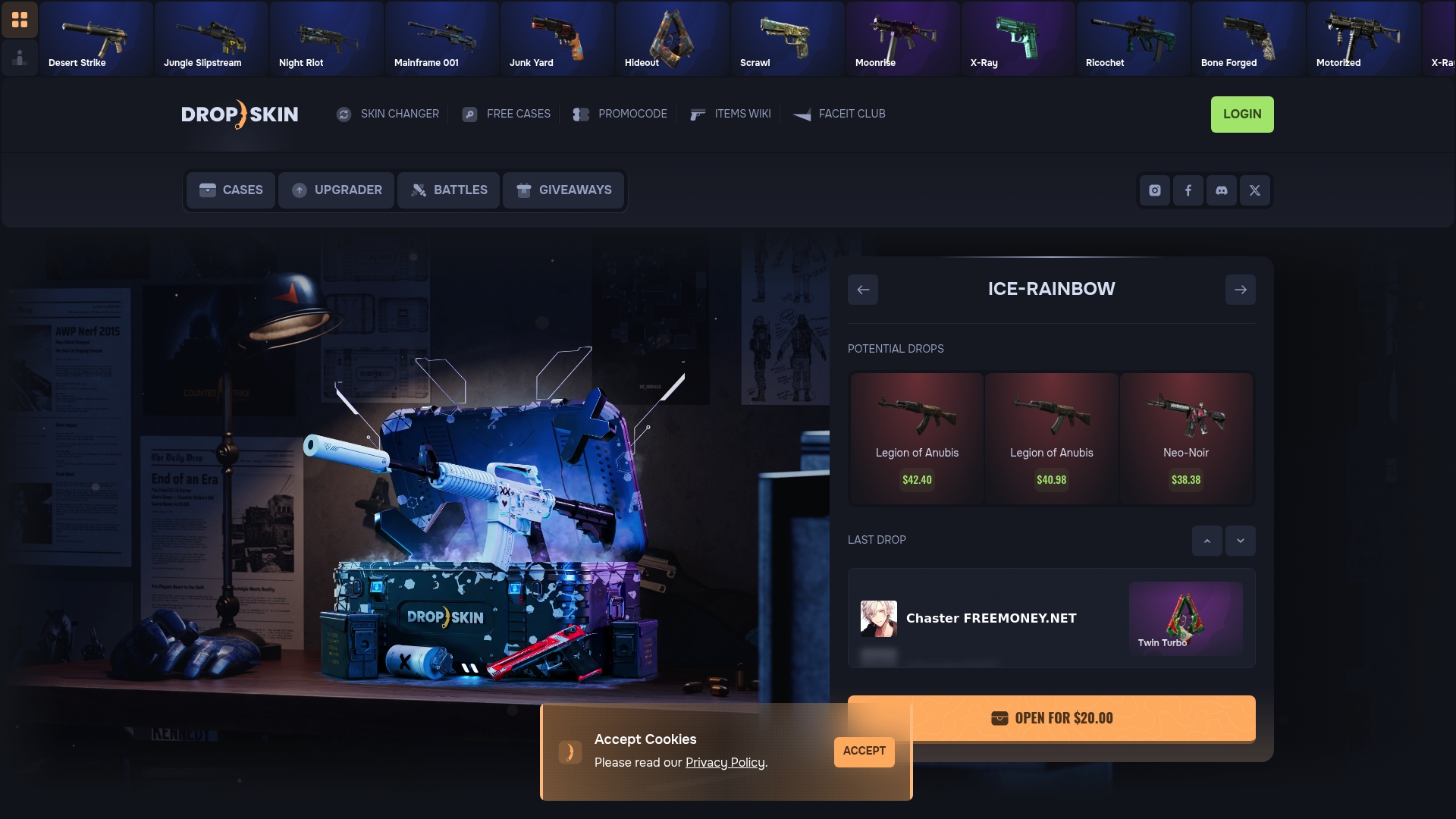
If you are ready to put these strategies into practice, Dropskin is built for exactly the kind of trading mindset this article describes. Whether you want to explore CS2 case openings with transparent odds or use the skin upgrader tool to convert lower-value skins into something worth holding or flipping, the platform gives you the tools without the friction. Dropskin's fee structure and skin upgrade mechanics are designed for players who take their inventory seriously, not just casual clickers. Check out the proven steps for affordable upgrades on the Dropskin blog to see how to move your skin value upward without overpaying at every step. Trade smart, upgrade intentionally, and enjoy the process.
FAQ
What makes a skin trade actually profitable?
A trade is profitable only after accounting for all marketplace fees, transfer costs, and the time your capital is tied up. Gross price differences rarely reflect real gains.
Which platform is best for skin arbitrage?
Buff163 as a buying source and Skinport as a selling platform currently offer the most reliable fee-adjusted spreads, though gaps close quickly and require fast execution.
How long should I hold skins for profit?
The recommended holding period for discontinued or supply-locked skins is 12 to 18 months. Shorter holds rarely generate enough appreciation to justify the locked capital.
Is case opening ever a good trading strategy?
No. The average return is negative 54% ROI per case opened. Case opening is entertainment, not a trading strategy. Buying skins directly is almost always more cost-effective.
What is the best starting strategy for new skin traders?
Focus on resale flipping with liquid skins in the $5 to $20 range. Small consistent margins build experience and capital faster than chasing high-value trades you are not yet equipped to evaluate.