TL;DR:
- E-sports significantly influences the value and demand of skins in the CS2 economy, creating market spikes around major tournaments and popular players. The skin market has grown to over $8 billion by mid-2026, driven by players, streaming, and competitive events, with demand manipulated by aspirational and behavioral factors. Regulatory pressures, platform risks, and technological developments shape future trading strategies and market stability.
Most gamers think of skins as cosmetic upgrades. Pick a color, flex in the lobby, move on. But the role of e-sports in skin trading runs far deeper than aesthetics. The CS2 skin economy has crossed $8 billion in market capitalization as of mid-2026, fueled not just by players but by professional matches, streaming audiences, and the aspirational pull of pro-level loadouts. If you want to understand how skins actually gain and lose value, you have to follow the e-sports thread.
Table of Contents
- Key Takeaways
- The role of e-sports in skin trading starts with market scale
- How e-sports visibility shapes skin prices
- Platforms and strategies for the e-sports skin market
- Risks and regulatory pressure in the skin economy
- Future trends at the intersection of e-sports and skin trading
- What I have actually learned watching this market
- Upgrade your skins before the next Major with Dropskin
- FAQ
Key Takeaways
| Point | Details |
|---|---|
| E-sports drives skin demand | Pro matches and tournament schedules create immediate price spikes for featured skins. |
| Market scale is massive | The CS2 skin economy exceeded $8 billion in capitalization by mid-2026, reflecting serious financial activity. |
| Platform choice matters | Steam's 15% fee and no cash-out policy make third-party platforms attractive but riskier. |
| Timing trades strategically | Anticipating e-sports event cycles helps traders capture momentum before prices peak. |
| Regulation is tightening | Valve banned skin gambling sponsors from licensed events, signaling growing legal pressure on the market. |
The role of e-sports in skin trading starts with market scale
Before you can appreciate how e-sports shapes skin trading, you need to understand what you are actually dealing with. The CS2 skin economy is not a niche hobby market. It is a multi-billion-dollar ecosystem that grew from $6 billion in October 2025 to over $8 billion by mid-2026. That is faster growth than most traditional collectible markets.
The supply side works through case openings. Players purchase keys to unlock cases, each containing randomly assigned skins across rarity tiers: Consumer Grade, Industrial Grade, Mil-Spec, Restricted, Classified, Covert, and Rare Special. Valve generated $1.15 billion in revenue in 2025 alone from case keys and Steam Community Market transaction fees, powered by over 400 million cases opened that year. The randomness creates scarcity. The scarcity creates value.
The participants in this market break down roughly into four groups:
- Casual players who open cases for fun and sell duplicates
- Speculators who buy low, hold, and sell during demand spikes
- Professional traders who track float values and rarity metrics full-time
- Esports pros and influencers who shape demand simply by being seen with specific skins
Understanding the skin economy fundamentals helps you recognize which group you belong to and trade accordingly. Each participant type responds differently to e-sports events, and that behavioral diversity is part of what makes the market so dynamic.
How e-sports visibility shapes skin prices
Here is where things get genuinely interesting. The impact of e-sports on trading is not theoretical. It is measurable, repeatable, and surprisingly fast.
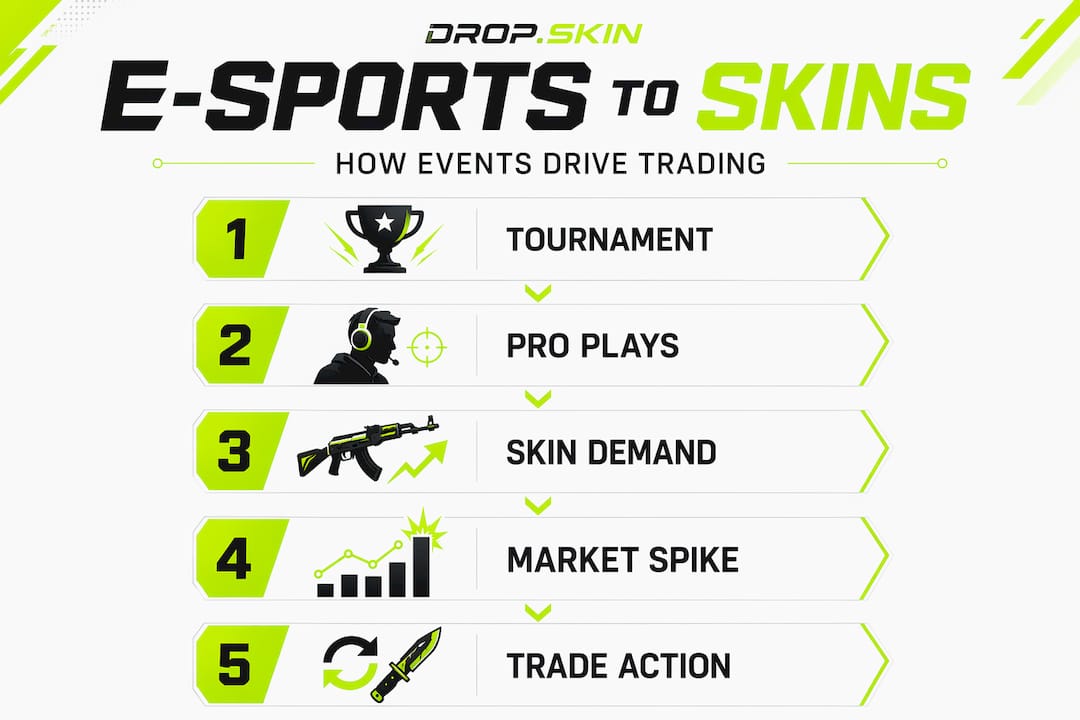
High-profile matches create immediate spikes in skin demand and prices. When a well-known pro pulls out a specific rifle skin during a Major finals broadcast, thousands of viewers notice. Some search for that skin within minutes. Demand rises. Price follows. This feedback loop between e-sports exposure and the e-sports skin market is one of the most reliable patterns traders have identified.

Professional players create aspirational demand in a way that advertising never could. When a top-ranked player consistently uses a particular AK-47 skin, it stops being just a cosmetic item. It becomes associated with skill, status, and identity. Fans want to own what their favorite player uses. This is how esports and virtual items become intertwined in market psychology.
Streaming amplifies this effect dramatically. Platforms broadcast not just matches but inventories. When a well-known streamer opens a rare skin on camera, the clip circulates, demand spikes, and the float value conversation starts. "Skinfluencers" have become a real category of market mover.
Here are the primary e-sports channels that affect skin trading volume:
- Major tournament broadcasts watched by millions, putting specific skins in front of a massive audience simultaneously
- Pro player streaming sessions where inventory and case openings are highly visible
- Team kit reveals where sponsored weapon finishes get exposure across social media
- Patch and update announcements tied to tournament meta shifts that change which weapons see play
Pro Tip: Watch major tournament schedules two to three weeks in advance. Skins associated with weapons favored in the current competitive meta tend to rise before and during events. Anticipating event-driven demand is one of the most consistent edges available to skin traders.
Platforms and strategies for the e-sports skin market
Knowing that e-sports drives demand is only half the equation. You also need to know where and how to trade to act on that knowledge effectively.
| Platform | Fees | Cash Out | Risk Level |
|---|---|---|---|
| Steam Community Market | 15% total | No (wallet credit only) | Low (Valve-backed) |
| Third-party platforms | 2% to 10% | Yes (real money) | Medium to high |
| Peer-to-peer trading | Minimal | Negotiated | High (fraud risk) |
The fee gap is significant. Steam charges 15% per transaction and locks proceeds inside the Steam wallet. Third-party platforms often charge far less and allow real money withdrawals, which makes them attractive for serious traders. The tradeoff is counterparty risk, since you are trusting platforms that operate outside Valve's ecosystem and have variable security and reliability records.
Professional traders do not just pick the cheapest platform. They prioritize liquidity and float values when assessing skin worth. A Factory New skin with an extremely low float number commands a meaningful premium over an identical skin with an average float, even though they look nearly the same in-game. Third-party tracking tools surface this data, and traders who ignore it leave money on the table.
For e-sports driven timing strategies, the approach looks like this. Before a Major, identify which weapons are dominant in the current competitive meta. Locate skins for those weapons at float values in the lower half of their condition range. Buy during low-interest periods, typically one to three weeks before the event. Sell during or immediately after peak broadcast viewership.
Pro Tip: Upgrading lower-value skins into rarer ones before an event cycle can compound your gains. If the weapon sees heavy pro play during the tournament, you want to be holding the high-tier version, not a base-grade skin. Check out how to capture this momentum before the next Major kicks off.
Risks and regulatory pressure in the skin economy
The relation between e-sports and skin economy comes with real dangers that too many traders dismiss until they get burned.
The gambling problem is genuine and legally complex. Legal definitions of gambling apply when skins purchased with real money are acquired by chance and then wagered for real-world value. That combination describes a large slice of the skin betting market, and regulators in multiple jurisdictions have taken notice. Lawsuits and tightened tournament sponsorship rules have followed.
Valve responded with concrete policy changes. Tournament Operating Requirements were updated in late 2025 and early 2026 to ban skin gambling and trading sponsors from licensed events. That was a significant shift, cutting off one of the most visible marketing channels that skin gambling sites relied on.
Beyond regulation, traders also face:
- Market manipulation by large holders who move prices through coordinated buying and selling
- Phishing and scam trades that target inexperienced traders on peer-to-peer platforms
- Account bans from Valve if trading patterns trigger automated fraud detection
- Liquidity traps where rare skins are hard to sell quickly at fair value
The skin market rewards research and patience. It punishes emotional buying driven by hype and poor platform choices driven by greed. Know your risk tolerance before you commit real money to any skin position.
Consumer protections in this space remain thin. Most skin platforms operate under gaming terms of service rather than financial regulations, which means your recourse when something goes wrong is limited. This is one area where the e-sports skin market genuinely lags behind traditional financial markets in maturity.
Future trends at the intersection of e-sports and skin trading
The next phase of how e-sports influence skin trading is likely to involve technology shifts that change how ownership and liquidity work.
Several developments worth tracking:
- Blockchain integration: CS2 skins are already being studied as a reference model for Web3 asset design because credibly enforced supply limits give them real economic properties that many tokenized assets lack.
- Hybrid tokenization: Blockchain models linking tokenized assets to esports skins may improve liquidity and cross-platform usability without replacing existing marketplaces entirely.
- Price transparency: Fragmented marketplaces maintain stable prices through efficient information flow today. Better data tools and potentially on-chain records could tighten arbitrage gaps further.
- Gamified investment: Skin upgrading mechanics, battle modes, and community-driven trading features are pulling skin economies closer to entertainment-driven financial experiences.
- E-sports expansion: As more titles build robust skin systems, the skin economies reshaping competitive gaming will extend beyond CS2 into other franchises, creating new trading opportunities.
The relationship between e-sports and skin markets is maturing. Early participants operated in a largely unregulated, information-poor environment. What is coming looks more structured, more transparent, and more connected to mainstream digital asset infrastructure. That is good for traders who operate with discipline.
What I have actually learned watching this market
I have spent years watching the CS2 skin economy from inside the community, and here is my honest read: most people dramatically underestimate how much of skin value is purely psychological, and e-sports is the engine running that psychology.
Traders who treat skins like stocks, focusing on float values and rarity charts, do well. Traders who buy because a pro they admire is holding something often overpay at the peak. The gap between those two behaviors is exactly where the market makes and loses money.
What frustrates me about how this gets discussed is the dismissiveness on one side and the uncritical hype on the other. Yes, the skin collecting culture in CS2 is genuine and community-driven. But it operates inside a system that Valve controls, regulators are examining, and market manipulators exploit. Ignoring any of those three layers is how people get hurt.
My advice is specific: track e-sports schedules like a trader tracks earnings calendars. Use third-party tools to evaluate float and liquidity. Never hold a skin you cannot afford to lose value on. And choose your platform based on your exit strategy, not just the entry fee.
The market is real. The opportunity is real. The risks are equally real.
— Dropskin
Upgrade your skins before the next Major with Dropskin
If you want to put the strategies in this article into practice, Dropskin gives you the tools to do it. Whether you are trading up from entry-level skins or looking to capture value before a tournament cycle peaks, the platform is built for exactly that.
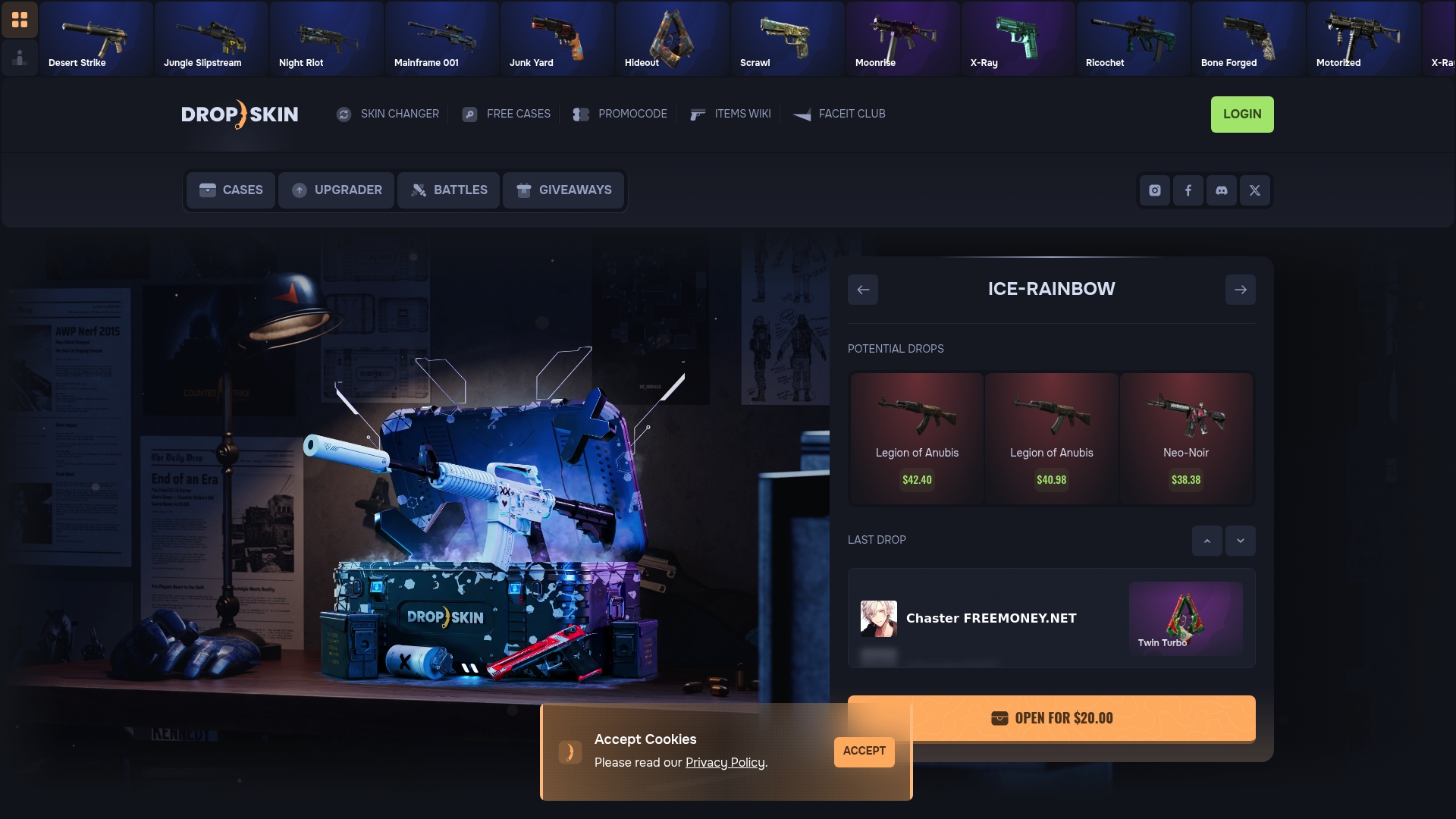
Dropskin's skin upgrader lets you convert lower-value skins into higher-tier items efficiently, which is the kind of move that pays off when e-sports demand spikes hit. Case openings, skin battles, and upgrade mechanics all sit under one roof, with competitive fee structures designed for active traders. Head to Dropskin and explore the case catalog or start an upgrade before the next big event drives prices up.
FAQ
What is the role of e-sports in skin trading?
E-sports creates direct demand signals for specific skins by putting them in front of millions of viewers during high-profile matches. When pros use particular skins in tournaments, prices often spike within hours due to aspirational buying from fans and speculators.
How do esports events affect skin prices?
Tournament broadcasts and pro player streams create immediate, measurable price increases for featured weapon skins. Traders who position before major events can capture this momentum, while those who buy during peak hype often overpay.
What platforms are best for trading skins in gaming?
Steam Community Market is the safest option but charges 15% fees and restricts cash-outs to wallet credit. Third-party platforms offer lower fees and real money withdrawals but carry higher counterparty and fraud risks.
Is skin trading regulated?
Regulation is increasing but remains inconsistent across jurisdictions. Valve updated its Tournament Operating Requirements in late 2025 to ban skin gambling sponsors from licensed events, and legal scrutiny around skin betting continues to grow globally.
How does float value affect skin worth in the CS2 market?
Float value measures a skin's wear level on a scale that directly impacts visual condition and price. Factory New skins with extremely low floats command significant premiums, and professional traders track these metrics using third-party tools rather than relying on in-game appearance alone.