
TL;DR:
- CS2 skin drops are now delivered weekly through terminals, removing rare case chances.
- Drops primarily consist of low-rarity weapon skins, emphasizing participation and playtime.
- Successful collecting involves trading up skins, monitoring float values, and using trusted third-party platforms.
Most players assume skin drops in CS2 are simple: play a match, get a skin. But after a major overhaul at the end of 2025, the
significantly, removing the rare case pool and shifting to drop terminals. The confusion that followed left traders and collectors scrambling for accurate information. This guide breaks down exactly how skin drops work in 2026, what changed, and how you can use that knowledge to build a smarter collection or sharpen your trading game.Table of Contents
- What is a skin drop? Core mechanics and meaning
- How skin drops work in CS2 and CS:GO
- Maximizing your drops: Strategies for traders and collectors
- The evolving landscape: Regulation, case bans, and drop alternatives
- Why most guides on skin drops get it wrong: The overlooked details in 2026
- Boost your collection: Where to trade, upgrade, and discover top skin drops
- Frequently asked questions
Key Takeaways
| Point | Details |
|---|---|
| Skin drops defined | Skin drops are in-game cosmetic rewards given to players in CS2/CS:GO, usually after matches. |
| Legacy pools removed | As of end-2025, rare case drops from legacy pools are gone, replaced by drop terminals following new regulations. |
| Maximize with strategy | Players can maximize their skin drops by playing on eligible servers and using trade-up methods. |
| Regulation impacts | Legal changes in 2026 mean players need to stay current on rules and check reliable community resources for drop odds. |
| Upgrade for value | Trading and upgrading skins through trusted services can help build a more valuable and personalized collection. |
What is a skin drop? Core mechanics and meaning
A skin drop is a cosmetic item you receive automatically after playing matches in CS2 or CS:GO. You do not buy it, earn it through achievements, or unlock it via a battle pass. It simply appears in your inventory as a reward for participation. Think of it as the game saying "thanks for playing" with a random cosmetic item attached.
There are two main types of drops:
- Weapon skin drops: A finished cosmetic item applied directly to a specific weapon. You can equip it, trade it, or sell it on the Steam marketplace immediately.
- Case drops: A virtual container that requires a paid key to open. Inside is a random skin, sometimes a rare or high-value one.
Skins are not all equal. Each skin carries a rarity tier (Consumer, Industrial, Mil-Spec, Restricted, Classified, Covert, or Contraband), a float value (a decimal from 0 to 1 that determines wear level from Factory New to Battle-Scarred), and sometimes a pattern index that affects visual appearance. These three factors together determine a skin's real-world trading value. A Factory New skin with a rare pattern can be worth hundreds of dollars, while the same skin in Battle-Scarred condition might sell for cents.
"Skin drops are essentially cosmetic rewards for participation, not guaranteed high-value items. Most drops land in the lower rarity tiers."
Understanding the value of collecting skins goes beyond aesthetics. Skins signal status in-game, serve as tradeable assets, and even drive skins and esports engagement at the professional level. A well-curated inventory is both a personal statement and a financial asset if you play the market right.
One important distinction: the word "drop" is used loosely in the community. Some players say "drop" when they mean a case, a skin, or even a reward from a third-party site. For clarity throughout this guide, a drop refers specifically to items received through CS2's in-game reward system after match play.
How skin drops work in CS2 and CS:GO
Here is a step-by-step breakdown of how the current drop system works:
- Play on official Valve servers: Only matches on Valve-operated servers count toward drop eligibility.
- Accumulate playtime: You need meaningful time in-game, not just a quick join-and-leave.
- Weekly reset: Drops reset each week, giving you a fresh chance at items.
- Drop terminal delivery: Since the system overhaul, drops are delivered through terminals rather than appearing randomly mid-session.
- Claim your drop: Check your terminal after eligible play to collect your item.
The biggest shift happened when rare case pools were removed at the end of 2025. The main drop system now runs exclusively through terminals, which changed both the frequency and the type of items players receive.
| Feature | Legacy drop pool (pre-2026) | Drop terminals (2026) |
|---|---|---|
| Rare case availability | Yes, roughly 1% chance | Removed |
| Drop frequency | Random during matches | Weekly, terminal-based |
| Item types | Weapon skins and rare cases | Weapon skins only |
| Predictability | Low | Higher |
| Player control | None | Slight, via playtime tracking |
The shift to terminals makes drops more predictable but less exciting for hunters of rare cases. You now know roughly when and how to claim a drop, but the ceiling on what you can receive is lower than before.

Pro Tip: Use community-run trackers and CS2 subreddit threads to stay current on drop rates. Valve does not always announce small rule tweaks, and top skin drop alternatives can fill the gap when in-game drops feel underwhelming.
Maximizing your drops: Strategies for traders and collectors
Knowing the system is one thing. Using it well is another. Here is how to get the most out of every drop cycle.
Best practices for maximizing drops:
- Play on official Valve matchmaking servers, not community servers, to stay eligible.
- Spread your sessions across the week rather than grinding everything in one day.
- Do not idle. Valve detects and excludes idle sessions from drop eligibility.
- Track your weekly drop status using community tools so you never miss a reset.
- Avoid using bots or automation tools. These violate Valve's terms of service and risk a ban.
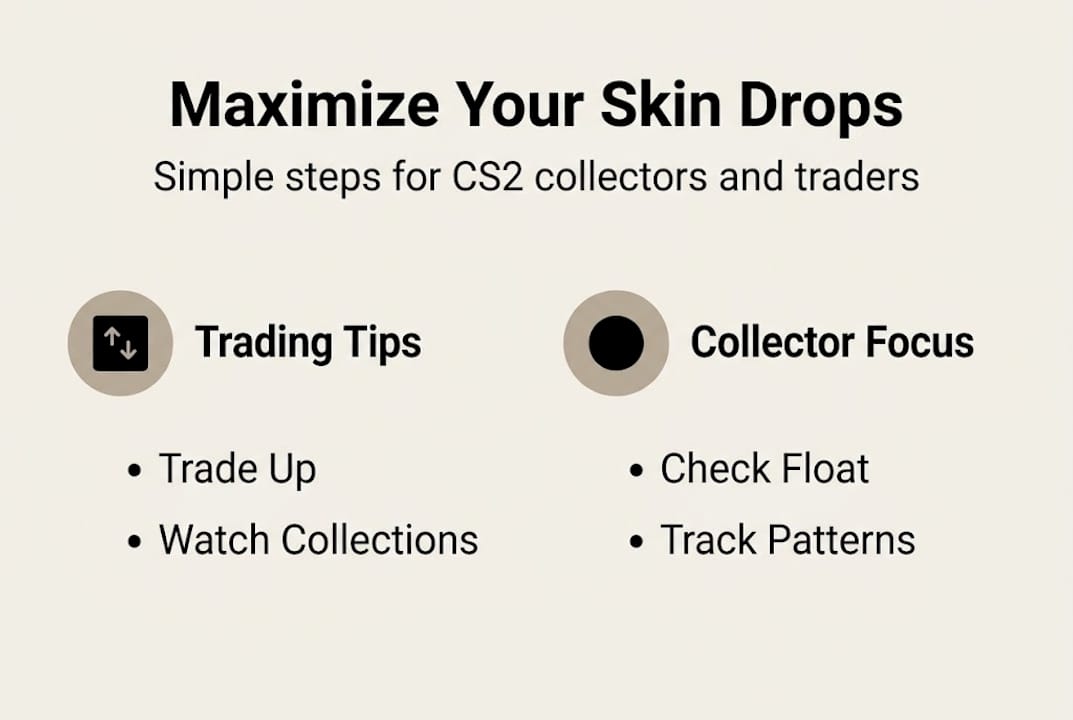
For traders, the strategy is about volume and patience. Most drops land at low rarity tiers, which means individual items have little value. But drop frequency and rules can change, and successful collectors adapt their play to stay ahead of those shifts. Stack up low-value drops over several weeks, then use a trade-up contract to convert ten lower-tier skins into one higher-tier item. This is one of the most reliable ways to climb the rarity ladder without spending real money.
For collectors, the focus should be on float values and pattern indexes. When you receive a drop, check the float before deciding whether to keep or trade it. A Mil-Spec skin with a near-zero float can sometimes outperform a Classified skin in poor condition on the trading market.
Pro Tip: Regularly trade up low-value skins rather than letting them sit. Even a modest stack of Consumer-grade skins can become something worth keeping if you execute trade-ups consistently. Stay informed on trends in skin trading and pair that knowledge with solid skin gambling strategies to stretch the value of every drop you receive.
One underrated move: watch for newly released weapon collections. Fresh skins often see a price spike in the first few weeks after launch, so drops from new collections can be worth more than usual during that window.
The evolving landscape: Regulation, case bans, and drop alternatives
The skin drop system does not exist in a vacuum. Legal pressure, platform policy changes, and community pushback have all shaped what you can and cannot receive through standard drops in 2026.
Several countries have moved to restrict or outright ban loot box mechanics in games, which directly influenced Valve's decision to restructure the drop system. Rare case pools are now mostly unavailable through standard drops, with drop terminals replacing them in 2026 as a more transparent and legally defensible system.
| Method | Availability | Rare skin potential | Risk level |
|---|---|---|---|
| Legacy drop pool | Removed (end of 2025) | High (rare cases included) | Low (official) |
| Drop terminals | Active in 2026 | Low to moderate | Low (official) |
| Third-party case sites | Available | High | Medium to high |
| Steam marketplace trading | Always available | High (depends on budget) | Low |
"The shift away from legacy drops has pushed many collectors toward third-party platforms and peer-to-peer trading as the primary routes to rare skins in 2026."
Third-party sites offer case openings and skin upgrades that go beyond what the in-game system provides. But they come with real risks. Some sites operate without proper licensing, use manipulated odds, or simply disappear with user funds. Understanding the risks of skin changers and knowing how to use skin changers in CS2 responsibly is essential before you move beyond the official system.
Always verify a site's reputation through community forums, check for published odds, and never deposit more than you are prepared to lose. The best third-party platforms are transparent about their mechanics and have verifiable track records.
Why most guides on skin drops get it wrong: The overlooked details in 2026
Here is the uncomfortable truth: most skin drop guides you find online are outdated, sometimes by years. They still reference the old 1% rare case drop odds as if those are still live. They are not. That pool was removed, and guides that have not been updated since 2024 are actively misleading players.
The bigger issue is that small system tweaks happen quietly. Valve rarely makes formal announcements about minor drop rule changes. A shift in playtime requirements or a subtle change to terminal eligibility can go unnoticed for weeks unless you are plugged into community trackers and active forums.
Legacy skins are another area where bad advice circulates. Many guides suggest grinding matches to find legacy items, but the reality is that those skins now come almost exclusively from trading or third-party platforms, not standard drops. Knowing why collecting skins matters beyond just gameplay is what separates serious collectors from casual players who follow outdated advice.
Our take: treat community trackers as your primary source of truth. Official patch notes are useful but slow. The players testing the system in real time are faster and more accurate.
Boost your collection: Where to trade, upgrade, and discover top skin drops
Ready to put these insights into action? Here is where to go next.
At Dropskin.com, we have built a platform specifically for CS2 players who want more than the standard in-game drop system offers. Whether you want to level up your inventory through the CS2 Skin Upgrader or explore thousands of items in the CS2 Skins Wiki, the tools are there to help you act on what you have learned.
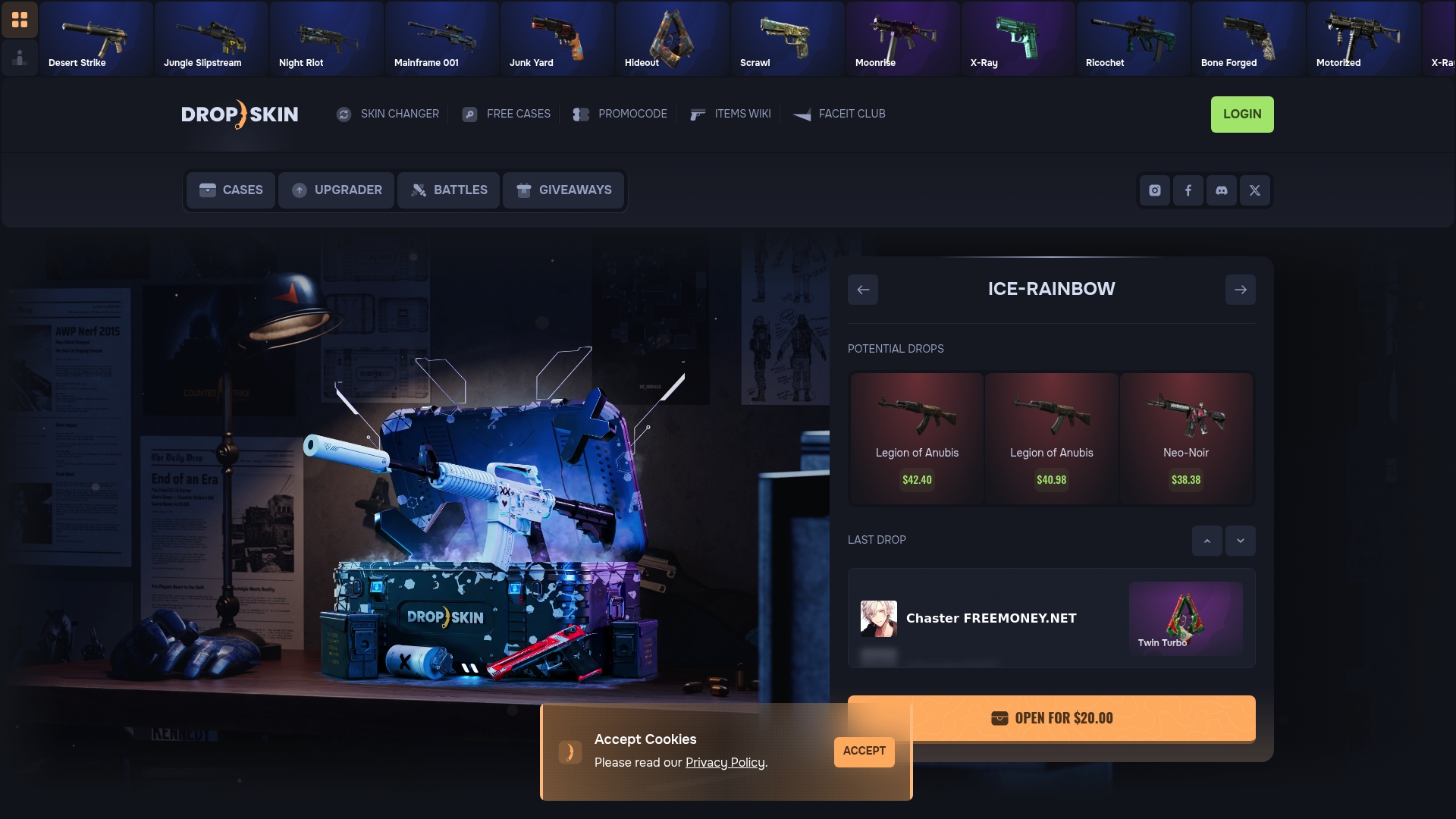
If you are ready to go further, you can open CS2 cases directly on our platform with transparent odds and a wide selection. We offer skin battles, giveaways, and upgrader features that let you transform low-value drops into something worth showing off. Your next great skin does not have to come from a weekly terminal.
Frequently asked questions
How often do you get skin drops in CS2?
You can receive up to 1-2 drops per week in CS2, tied to match play on official servers and subject to the weekly reset cycle.
Can you still get rare case drops in 2026?
No. The rare case pool was removed at the end of 2025 and replaced by drop terminals, which deliver weapon skins rather than rare cases. Check community trackers for the latest odds.
What's the difference between a weapon skin and a case drop?
A weapon skin is a ready-to-equip cosmetic item, while a case drop is a locked container that requires a paid key to open and reveals a random skin from a specific collection.
Are third-party skin drop sites safe?
Reputable platforms with published odds and community verification can be trustworthy, but unregulated sites carry real financial and account risks. Always research before depositing anything of value.