TL;DR:
- Catching trending Counter-Strike skins requires analyzing demand drivers like visibility, design, and liquidity to differentiate hype from lasting value.
- Using multiple sources such as market data, pro player inventories, and community sentiment helps confirm genuine trends before purchasing.
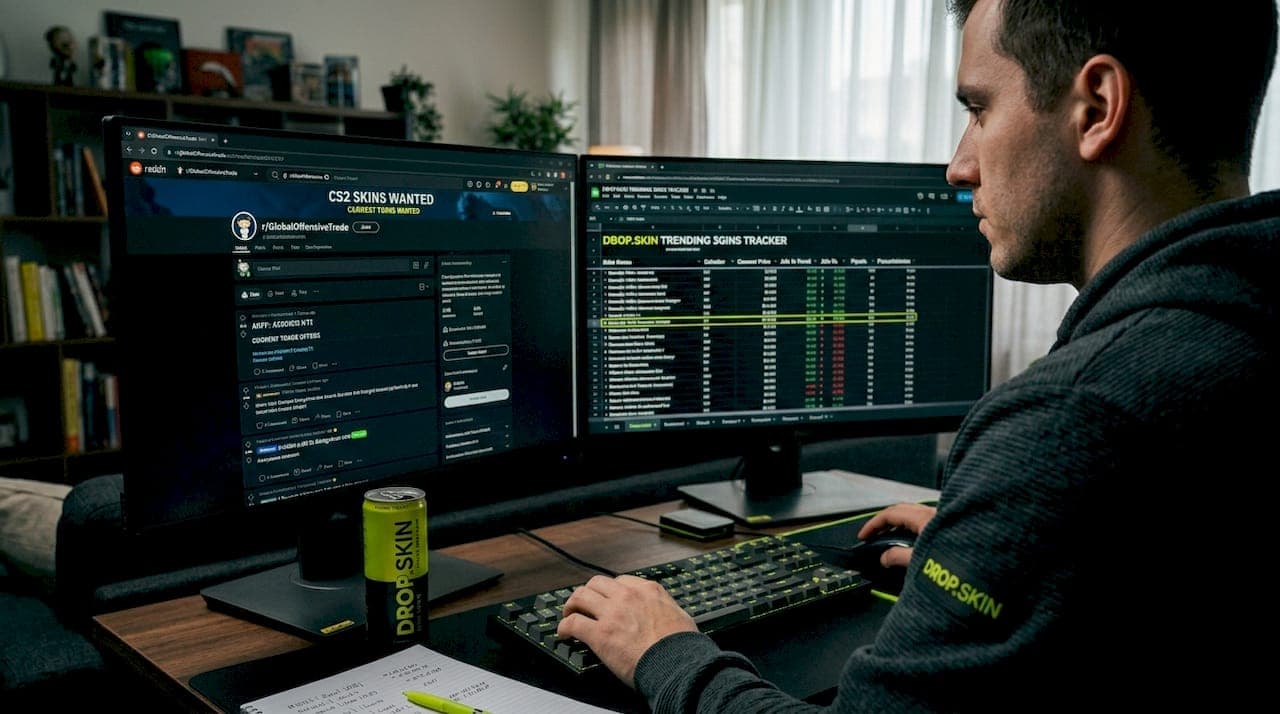
You refreshed the Steam Market three times, watched a pro streamer's inventory video twice, and still bought the skin two days too late. Sound familiar? Catching trending Counter-Strike skins at the right moment is one of the most exciting and frustrating challenges in the CS2 community. Whether you're a trader chasing profit, a collector hunting prestige pieces, or a gambler looking to stake high-value items, identifying which skins are genuinely heating up before the crowd piles in is a real competitive advantage. This guide gives you concrete strategies to do exactly that.
Table of Contents
- Understanding what makes a skin trend
- Where to spot skin trends: sources and tools
- How to evaluate and confirm if a skin is trending
- Mistakes and pitfalls in finding trending skins
- A seasoned collector's strategy: what works, what doesn't
- Upgrade your collection with trending skins
- Frequently asked questions
Key Takeaways
| Point | Details |
|---|---|
| Trend factors matter | Skins with lasting visibility and liquidity trend longer than hype-driven ones. |
| Best sources to spot | Analytic tools, market charts, and pro player streams help identify skin trends efficiently. |
| Verify before buying | Check both price charts and competitive use to confirm a skin’s trend and value. |
| Avoid collector pitfalls | Don’t confuse rarity with trend—look for skins with stable demand. |
| Use trusted platforms | Trading and upgrading on reputable sites minimizes risk and increases chances to catch hot skins. |
Understanding what makes a skin trend
Now that we've previewed the challenge and rewards of finding trending skins, let's break down what makes a skin trend in the first place.
A "trending skin" in Counter-Strike isn't just any skin people talk about for a week. It's a skin experiencing measurable, accelerating demand, reflected in rising trading volumes, climbing prices, and increased social mentions across the community. But not every trending skin stays valuable. Understanding skin value in gaming helps you separate short-lived buzz from lasting appreciation.
There are three main drivers behind why a skin trends:
- Competitive visibility: When a top-tier pro player or a popular streamer equips a specific skin in a high-profile match or broadcast, that skin's demand can spike within hours. Viewers want what winners use.
- Design appeal: Skins with bold, recognizable finishes tend to hold attention longer. Complex patterns, vibrant colors, and iconic themes create natural conversation starters.
- Market liquidity: A skin that can be bought or sold quickly at a fair price without wild swings is far more appealing to traders and collectors alike.
The crucial distinction is between hype-driven trends and demand-driven trends. Hype spikes fast and collapses just as quickly, often tied to a single viral clip or limited-time event. Demand-driven trends build more steadily because they're rooted in genuine utility or aesthetic respect within the community. Understanding skin collectibles impact gives you a clearer picture of why certain skins transition from "hot right now" to long-term collector staples.
"For trending skins that are also good for collectors, focus on skins whose demand is likely to persist beyond hype windows, including strong competitive visibility, recognizable finishes, and stable liquidity." Most Popular CS2 Skins
Qualities that collectors genuinely prize include float value (wear condition), pattern index for skins like the Case Hardened series, and sticker combinations from major tournaments. These attributes can transform an otherwise ordinary skin into a high-demand collectible that trends for months, not days.
| Quality | Hype skin | Collector skin |
|---|---|---|
| Price behavior | Spike then crash | Gradual climb |
| Community attention | Short burst | Sustained interest |
| Competitive use | Often incidental | Frequently visible |
| Liquidity | Drops after peak | Stays consistently tradeable |
Pro Tip: Before you call a skin "trending," check if it was trending six months ago too. Consistent reappearance in top trade lists signals real collector value, not fleeting excitement.
Where to spot skin trends: sources and tools
Once you know what defines a trending skin, the next step is knowing where to look. Let's explore your options.
Not all sources are equal. Some are fast but shallow. Others are thorough but slow. The smartest approach is to layer multiple sources together so you catch early signals before they become mainstream news. Keeping up with skin trading trends 2026 can also reveal broader market movements you'd otherwise miss.
Here are the primary sources and what they're best for:
- Steam Community Market: The gold standard for official price data. You can see historical price graphs and transaction volume, which are reliable indicators of genuine demand spikes versus random noise.
- CS2 analytic platforms (CSFloat, Skinbid, CS.MONEY): These platforms track float values, pattern indexes, and real-time pricing across multiple markets. They're essential for cross-referencing price behavior.
- Twitch and YouTube: When a well-known player or content creator showcases a skin, watch how quickly trading volume reacts. The lag between a broadcast moment and a market price move is your window to act.
- Reddit communities (r/csgo, r/GlobalOffensive): Great for sentiment analysis. If a skin starts getting organic posts and comments from multiple users in a short period, that's a social signal worth tracking.
- Discord trading servers: Often ahead of public platforms. Experienced traders share what they're moving before it hits the mainstream radar.
| Source | Speed | Depth | Reliability |
|---|---|---|---|
| Steam Market | Medium | High | Very high |
| CSFloat / CS.MONEY | Fast | Very high | High |
| Twitch / YouTube | Very fast | Low | Medium |
| Reddit / forums | Fast | Medium | Medium |
| Discord servers | Very fast | Medium | Varies |
Strong competitive visibility, recognizable finishes, and stable liquidity are consistently the factors that separate skins worth tracking from ones worth ignoring. Cross-checking your findings across at least three sources before acting significantly reduces the risk of chasing false signals.
Pro Tip: Set up browser bookmarks for your three most-used analytic platforms and check them every morning. A 10-minute daily habit builds pattern recognition over weeks that no single deep-dive session can replicate.
Understanding why traders make moves also matters. Explore trading skins for profit to see the motivations behind market movements, which helps you predict where demand will travel next.
How to evaluate and confirm if a skin is trending
With sources identified, you'll want to confirm whether a skin you spot is genuinely trending or just fleeting hype.
Spotting a potential trend is step one. Confirming it before you spend real money is step two and arguably more important. Here's a practical process you can follow every time:
- Check the price chart over 30 and 90 days. A skin trending for real shows a steady upward slope, not a single vertical spike. If the price jumped 60% overnight and has no history of gradual movement, treat it as a red flag.
- Look at transaction volume. Rising prices with rising volume confirm real buyer interest. Rising prices with falling volume usually signal a manipulation attempt where few sellers are artificially pushing the price up.
- Cross-reference pro player inventories. Tools like ProSettings or esports broadcast archives let you check which skins pros are actually using. If multiple top players recently switched to the same skin, demand won't be random.
- Check community sentiment on Reddit and Discord. Organic, varied conversations across different users are a healthier signal than one viral post repeating the same talking points.
- Compare across multiple marketplaces. If a skin is trending on Steam Market but flat on Skinbid or CSFloat, the price movement may be isolated rather than market-wide.
"Demand will persist for skins with strong visibility and liquidity, not just hype." Most Popular CS2 Skins
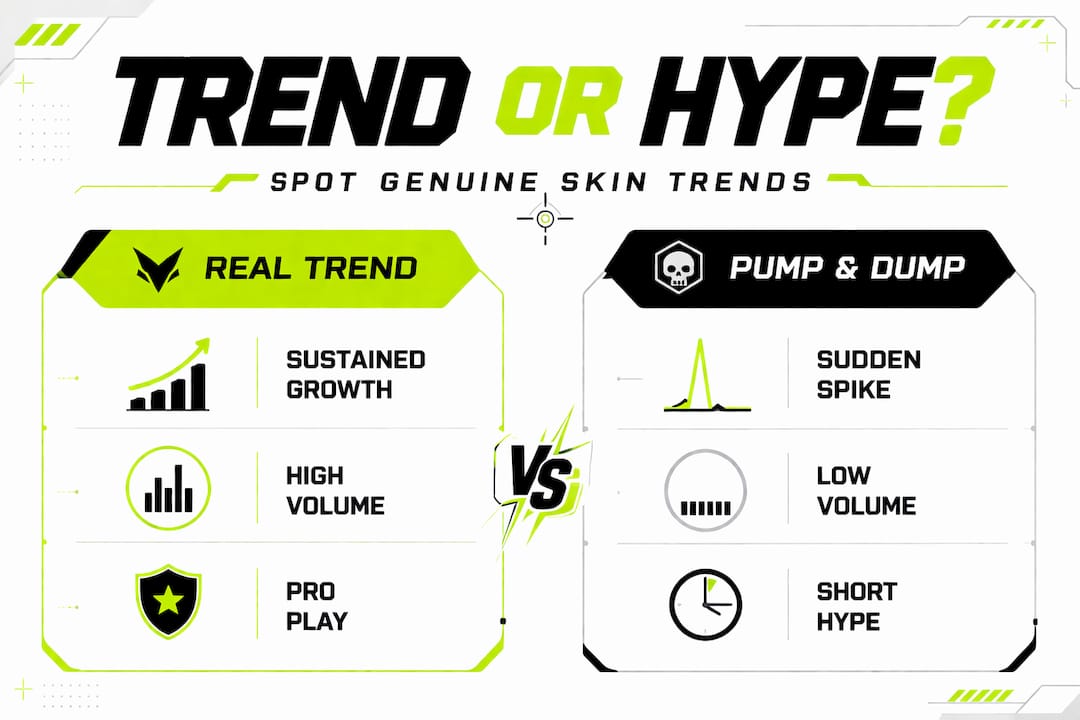
One major trap to avoid is the pump and dump scheme, where a coordinated group buys up a skin to inflate its price, generates social media noise, then sells into the artificial demand, leaving late buyers holding overpriced inventory. These schemes often target lower-tier skins because they're cheaper to manipulate. Learning about choosing valuable skins helps you build a framework that resists these traps.
| Signal | Genuine trend | Pump and dump |
|---|---|---|
| Price movement | Gradual, sustained | Sudden spike |
| Volume | Rising with price | Drops after spike |
| Community talk | Diverse, organic | Repetitive, coordinated |
| Pro visibility | High | Low or absent |
Another overlooked confirmation step is checking whether collecting rare skins collectors are discussing the skin as a long-term hold. Collector communities have seen enough hype cycles to be naturally skeptical of short-term buzz, so their interest is a strong endorsement.

Pro Tip: Use the 30-day moving average on CSFloat to filter out noise. If the skin's price is consistently above that average and volume is healthy, the trend has real legs.
Mistakes and pitfalls in finding trending skins
Even with strong strategies, it's easy to fall victim to mistakes. Let's cover what to avoid on your quest for trending skins.
The most expensive lesson most collectors and traders learn is overpaying during a hype spike. When a skin suddenly dominates the community's conversation, the market moves fast. Panic buying at the peak of a price surge locks you into an inflated position that may not recover for months or at all.
Common mistakes to avoid:
- Buying at the spike, not the base. The ideal entry point is when you first notice a trend forming, not when everyone else has already noticed it. Buying into established momentum means you're already late.
- Trusting unverified influencers. Some content creators have financial incentives to promote certain skins. If an influencer's recommendation isn't backed by data from analytic platforms, treat it as entertainment, not investment advice.
- Confusing rarity for trendiness. A StatTrak Souvenir skin with a Factory New float might be extraordinarily rare, but if no one is actively searching for it, it won't trend. Skin collecting culture teaches us that community desire, not scarcity alone, creates real demand.
- Ignoring transaction fees. Steam's 15% transaction fee, plus fees on third-party platforms, can eliminate profit margins quickly if you're trading skins with thin value differences.
- Falling for fake trade offers. Scammers use trending skins as bait, offering fake versions, lookalike items, or trades with hidden conditions. Always verify every trade on the official Steam interface.
"Focus on skins with lasting demand for both collectors and traders." Most Popular CS2 Skins
The emotional pull of a trending skin is real. When a skin is all over your feed and your friends are buying it, staying disciplined feels almost unnatural. That's exactly why establishing a pre-trade checklist, covering price history, volume data, community sentiment, and pro visibility, keeps your decisions grounded in analysis rather than excitement.
Pro Tip: Set a personal rule: never buy a trending skin on the same day you first hear about it. Wait 24 hours, run your checklist, and then decide. This one habit alone prevents most impulse mistakes.
A seasoned collector's strategy: what works, what doesn't
Here's something most guides won't tell you: the market charts often follow the pro players, not the other way around. By the time a price spike appears on Steam Market, a team of pros has already been using that skin for two to three weeks in scrimmage and warm-up lobbies. Smart collectors watch pro player streams, not just market charts.
We've seen collectors build impressive portfolios by focusing on a simple rule: buy skins that would still be interesting to own even if the price never moved. That mindset filters out 90% of the hype-chasing noise. If a skin has genuine visual appeal, strong competitive presence, and a history of stable pricing, it's worth serious attention.
Contrarian timing also matters. The best entry point for many iconic skins comes right after a hype cycle cools. Once the excitement fades and weak hands sell off, prices often settle 20 to 30 percent below the peak. Patient collectors who waited through the noise have picked up some spectacular pieces at genuinely fair prices.
Trending skins with lasting value consistently show competitive relevance and real collector demand, two things that no algorithm can manufacture. Understanding the value of digital skins as cultural artifacts in esports helps reframe your approach: you're not just trading pixels, you're participating in a living collectibles market.
When to hold is equally important as when to buy. If a skin you own starts appearing in major tournament broadcasts and community discussion is growing organically, that is not the time to sell. That's the time to hold and let the market come to you.
Upgrade your collection with trending skins
Staying on top of skin trends is rewarding, but having the right tools makes the whole process faster and more enjoyable.
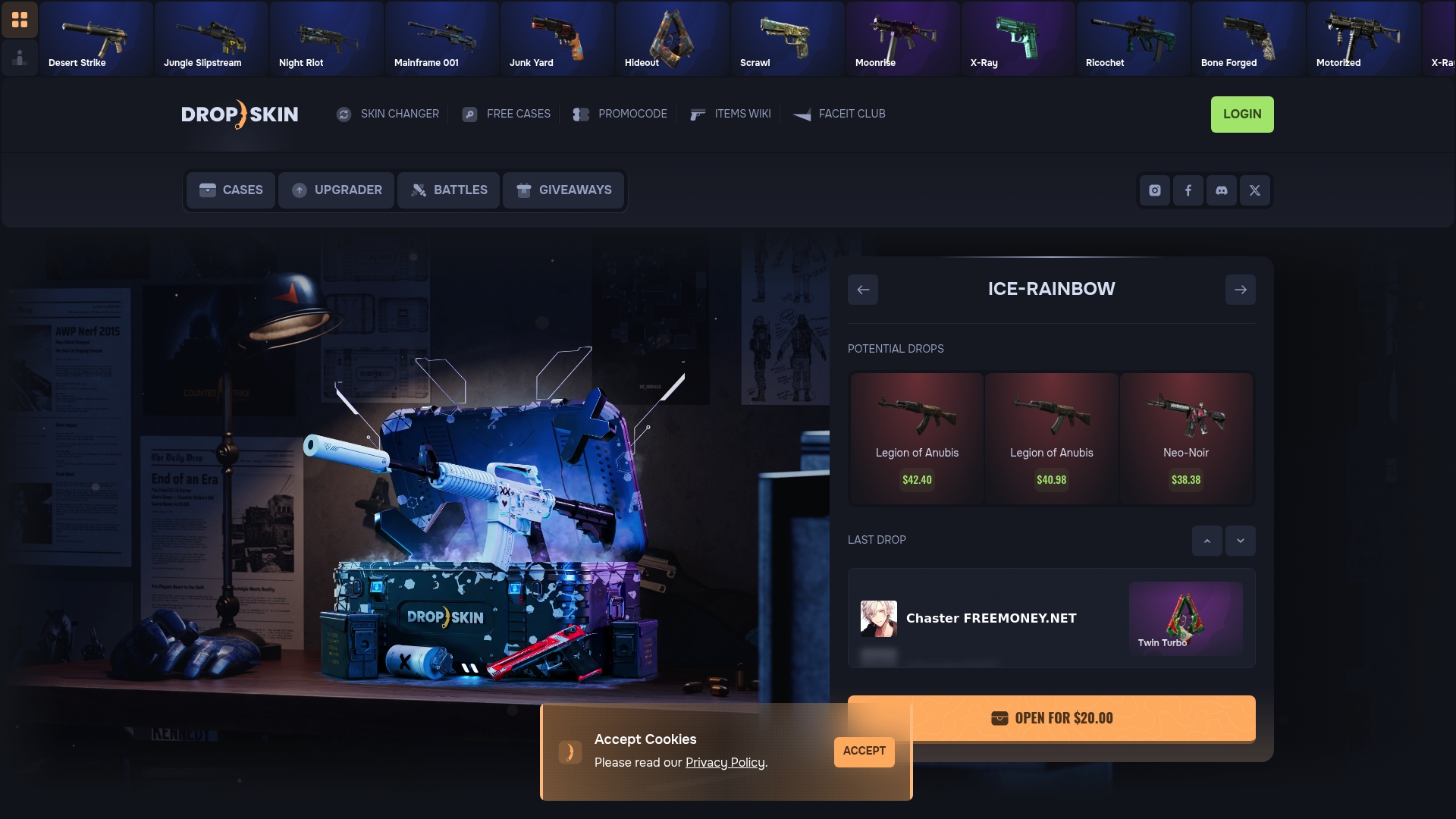
At DROP.SKIN, you don't have to wait for the perfect skin to show up on the open market. You can open CS2 cases from an extensive collection that regularly features high-demand skins across all price ranges, giving you real shots at landing trending items without overpaying for established market prices. For collectors and traders who already have a base inventory, the skin upgrader tool lets you convert lower-value skins into higher-tier pieces, a practical shortcut to climbing toward the skins everyone wants. Combined with active giveaways, community engagement, and fair trading mechanics, DROP.SKIN makes chasing trends an advantage rather than a gamble.
Frequently asked questions
What is the fastest way to find trending Counter-Strike skins?
The fastest way is to monitor live trading volume on analytic platforms like CSFloat while following pro player inventory streams, since stable liquidity and competitive visibility are the earliest reliable signals of a genuine trend.
How can I tell if a skin's trend is just hype?
If the price spike is sharp and brief without matching increases in trading volume or consistent pro play, it's likely hype. Skins with real demand show steady price growth backed by liquidity, not just a spike.
Are rare skins always trending or valuable?
No, rarity alone doesn't create trends or lasting value. Competitive relevance and collector demand matter far more than how few copies of a skin exist in the market.
What are common mistakes when searching for trending skins?
The biggest mistakes are overpaying during hype spikes and trusting unverified sources. Always rely on lasting demand indicators like volume trends and pro usage rather than social media noise alone.
Where can I upgrade or trade trending skins safely?
Dedicated platforms like DROP.SKIN offer secure case openings, skin upgrades, and trading features specifically designed for CS2 collectors and traders chasing the market's hottest picks.