
TL;DR:
- Rare skins serve as digital badges of skill, status, and community belonging in Counter-Strike.
- The market value of skins depends on rarity, condition, demand, and esports influence.
- Skin collecting is risky; most players experience losses without proper research and strategy.
Rare skins are not just cosmetic extras slapped onto your favorite weapon. They sit at the heart of a living economy, a social hierarchy, and a cultural movement that keeps Counter-Strike relevant year after year. With 1M+ concurrent players logging in daily, rare skins are one of the biggest reasons people stay, spend, and watch. This guide breaks down the real motivations behind collecting rare skins, from personal expression and social status to financial strategy, esports impact, and the very real risks that come with treating pixels as assets.
Table of Contents
- What drives the desire to collect rare skins?
- Rarity, value, and market mechanics
- Risks, volatility, and myths of skin investing
- Rare skins and the Counter-Strike esports scene
- A fresh perspective: Is skin collecting truly worth it?
- Start your rare skin journey with DROP.SKIN
- Frequently asked questions
Key Takeaways
| Point | Details |
|---|---|
| Cultural badges | Rare skins serve as digital status symbols and build player identity within the Counter-Strike community. |
| High potential returns | Certain rare skins have historically outperformed traditional assets, but this comes with risks and high volatility. |
| Esports engagement | Rare skins fuel esports participation, prize pools, and long-term community loyalty. |
| Risks versus rewards | Most collectors do not profit due to marketplace fees and price swings—knowledge and timing are crucial. |
What drives the desire to collect rare skins?
Ask most players why they want a rare skin and they will say it looks cool. But that surface-level answer hides something deeper. Skins work as digital badges that communicate skill, taste, and loyalty without a single word being spoken. The moment you pull out a Factory New Karambit with a .01 float, every player in that lobby knows something about you.
The psychology behind skin-collecting motivations runs through several clear layers:
- Identity: Your loadout is your signature. Rare skins let you build a visual identity that stands apart from the default look.
- Social status: High-value skins signal experience and investment in the game. Other players notice, and that attention matters.
- Community belonging: Owning a sought-after skin connects you to a global group of collectors who share knowledge, trades, and hype.
- Emotional reward: The rush of unboxing or acquiring a rare item triggers real excitement. That feeling keeps players engaged.
- Long-term pride: Unlike most in-game rewards, rare skins hold or gain value over time, making ownership feel purposeful.
The cultural side is just as important as the personal one. Skins have become shorthand inside the CS2 community. Certain knives, gloves, and rifle finishes carry reputations built over years of trading, streaming, and esports coverage. According to the broader esports engagement landscape, skins actively increase viewership because fans want to see what the pros are using.
"Skins are not just cosmetic. They are the currency of respect inside the Counter-Strike community."
This is why casual players grind for skins they will never sell. The act of owning something rare enough to generate compliments in-game is its own reward. The market and the culture feed each other constantly.
Rarity, value, and market mechanics
Not all skins are created equal, and the gap between common and rare is enormous. Rarity in CS2 is defined by a classification system that ranges from Consumer Grade all the way up to Covert and the ultra-rare Special items. Drop rates matter enormously here. A Covert skin might have a drop probability below 1%, while Consumer Grade items appear constantly.
Condition adds another layer of complexity. Each skin comes with a float value, a number between 0 and 1 that determines how worn or pristine it looks. A lower float equals a cleaner finish, and for the rarest skins, the difference between a .01 and a .07 float can mean thousands of dollars in resale value.
| Rarity Tier | Example | Avg. Market Price |
|---|---|---|
| Consumer Grade | Nova Sand Dune | $0.03 |
| Mil-Spec | AK-47 Red Laminate | $2.00 |
| Restricted | M4A4 Asiimov | $25.00 |
| Classified | AK-47 Fire Serpent | $400.00 |
| Covert / Knife | Karambit Fade FN | $1,500+ |
The numbers above show why skin rarity explained is such a critical topic for anyone entering the market. You can spend $5 opening cases, or you can target specific skins on the marketplace with a clear budget and strategy.
From a financial perspective, the data is striking. A study found that CS2 skins averaged 41.2% annual returns between 2013 and 2024, with a Sharpe ratio of 0.34 that outperforms both Bitcoin at 0.21 and the S&P 500 at 0.25. Cases specifically averaged 66.9% returns in the same period.

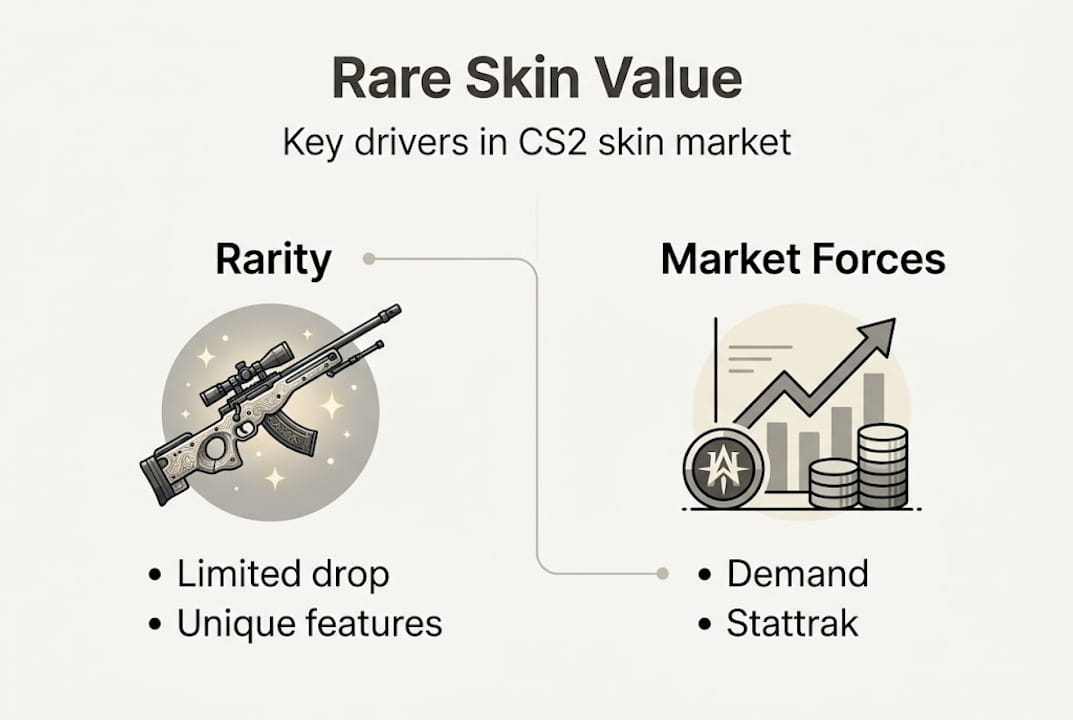
Factors that how rarity affects price include market demand, whether the skin is stattrak, the presence of rare stickers, and whether it has been featured in a major esports broadcast.
Pro Tip: Before buying a rare skin, check its 90-day price history on third-party tracking sites. A skin that just spiked after a pro player used it in a major tournament may already be overvalued. Wait for the hype to settle before committing.
Risks, volatility, and myths of skin investing
The headline numbers on skin returns sound incredible. But here is where most collectors go wrong: they assume the average return applies to every skin equally. It does not.
Blue-chip skins like knives and high-tier gloves do yield 10-30% annual returns for informed collectors. But the same source confirms that the vast majority of players lose money because they buy low-tier skins with high fees, poor timing, and no exit strategy. Skin price volatility can hit 300% in either direction, far beyond what stock markets typically show.
Here are the most common ways players damage their skin portfolios:
- Buying during hype spikes after a major tournament or streamer feature, when prices are at their peak.
- Ignoring platform fees on the Steam Marketplace or third-party sites, which can eat 10-15% of every transaction.
- Holding low-tier skins hoping they will appreciate, when in reality they often depreciate as supply increases.
- Falling for fake rarity on skins that look impressive but have large supply pools and weak demand.
- Panic selling during market dips, locking in losses that would have recovered within weeks.
"The market punishes impatience. Rare skins reward those who research before they buy, not after."
The myth that skin collecting is easy passive income is one of the most damaging ideas in the community. For a detailed look at what actually drives value, understanding the skin collecting risks and the drivers of skin worth is essential before putting real money into any item.
Pro Tip: Treat rare skins like a hobby investment first and a financial one second. Set a budget you are comfortable losing, focus on items you genuinely enjoy owning, and only consider the profit angle for top-tier blue-chip skins with proven price histories.
Rare skins and the Counter-Strike esports scene
The relationship between rare skins and esports is not just about aesthetics. It is structural. Skins generate revenue that flows back into the game's competitive ecosystem in tangible ways.
Here is how rare skins power the esports world:
- Viewer incentives: Tournament-exclusive sticker capsules and viewer passes give fans a reason to watch every match. Buying a capsule supports the prize pool and delivers a potential rare item.
- Pro player influence: When a top player uses a specific skin setup, demand for that skin surges almost immediately. This creates a direct link between competitive performance and market value.
- Org branding: Esports organizations release co-branded sticker collections and sometimes limited skins, turning team loyalty into a collectible economy.
- Daily engagement: With 1M+ concurrent players active on any given day, skins are one of the primary reasons people open the game outside of ranked matches.
- Long-term retention: Players who invest in rare skins are statistically less likely to quit the game, since leaving means walking away from real stored value.
"The skin economy is not a side effect of CS2's success. It is one of the engines driving it."
Understanding esports skin engagement shows that the impact of collectibles on tournament viewership and player retention is measurable and growing. For anyone serious about esports skin collecting, following the competitive calendar is not optional. It is part of the strategy.
A fresh perspective: Is skin collecting truly worth it?
Here is the honest take: most collectors who focus purely on profit will eventually be disappointed. The market is smart, unpredictable, and dominated by well-funded traders who move faster and know more. Trying to out-trade them with a casual budget is a losing game for most people.
But the players who stick around the longest are not usually the ones chasing returns. They are the ones who found identity, community, and excitement in the collecting process itself. That Karambit on your belt during a ranked match is not just money sitting in inventory. It is a statement about who you are in this game.
The cultural and social value of rare skins consistently outlasts hype cycles. Skins that made esports moments memorable ten years ago still carry weight today. That kind of long-term engagement is rare in any entertainment space. For most players, the best reason to collect is not the spreadsheet. It is the story the skin tells every time you drop into a match.
Start your rare skin journey with DROP.SKIN
Now that you understand what makes rare skins valuable and why they matter across culture, community, and esports, the next step is experiencing it firsthand. Whether you are new to collecting or looking to upgrade your current setup, DROP.SKIN gives you the tools to make it happen.
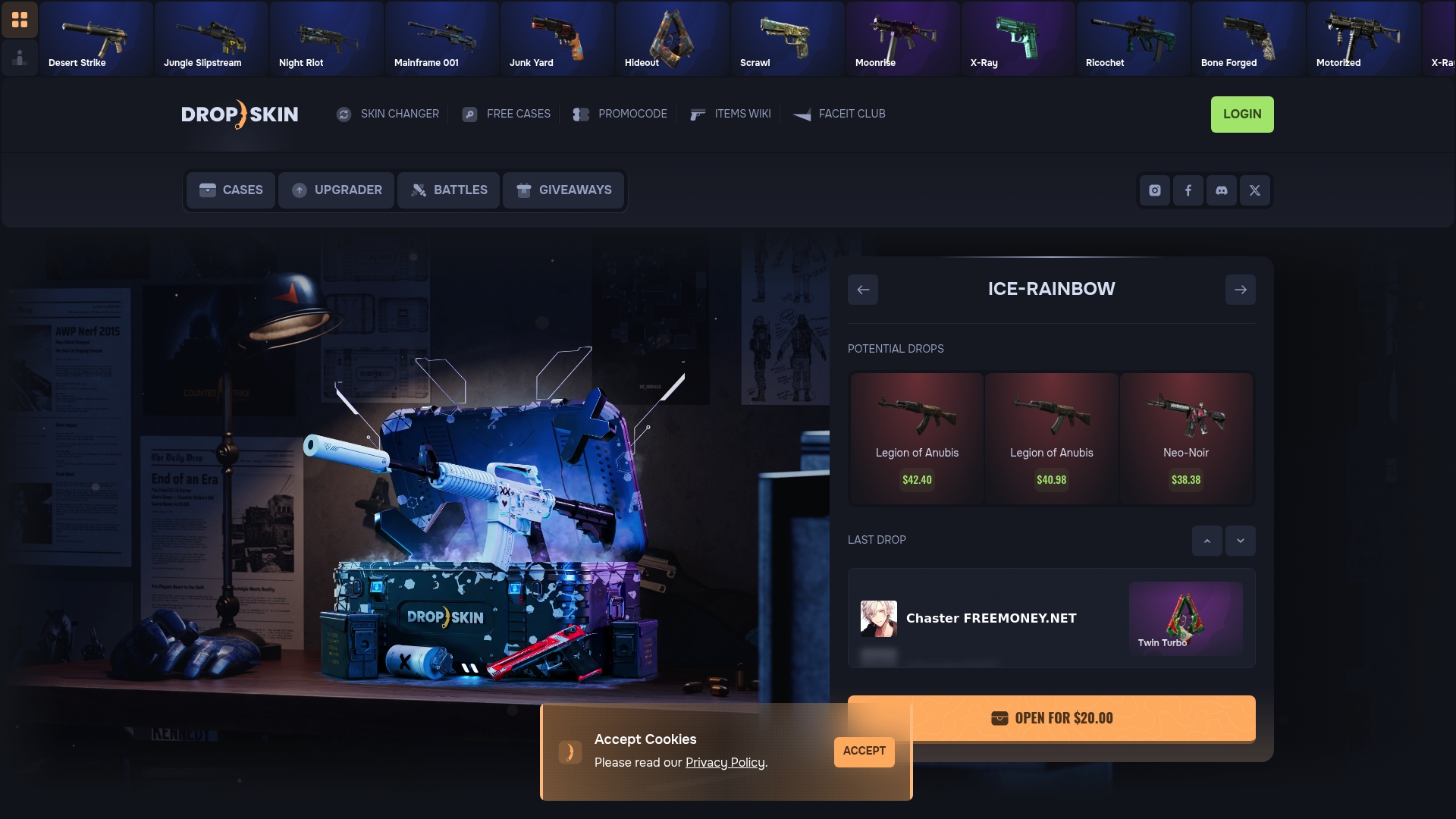
You can open CS2 cases with a massive selection built for every budget, or use the platform's smart upgrade skins online feature to turn common skins into something genuinely rare. With regular giveaways, promo codes, and a community of active collectors, DROP.SKIN is where casual fans and serious collectors meet. Start small, learn fast, and build the inventory you actually want.
Frequently asked questions
Are rare CS2 skins a good investment in 2026?
Some rare skins have shown 41.2% annual returns over the past decade, but most players lose money due to fees, volatility, and poor timing. Profits are never guaranteed, so treat skin collecting as entertainment with a potential financial upside rather than a reliable income strategy.
What makes a skin 'rare' in the Counter-Strike market?
Rarity is determined by drop rate, classification, limited availability, float value, and any unique in-game features. Covert-tier items and Special items have the lowest drop probabilities and tend to command the highest prices.
How do rare skins boost CS2 esports and community engagement?
Rare skins drive daily participation and retention by giving players a reason to stay active beyond ranked play. They also boost tournament viewership through collectible capsules and sticker sales that tie fan investment directly to competitive outcomes.
Can the value of rare skins drop suddenly?
Yes. Skin prices can be highly volatile, moving 300% in either direction based on game updates, shifts in player demand, or changes in the broader CS2 economy. Always buy with a clear exit plan in place.